Universe Today
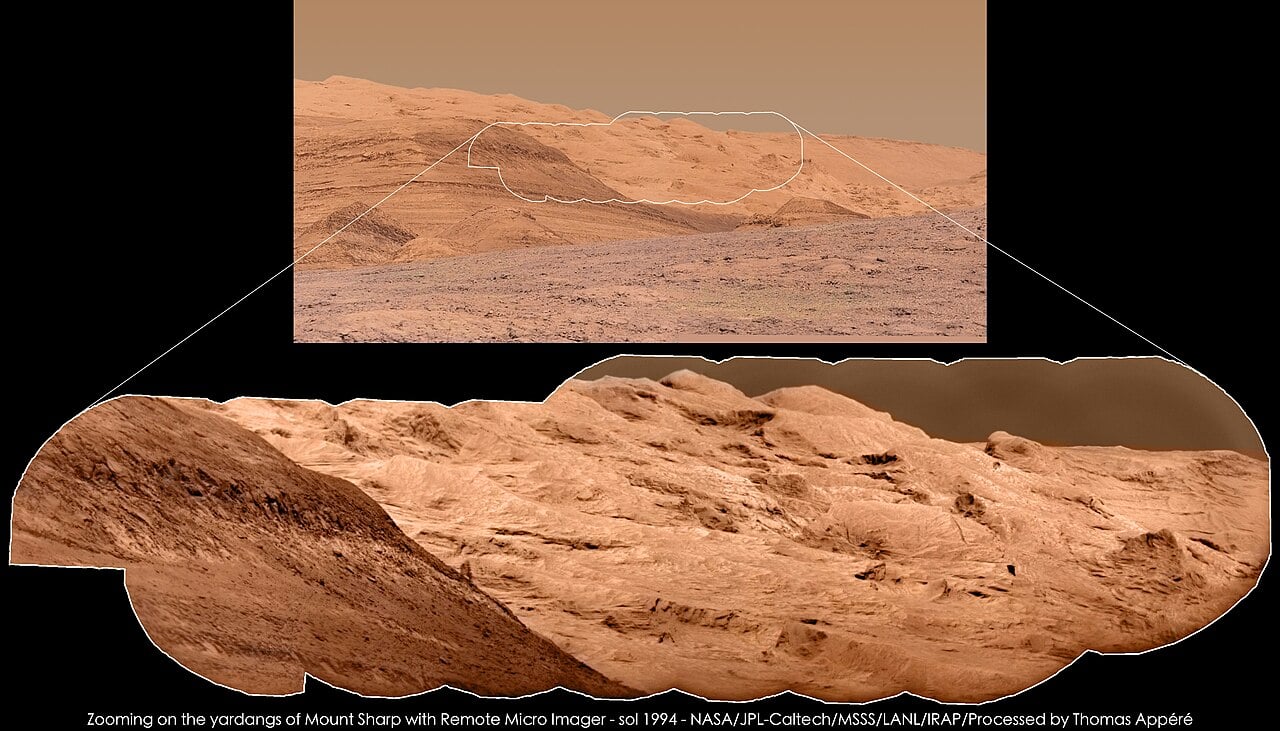
Our red neighbour Mars, seems to experience many similar phenomena to Earth. It does however seem to lack the hurricanes and typhoons that lash Earth, but don’t underestimate the Martian winds. Over millions of years, these persistent atmospheric currents have carved spectacular grooves and ridges across the landscape, carrying sand grains like microscopic chisels to sculpt the surface. ESA’s Mars Express has now captured some of the most striking examples of this erosion near the planet’s equator.
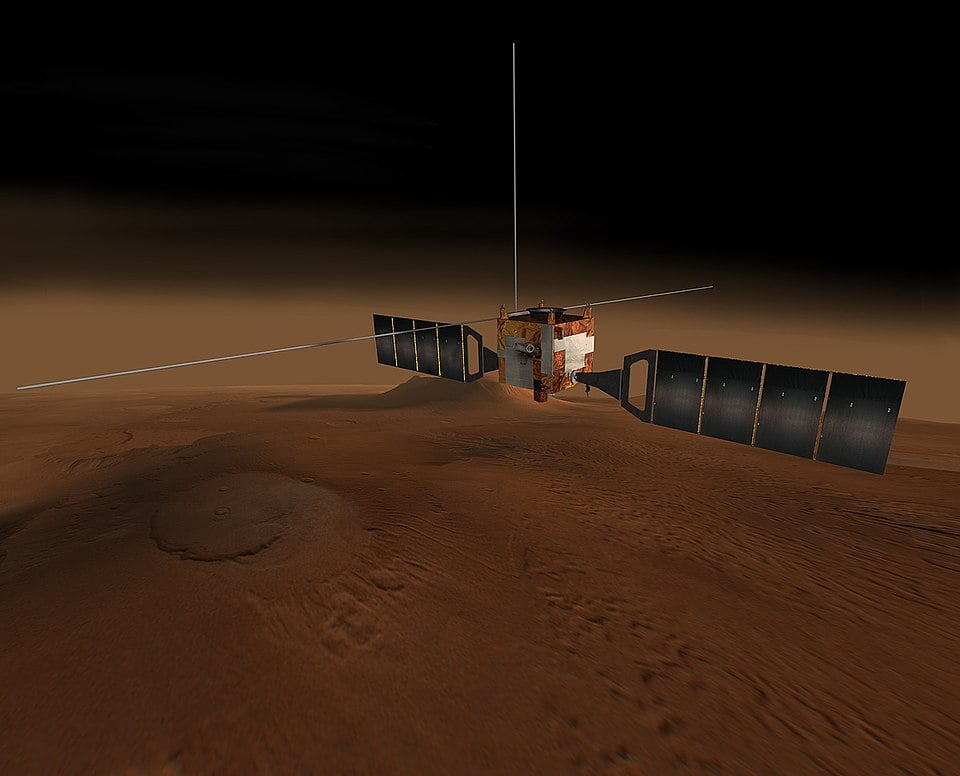 Image of ESA's Mars Express spacecraft (Credit : NASA/JPL/Corby Waste)
The spacecraft’s High Resolution Stereo Camera imaged a region almost the size of Belgium at the northern end of the Eumenides Dorsum mountains, revealing features technically known as yardangs. These elongated ridges and mounds stand like sentinels where surrounding terrain has been blasted away. Each one tells a story of relentless erosion.
The process begins when Martian winds pick up sand grains and accelerate them across the surface. These airborne particles act as abrasive particles, exploiting weaknesses in soft sedimentary rock layers. Where cracks or faults exist, the sand laden winds dig deeper, wearing away material grain by grain, millennium after millennium. What remains are the harder, more resistant portions of rock, the yardangs themselves.
What makes these particular yardangs especially revealing is their uniform orientation. Every ridge slants in the same direction, curving in from the southeast, recording the prevailing wind direction like a geological weather vane. This consistent pattern demonstrates that Martian winds, while thin compared to Earth’s atmosphere, blow with remarkable persistence over geological timescales.
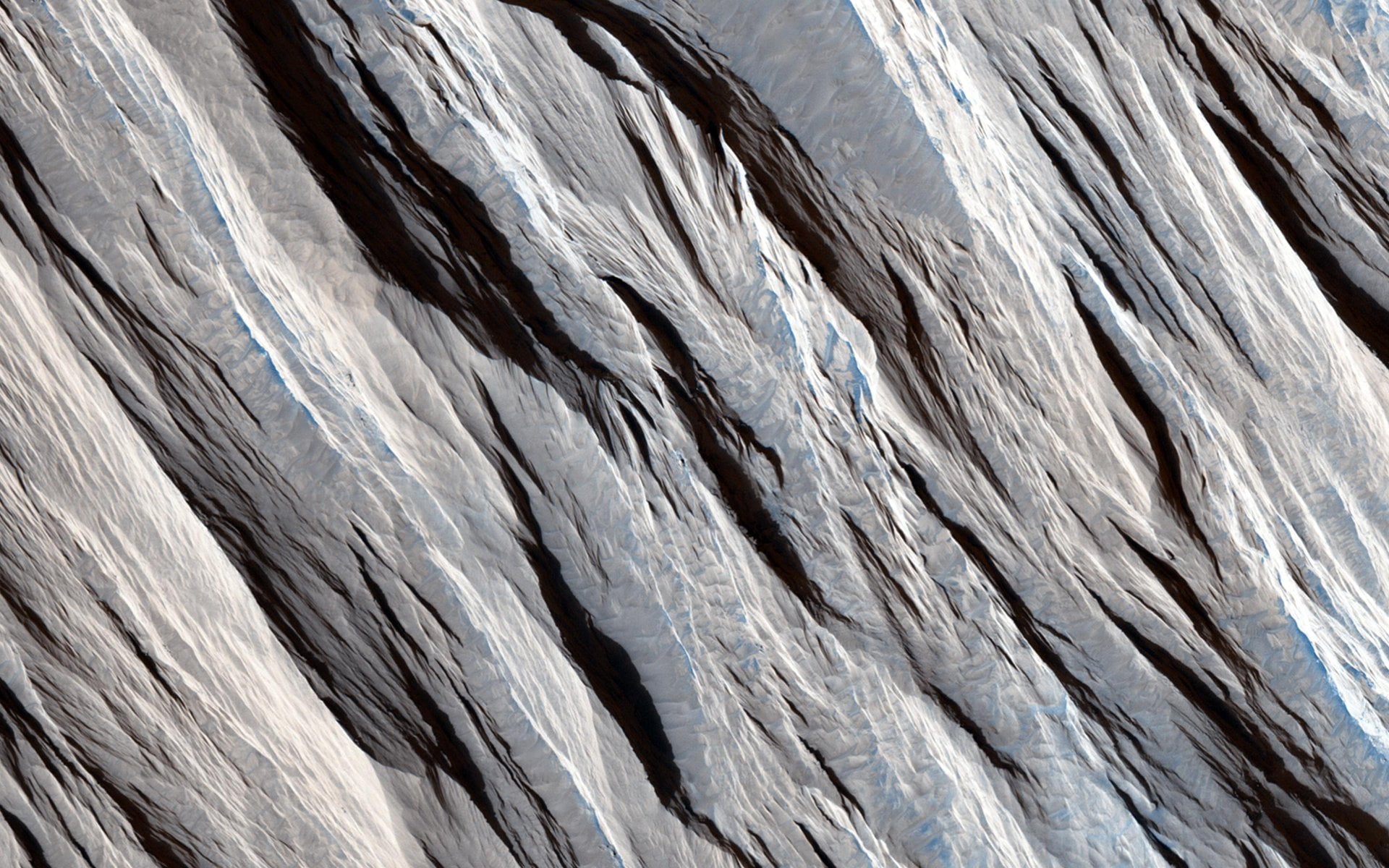 The long straight ridges seen in this image from NASA's Mars Reconnaissance Orbiter are called yardangs and they form on Mars when the wind strips away the inter-ridge material. (Credit: NASA/JPL-Caltech/Univ. of Arizona)
The region captured by Mars Express represents a fascinating convergence of Martian geological processes. Alongside the wind carved yardangs sits a relatively fresh impact crater, its wavy edged blanket of ejecta splayed across the surface from the violence of asteroid impact. More subtle but equally intriguing is what planetary scientists call “platy flow”, an ancient lava that crusted over as it moved across the terrain, with continued flow beneath breaking the solid surface into sections that drifted like ice flows on Earth’s polar seas.
These three processes: wind erosion, impact cratering, and volcanic activity, meet in a single frame, each representing fundamental forces that have shaped the Red Planet. The yardangs are thought to have formed atop the platy flow, suggesting they’re relatively recent additions to this ancient volcanic landscape.
Mars Express has been documenting these diverse Martian terrains since 2003, building a wonderful portrait of our planetary neighbour over more than two decades of continuous observation. Each new image adds detail to our understanding of how wind, water, volcanism, and impacts have collaborated to create the Mars we see today.
Source : Sandblasting on Mars