Universe Today
For the past decade, astronomers thought they had a reasonable answer to that question. Around stars like our Sun, the two dominant planet types are sub-Neptunes, worlds resembling a shrunken Neptune, with thick gaseous envelopes and super-Earths, rocky planets up to ten times the mass of our own. Surveys had found them everywhere, orbiting star after star, and the assumption quietly took hold that these planets must be equally widespread across the Galaxy as a whole.
New research from McMaster University has just demolished that assumption. The problem with the earlier picture was that the stars and planets studied were not fully representative of the plethora of stars in the Galaxy. Sun like stars for example, for all their familiarity, are actually a minority in the Milky Way. The most numerous stars in our Galaxy are mid-to-late M dwarfs (red dwarfs), small, dim, and cool, ranging from just eight to forty percent the size of our Sun. For years, their faintness made them almost impossible to study in detail, leaving a gaping hole in our understanding of where planets come from.
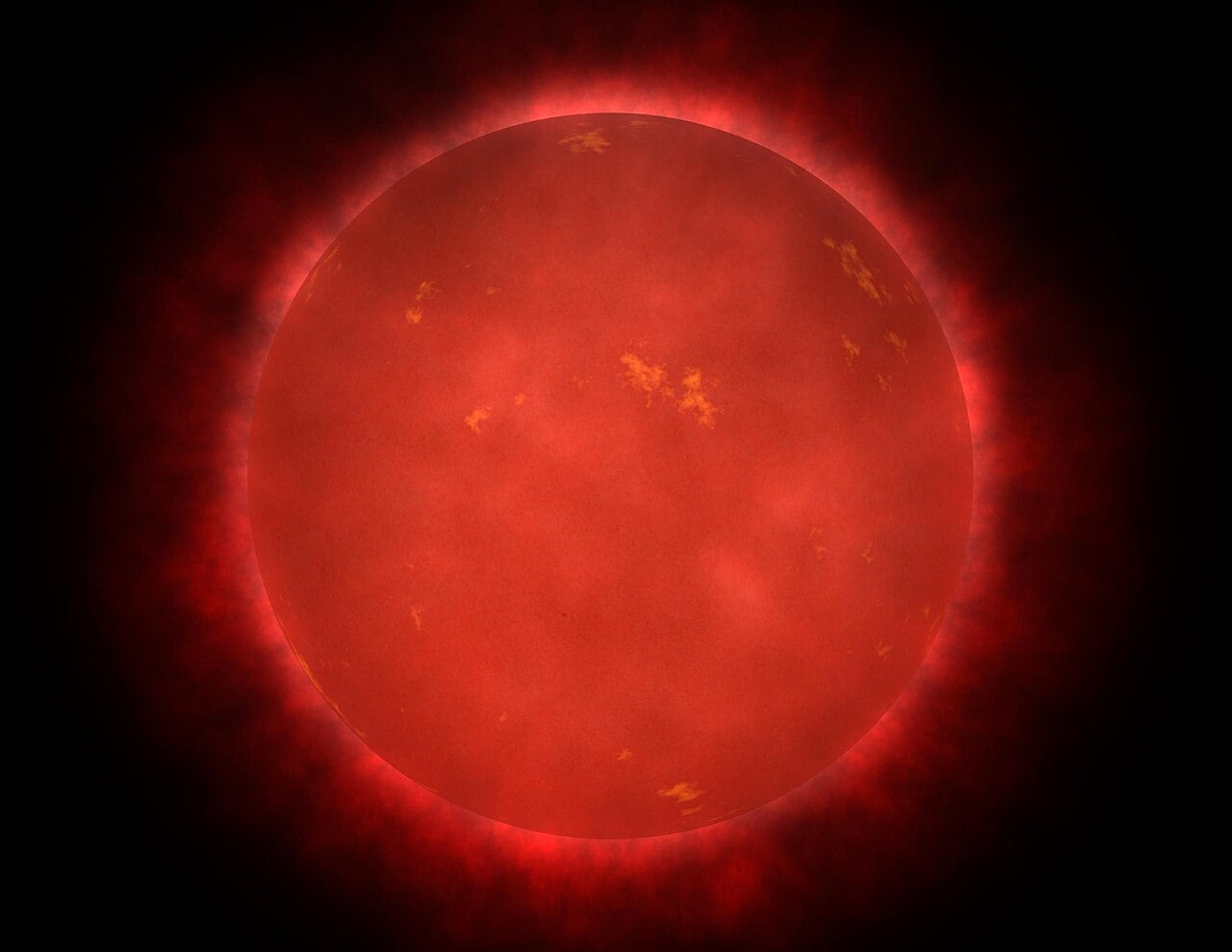 Artist's conception of star SO25300.5+165258 which is an m-type star or red dwarf about 7.8 light years from the Sun (Credit : NASA/Walt Feimer)
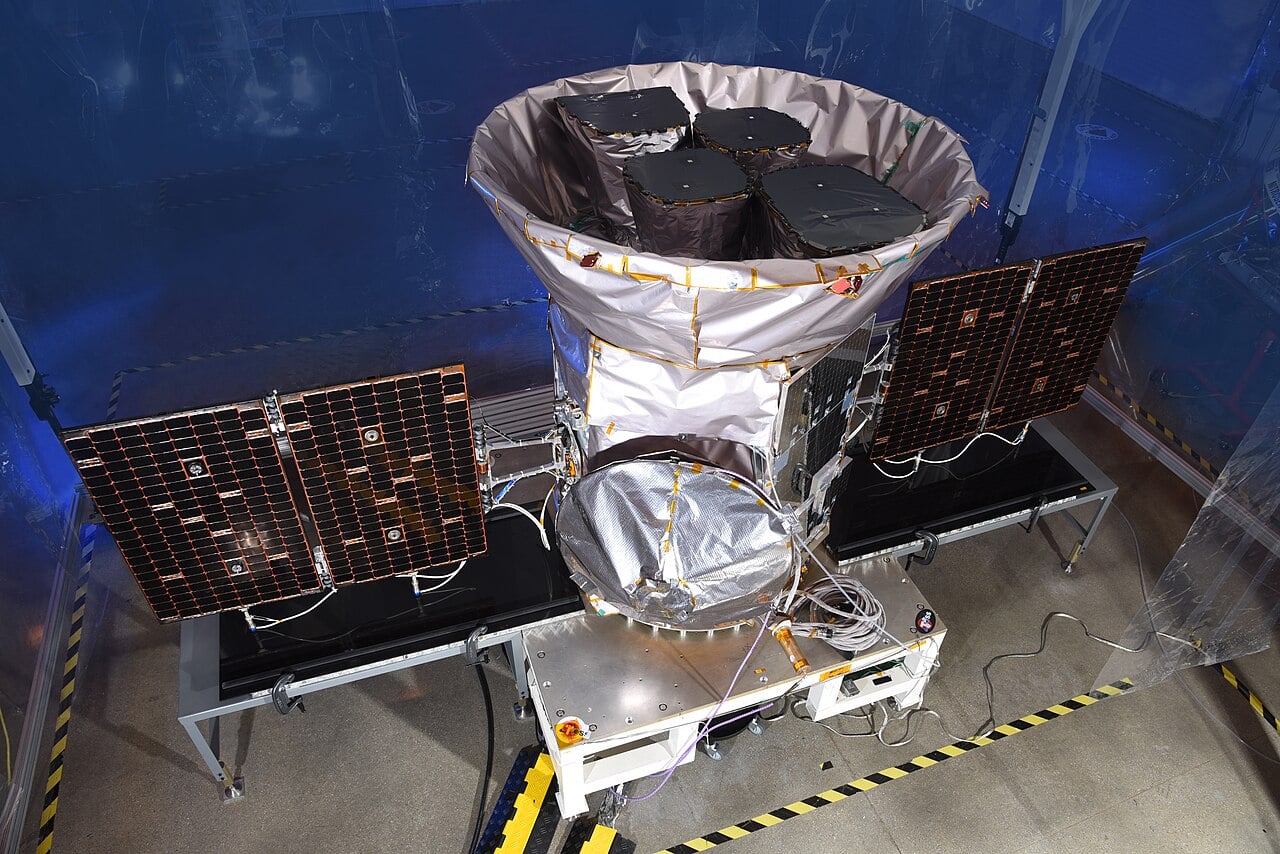
NASA's Transiting Exoplanet Survey Satellite, TESS, changed that. By scanning a fresh patch of sky every 28 days and building up a full sky survey over 26 months, TESS delivered an unprecedented view of these elusive stars and whatever might be orbiting them. PhD student Erik Gillis and his supervisor Ryan Cloutier, Canada Research Chair in Exoplanetary Astronomy, used that data to look directly at what planets these stars actually host.
They discovered, around mid-to-late M dwarfs the sub-Neptunes effectively seem to have vanished, they just weren’t there. These stars produce super-Earths in abundance, but the gas shrouded worlds that dominate planetary census counts around Sun like stars are almost entirely absent.
The leading explanation for why super-Earths and sub-Neptunes exist as distinct populations has long been photoevaporation, the intense radiation from a young star blasting away a planet's atmosphere, stripping a sub-Neptune down to a bare rocky core. M dwarfs are energetically violent, particularly in their youth, and should theoretically be capable of doing exactly that. But the near complete disappearance of sub-Neptunes goes far beyond what photoevaporation alone can explain. The more likely answer, the McMaster team suggests, is that planet formation around these stars favours water rich worlds rather than gas shrouded ones in the first place.
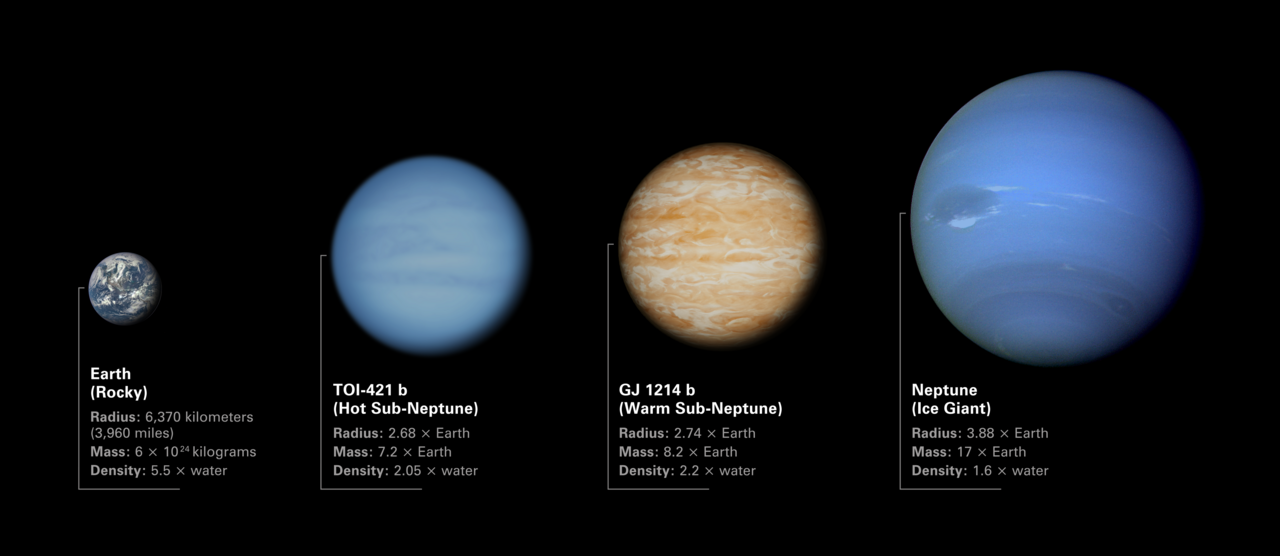 Illustration comparing the sizes of sub-Neptune exoplanets TOI-421 b and GJ 1214 b to Earth and Neptune. Both TOI-421 b and GJ 1214 b are in between Earth and Neptune in terms of radius, mass, and density. The low densities of the two exoplanets indicates that they must have thick atmospheres (Credit : NASA, ESA, CSA, Dani Player (STScI))
The findings, published in the Astronomical Journal, arrive at a remarkable moment in the history of the field. The first exoplanets were confirmed just thirty years ago and, barely a blink of an eye later in astronomical terms, fundamental discoveries are being made. Missions like TESS are allowing researchers to compare thousands of planetary systems at once, uncovering patterns that no one anticipated. As Gillis put it, if we want to understand the origins of planets and the origins of life, we need a complete picture of how planets form and what they are made of and the most common stars in the Galaxy have barely featured in that picture until now.
Source : The most common planets in the galaxy don't appear around the most common stars