Universe Today
Every year, thousands and thousands of satellites get launched into orbit around our planet. The result is an increasingly congested "space" above Earth populated by equipment that provides services to the surface. At the same time, these satellites affect ground-based astronomy and create potential for damage when they eventually fall through Earth's atmosphere to the surface. In addition, near-Earth space hosts old rocket bodies and other materials (cameras, gloves, etc.) left in orbit by past missions.
Artificial objects in orbit aren't the only things "out there". Near-Earth asteroids — usually referred to as NEOs — can cross Earth's orbit. We also contend with smaller bits of debris that form meteors. Eventually, all these things fall to Earth or, in the case of NEOs, their trajectories can bring them uncomfortably close to intersecting the planet. All of these objects need to be monitored, not only for their own safety and health, but for ours. Their orbits need to be tracked and characterized so that fair warning can be given when or if a piece of space "stuff" is coming to Earth.
Incoming!
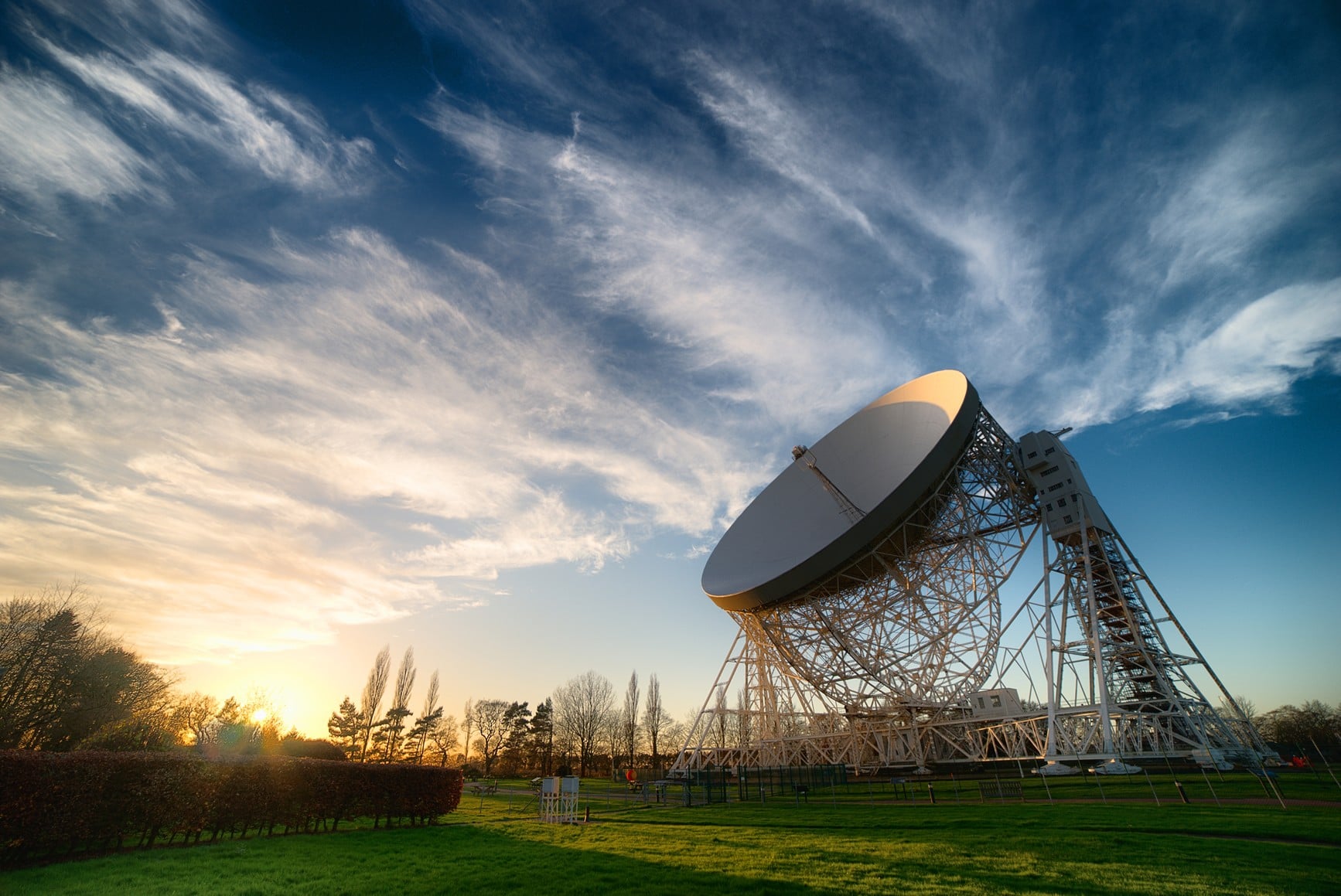
That's where a monitoring array called the Long Baseline Multistatic Radar (LMBR) will come in useful. A team of radio astronomers and radar experts found a way to use radio telescopes to track satellites and other objects in orbit and demonstrated it recently for partners in Australia, the United States, and the United Kingdom. In particular, they've linked the 76-meter Lovell Telescope at Jodrell Bank in England, along with other antennae in the e-MERLIN array, to track objects in space for what's called Space Domain Awareness. A research team tested the concept in September 2025 by measuring and tracking 20 distinct rocket bodies, using the NASA Deep Space Network antenna in Canberra, Australia, the Australian Compact Telescope Array and other antennae in Australia, and installations in Tasmania.
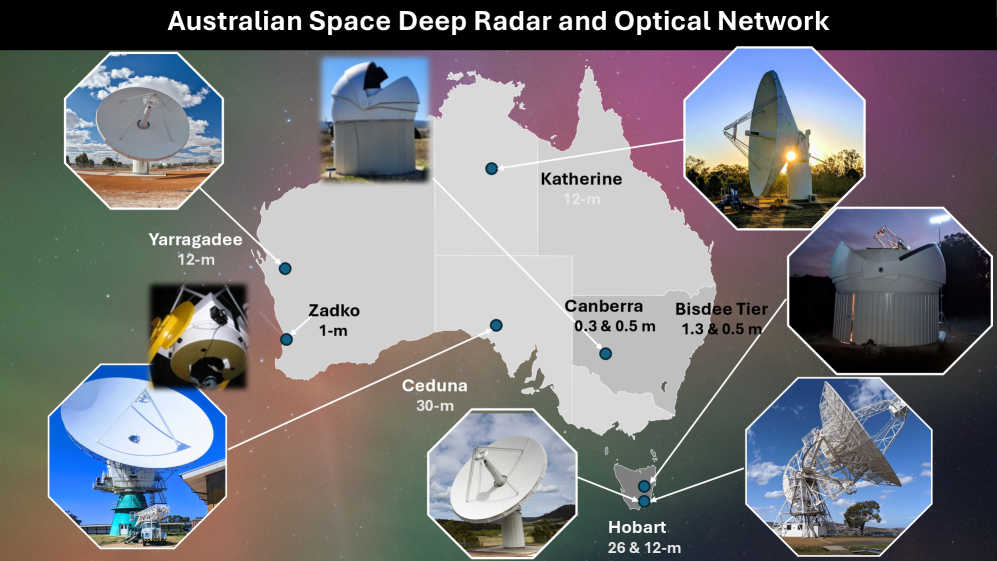 The network used to test the concept of distributed antennas used for bi-static radar observations of space debris. Courtesy Calves, et al. 2025
They performed micro-Doppler analysis (essentially using the Doppler effect) to measure axial rotation signatures of the rocket bodies. That let them determine rotation periods, object dimensions, surface characteristics, and mass distribution parameters with enhanced accuracy in orbital refinement. The team then used advanced imaging reconstruction techniques to generate shapes of the targets. They described their results in a paper, showing successful determination of debris rotation periods with second-level precision, dimensional estimates within 10% accuracy compared to known specifications, and improved orbital parameter determination reducing position uncertainties by up to 30%. That level of accuracy helps determine any threats from incoming asteroids or satellites re-entering the atmosphere.
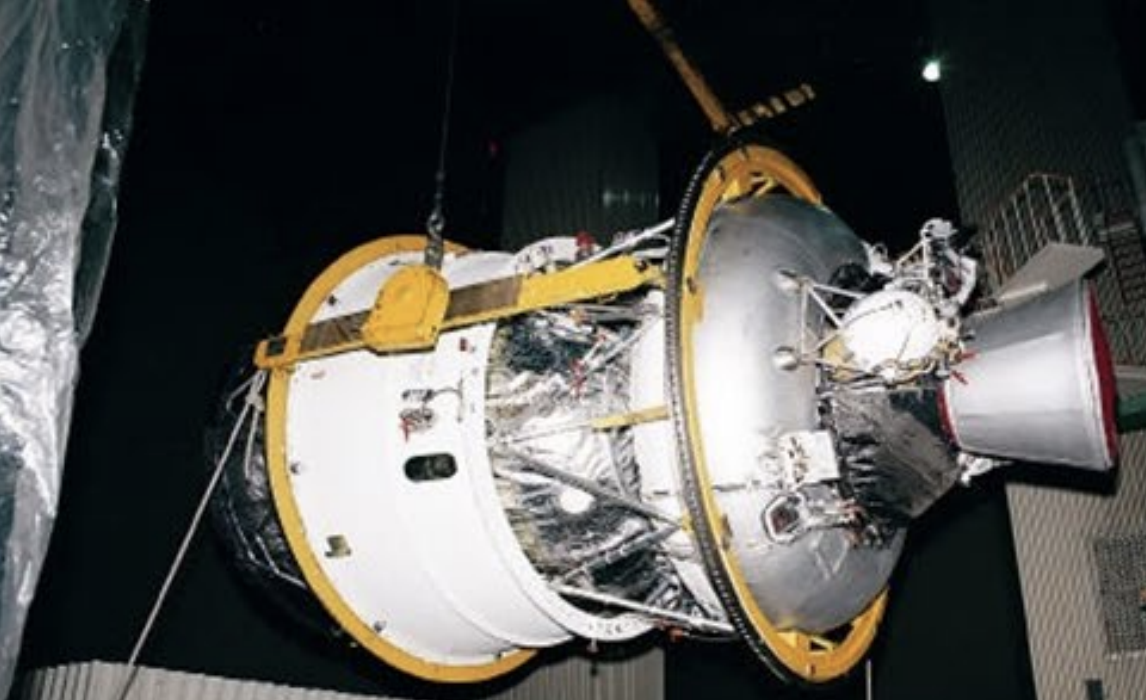 The network test tracked rocket bodies such as SL-12, the fourth stage of a Russian Proton K launch vehicle. There are currently 25 of these in geosynchronous orbit. Courtesy Calves, et al. 2025
Radar Signatures Track Objects in Real Time
Radar is a powerful tool for monitoring objects in orbit, and it's widely used on Earth to track aircraft. For example, radar facilities send signals out that bounce off of aircraft and then return data to the radar system. Depending on the type of signals used and radar modes, tracking stations can get information about the type of aircraft, who's operating it, and other properties such as size and shape. Radar has also been used to study the surface of planets, asteroids, moons, and other solar system objects. For example, scientists have mapped Venus's surface features using radar, particularly on the Magellan spacecraft. As another example, the Jovian moon Europa was mapped using radar in the 1980s and 1990s.
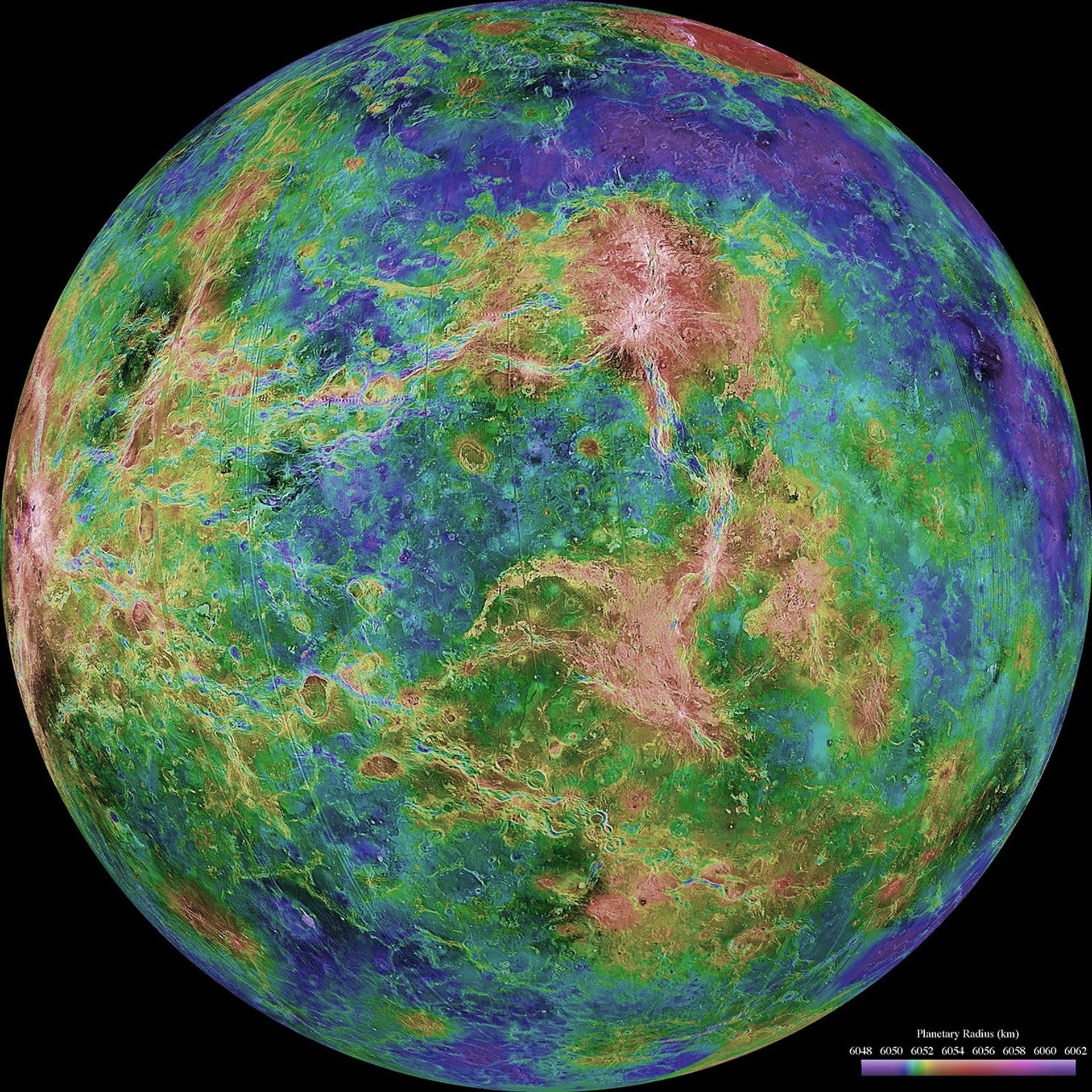 The Magellan did radar scans as it orbited Venus in the 1990s to produce this map. Courtesy NASA.
There are some limitations to using conventional radar for monitoring space objects. Tracking a satellite in a geostationary orbit, for example, requires higher-power, more sensitive antennae than those used to follow aircraft on Earth or spacecraft coming back from a mission. This is where radio telescopes like those at Jodrell Bank come in handy. They're built to receive natural signals from very distant objects ranging from the solar system to other stars and galaxies. In addition, such installations as the Deep Space Network are built to relay information back and forth between spacecraft out in the solar system. According to Simon Garrington of Jodrell Bank Observatory, including the Lovell Telescope is a big step forward. “The 76-m Lovell Telescope at Jodrell Bank makes a superb radar receiver for this type of work," he said. "We are very keen to realise its full potential in contributing to monitoring objects in orbit, protecting UK assets in space, and making space safer. Our e-MERLIN array is also being used in this work and is a unique UK capability for high-precision measurements of objects in orbit”.
These uses (and more) are a good reason to bring radio telescopes into the mix. Essentially, they'd be used as geographically distributed radar receivers, which would enable the detection of objects ranging of nearly all sizes to be detected at great distances. All the data from the radar echoes received by the radio telescopes would be collected and analyzed in real time. The UK Space Agency recently demonstrated this live tracking capability for stakeholders such as the government, defense agencies, and industrial partners. It's the first time such tracking techniques performed by radio telescopes have been used. The UK, United States, and Australia are expected to benefit from the additional "radar firepower". Details of the radar network studies can be found in the paper cited below.
Will Jodrell Bank Be Part of this Moving Forward?
Ironically, the successful use of Jodrell Bank as a part of the LBMR tracking network could be in jeopardy if recently announced budget cuts to UK science occur. Media stories report that funding cuts will force the closure of parts of the Jodrell Bank Observatory sometime in 2028. The United Kingdom Research and Innovation offices announced cuts that will force the shutdown of the e-MERLIN telescopes, including the Lovell radio antenna. The facility itself will remain open in order to host the Square Kilometer Array Observatory headquarters, and other programs of higher importance to the UK science community. Of course, astronomers are looking for alternative funding sources in the meantime.
These cuts are part of a larger effort to reduce funding to science across UK science facilities. The UK science community is heavily involved in consortia and projects outside the country, providing instruments and research for such facilities as CERN, the upcoming Vera C. Rubin Observatory, and others. In particular, the cuts will force the UK to cut its participation in the Rubin Telescope by as much as 20 percent. If and when e-MERLIN is shut down, it will definitely have an effect on the observatory's participation in LMBR, although it's not yet clear what the extent of those effects will be.
For More Information
Jodrell Bank Demonstrates Live Radar Observations of Satellites and Space Debris
Micro-Doppler Signatures and Object Characterisation of Space Debris with Radio Telescopes