Universe Today
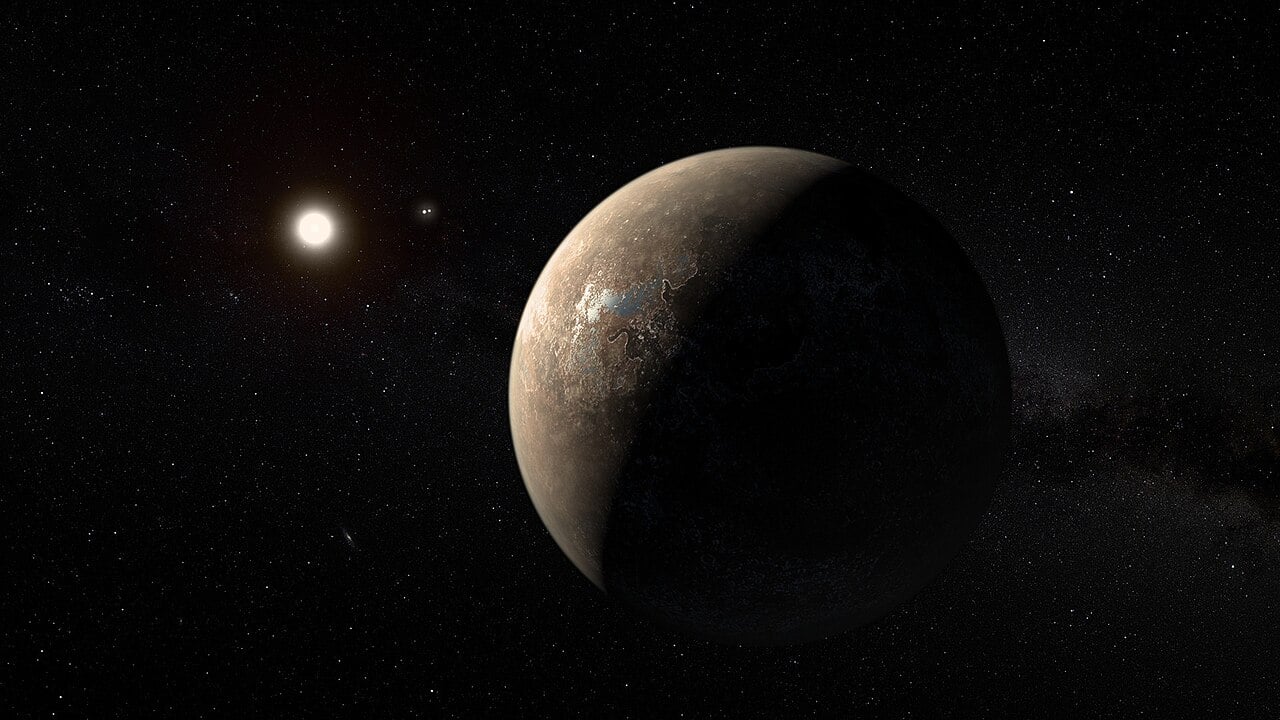
Imagine trying to spot a single firefly orbiting a lighthouse from hundreds of kilometres away. That's essentially the challenge astronomers face when attempting to study Proxima b, an Earth sized exoplanet orbiting Proxima Centauri, the closest star to our Solar System. The star shines 10 million times brighter than its planet, drowning out any hope of detecting the faint light reflected from that distant world. Now scientists at the University of Geneva have successfully tested key components of an instrument designed specifically to solve this seemingly impossible problem.
The RISTRETTO spectrograph, which will eventually be installed on the Very Large Telescope in Chile, represents a new approach to exoplanet observation. Rather than simply building bigger telescopes or better cameras, the team has developed sophisticated optical tricks to mask the star's overwhelming brilliance and reveal the planets hiding in its glare.
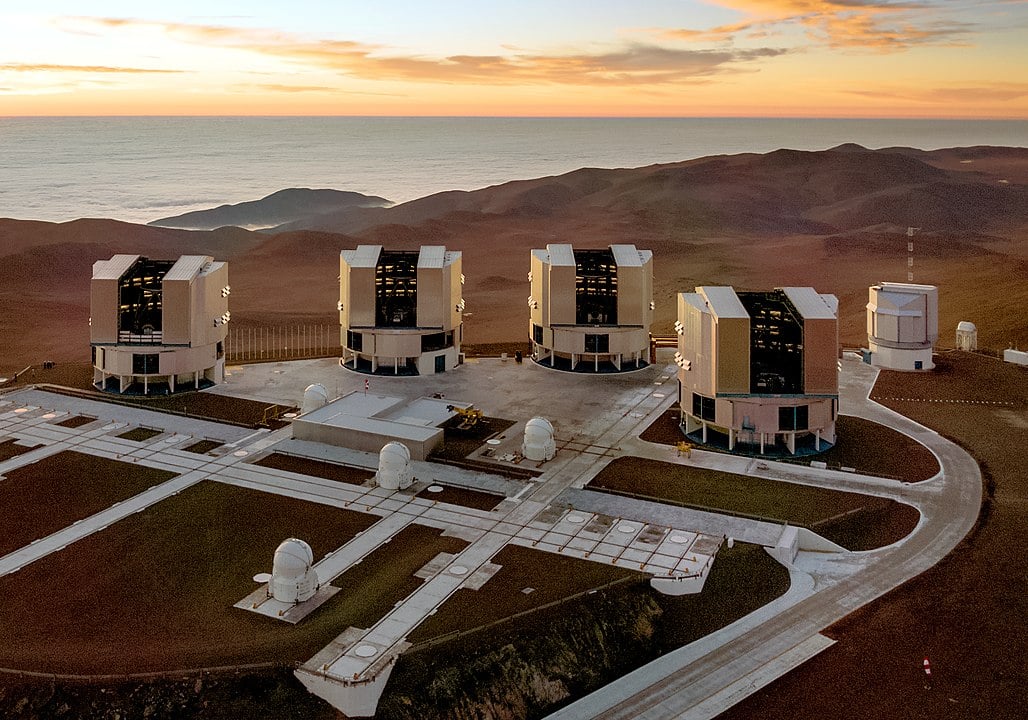 The Very Large Telescope installation in Chile (Credit : ESO)
The heart of the system is a coronagraphic Integral Field Unit, a device that sounds complicated but performs an wonderful function. It uses an array of hexagonal lenses to capture incoming light, then routes that light through optical fibres while manipulating its properties to partially "extinguish" the star. What remains is the much fainter signal from any planets orbiting nearby. Nicolas Blind, a research engineer who led development of this component, reports that the prototype performed exactly as expected during recent tests at Geneva Observatory, confirming the technology will work when scaled up for the full instrument.
The instrument also requires extreme adaptive optics to compensate for distortions caused by Earth's atmosphere. Air currents and temperature variations constantly bend and blur starlight, the same phenomenon that makes stars appear to twinkle. For precision work like detecting exoplanets, these distortions must be corrected in real time. The RISTRETTO team successfully tested several components of this system at France's Haute-Provence Observatory in October.
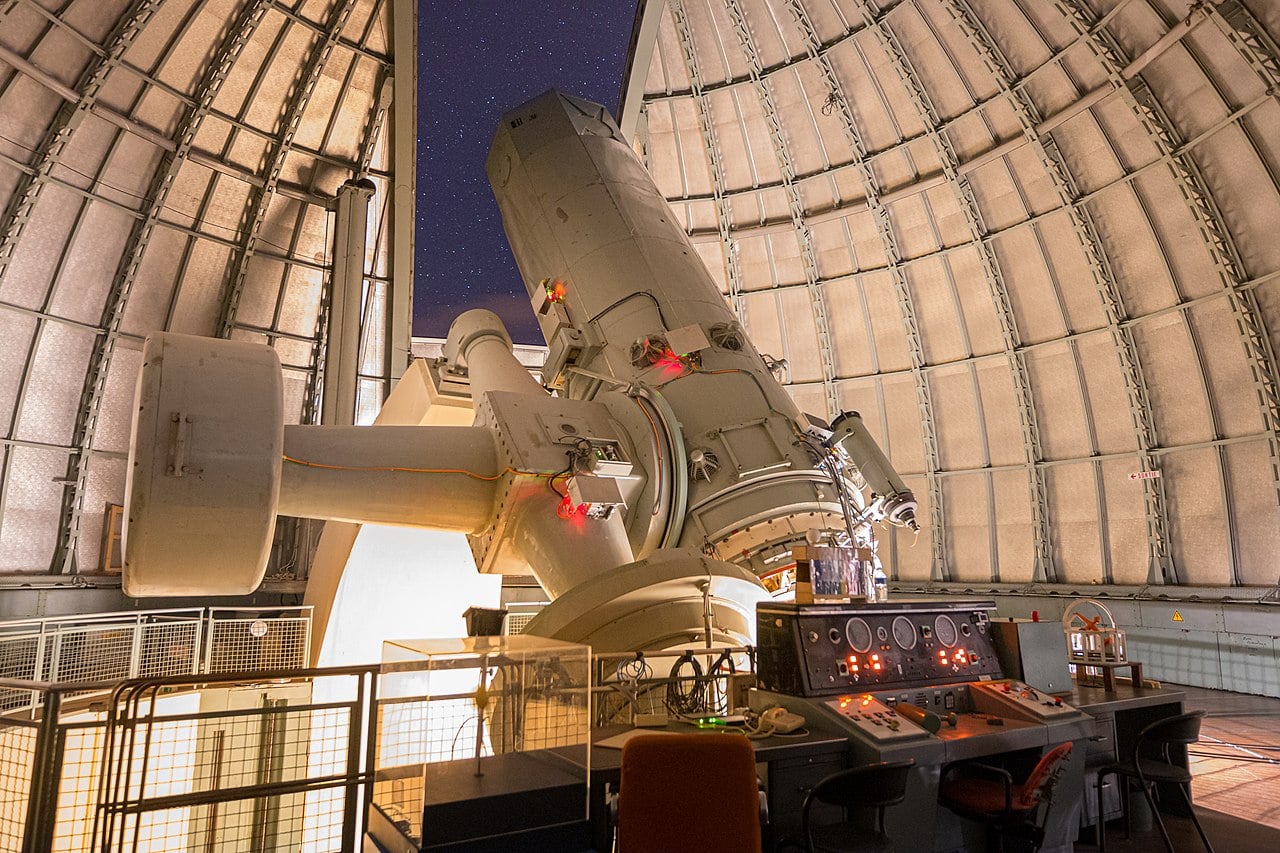 One of the telescopes at the Haute-Provence Observatory in France (Credit : José Rodrigues)
With these technical validations complete, researchers could model the full instrument's capabilities using computer simulations. They fed the simulation synthetic observations of Proxima Centauri and its planet to see whether RISTRETTO could pick out the planetary signal. The results exceeded expectations. With just 55 hours of observation time on the Very Large Telescope, the instrument should be able to detect Proxima b. With 85 hours, it could potentially identify signs of oxygen or water in the planet's atmosphere.
That last capability matters enormously. Proxima b orbits within its star's habitable zone, the region where temperatures might allow liquid water to exist on a planet's surface. The world is roughly Earth-sized and receives similar amounts of starlight to what Earth gets from the Sun. Whether it actually harbours water, maintains an atmosphere, or supports any form of life remains completely unknown. RISTRETTO won't answer all those questions, but detecting atmospheric oxygen or water vapour would represent a significant first step.
The project received financial backing from Swiss watchmaker Swatch earlier this year and aims for installation on the Very Large Telescope by 2030. Beyond studying Proxima b, RISTRETTO will serve as a testbed for techniques that will eventually be applied to second generation instruments on the Extremely Large Telescope, the 39 meter behemoth currently under construction in Chile. That telescope will have the resolution to study exoplanets around more distant stars, but the lessons learned from observing our nearest neighbour will prove invaluable for designing those future instruments.
Source : Conclusive tests for the RISTRETTO exoplanet explorer