 Universe Today
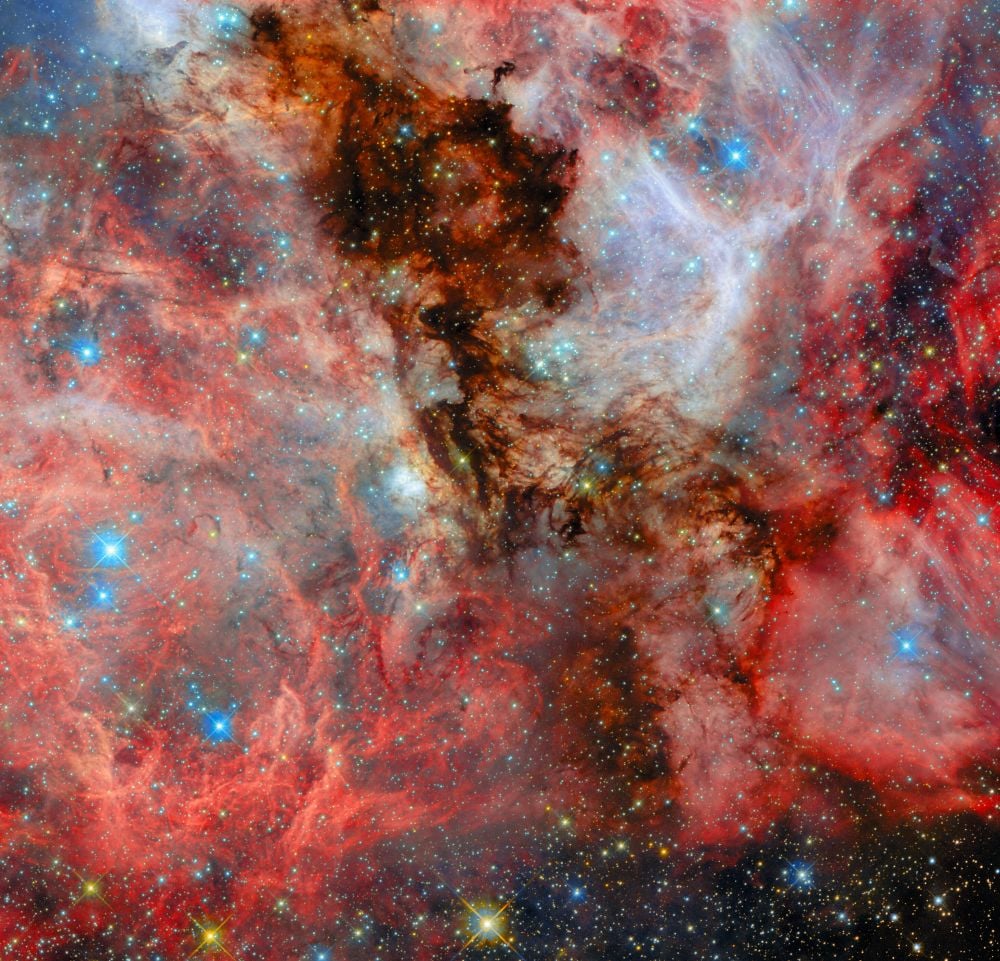
The N159 star-forming complex in the Large Magellanic Cloud is a stunning example of an active star formation region. Though its much larger neighbour, the Tarantula Nebula, captures more attention (thanks to stunning images like the one from the JWST) N159 is gorgeous in its own right.
N159 spans 150 light-years and contains many hot young stars. It's one of the largest star-forming regions in the LMC, though this image shows just a small part of it. A complete count of its stars is near impossible, since much of the region is obscured by thick dust.
In star-forming regions like this, radiation and winds from the star sculpt thick clouds of hydrogen gas into eerie, almost supernatural arrangements. As they shine, they also ionize the hydrogen, giving the scene an irridescent, red glow, that's both inviting and frightening.
The brightest regions in the image are where hot young stars are concentrated. They're carving out cavernous openings in the gas and in some cases appear to be blowing bubbles. The dark cloud that stretches diagonally from the top left to the bottom right is thick gas and dust lit up from behind by stars. The clouds and the bubbles illustrate the powerful stellar forces that shape nebulae and give them their character.
N159 was also featured in an ESA/Hubble Picture of the Week in 2025. That image showed a different part of the region, and emphasized the bubble-blowing behaviour of young stars. While some of the stars are obscured by thick clouds, others have carved out reddish bubbles with their stellar feedback.
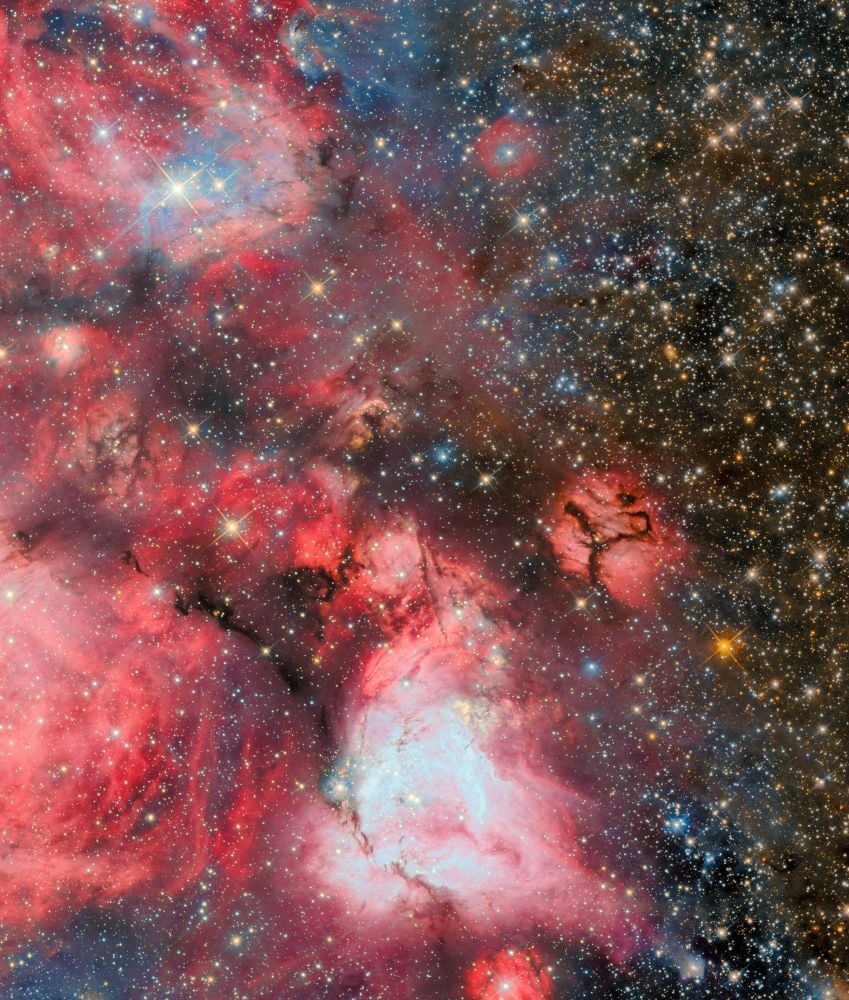 This image was an ESA/Hubble Picture of the Week in 2025. It shows another part of N159, and shows young stars blowing characteristic bubbles in the gas with their stellar feedback. Image Credit: ESA/Hubble & NASA, R. Indebetouw. LICENCE: CC BY 4.0 INT or ESA Standard Licence
The Hubble imaged N159 a decade ago, too, in another Picture of the Week. Though it's shown in a different colour scheme, it illustrates the same ridges, wisps, and bubbles of gas being sculpted by young stars and their powerful UV radiation. That image also shows the small Papillon nebula, a butterfly shaped nebulosity. It's classified as a High-Excitation Blob, and is associated with the early stages of massive star formation. These dense blobs only ever form inside or adjacent to HII regions, and are usually no larger than 9 light-years across.
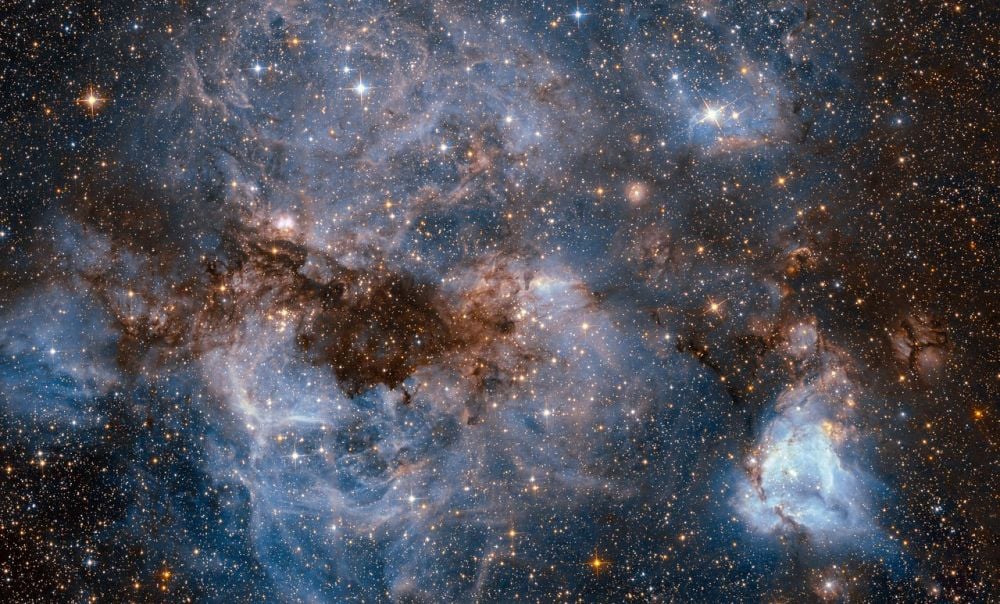 This is a Hubble Picture of the Week from 2016 showing N159 in a different light. The Papillon Nebula (or High Excitation Blob) is small and red, and is located in the upper left quadrant, directly above the dark cloud complex. Image Credit: ESA/Hubble & NASA
Star-forming regions like N159 keep attracting our attention because they're so visually fascinating. The turbulence and radiation are on a massive scale, almost impossible to appreciate. But they're also scientifically important since so much goes on there.
The Hubble deserves a pat on the back for bringing astronomers and the rest of us together.


