Universe Today
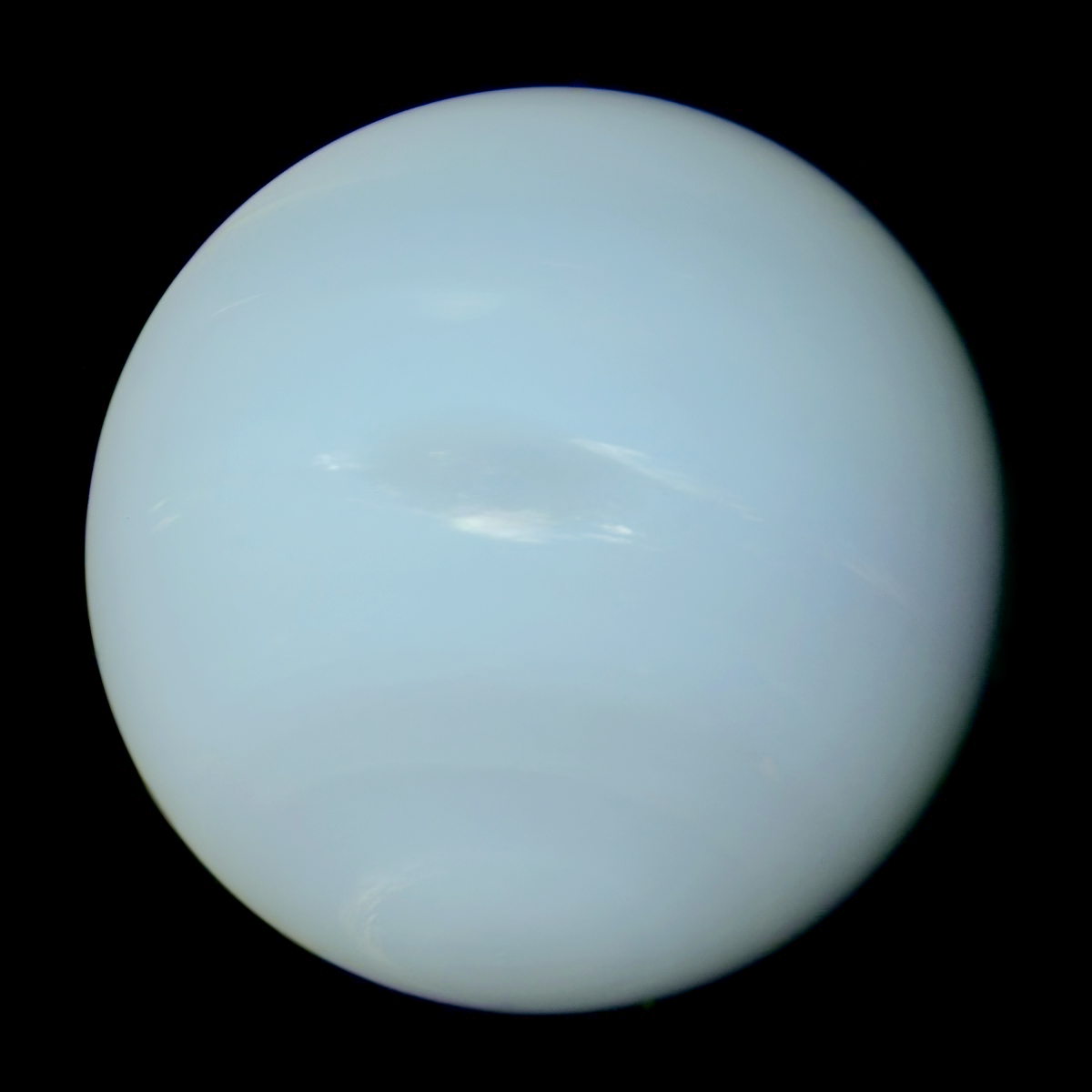
Neptune is the Solar System's most distant planet, a cold, blue ice giant sitting nearly 30 times further from the Sun than Earth. At that remote distance, temperatures plunge to nearly minus 200 degrees Celsius and a single year lasts 165 Earth years. Yet despite its isolation, Neptune is a world whipped by the fastest winds in the Solar System and home to one of its most bizarre moons.
Every planet in our Solar System has a tilt. Earth's 23 degree lean gives us our seasons while Uranus is so dramatically tilted it practically rolls around the Sun on its side. But Neptune's 28 degree axial tilt has quietly puzzled planetary scientists for decades. How did the outermost ice giant end up leaning at that particular angle? New research from Rodney Gomes at São Paulo State University suggests the answer lies with one of the strangest moons in the Solar System.
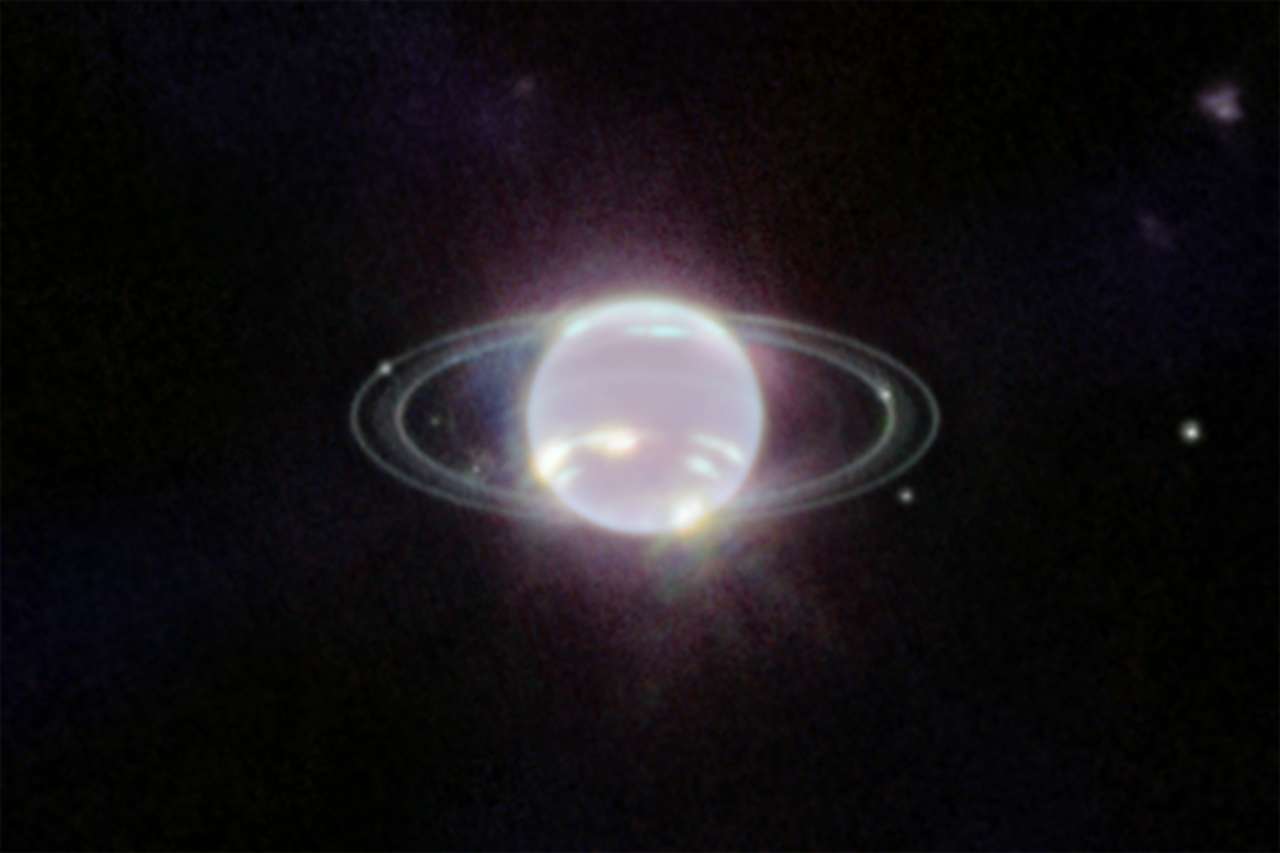 Rings of Neptune imaged by the James Webb Space Telescope's NIRCam instrument (Credit : NASA, ESA, CSA)
Triton is an oddity. It is the only large moon in the Solar System that orbits its parent planet in the wrong direction, moving backwards against Neptune's spin in what is known as a retrograde orbit. Triton is thought to have once been a dwarf planet from the Kuiper Belt, captured into Neptune's gravitational field at some point in its early history. The capture event set in motion a chain of consequences that, according to Gomes, may still be reshaping the Neptune system today.
The new research proposes that Neptune's current axial tilt resulted from the interaction between Triton's tidally evolving orbit and Neptune's spin axis, causing it to resonate with a specific Solar System frequency known as s8. In other words, as Triton slowly spiralled into its current orbit over millions of years, the gravitational tug of war between moon and planet effectively rocked Neptune off its original axis like a spinning top being nudged by a passing hand.
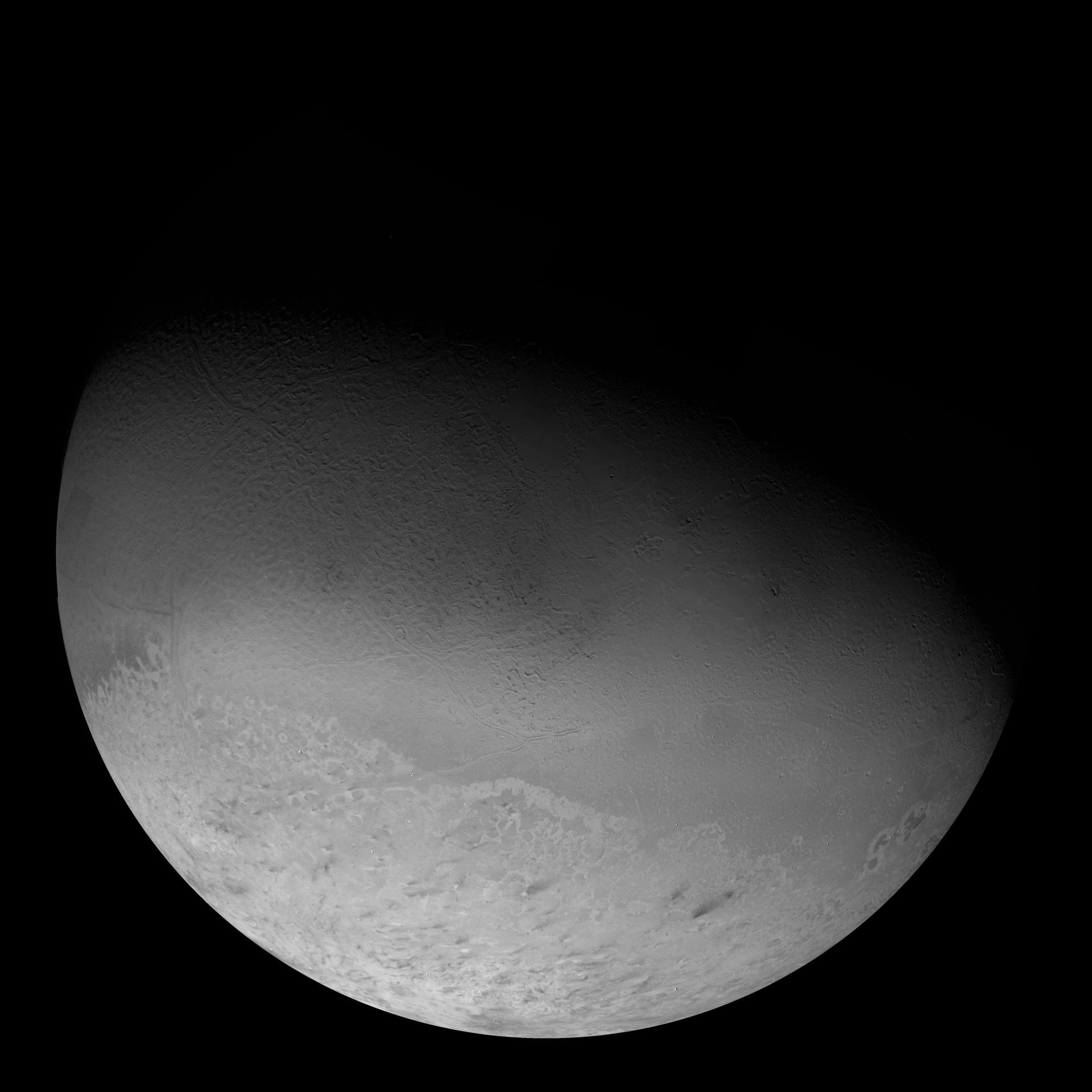 A full-disc mosaic of Triton (Credit : Michael T. Bland)
In the simulations, Triton initially occupies an inclined and highly eccentric orbit, gradually evolving through tidal interactions to its present path around Neptune. The results show that obliquities exceeding 50 degrees are possible in some cases, with nearly one in four simulations producing a tilt greater than 20 degrees, comfortably enough to account for Neptune's observed lean.
Triton's orbit is already closer to Neptune than our Moon is to Earth, and tidal interactions are causing it to spiral inward still further so predictions suggest that in around 3.6 billion years, Triton will pass within Neptune's Roche limit. At that point it will either collide with the planet or break apart to form a spectacular new ring system.
For now though, Triton continues its slow inward spiral, a captured wanderer still leaving its fingerprints on the planet it now calls home. If Gomes is right, it didn't just arrive in Neptune's neighbourhood it fundamentally changed it.
Source : Neptune's obliquity was likely engendered by Triton's tidal evolution