 Universe Today
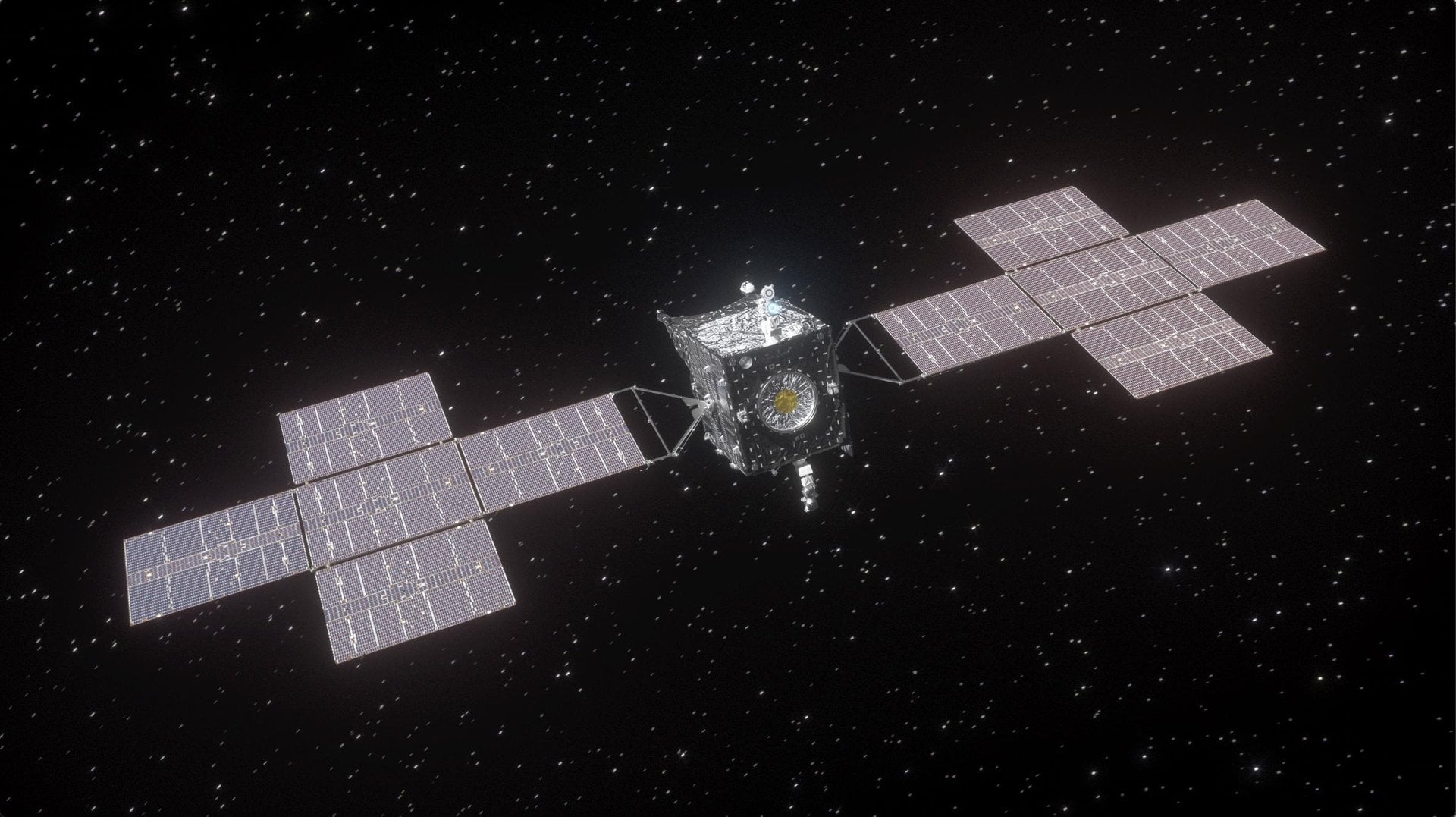
Asteroid mining companies are finally getting off the ground, and that is raising some concerns about the impact those activities will have on the space environment. A new paper published in Acta Astronautica from Anna Marie Brenna of the University of Waikato in New Zealand discusses a framework that she thinks might work to solve the legal challenges facing those who want to protect the space environment and those who want to exploit it.
The need for this discussion is quickly becoming more than a theoretical exercise. Asteroid mining companies like AstroForge and Karman+ have either already launched missions, or plan to in the next few years. And they are doing so on shoestring budgets compared to the large space agencies. AstroForge plans to land their next mission, Vestri, on a metallic asteroid, while Karman+ plans for their first mission to recover a multi-kilogram sample of an asteroid to prove that zero-gravity excavation is viable.
On Earth, mining is an extremely environmentally polluting industry. There’s debris, chemicals, and regulations in place to make sure the impact on the surrounding environment is minimized. One of the biggest appeals of asteroid mining is that it doesn’t have the same ecological considerations as Earth-based extraction does. So why would we need environmental regulations around it?
Podcast from the Environmental Law Institute that talks about the “legal void” of asteroid mining. Credit - Environmental Law Institute YouTube ChannelDr. Brennan argues two main points. First, asteroid mining can irreparably break an asteroid. Obviously that’s part of the point - extracting the materials in the asteroid is literally the purpose of asteroid mining. But in doing so, miners would destroy the “scientific, cultural, and potential economic value [of that asteroid] for future generations.” There’s certainly some debate about this, but she has a point in that asteroids could one day be the home to a large portion of humanity, if we convert them into rotating space habitats. While the cultural and scientific value of a random few kilometer long rock might be negligible, current law doesn’t differentiate between that and Psyche, the Queen of the Asteroid belt. Under current regulations, a company (or even an individual) could literally extra resources from anywhere on the largest asteroid, without any mechanism to adjudicate overlapping claims. Even the biggest proponents of space exploration would likely say that’s a bad idea.
The second point Dr. Brennan makes is about space debris. Her concern focuses on how the reckless extraction of one company could damage nearby assets or cause “accumulation of space debris that could impede future human activity”. This one is on a little trickier technical footing. Saying space is big is an understatement. Near-Earth Asteroids (NEAs), the most likely targets of early asteroid mining efforts, are normally tens of millions of miles apart from one another. Even if you broke apart thousands of asteroids and just dumped their contents into that space, it wouldn’t necessarily cause any significant increase in the debris field. And the likelihood of damaging any nearby assets is almost zero. Even in the asteroid belt, which is much more densely packed than the NEAs, the average distance between asteroids is around 1 million kilometers - 2.5 times the gap between the Earth and the Moon.
While debating over the validity of environmental concerns is an interesting philosophical exercise, someday there will have to be a legal framework developed to manage this system. The current mish-mash of regulations, such as the Outer Space Treaty (from 1967), the US Space Act of 2015, and the Moon Agreement of 1979, are contradictory, lack widespread support, and don’t encourage much accountability for the actions of any individual country or organization. In other words, it's a lawyer’s worst nightmare.
Fraser discusses how we might one day mine asteroids.Dr. Brennan suggests using a particular legal framework for a similar situation on Earth - the International Seabed Authority (ISA), which governs mineral extraction in international waters. The similarities are obvious - you could even argue that space is the ultimate “global commons” that treaties like the ISA are supposed to protect.
Unfortunately, nothing in the legal world is as simple as the engineering challenges of solving asteroid mining. The ISA has been tasked with developing “Draft Exploitation Regulations” to allow companies to mine the deep seabed for years. In 2021, the island nation of Nauru triggered a legal loophole demanding the rules be finalized within two years. Perhaps unsurprisingly given the state of global cooperation, they still aren’t. These struggles highlight the difficulties of getting the international community to agree on anything.
The framework Dr. Brennan suggests a new organization similar to the ISA that is charged with managing the outer space environment includes such political hot topics as environmental impact assessments and an adjudicatory body that would be the ultimate arbiter of disputes. While these sound great in theory, in practice the ISA is likely a more instructive example.
Technology might force the hand of the powers that be though. Get enough people up in space and actively mining, and there’s bound to be negative consequences for somebody that will kick the legal framework development into gear. For now, it’s still the wild west up there - and down here we’ll just have to wait and watch to see how it pans out.
Learn More:
A. M. Brennan - Regulating the environmental impact of asteroid mining: Toward an independent international monitoring mechanism
UT - A Pioneering Study Assesses the Likelihood of Asteroid Mining

