Universe Today
As a geeky kid, logic gates nearly broke me. AND, OR, NAND, NOR… I could just about wrap my head around them, but only just. I eventually got it but had I seen the description in the epic trilogy The Three-Body Problem by Liu Cixin then I might have got it much quicker. In the book, there is a beautifully described scene where millions of soldiers are arranged across a vast plain and made to act as human logic gates, physically forming a living, breathing computer. It makes what researchers at Georgia Tech have just achieved feel even more remarkable.
What has that got to do with space. Think about the last time your phone crashed and you lost something important. Annoying, right? Now imagine that happening 640 million km from Earth, on a spacecraft exploring Jupiter's moons, with no repair crew coming and a communication delay measured in hours. Suddenly, reliable data storage isn't just convenient, it’s everything.
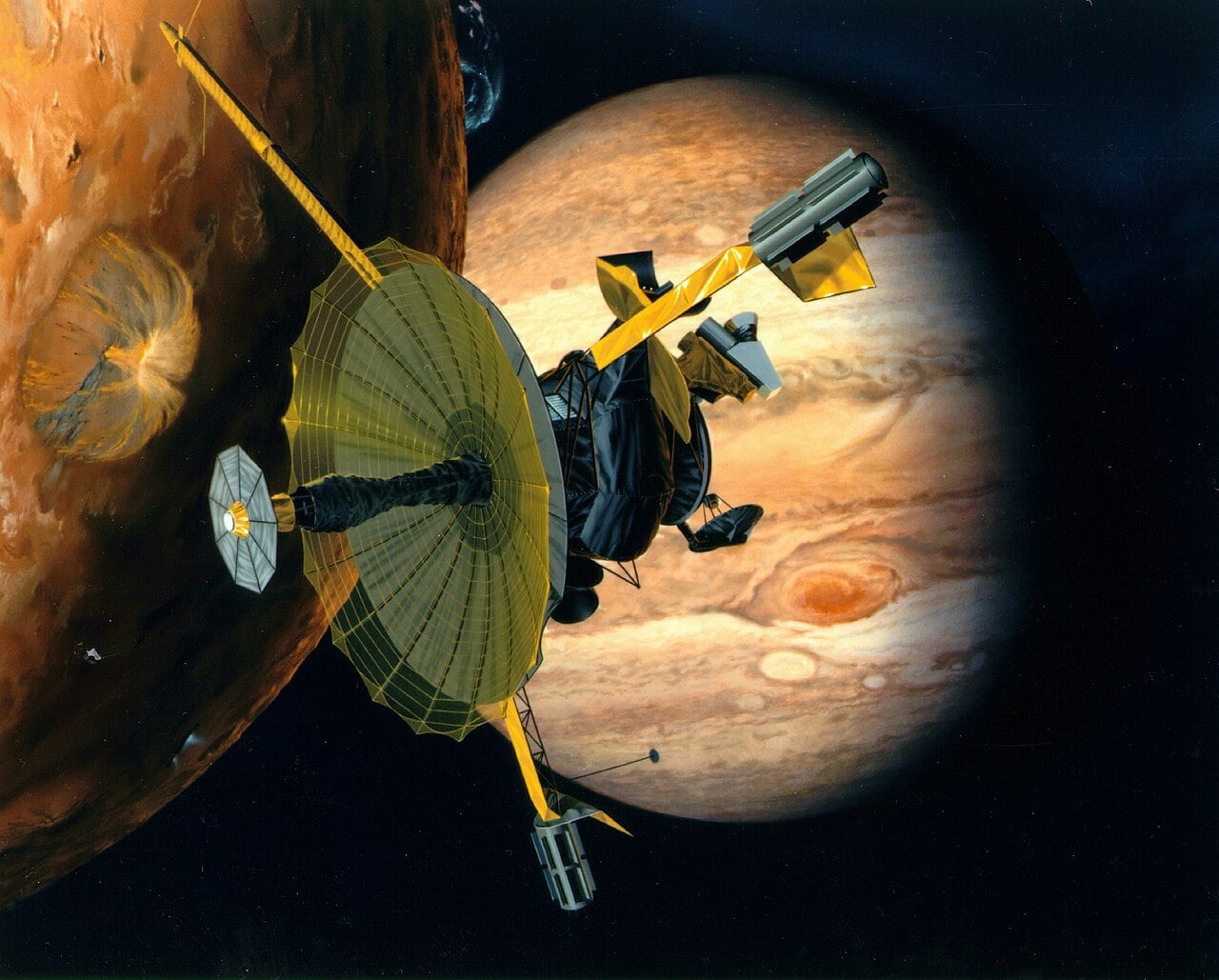 Artist's rendering of NASA's Galileo spacecraft flying past Jupiter's moon Io. Storing data on deep space missions has always been problematic (Credit : NASA)
That's the problem engineers and scientists have been wrestling with for years. NAND flash memory, the same technology that stores your photos, apps, and files on your phone is the current gold standard for high-density data storage in space. It's compact, it's powerful, and it works brilliantly here on Earth. But send it into deep space, and the radiation gradually eats away at it, flipping bits, corrupting data, and ultimately destroying the very information the mission was sent to collect.
Researchers at Georgia Institute of Technology think they've found the answer. Their solution lies in a phenomenon called ferroelectricity, the ability of certain materials to hold a permanent, spontaneous electric charge. Traditional flash memory stores data as trapped electrical charge, which radiation can knock loose relatively easily. Ferroelectric memory stores it differently, as something called polarisation within the material itself. And polarisation, it turns out, is extraordinarily difficult to disturb.
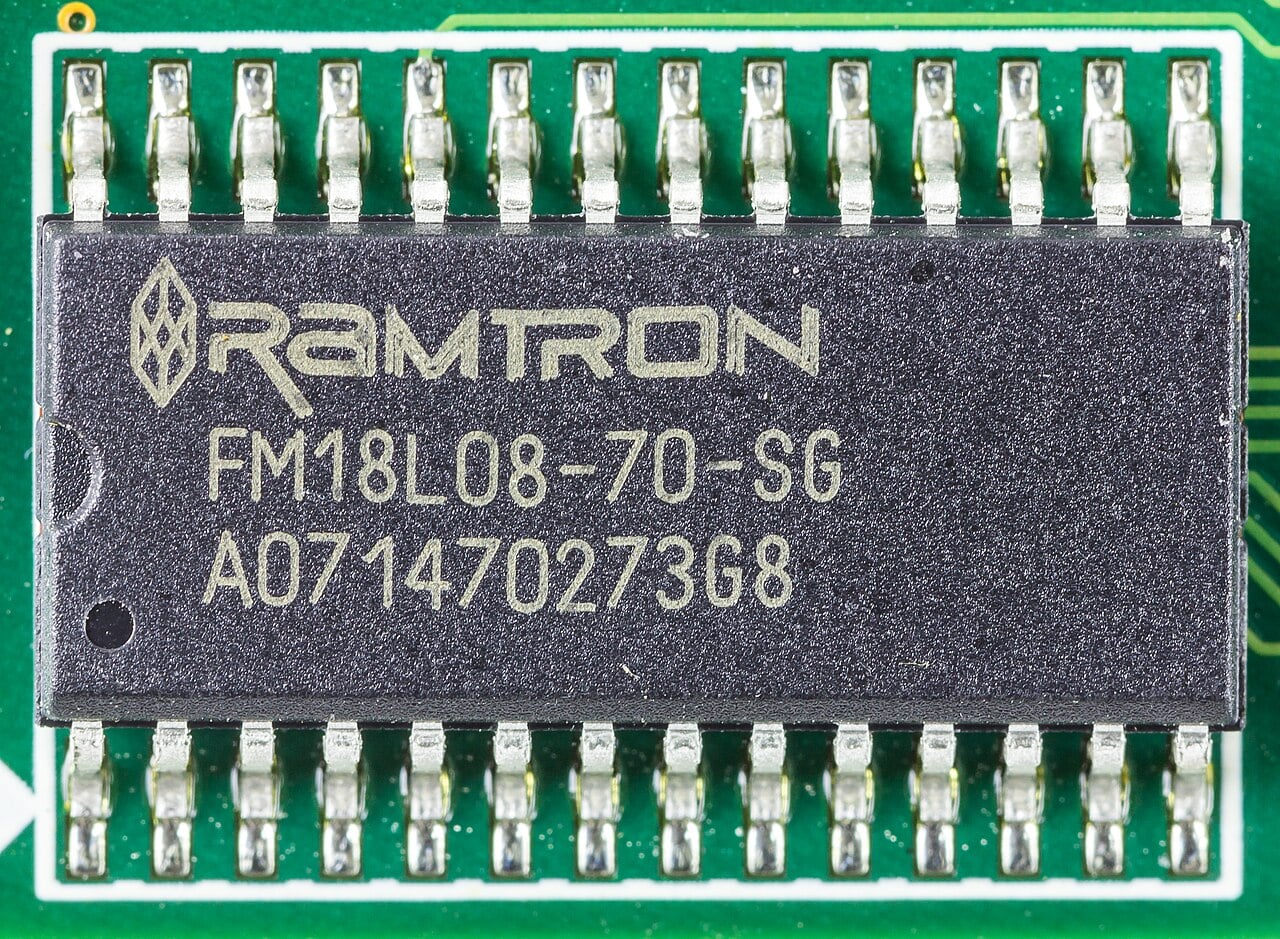 An example of a ferroelectric memory storage chip (Credit : Raimond Spekking)
To test just how resilient it really was, the team fabricated ferroelectric NAND memory chips in their cleanroom and sent them to collaborators at Pennsylvania State University for radiation testing and the results were striking. The chips withstood radiation doses of up to one million rads, the equivalent of 100 million chest X-rays, making them 30 times more durable than conventional flash memory. To put that in perspective, deep space missions are typically exposed to around one million rads over their lifetime. This technology sits right at that threshold, and comfortably clears it.
As spacecraft become increasingly autonomous, it couldn’t have come at a better time since they rely more and more on artificial intelligence to process vast amounts of data without constant input from Earth. Missions surveying distant moons, probing the outer planets, or eventually heading beyond the Solar System entirely will need memory that simply doesn't give up.
Ferroelectric NAND flash might just be what's been missing from the toolkit. For missions pushing the very edges of exploration, the difference between data that survives and data that doesn't could be the difference between success and silence.
Source : Georgia Tech researchers discover new form of NAND flash data storage for deep space missions