Universe Today
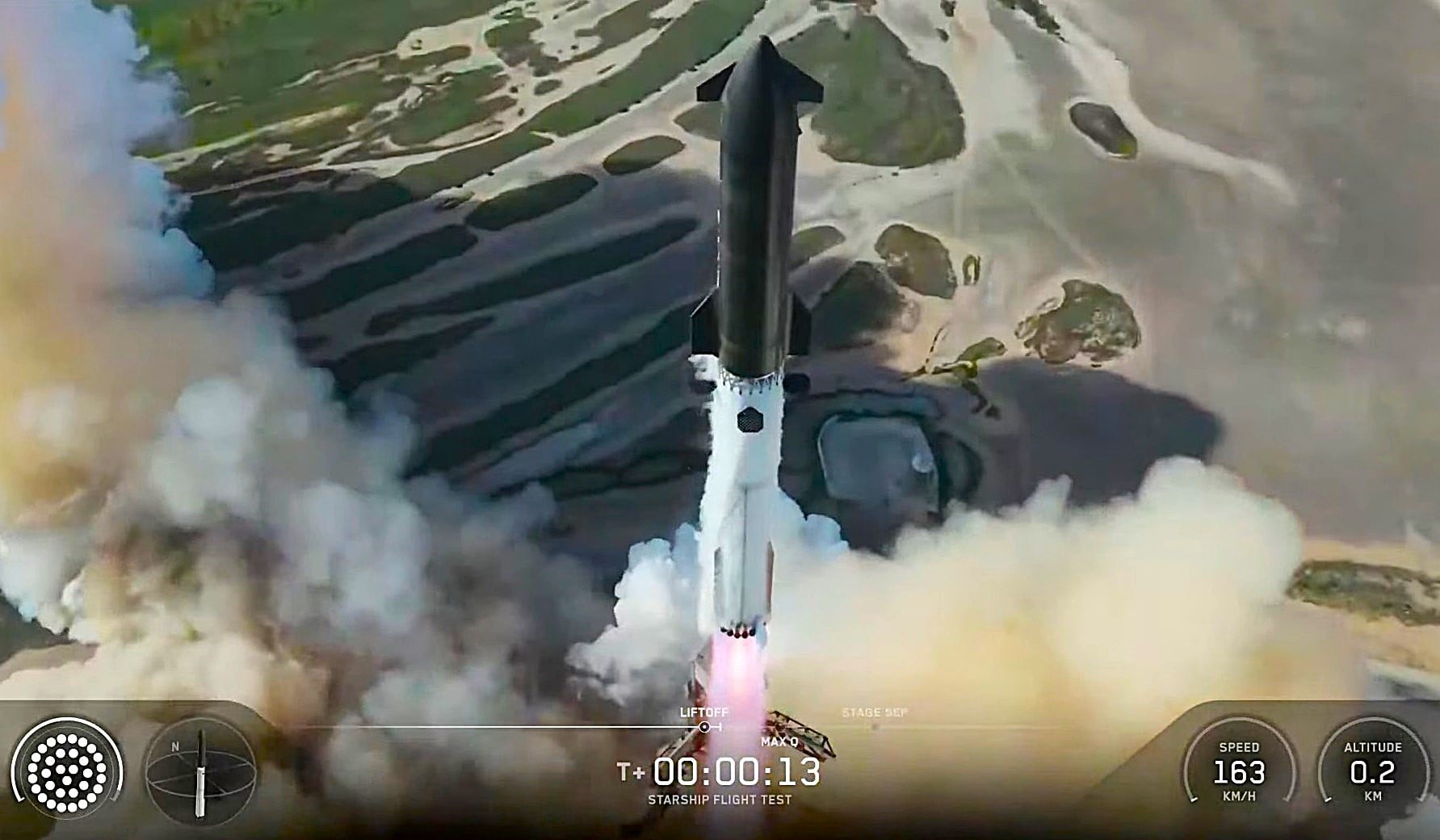
SpaceX's Starship super-rocket deployed operational next-generation Starlink satellites for the first time during its 13th flight test, which addressed snags that arose in the previous test.
The 407-foot-tall, two-stage rocket rose from its Starbase launch pad in Texas at 5:51 p.m. CT today (10:51 p.m. UTC), with all 33 Raptor engines firing on the Super Heavy booster. On the way up, the rocket set a record for maximum dynamic pressure, also known as Max-Q.
Minutes after liftoff, the Starship upper stage — known as Ship — separated to continue on the flight test's trajectory, and then the booster relit its engines for a controlled splashdown in the Gulf of Mexico. SpaceX launch commentator Dan Huot noted that not all of the engines fired up as planned — making for a splash that was a bit spicier than expected but still safe.
During the next phase of the test, Ship sent out 20 operational Starlink V3 satellites from a deployment system that's been nicknamed the "Pez Dispenser." For about 20 minutes, SpaceX's engineering team ran a series of tests to check the deployment of solar arrays and see how the satellites were able to communicate with other spacecraft in the telecom network using laser systems.
"Not only were we able to make contact with all 20, but we also made comms over lasers with all of them as well," SpaceX engineer Kate Tice said. "So, that is awesome."
The satellites weren't meant to stay in orbit. After the tests were completed, all 20 re-entered the atmosphere and burned up. But the data gathered during the tests will help SpaceX ensure that future batches of Starlink V3 satellites work properly.
Starlink V3 satellites are built to download data at speeds of up to 1 terabit per second, which marks a substantial technological advance over the V2 satellites that make up the bulk of the Starlink constellation. Adding V3 satellites to the network will upgrade Starlink's capacity for direct-to-device services.
After satellite deployment, the upper stage executed a relight of one of its six Raptor engines in mid-flight, and then descended through the atmosphere to a splashdown in the Indian Ocean. On the way down, Ship's heat shield weathered fiery flashes of plasma that made for quite a fireworks show on the in-space video transmitted down to Earth via Starlink. At the very end, the upper stage settled down intact in the water, spouting flames as it floated.
"That is a first. That is the softest splashdown we have ever had with a Starship there in the Indian Ocean," Huot said. "This is a dream scenario for the team that's trying to get this heatshield data."
This marked the second test of SpaceX's beefed-up Starship V3 rocket. The previous test in May followed a similar flight profile and was rated a success, but SpaceX made some modifications to systems on the Super Heavy booster as well as on the upper stage to address engine performance issues.
SpaceX's initial attempt to launch the 13th flight test was aborted a week ago, at the moment of ignition, when four Raptor engines failed to start up for launch. After the scrub, SpaceX found six booster engines that raised concerns and replaced them for today's second try.