Universe Today
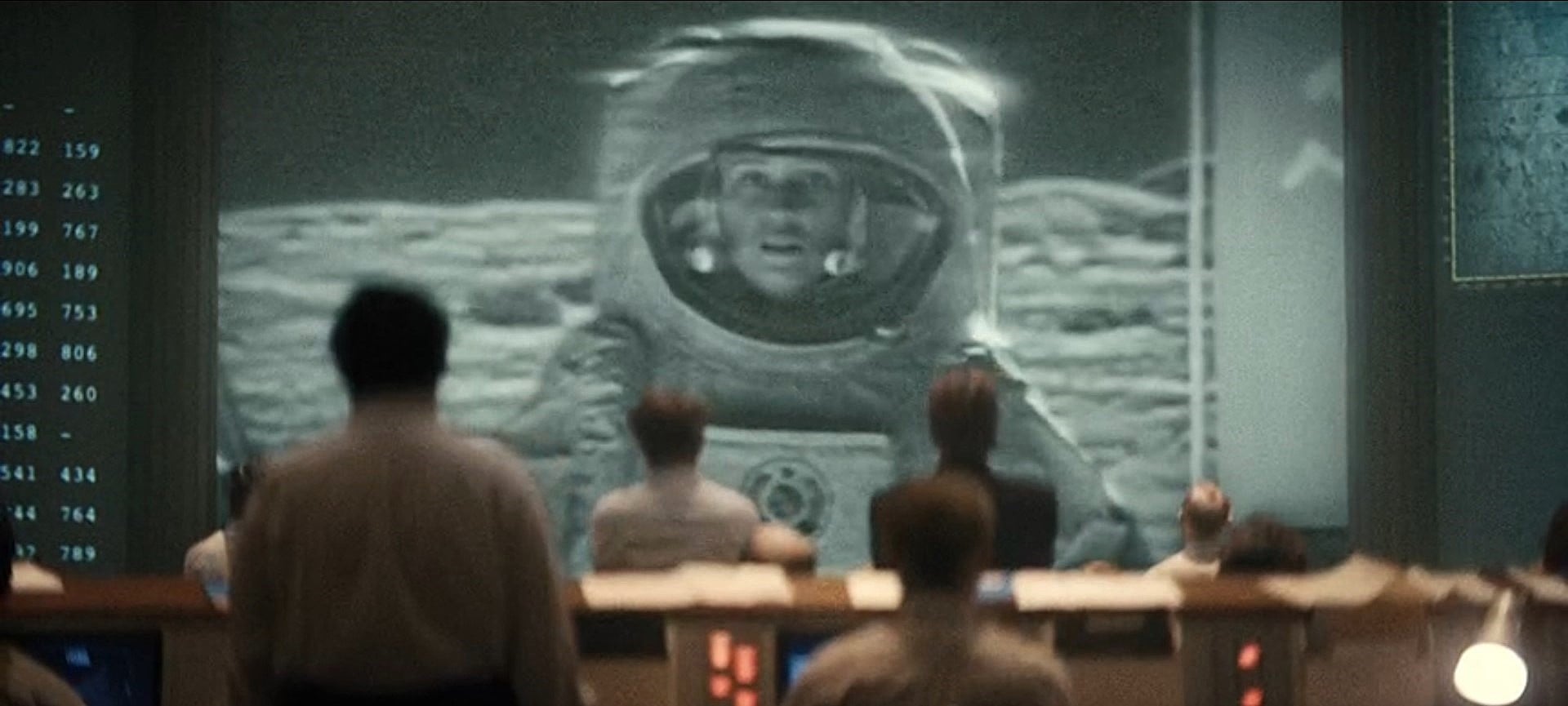
How do you capture the mood of the 1960s space race in a fictional universe where the Soviets beat the Americans to the moon?
The American side of the story was told in “For All Mankind,” an Apple TV series that concluded its fifth season in May. Now a spinoff series called “Star City,” which tells the Soviet side of the story, is set to wrap up its critically acclaimed first season.
Reimagining the Soviet space effort — and the Star City cosmonaut training center that served (and still serves) as its epicenter — was a challenge worthy of the Chief Designer himself. But cinematographer Brendan Uegama and the rest of the production team were up to it.
“We set up a really high bar for our standard of what our world was,” Uegama says in the latest episode of the Fiction Science podcast.
“That was not a perfectly beautiful world of photography like you would typically see or experience in a lot of movies,” he says. “We didn’t go to the beauty just for the sake of making a pretty picture. We stuck with our gut and said, no, it’s better if it’s a little uglier, because it feels a little more truthful to what this would be.”
Click to launch the Fiction Science podcast on Spotify
The production team had to balance several factors as they created the Star City that’s shown in “Star City.” The visual look and feel had to reflect the closed society of the Soviet Union in the 1960s and ’70s, but it also had to accommodate fictional changes in the timeline — including Soviet moon landings and a mission to Venus.
None of the filming took place in Russia. Instead, most of the scenes were shot in the former Soviet republic of Lithuania, where enough of the era’s brutalist architecture remains to provide the foundation for a suitably gray Cold War tale.
Uegama studied old photos and newsreels to sharpen his sense for Soviet-era settings. His main inspiration came from a set of photos taken in the early 1950s by Martin Manhoff, an American diplomat and suspected spy.
“He took just unbelievably fantastic photos of Moscow and everything around that time, and that informed me a lot personally,” Uegama says. “It inspired me a lot … to at least start to go down the road of what I thought this world could look like.”
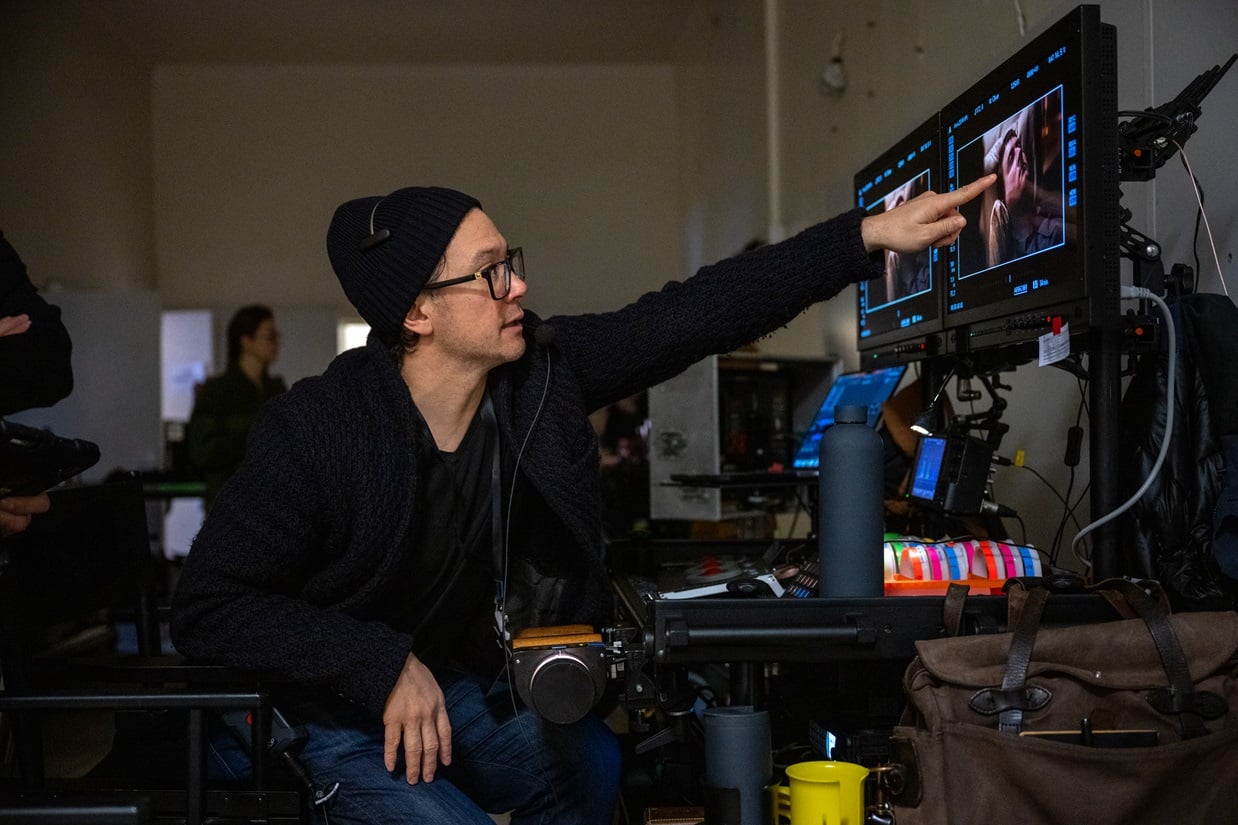 Brendan Uegama, the director of photography for “Star City,” reviews a scene on video. (Credit: Apple TV / Lukas Šalna)
The story behind Manhoff’s photos and film footage could merit its own TV drama. Manhoff is best known for capturing footage of Josef Stalin’s funeral from a vantage point in the U.S. Embassy in 1953. He was never able to go to Star City. “That was, of course, completely out of bounds in the 1950s,” historian Douglas Smith says. But Manhoff was able to travel around the Soviet Union, chronicling everyday life in cities as well as the countryside.
When Manhoff and several other military attachés were accused of spying, he returned to the U.S., bringing the slides and reels of film back with him. They eventually ended up in cardboard boxes that were stored in a former auto body shop in the Seattle area, but overlooked until after Manhoff’s death in 2005. Smith played a key role in rediscovering and organizing the visual treasure trove.
The cinematography of “Star City” reflects the grainy look of 1960s-era film footage. “I started to lean into this world that felt imperfect and felt a little more handmade and a little more ‘found,’ in a way,” Uegama explains. “It wasn’t about constructing perfect scenes in the sense of traditional cinema…. We wanted to feel like we just walked into this room, and there were the people, and this is what it looked like, and how it was lit, and we photographed it.”
That doesn’t mean that “Star City” lacks the artist’s touch, or the filmmaker’s craft. In an Instagram post, Uegama says he used nearly 30 lenses made by 11 different manufacturers — tools that were selected to reflect “a deliberately imperfect aesthetic from the lens up.”
Check out an Instagram montage of shots from 'Star City'
I had the opportunity to visit Star City myself a quarter-century ago, during a reporting trip tied to the final days of Russia’s Mir space station. So, I can vouch for the retro feel and the imperfections that Uegama picked up on for “Star City.” Back then, I noted that all but one of the toilets in the restroom I had access to were out of order, and the tank on the one toilet that worked was half-disassembled.
In the real world, the Soviets suffered a string of failures during the 1960s that ruined their quest to put cosmonauts on the lunar surface. The space program’s secretive chief designer, Sergei Korolev, died during surgery in 1966. And the Soviets’ massive N1 moon rocket failed spectacularly during an uncrewed test launch that took place just two weeks before Apollo 11 lifted off in 1969. The Soviets abandoned their drive to the moon, ceding the Cold War space race to the Americans.
In “Star City,” the unnamed Chief Designer survives his health crisis in 1966, and a fully operational N1 rocket sends a crew to the moon less than a month before Apollo 11. That success energizes the Soviet Union and its space effort — and a follow-up mission known as Luna 16 puts the first woman on the moon. (The real Luna 16, which launched in 1970, was the first robotic probe to bring lunar samples back to Earth.)
Luna 16’s female cosmonaut takes the global spotlight and plays one of the leading roles in the first season of “Star City.” But the series highlights several other characters and plot threads, including a spy-hunting story that’s as gripping as anything in the files of the CIA.
One of the key events in the first season is a crewed mission to Venus, organized in secret by the Chief Designer and designated as Venera 7. The idea of sending a crew to another planet in 1970 is totally made up, but the real Venera 7 mission still made history. It was the first robotic probe to make a soft landing on Venus’ hellish surface and transmit data back to Earth. Years later, a succession of uncrewed spacecraft (Venera 9, 10, 13 and 14) sent back images of Venus.
So, what’s the future of “Star City”? Based on what we know from five seasons of “For All Mankind,” the Soviet space program will continue to move ahead in parallel with the alternate universe’s American space program, deviating from the real-world timeline in interesting ways.
The big question is, will Apple TV renew “Star City” for a second season? Based on the reviews for the first season, which is wrapping up this week, that seems likely. But Uegama is keeping his options open.
“I just like to work on things that inspire me in different ways, so doing the same thing over and over again isn’t as inspiring as finding a new world to dive into and figure out,” he says. “But we’ll see what happens. We’ll see what it is.”
The season finale of “Star City” makes its debut on Apple TV on July 10.
You can take a time machine back to my reports from Russia’s space hotspots thanks to NBC News and the Internet Archive:
- Star City 2001: A crossroads for cosmonauts
- Energia 2001: A factory floor for flights of fancy
- Museums of Moscow 2001: Russia’s hidden treasures of space
- From 2001: Russia’s space sites in need of repair
- From 2005: Russia thriving again on the final frontier
- Star City 2005: Russia’s most reluctant cosmonaut
This feature was originally published to Cosmic Log. Fiction Science is included in FeedSpot’s 100 Best Sci-Fi Podcasts. Stay tuned for future episodes of the Fiction Science podcast via Apple, Spotify, Player.fm, Pocket Casts and Podchaser. If you like Fiction Science, please rate the podcast and subscribe to get alerts for future episodes.