 Universe Today
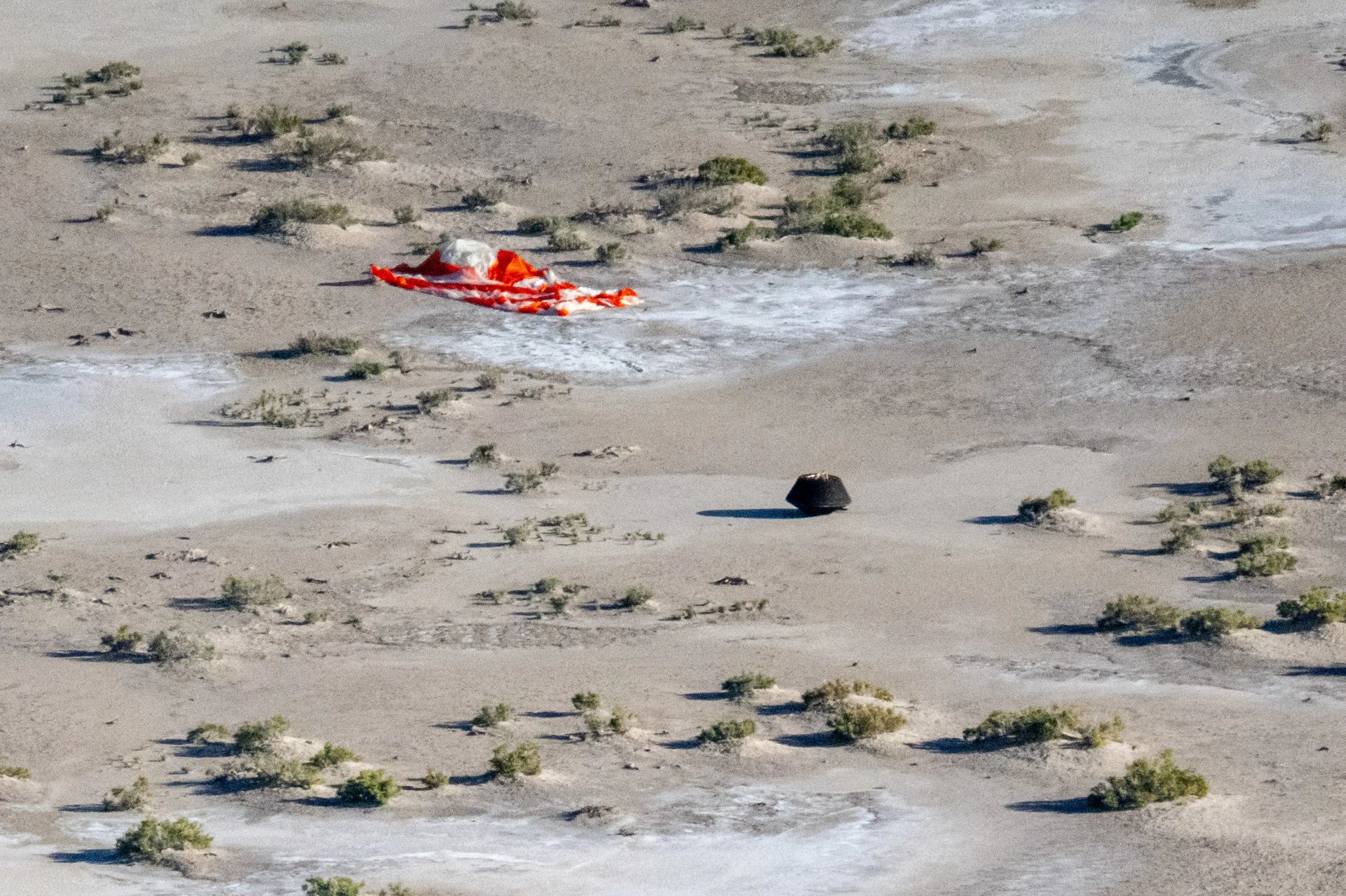
At the end of their lives, most satellites fall to their death. Many of the smaller ones, including most of those going up as part of the “mega-constellations” currently under construction, are intended to burn up in the atmosphere. This Design for Demise (D4D) principle has unintended consequences, according to a paper by Antoinette Ott and Christophe Bonnal, both of whom work for MaiaSpace, a company designing reusable launch vehicles for the small satellite market.
Simply put, those unintended consequences could go so far as to create another hole in the ozone layer. There are two main chemicals that are concerning when it comes to that possibility: nitrogen oxides (NOx) and alumina.
NOx is known to deplete the ozone - it’s part of the reason why we have systems on diesel engines to remove it before it’s released into the atmosphere. However, satellites don’t create NOx in a nice, controlled combustion chamber - they do it when the shockwaves from their reentry force the nitrogen and oxygen to combine. This process, known as the Zeldovich mechanism, is equivalent to “cooking the air” with the energy released from the satellites fall into the atmosphere. Estimates suggest as much as 40% of the energy from a spacecraft’s mass is effectively converted into NOx during re-entry.
ESA video on how to design satellites to not break up. Credit - ESA YouTube ChannelAlumina, on the other hand, comes from the spacecraft itself. Many spacecraft designers use aluminum as an intention design choice, with the idea that its relatively low melting point will allow it to more easily burn up in the atmosphere. While that is true, when it does burn up, it creates alumina, a type of aluminum oxide, that accumulates in the stratosphere about 20 km up. Alumina particles at that level actually have a cooling effect on the lower atmosphere, but a warming effect on the upper, causing havoc with weather patterns. Perhaps more importantly, though, they can act as a reaction surface for activating chlorine, which is a common killer of ozone.
Some amount of alumina that high in the atmosphere is natural - mainly coming from meteors as they “demise” themselves. However, models predict that there could be a 650% increase in alumina in the upper atmosphere over the coming decades, with unknown consequences both for the climate and the ozone itself. There’s already evidence of an increase, with data from NOAA’s SABRE mission indicating that 10% of sulfuric acid particles in the stratosphere already contain alumina.
So what’s the alternative to our satellites destroy themselves? Engineers could design them to intentionally stay together through the deorbiting process - a design philosophy known as Design for Non-Demise (D4ND). There are obvious risks to this as well - the most obvious one being what happens if parts of a satellite actually hit something valuable on the ground.
Video talkinga bout the amouhnt of debris in space. Credit - VideoFromSpace YouTube ChannelThat’s becoming increasingly common. SpaceX and the Federal Aviation Administration have been having a lively discussion about how effective their D4D actually is, given the increasing amount of evidence that some parts of some satellites seem to survive intact to the ground. There are international standards in place already, such as ISO 27875, which limits the chances of a deorbiting object causing a casualty on the ground to 1 in 10,000. The problem is, starlink alone will eventually have upwards of 40,000 satellites, with more being replenished all the time. At those numbers, the 1 in 10,000 chances begin to look a little too high for the public’s comfort.
So what about controlled reentry? We could make sure all satellites deorbit somewhere in the Pacific with no risk to any built infrastructure or people. That is already required by many regulators, but it comes with increased costs. The satellites themselves might have to be heavier to ensure they survive reentry, They will also have to carry extra fuel to ensure they can maneuver themselves to a safe point for that reentry. All that extra weight translates directly into extra cost, though, given the increasing availability of lower-cost launch options that might be a trade-off we’re willing to make.
In an interview with UT, Ms. Ott mentioned there is no clear “right” answer to this problem. Weighing risks between D4D and D4ND, which include calculations about both the environmental impact and the risk to civilians on the ground, should be an integral part of any future orbiting satellite design. She also mentioned that there’s ongoing work to formalize the models that could quantify the risk for each design decision, and that there might be alternatives, such as Design for Containment philosophy that could help limit the negative impacts of either other choice.
While these mega-constellations continue to grow apace, satellite designers need to be conscious of how their choices of materials and deorbiting plans affect not just the people on the ground, but also the atmosphere as a whole. As we move into a world with LEO-enabled infrastructure, we need to balance all of the considerations of how to maintain it without damaging the world it's designed to improve.
Learn More:
A. Ott & C. Bonnal - Atmospheric re-entry of orbital objects – can “Design For Non-Demise” be the optimal solution?
UT - See the Dramatic Final Moments of the Doomed ERS-2 Satellite
UT - These are the Most Concerning Pieces of Space Debris
UT - Companies Will Have Five Years to Dispose of Their Dead Satellites

