 Universe Today
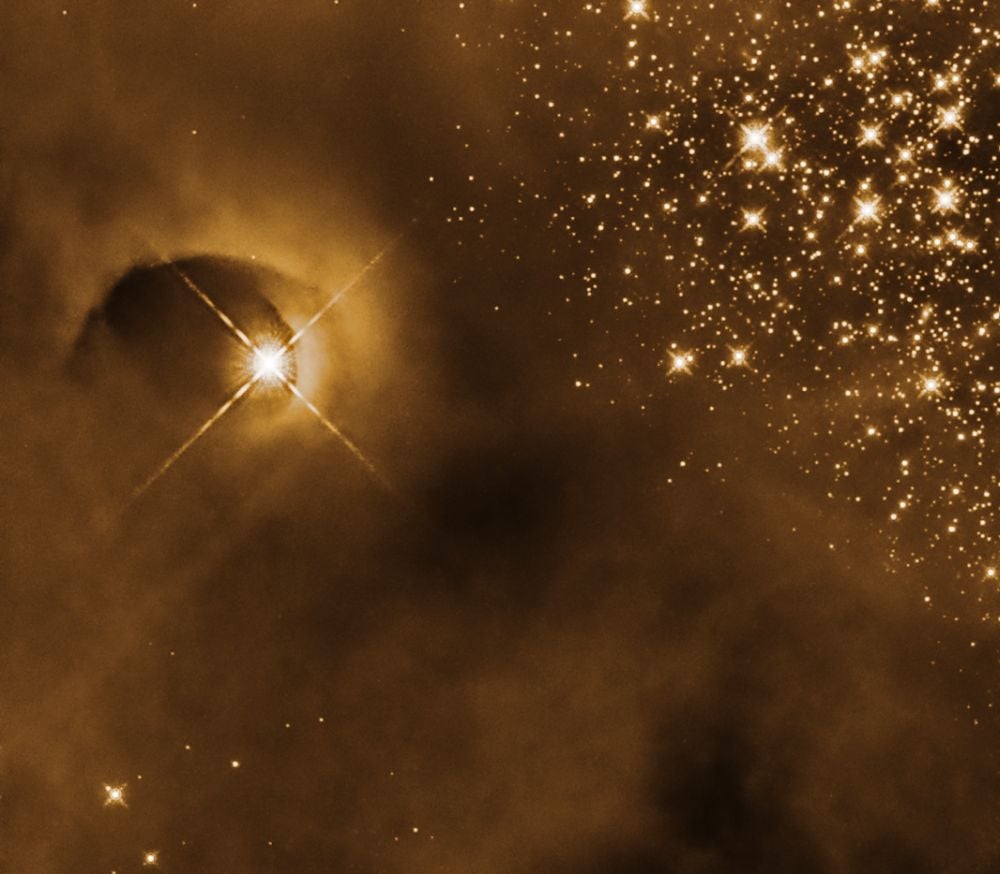
Young stars need time to grow into their final masses before they begin fusing lighter elements into heavier elements as main-sequence stars. They can spend hundreds of thousands of years as protostars, when they're still accreting mass from the molecular clouds they form in. But even though they haven't begun fusion, they still inject energy into their surroundings.
Protostars have powerful winds and jets that shape their surroundings. These jets and winds are known to carve bubbles and caverns in the surrounding gas, and astrophysicists want to understand more about this feedback process. Three new Hubble Space Telescope images are part of their effort.
All three show protostars in the Orion Molecular Cloud complex(OMC), one of the most active star-forming regions in our neighbourhood.
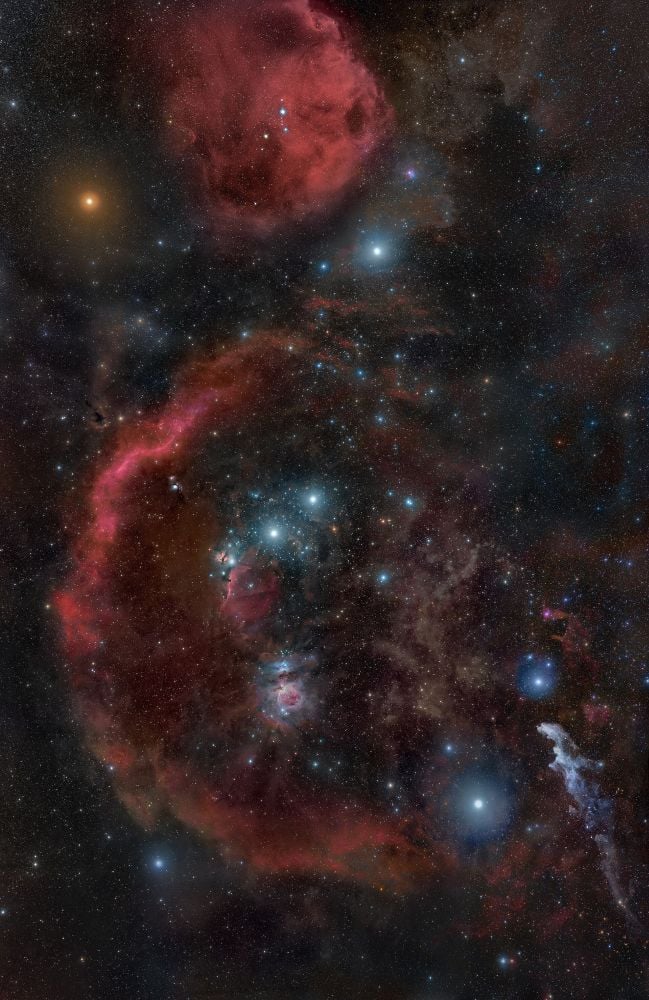 This image shows the Orion Molecular Cloud complex in its entirety. The three stars of Orion's Belt are clearly visible. Betelgeuse, the red supergiant star, is visible in the upper left, and the red crescent shape is Barnard's Loop, an emission nebula. There are thousands of stars in the OMC, but many of them are hidden inside their cocoons of gas and dust. Image Credit: By Rogelio Bernal Andreo - http://deepskycolors.com/astro/JPEG/RBA_Orion_HeadToToes.jpg, CC BY-SA 3.0, https://commons.wikimedia.org/w/index.php?curid=20793252
Astrophysicists know that young protostars accrete material from the surrounding molecular clouds. They know that gas from the clouds first forms a disk around the star, but they aren't certain how gas from the disk reaches the star and becomes part of it. They do know, however, that not all of the material reaches the star. Some is ejected as jets, which help carve out caverns in the gas around the protostar. The jets contain mostly hydrogen, accelerated to high speeds, channelled along the star's magnetic fields and emitted from the poles.
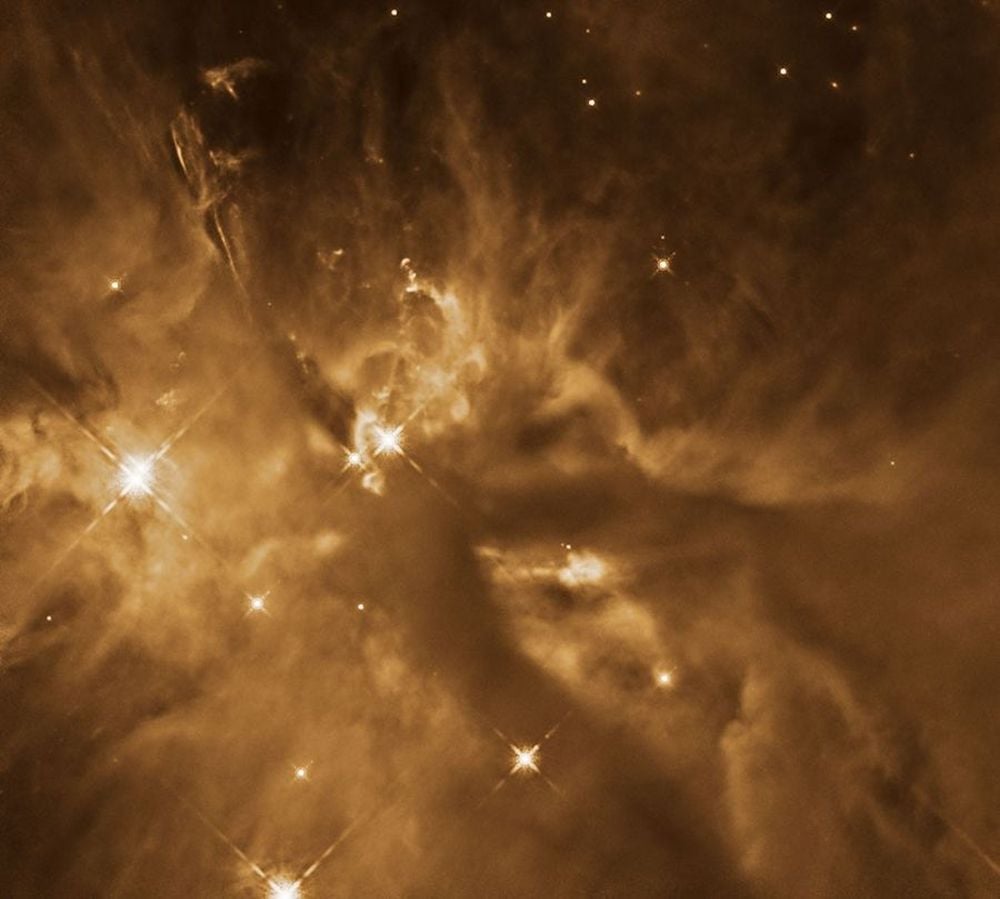 This Hubble image shows the young protostar HOPS 181 buried behind layers of intervening gas and dust in the center of the image. The star's energy is shaping its surroundings. A long curved arc in the image's top left is shaped by HOPS 181's outflows, most likely by jets coming from its poles. Image Credit: NASA, ESA, and T. Megeath (University of Toledo); Processing: Gladys Kober (NASA/Catholic University of America)
While the jets are focused beams, the stellar winds from protostars are more like wide-angle outflows. They flow in all directions from a star. The winds from these young stars are actually far more powerful than the stellar wind from the Sun or other main sequence stars. They also clear gas and dust away from protostars. Young stars can experience periods of dramatic brightening and stronger winds, but over time, their winds become weaker as they reach the main sequence.
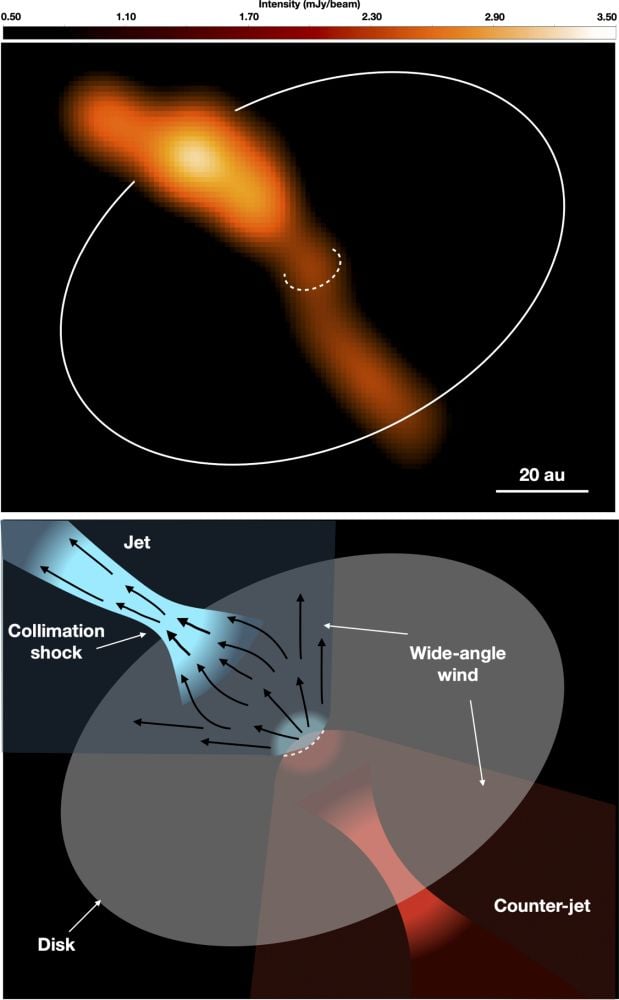 This schematic shows how protostars create their powerful polar jets. Wide angle stellar wind comes from the star's surface, and it's then directed by the star's magnetic field out of its poles. The strongest jets come from the most massive protostars, and the formation of massive stars is not as well understood as the formation of less massive stars. Image Credit: Carrasco-González et al. 2025. ApJL
These new Hubble images helped astronomers make some headway in understanding protostars. They found that the cavities didn't grow larger as the young stars moved through their later stages of formation. Protostars have a lower rate of mass accretion over time, and the star formation rate (SFR) in the OMC has also slowed over time. But scientists found that neither phenomenon can be attributed to the jets and winds carving out cavities in the gas.
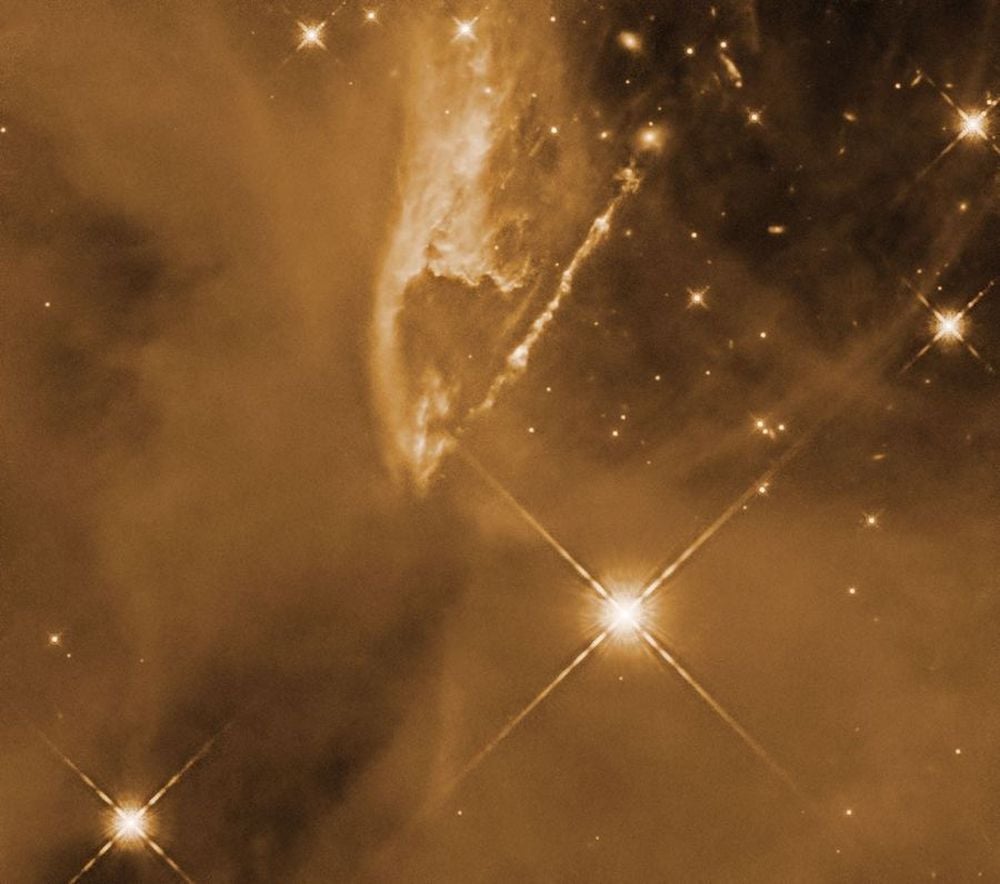 This Hubble image shows where the protostar HOPS 310 is hiding behind gas and dust. The bright easily visible star is called CVSO 188, and its diffraction spikes make it stand out. But HOPS 310 is to the left of center and is carving out the cavity with bright walls with its jets and stellar wind. One of its jets is visible as a long stream of material reaching toward the upper right of the image. In the upper right, some background galaxies are visible. Image Credit: NASA, ESA, and T. Megeath (University of Toledo); Processing: Gladys Kober (NASA/Catholic University of America)
When the Sun was young, it was with a cluster of its siblings in a molecular cloud just like the protostars in the OMC. As a young star, it would've shaped the gas and dust that surrounded it, just as they are.
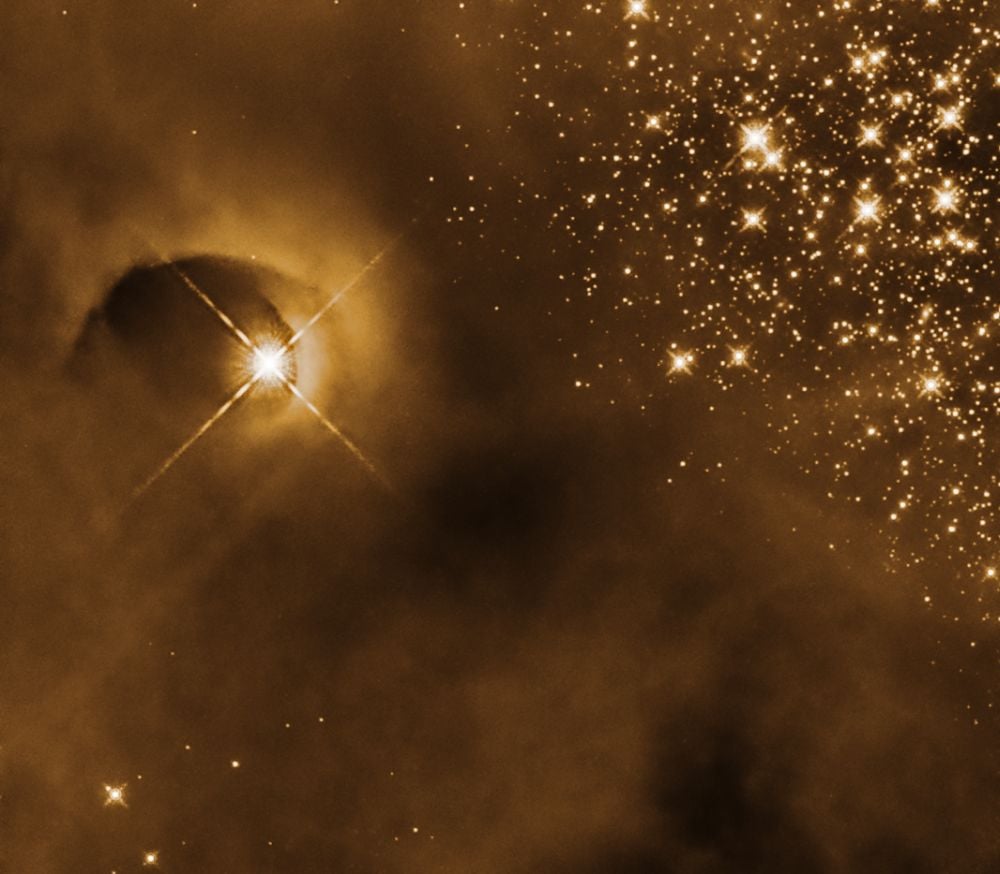 The edge of a cavernous cavity in the gas is clearly visible in this image in the upper left. Stellar winds from a bright protostar to the right of the cavern have carved out the shape. Glittering background stars fill the upper right. Image Credit: NASA, ESA, and T. Megeath (University of Toledo); Processing: Gladys Kober (NASA/Catholic University of America)
The protostars in these image will become quiescent main-sequence stars one day. Over time, there will be little evidence left of the OMC, and the stars will have drifted apart, becoming solitary stars like our Sun.

