Universe Today
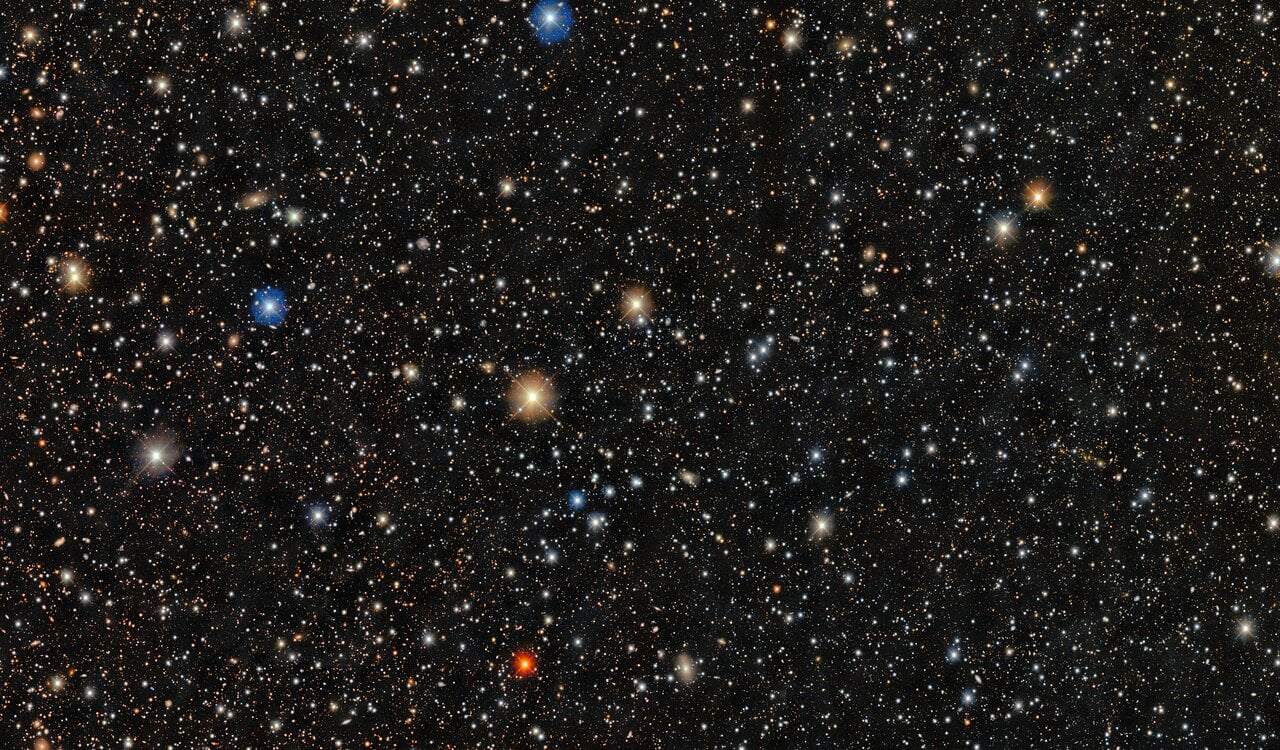
Astronomers studying the ultra-faint dwarf galaxy Pictor II have found an extremely chemically peculiar star that contains traces of elements created by the first stars in the Universe. It's called PicII-503, a "second-generation star" that is one of the most chemically primitive stars ever found. It's extremely low in iron but is enhanced with carbon. Its home galaxy, Pictor II, is a satellite of the Large Magellanic Cloud (itself a satellite of the Milky Way Galaxy), and lies some 150,000 light-years away. Its stars may play a role in helping us understand chemical evolution in early epochs of cosmic time.
Chemically enriched metal poor (CEMP) stars such as PicII-503 aren't limited to just one area of space. Astronomers have found them in the Milky Way's halo and have long worked to explain their existence. The fact that this star lives in a galactic "fossil graveyard" makes Pictor II good place to study other similar stars. What astronomers find there will contribute to an increased understanding of the chemical evolution of the earliest generations of stars. The galaxy's few thousand stars are more than 10 billion years old and began forming relatively early in the history of the Universe. It stopped forming stars billions of years ago and this entire whole dwarf galaxy is dominated by dark matter,
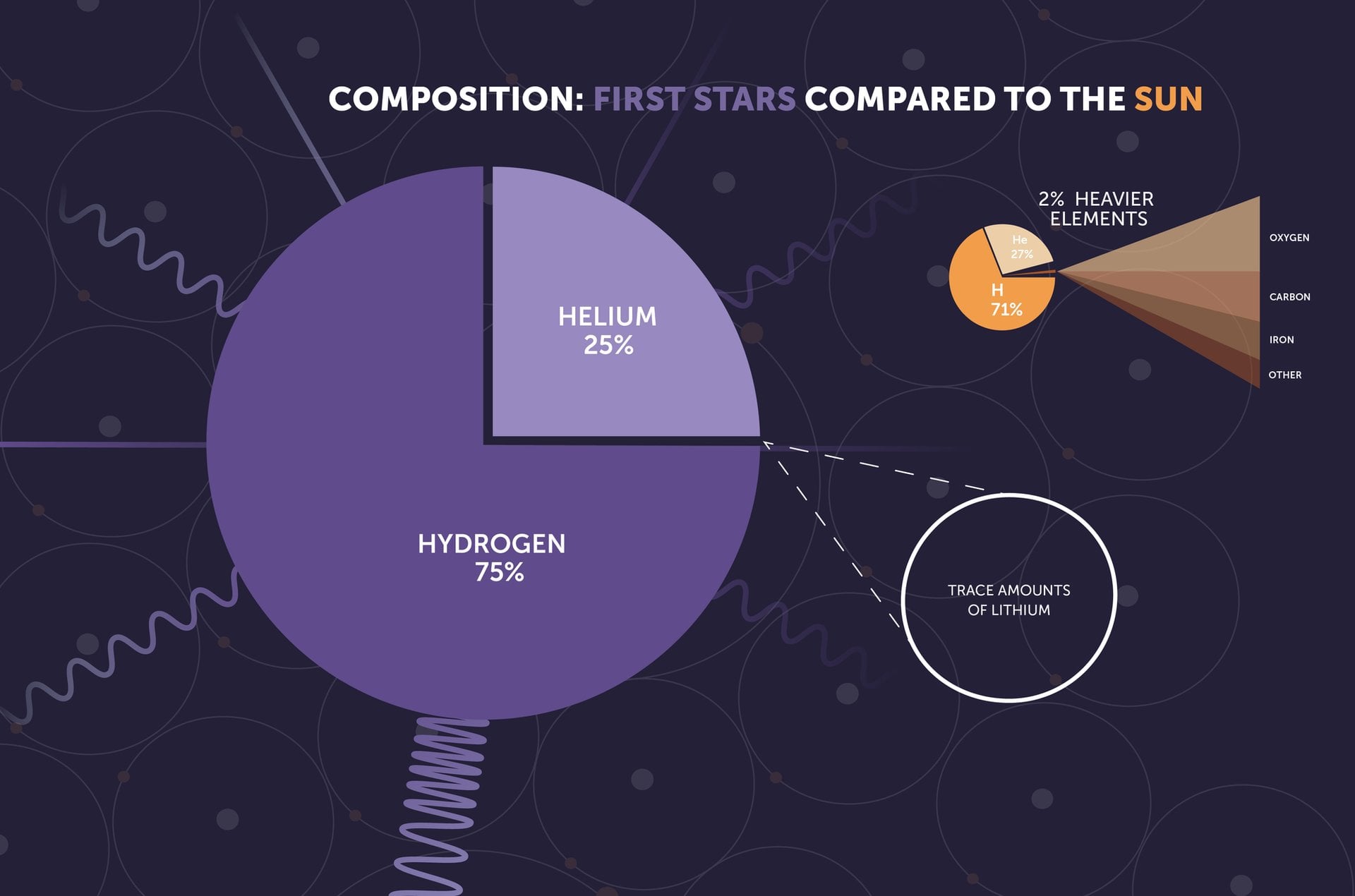 A chart showing the chemical composition of the first stars compared to the composition of the Sun. PicII-503 would show hydrogen and an enriched amount of carbon (among other elements). Courtesy NASA/ESA/STScI
Understanding Ancient Stars
PicII-503 and stars like it act as stellar time capsules. That's because they contain their original primordial hydrogen and helium (first created in the Big Bang), but they have really low amounts of heavy elements. To astronomers, "heavy" elements or "metals" are those cooked up inside stars (such as carbon, nitrogen, silicon, calcium and iron). The first stars in the Universe were mainly hydrogen and helium that did exactly that: fuse hydrogen to create helium, and then went on to fuse helium to carbon, carbon to nitrogen, and so on. The most massive stars fuse elements all the way to iron. When they try to make iron, they can't support the process. Instead, they die, exploding as supernovae and spreading all those elements out to space through clouds of gas and dust.
The next generations of stars contain traces of whatever got cooked up in the cores of the first stars. That's where PicII-503 came from, formed in a cloud of gas and dust seeded by elements from the long-dead first stars. During the stardeath process, heavy elements that form close to the supernova progenitor star’s interior, like iron, fall back into the remnant compact object. Lighter elements (such as carbon) lie closer to the outer regions of the star and they get blasted out to space to seed the interstellar medium. The ejected "star stuff" gets swept up in the formation of the next generation of stars.
This suggested link between second- and first-generation stars is what led astronomer Anirudh Chiti of Stanford University and an extensive team of researchers to the discovery of this PicII-503. “Discovering a star that unambiguously preserves the heavy metals from the first stars was at the edge of what we thought possible, given the extreme rarity of these objects,” said Chiti. “With the lowest iron abundance ever derived in any ultra-faint dwarf galaxy, PicII-503 provides a window into initial element production within a primordial system that is unprecedented."
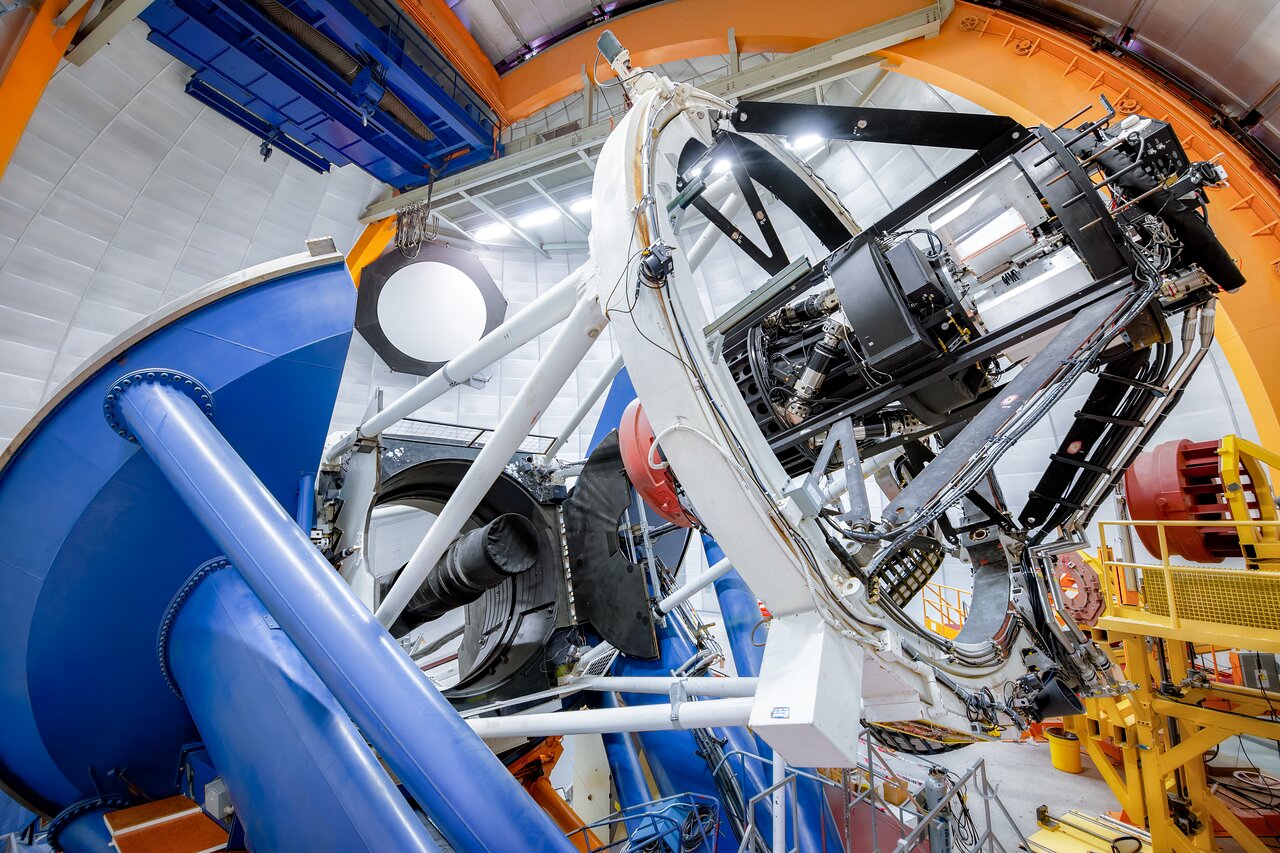 The Dark Energy Camera (DECam), on the Víctor M. Blanco 4-meter Telescope at the Cerro Tololo Inter-American Observatory (CTIO). It was used to survey the sky for CEMP stars to study. Credit: CTIO/NOIRLab/DOE/NSF/AURA/R. Hahn (Fermi National Accelerator Laboratory)
The team used the Dark Energy Camera on the Victor M. Blanco 4-meter telescope at Cerro Tololo Inter-American Observatory in Chile as part of a survey called MAGIC (Mapping the Ancient Galaxy in CaHK). That survey operated for 54 nights, searching for the oldest and most chemically primitive stars in our galaxy as well as nearby ones. They also useddata from the Magellan/Baade Telescope and ESO's Very Large Telescope to study the star. They found PicII-503 to be exceptionally metal-poor.
A Key to Understanding Early Element Production
So, did ancient supernovae play a role in the chemical mix in CEMP stars? The data from the survey and observations seem to support that idea. Astronomers think that some of the elements these objects do have came from low-energy supernova explosions of the first stars. Pictor II is a good place to look at this because of its dwarf status. If supernovae exploding within its "territory" had been very high-energy, then the metals they blew out to space would have escaped and not gotten swept up into Pictor's second-generation stars. That likely explains the metal-poor character of PicII-503.
Chiti's team and its work have provided a window onto the first chapters of chemical evolution in the Universe, if the findings as PicII-503 play out across other CEMP stars. “What excites me the most is that we have observed an outcome of the very initial element production in a primordial galaxy, which is a fundamental observation!” said Chiti. “It also cleanly connects to the signature that we have seen in the lowest-metallicity Milky Way halo stars, tying together their origins and the first-star-enriched nature of these objects.”
For More Information
Extremely Rare Second-generation Star Discovered Inside Ancient Relic Dwarf Galaxy