Universe Today
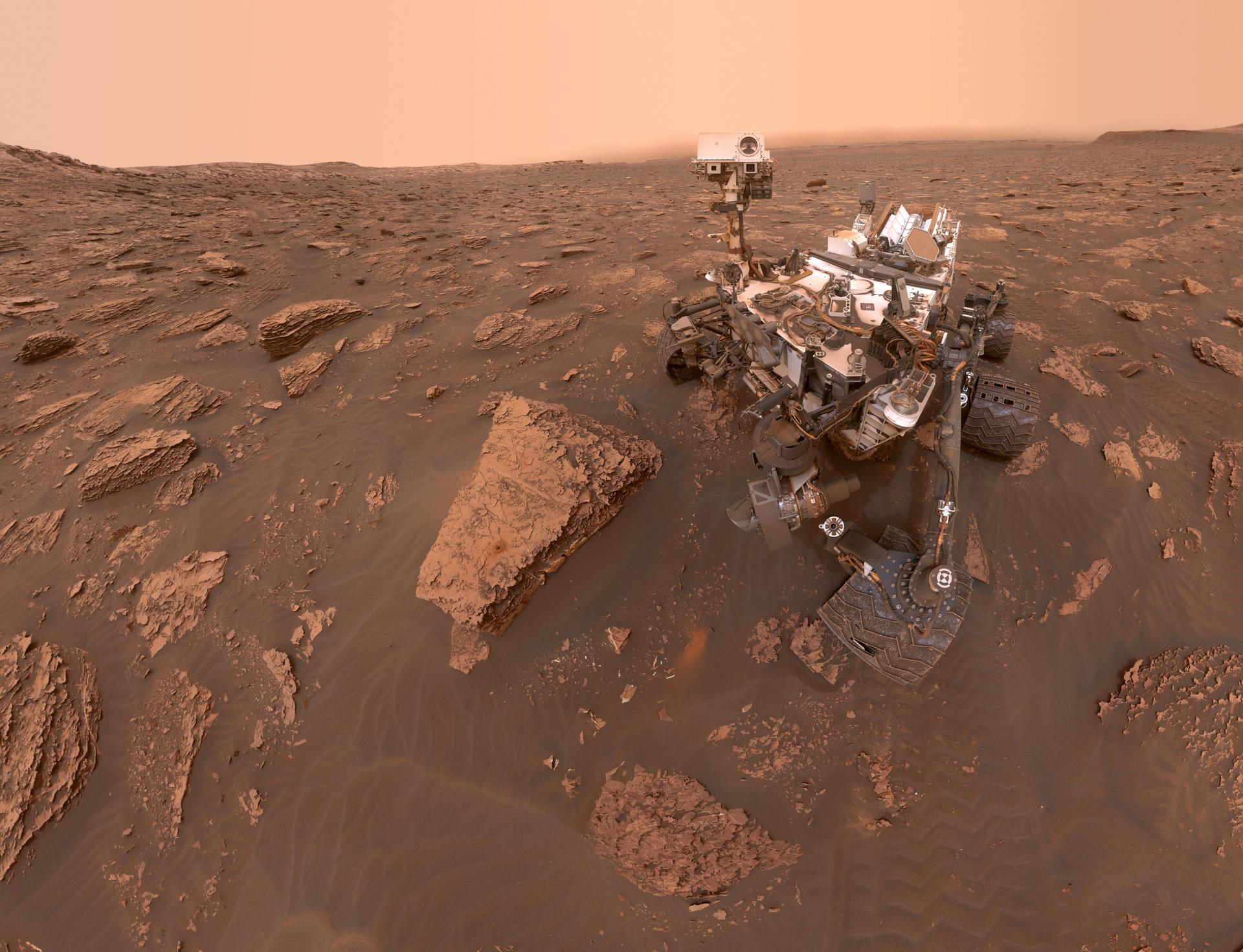
In 2004, the ESA's Mars Express orbiter detected methane in Mars' atmosphere. This was followed in 2013 and 2014 when the Curiosity rover detected a methane spike and organic molecules while exploring the floor of the Gale Crater on Mars. Curiosity detected an even larger spike in 2019 while exploring an outcropping of layered bedrock, which is part of the larger formation known as "Teal Ridge." Since that time, scientists have looked for possible explanations for the sudden detections of this organic molecule, which generally favored non-biological processes.
In March 2025, Curiosity once again hit pay dirt when it detected small amounts of decane, undecane, and dodecane in a rock sample, which constituted the largest organic compounds found on Mars to date. According to a new study that appeared in the journal Astrobiology, an international team of researchers hypothesize that these could be fragments of fatty acids preserved by ancient mudstone in the Gale Crater. If true, this is the most compelling evidence yet that complex organic chemistry and maybe even life once existed on Mars.
On Earth, carboxylic acid (aka fatty acids) are a natural byproduct of life, appearing in seeds, nuts, and animal tissues. In the case of animals, fatty acids are predominantly formed from carbohydrates predominantly in the liver, adipose tissue, and the mammary glands. However, there are known non-biological and geological pathways that also lead to the formation of carboxylic acid. This includes lightning, hydrothermal activity in deep-sea vents, and photochemical reactions between ultraviolet radiation and hydrocarbon-rich mixtures.
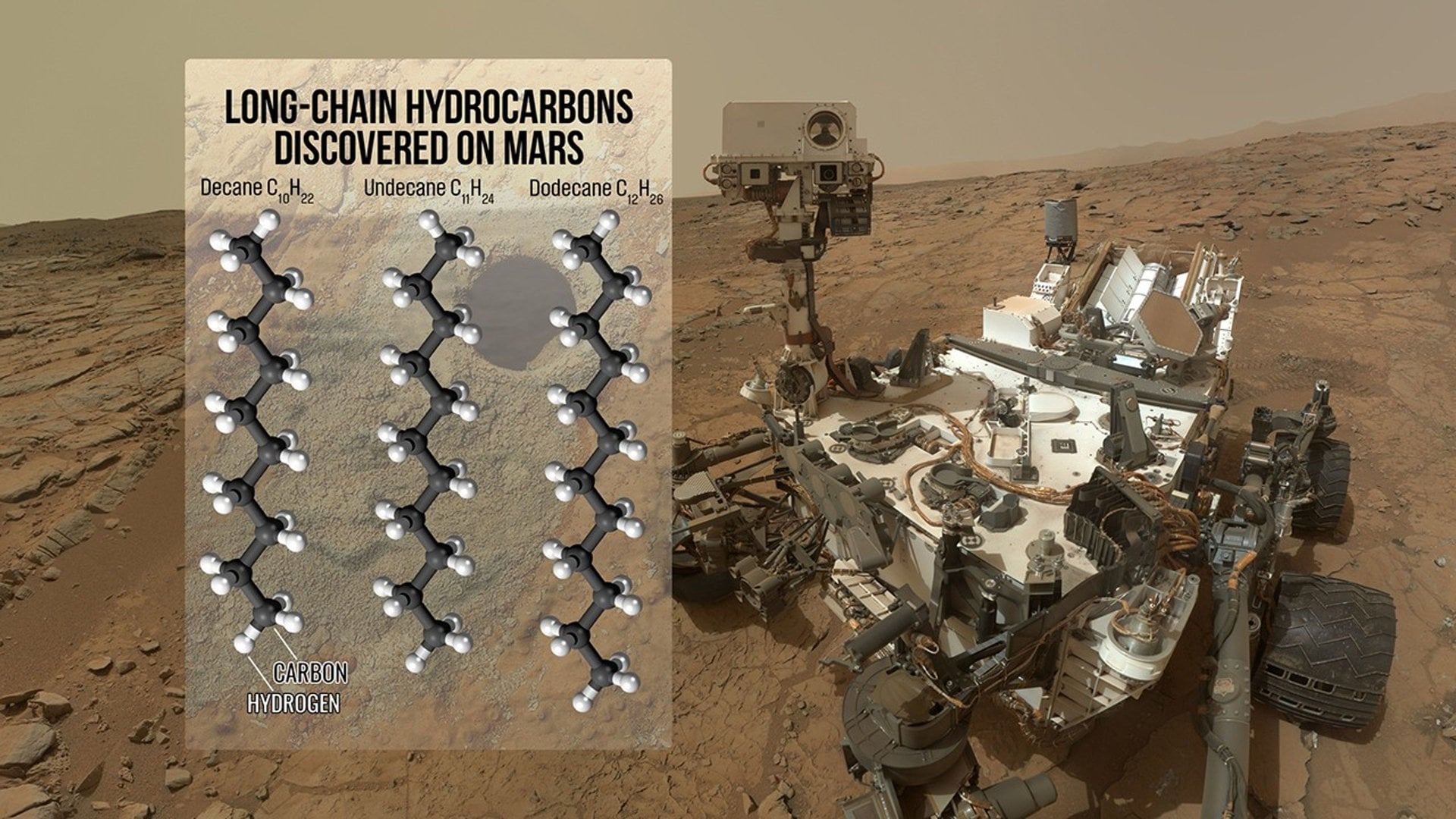 This graphic shows the long-chain organic molecules decane, undecane, and dodecane. These are the largest organic molecules discovered on Mars to date. Credit: NASA/Dan Gallagher
The complex organic molecules (COMs) were detected in a drilled rock sample called “Cumberland” that was analyzed by the Sample Analysis at Mars (SAM) laboratory aboard the Curiosity rover. Since it was not possible to determine if the molecules were created by biological processes based on the SAM data alone, the researchers conducted follow-up studies to evaluate known non-biological sources. To do this, they needed to recreate what conditions were present in the Gale Crater 80 million years ago (the amount of time the rock would have been exposed to the surface).
This consisted of a combination of radiation experiments mathematical modeling with the Curiosity data. This allowed them to estimate how much organic material would have been present before being destroyed by long-term exposure to cosmic radiation: far more than typical non-biological processes could produce. The most likely source they considered was delivery by carbonaceous meteorites, which are known to contain a variety of fatty acids that form in space. Upon review, the researchers found that the non-biological sources they considered could not fully explain the abundance of organic compounds detected by Curiosity.
While this indicates that living things could have formed these complex organic molecules (COMs), the team admits that more study is needed. Until scientists learn more about how quickly they break down under Mars-like conditions, no conclusions about the existence of life can be reached. In the meantime, these results could inform future astrobiological studies on Mars and the long-awaited analysis of returned samples.
Further Reading: NASA