Universe Today
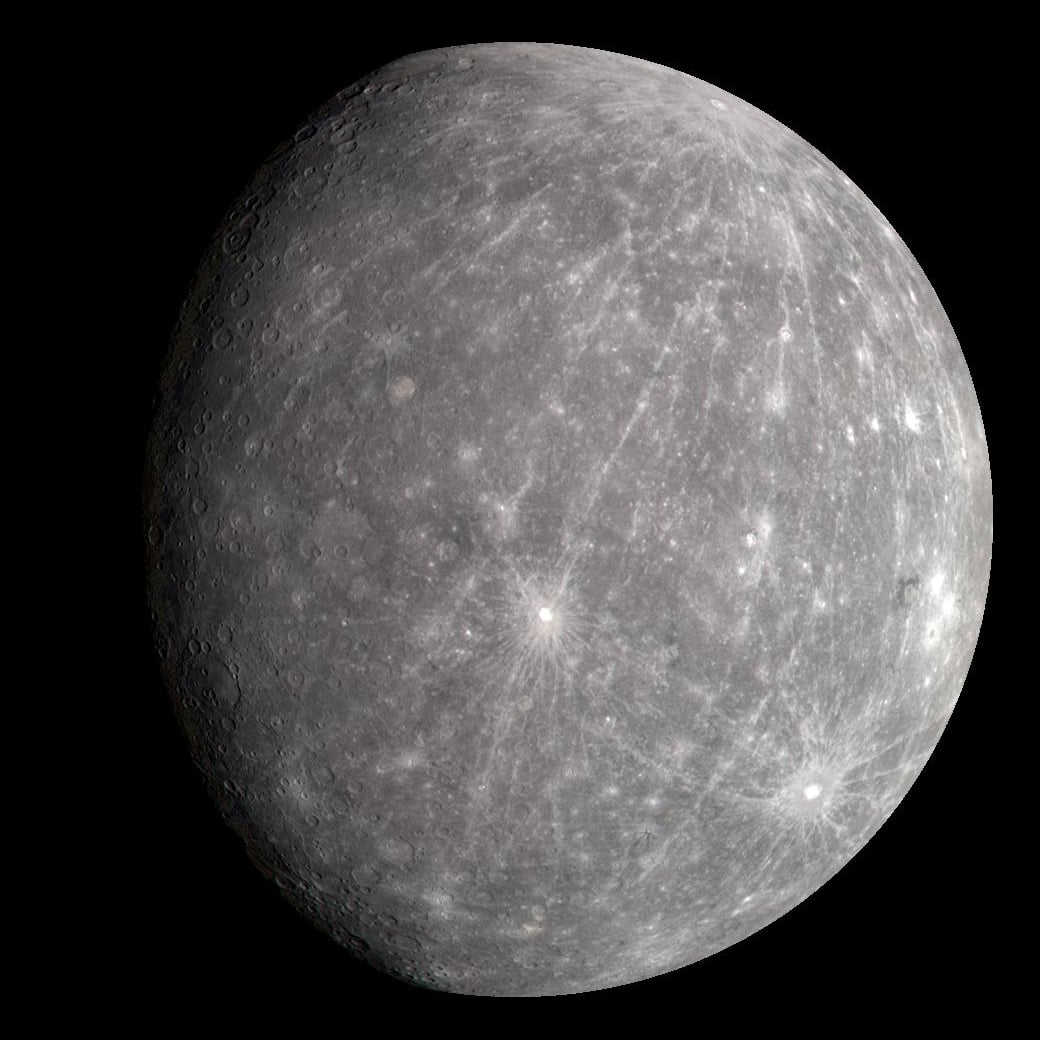
For decades, Mercury has carried the reputation of being a dead, dry planet whose geological story ended long ago. Its cratered surface, baked by the Sun and seemingly frozen in time, appeared to tell a tale of ancient violence followed by billions of years of silence. That story just got considerably more interesting.
A team led by Dr. Valentin Bickel from the University of Bern has discovered around 400 bright linear features streaking down slopes across Mercury's surface. These "lineae" aren't just interesting geological oddities, they’re potentially active features driven by volatile materials escaping from beneath the planet's crust.
The discovery emerged from an ambitious project analysing roughly 100,000 high resolution images captured by NASA's Messenger spacecraft, which orbited Mercury between 2011 and 2015. Using machine learning to systematically map these features for the first time, the researchers found clear patterns in where and how the streaks appear.
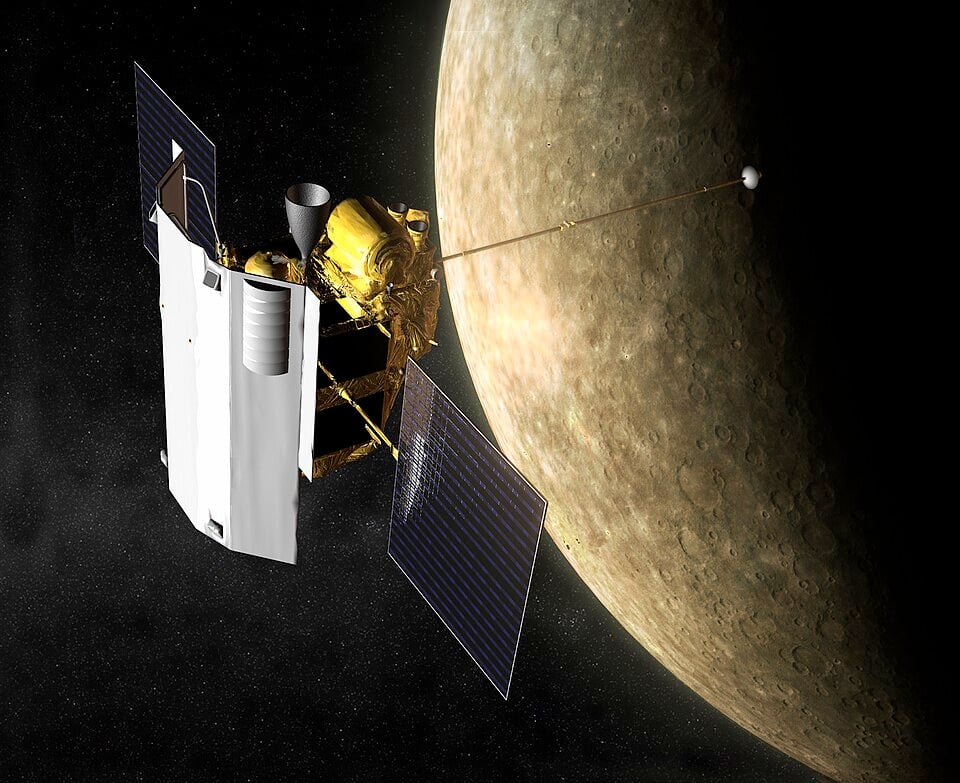 Artist impression of the Messenger spacecraft entering orbit around Mercury (Credit : NASA/JHU/APL)
The lineae concentrate on Sun facing slopes of relatively young impact craters, specifically those that punched through volcanic surface layers into potentially volatile rich bedrock beneath. They often originate from bright depressions called "hollows," which themselves are thought to form through outgassing. The correlation with solar heating suggests the Sun's radiation plays a crucial role in triggering the release of these subsurface materials.
The researchers propose that volatile substances like sulphur and other light elements are venting from Mercury's interior through networks of cracks created by meteorite impacts. When solar radiation warms these exposed regions, it drives the volatiles to the surface where they escape into space, leaving behind the characteristic bright streaks.
This changes our understanding of Mercury fundamentally. Rather than a static world that exhausted its geological activity eons ago, Mercury appears to be continuously losing material from its interior in a dynamic process that is happening right now.
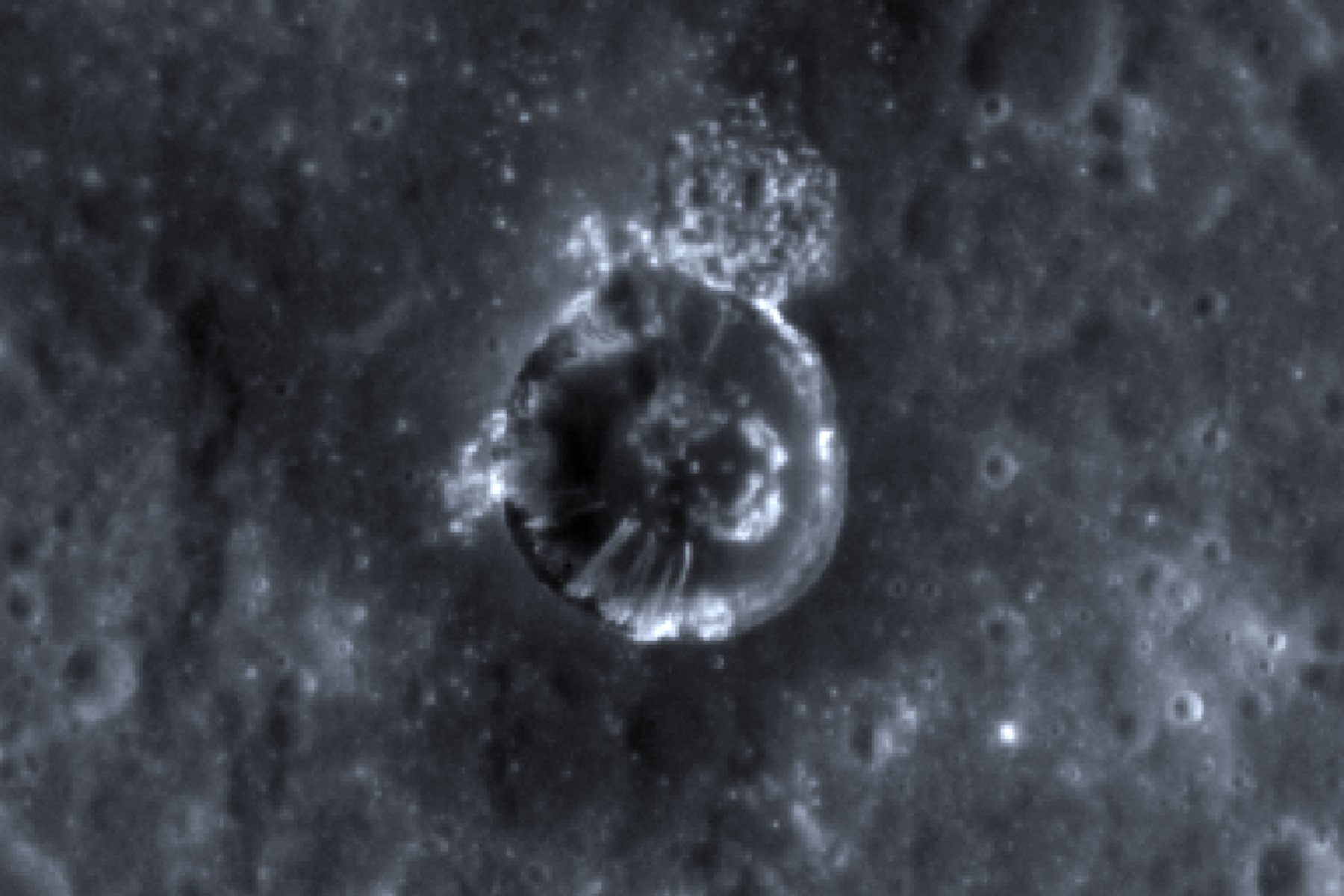 Image of the streaks or 'lineae' on the slopes of the crater wall on Mercury captured by Messenger (Credit : NASA/JHU/APL)
The discovery has come just in time as the European Space Agency's BepiColombo mission is currently en route to Mercury, carrying instruments designed and built partly at the University of Bern. When it arrives, BepiColombo will photograph the same regions MESSENGER imaged, allowing researchers to see if new streaks have formed in the intervening years.
If they have, it will provide direct evidence of ongoing geological activity on Mercury, proof that even small, apparently dead worlds can harbor secrets about planetary processes we're only beginning to understand.
Like many aspects of science, a discovery can often raise more questions than it answers. Just how much material is the planet losing? How long has this process been occurring? And what does it mean for the long-term evolution of rocky planets close to their stars? As we find more small, scorched worlds orbiting distant suns, Mercury's ongoing activity might offer clues to processes playing out across the Galaxy.
Source : Streaks on Mercury show: Mercury is not a "dead planet"