Universe Today
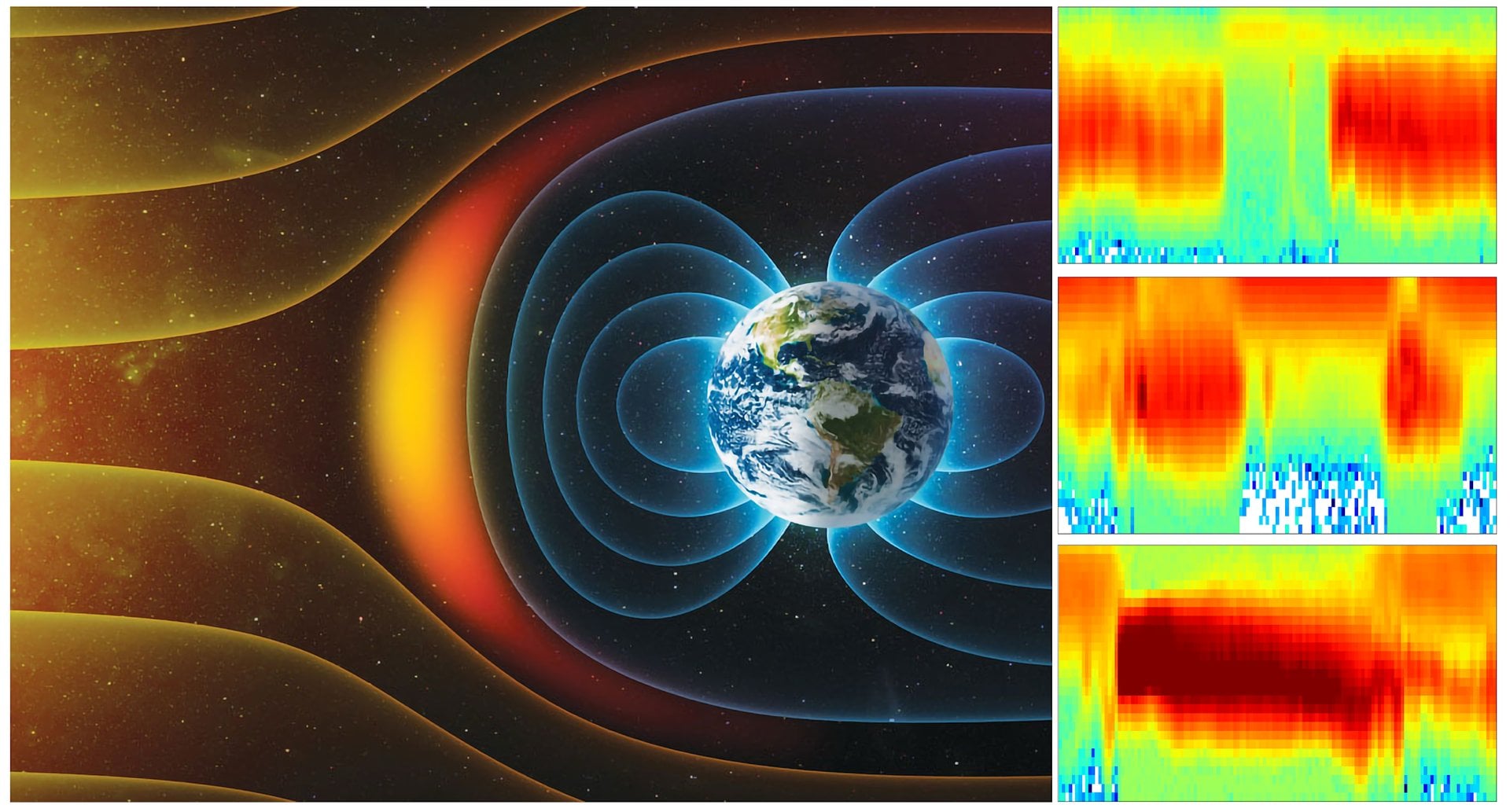
The Sun regularly emits streams of charged particles (solar wind) from its upper atmosphere (the corona), which flow throughout the Solar System that interacts with Earth's magnetic field. This is what powers the beautiful aurorae visible in the Northern and Southern hemispheres (Aurora Borealis and Australis. It can also play havoc with modern technological systems, including telecommunications, GPS navigation, and electrical power grids. Since 2015, NASA's Magnetosphere Multiscale (MMS) mission has been collecting data on Earth's magnetosphere.
The purpose of the mission is to investigate how the magnetic fields of the Sun and Earth periodically connect and disconnect, with energy transferred between them. This phenomenon, known as magnetic reconnection, is the decisive factor in space weather. To investigate the dynamic region where the Sun's and Earth's magnetic fields connect, NASA has announced the Space Umbrella project. Participants will help identify when the MMS spacecraft has observed the strongest interactions between Earth's magnetosphere and solar wind.
In addition to potentially affecting satellites and grid systems, space weather is an increasing concern for missions venturing beyond Low Earth Orbit (LEO). This includes the Artemis Program, which will create a "sustained program of exploration and development" on the lunar surface, as well as similar plans by China and Russia to establish an International Lunar Research Station (ILRS). There are similar considerations when it comes to missions to Mars and elsewhere in the Solar System beyond the protection of Earth's magnetic field.
"Your work will also help scientists better understand solar storms," says the NASA press release. "Understanding these solar storms can contribute to keeping our astronauts and technology safe."
Those interested are instructed to visit the Space Umbrella project website. No prior experience is necessary, and users are provided with a comprehensive tutorial that explains how to identify when the satellite is inside Earth's magnetic field and when it is interacting with solar wind.
Further Reading: NASA