Universe Today
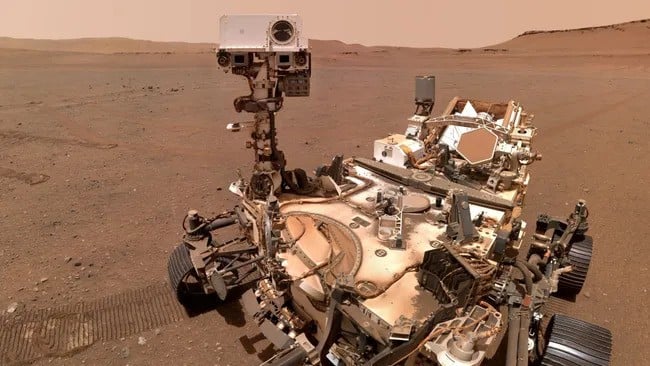
Searching for past or present life on Mars is the sole driving force behind every mission we send to the Red Planet, from orbiters to landers to rovers. However, there remains a concern in the scientific community of Earth-based microbes hitching a ride on Mars-bound spacecraft, also called forward contamination. The concern is potentially mistaking Earth microbes for Mars life or Earth microbes potentially influence samples of Mars life we might find. While NASA is dedicated to mitigating it as much as possible, could new methods help determine how long Earth-based microbes could survive on Mars, this alleviating concerns for forward contamination?
Now, a team of researchers led by York University in Canada has introduced the Mars Microbial Survival (MMS) model, which they note could be used to estimate the amount of forward contamination from Earth-based microbes on Mars. More specifically, how long in Mars sols would Earth-based microbes that weren’t caught before launch could survive on the Red Planet upon arrival? For context, one Mars sol is one Mars day, which is slightly longer than one Earth day at 24 hours and 39 minutes. Their findings were reported in a recent study published in The Planetary Science Journal.
To accomplish this, the researchers analyzed how a spacecraft would encounter microbial sterilization during the cruise phase and surface phase. During the cruise phase, the spacecraft is bombarded with solar wind in the form of Ultraviolet-C (UVC) radiation, so the team analyzed how the spacecraft would respond inside a vacuum with varying temperatures and solar radiation. For the surface phase, the spacecraft is exposed to Mars’ surface temperatures and pressures, while also being exposed to incoming solar radiation since Mars lacks a protective ozone layer or magnetic field like Earth.
The researchers analyzed 14 previously used landing or crashed sites on Mars from past missions, including Viking, Pathfinder, Spirit, Opportunity, Curiosity, and Perseverance, to determine the level sterilization future spacecraft could encounter.
In the end, the MMS model determined that the spacecraft exteriors were sterilized from solar wind while the encased rovers or landers were protected from solar wind. However, they were still exposed to a vacuum environment and temperatures change, thus enabling sterilization from these environments.
For the surface phase, the MMS model determined that it would take approximately one Mars sol for upward-facing spacecraft surfaces to become sterilized, and it would take approximately one Mars year (687 Earth days) for the entire spacecraft to become sterilized. MMS also considered the toxic regolith, surface pressure, and lack of moisture (desiccation) to contribute to further sterilization. Finally, MMS estimated that it would take approximately 100 sols for the spacecraft interior to sterilize due to the heating of the components. However, the researchers note that it could take as long as 25 Mars years to sterilize unheated internal components.
The study concludes, “The MMS model predicts very low survival rates for bioburdens on both cruise-phase aeroshells and landed spacecraft at each of the 14 landing sites examined. All external spacecraft surfaces were likely sterilized by UVC alone, with small contributions from other biocidal factors. The bioburdens on the internal surfaces of spacecraft will mostly likely be reduced by temperature and low-pressure effects acting synergistically, although it might take up to 25 yr for sterility when considering low pressure alone. While maintaining high planetary protection standards is crucial for successful Mars science missions, we estimate that small numbers of microorganisms on cold internal surfaces of spacecraft might persist for several decades on Mars.”
NASA’s planetary protection program, officially called the NASA Jet Propulsion Laboratory (JPL) Biotechnology and Planetary Protection Group (BPPG), has a singular goal of preventing forward contamination by ensuring maximum spacecraft sterilization prior to launch. Like all endeavors, BPPG constantly strives to improve itself, as it maintains research to enhance sterilization procedures, including more efficient and cost-effective technologies.
How will the Mars Microbial Survival model contribute to planetary protection in the coming years and decades? Only time will tell, and this is why we science!
As always, keep doing science & keep looking up!