Universe Today
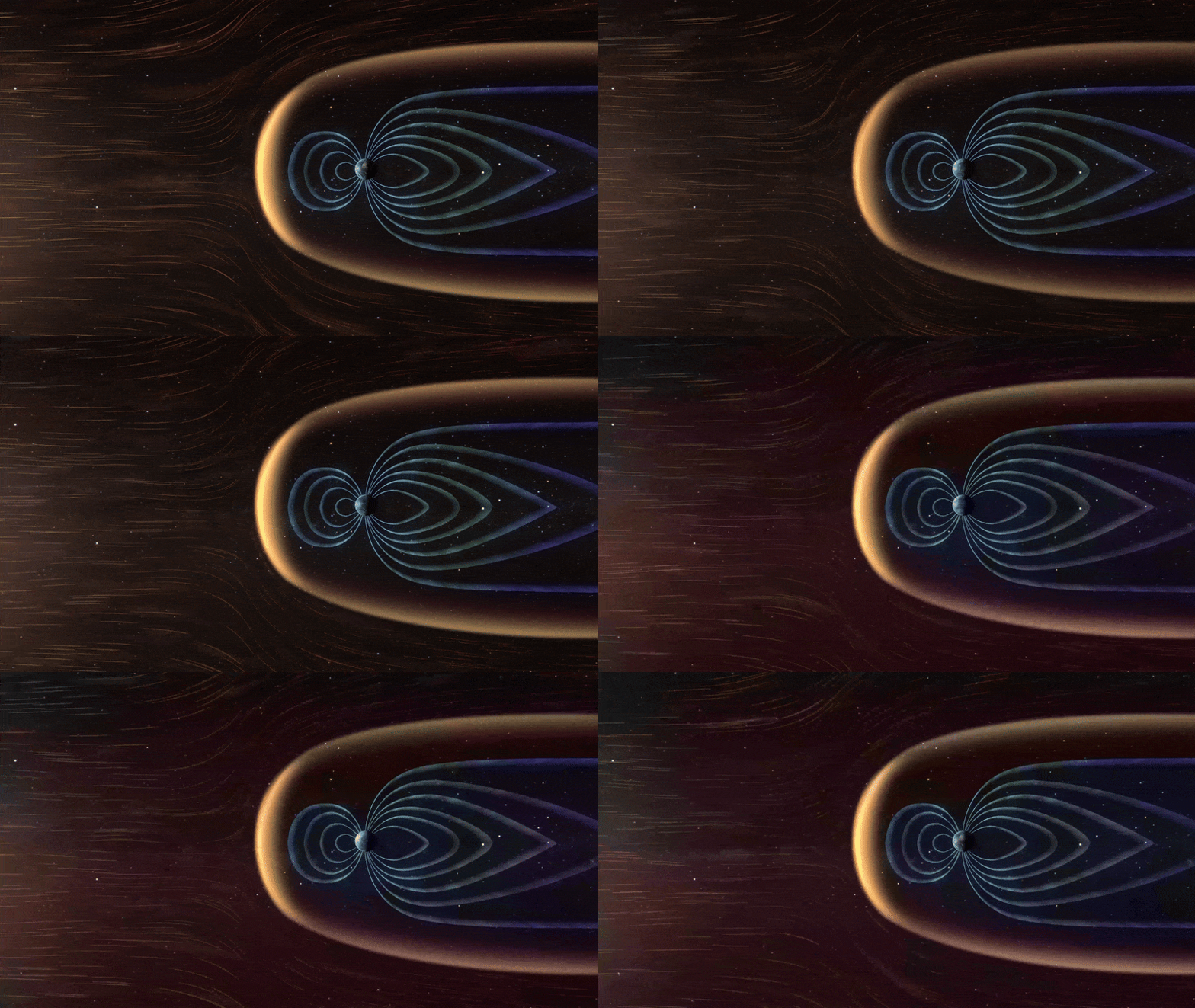
The Sun, our nearest star, never stops breathing. Every second of every day it exhales a vast stream of charged particles that sweeps outward through the Solar System at hundreds of kilometres per second. We call it the solar wind, and while that name conjures something gentle and constant, the reality is considerably more turbulent.
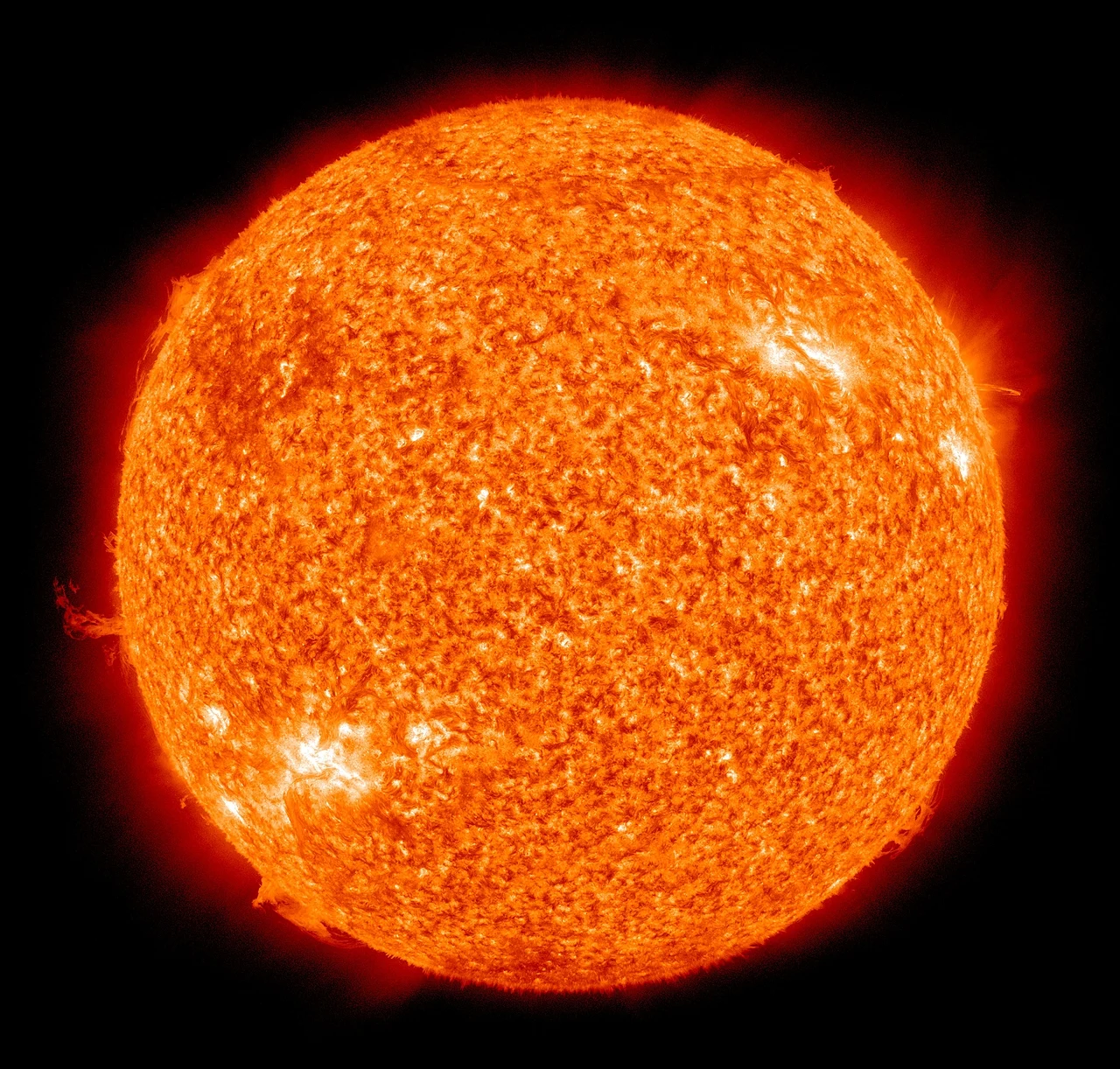 The Sun photographed at 304 angstroms by the Atmospheric Imaging Assembly (AIA 304) of NASA's Solar Dynamics Observatory (Credit : NASA/SDO)
Buried within the solar wind are waves. Not ocean waves or sound waves, but plasma waves, ripples of energy moving through a sea of charged particles. According to new research from PhD student Jordi Boldú at the Swedish Institute of Space Physics and Uppsala University, those waves play a far bigger role in shaping our space environment than most people realise.
To investigate, Boldú used data from Solar Orbiter, the European Space Agency's Sun watching spacecraft. It's an extraordinary vantage point with Solar Orbiter dipping closer to the Sun than the orbit of Mercury, granting a front row seat to the solar wind at an earlier stage of its journey than was ever previously possible. What happens that close to the source tells a different story from what we detect near Earth, and that difference matters.
The research focused particularly on high frequency electrostatic waves, specifically Langmuir waves and ion acoustic waves. The behaviour of these waves is governed by a process called resonance. Only particles moving at precisely the right speed can sync with a passing wave, and when they do, energy transfers between them. It's not unlike the way a wine glass shatters if you hit exactly the right note, the physics may be different, but the principle of matching frequencies is the same.
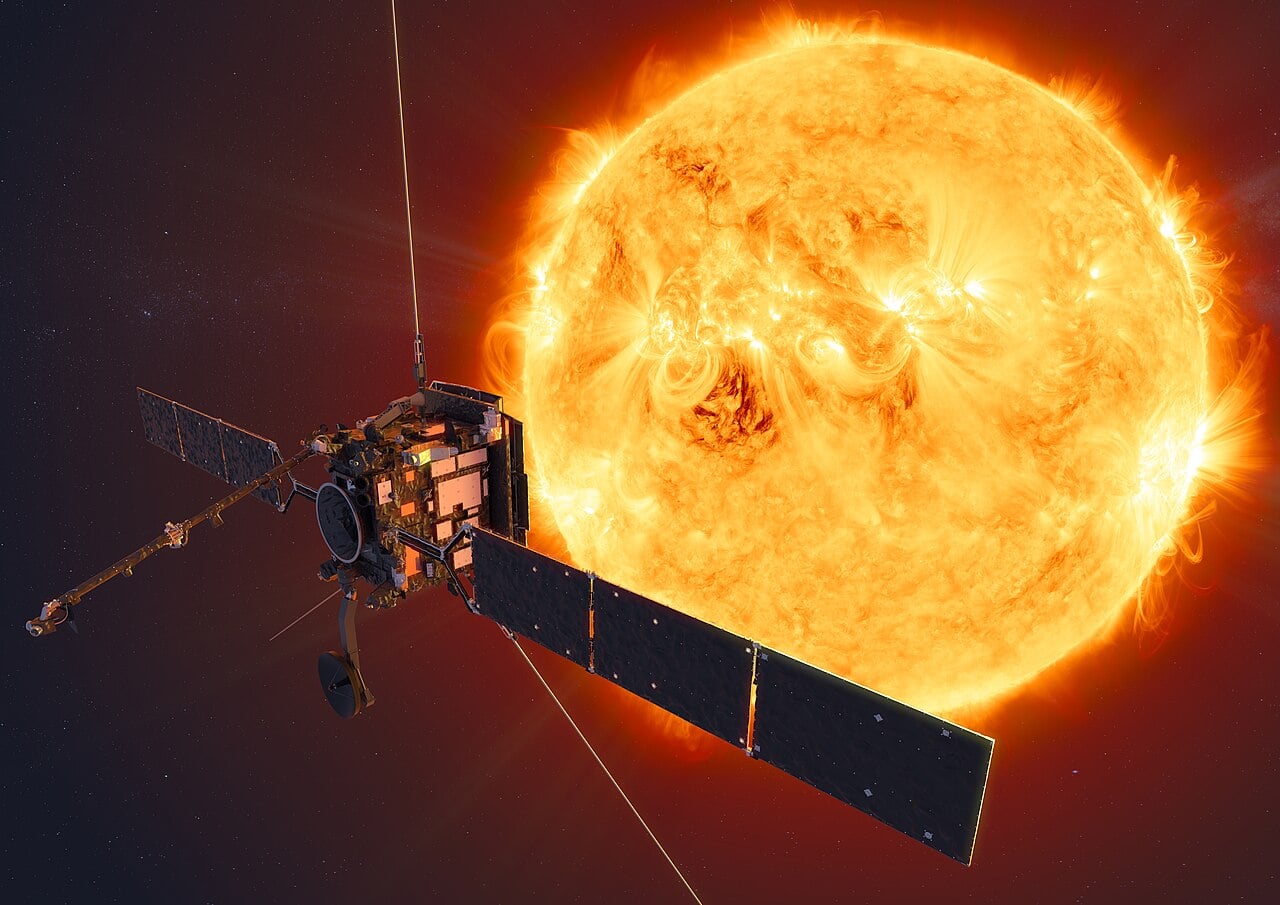 ESA's Solar Orbiter mission will face the Sun from within the orbit of Mercury at its closest approach (Credit : ESA)
What this means is that plasma waves are constantly redistributing energy within the solar wind as it travels outward. They're not passive bystanders to the process, they’re active participants, shaping how the solar wind evolves across the vast distances between the Sun and the planets. All of this has an impact on us down here on Earth. The solar wind directly influences the geomagnetic storms that can disrupt satellites, power grids, and communications on our home planet. It also drives the acceleration of high energy particles and shapes the shock waves that form when the solar wind collides with planetary magnetic fields. Knowing how and where energy is redistributed in that outflowing plasma is essential for understanding all of those phenomena.
Using orbiting observatories like Solar Orbiter is giving scientists a way to unpick these processes near their origin. Catching the solar wind young, before it has had time to evolve and complicate its story, makes it considerably easier to trace cause and effect.
Source : Waves in the solar wind shape our space environment