Universe Today

Earth's climate has swung between ice ages and warmer periods for millions of years, driven by subtle changes in our planet's orbit and axial tilt. These variations, known as Milankovitch cycles, occur because Earth doesn't orbit the Sun in isolation. The gravitational pull of other planets constantly tugs at Earth, slowly altering its orbital path, the tilt of its axis, and the direction its poles point. While astronomers have long known that Jupiter and Venus play important roles in these cycles, a detailed new analysis reveals that Mars too, despite being much smaller than the gas giants, exerts a surprisingly strong influence on Earth's climate rhythms.
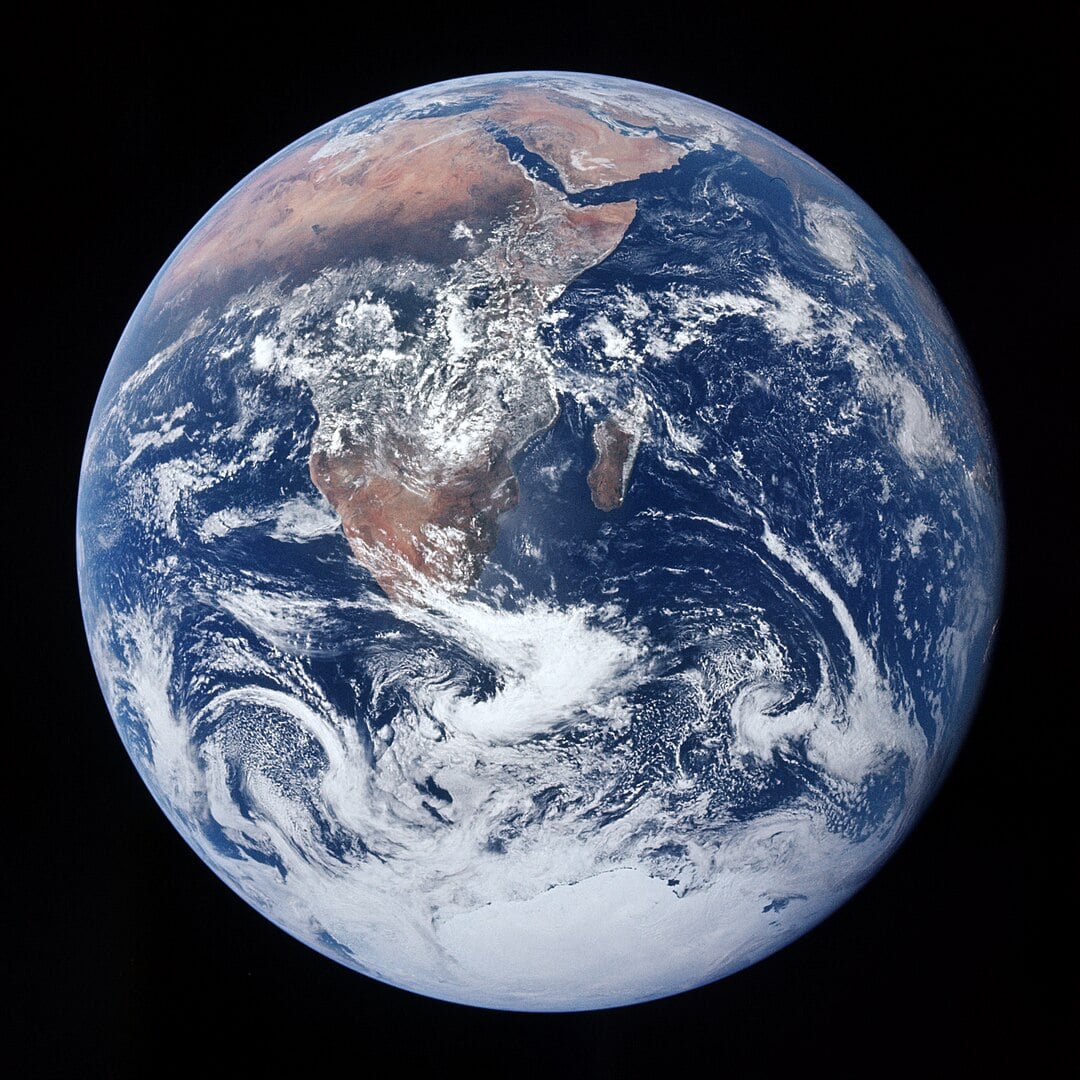 The seasons of Earth seem to be in part controlled by the presence of Mars. Image captured by Apollo 17 (Credit : NASA)
Researchers led by Stephen Kane ran computer simulations that varied Mars's mass from zero to ten times its current value, tracking how these changes affected Earth's orbital variations over millions of years. The results establish Mars as a key player in determining the seasons here on Earth.
The most stable feature across all simulations was the 405,000 year eccentricity cycle, driven by interactions between Venus and Jupiter. This "metronome" persists regardless of Mars's mass, providing a steady beat underlying Earth's climate variations. However, the shorter ~100,000 year cycles that pace ice age transitions depend critically on Mars. As Mars becomes more massive in the simulations, these cycles lengthen and gain power, consistent with enhanced coupling among the inner planets' orbital motions.
Perhaps most strikingly, when Mars's mass approaches zero in the models, a crucial climate pattern disappears entirely. The 2.4 million year "grand cycle," which causes long term climate fluctuations, exists only because Mars has sufficient mass to create the right gravitational resonance. This cycle, related to the slow rotation of Earth's and Mars's orbits, affects how much sunlight Earth receives over millions of years.
Earth's axial tilt, or obliquity, also responds to Mars's gravitational influence. The familiar 41,000 year obliquity cycle that appears in geological records lengthens as Mars becomes more massive. With a Mars ten times heavier than reality, this cycle shifts to a dominant period of 45,000 to 55,000 years, dramatically altering the pattern of ice sheet growth and retreat.
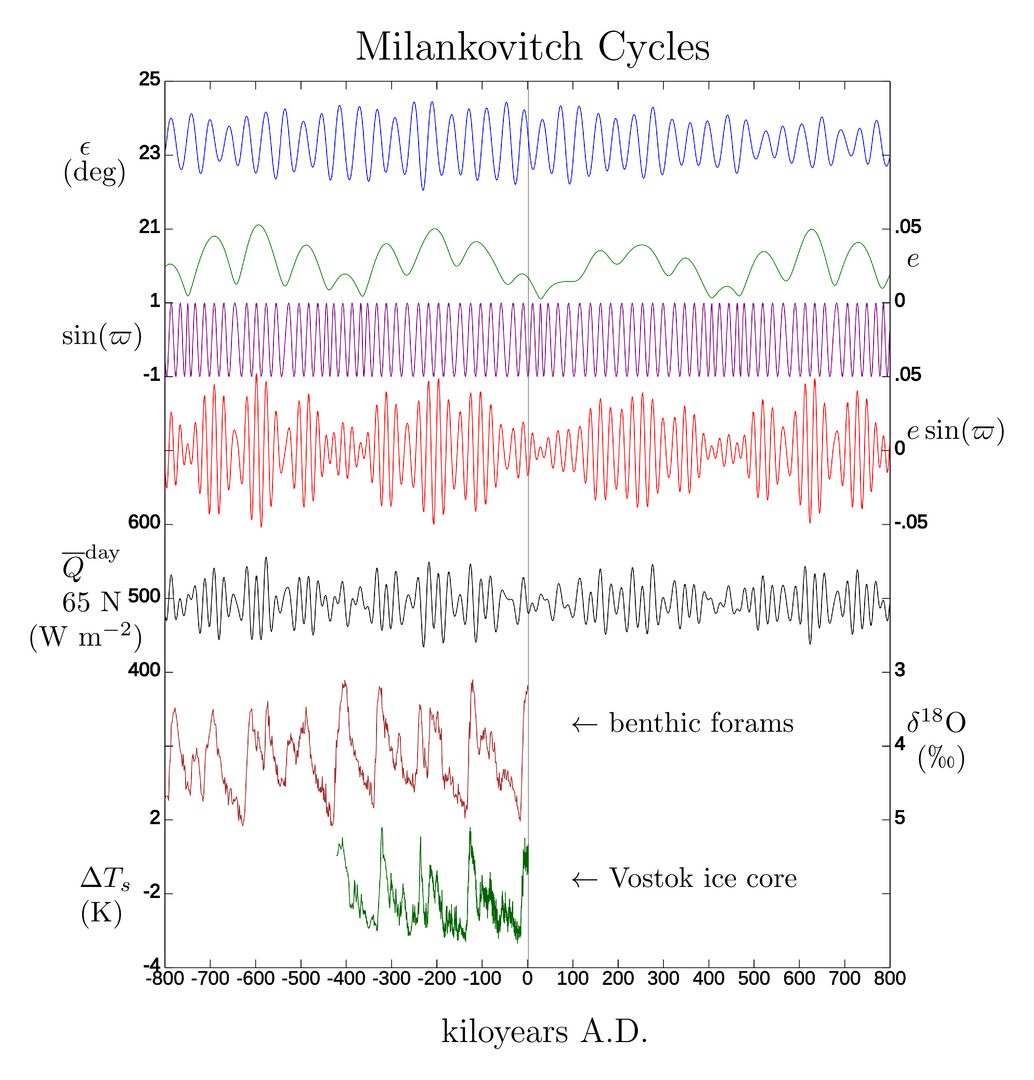 Past and future Milankovitch cycles via VSOP model Graphic shows variations in five orbital elements: Axial tilt or obliquity (ε). Eccentricity (e). Longitude of perihelion (sin(ϖ)). Precession index (e sin(ϖ)) Precession index and obliquity control insolation at each latitude: Daily-average insolation at top of atmosphere on summer solstice () at 65° N Ocean sediment and Antarctic ice strata record ancient sea levels and temperatures (Credit : Incredio)
This new discovery also helps us to assess habitability of Earth like exoplanets by understanding the impact from other planets in the same system. A terrestrial planet with a massive neighbour in the right orbital configuration might experience climate variations that prevent runaway freezing or make its seasons more conducive to life.
The research demonstrates that Earth's Milankovitch cycles aren't just about Earth and the Sun. They're a product of our entire planetary neighborhood, with Mars playing an unexpectedly important supporting role in shaping our climate.
Source : The Dependence of Earth Milankovitch Cycles on Martian Mass