Universe Today
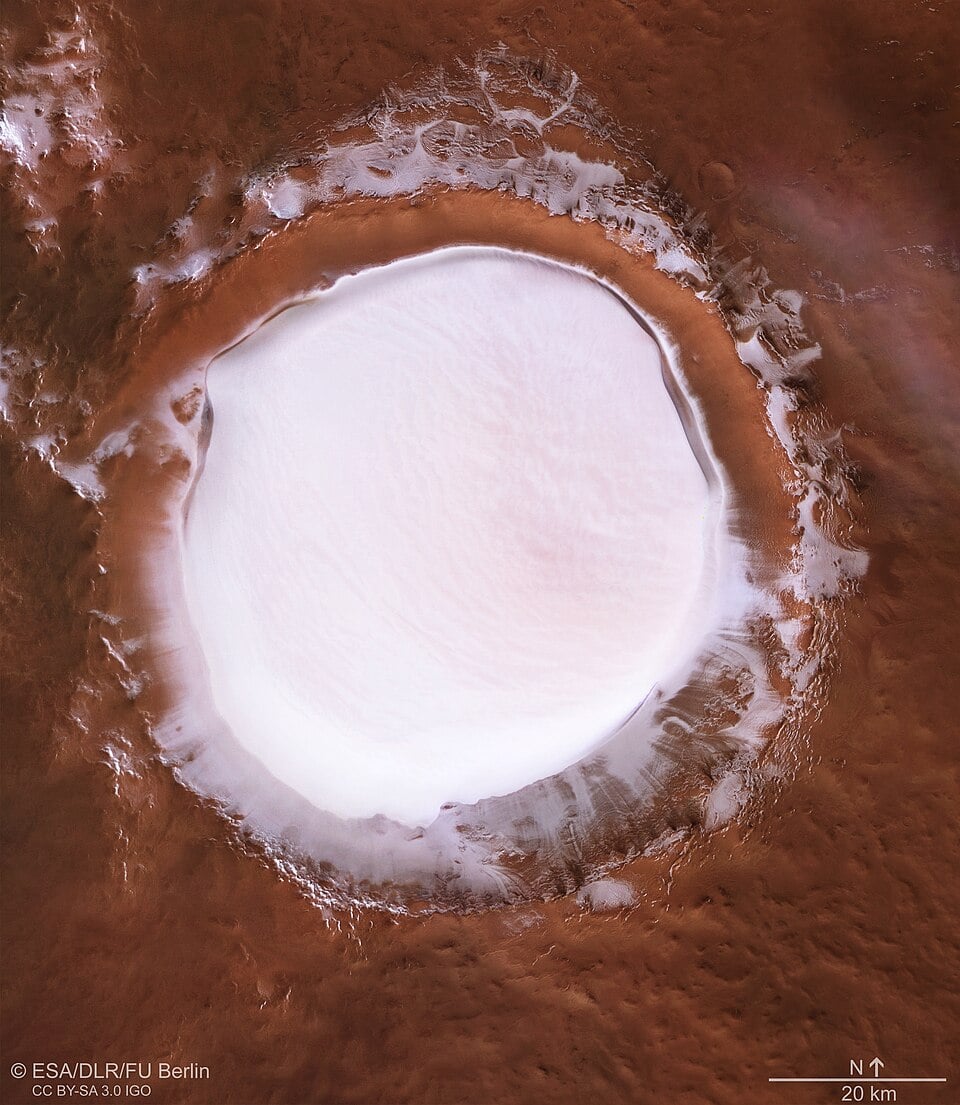
Scientists have known that Mars has water for some years, documenting ice beneath the surface, moisture locked in soil, and vapour drifting through the thin atmosphere. The challenge facing future human missions isn't finding water on the Red Planet, it’s figuring out how to actually extract and use it.
Dr Vassilis Inglezakis at the University of Strathclyde has tackled this practical problem in a new study that compares the various technologies capable of recovering Martian water. While previous research focused on identifying where water exists, this analysis examines the crucial next step which is the evaluation of how effectively each extraction method would work under authentic Martian conditions.
Reliable water access would prove essential not just for drinking but for producing oxygen and fuel, dramatically reducing dependence on supplies shipped from Earth at enormous expense. A self sufficient Mars base needs local water, and it needs extraction systems that actually function in an environment far harsher than anywhere on Earth.
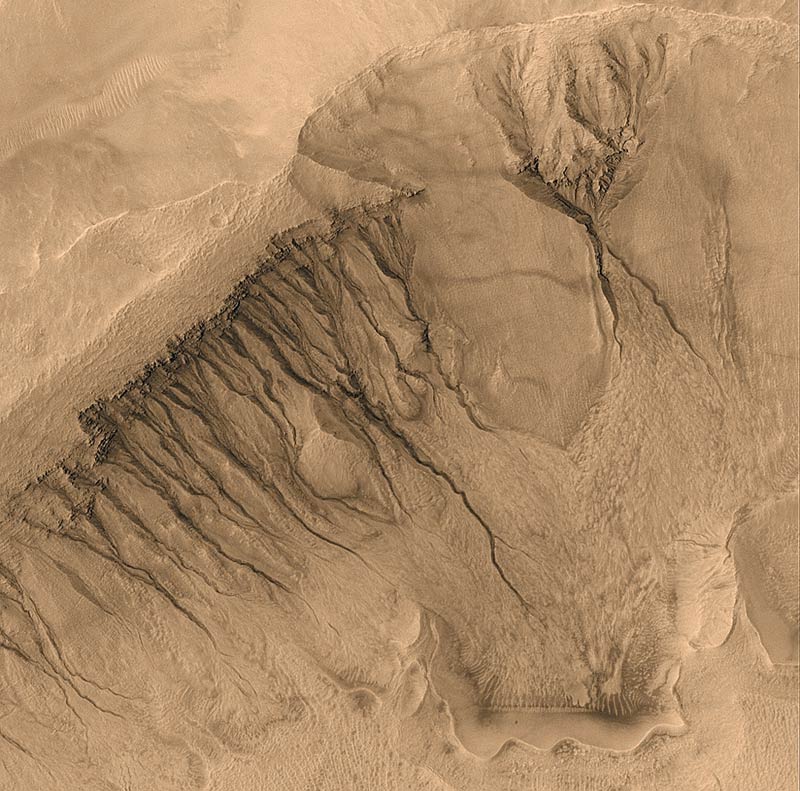 Gullies, similar to those formed on Earth, are visible on this image from Mars Global Surveyor and are thought to be formed by transient running water on the surface of Mars.
Inglezakis compared three primary water sources and their associated technologies. Subsurface ice emerges as the most promising long term option, offering substantial quantities of relatively pure water once drilling or excavation equipment reaches deposits typically buried beneath meters of dry soil and rock. The energy costs of melting ice pale in comparison to the water yield, making this approach economically viable for permanent settlements.
Soil moisture presents a trickier proposition. Martian regolith contains water molecules chemically bound to minerals, which can be liberated through heating. However, the process demands significant energy to extract relatively modest amounts of water, making it better suited as a supplementary source or emergency backup rather than a primary supply.
Atmospheric water harvesting represents perhaps the most intriguing possibility, particularly for missions exploring regions far from known ice deposits. Mars's atmosphere contains water vapour, though in concentrations far lower than Earth's driest deserts. The study proposes new harvesting approaches that could capture this atmospheric moisture, offering a potentially valuable water source when nothing else is accessible. The technology would need to operate continuously, compensating for the atmosphere's stinginess through persistent collection over extended periods.
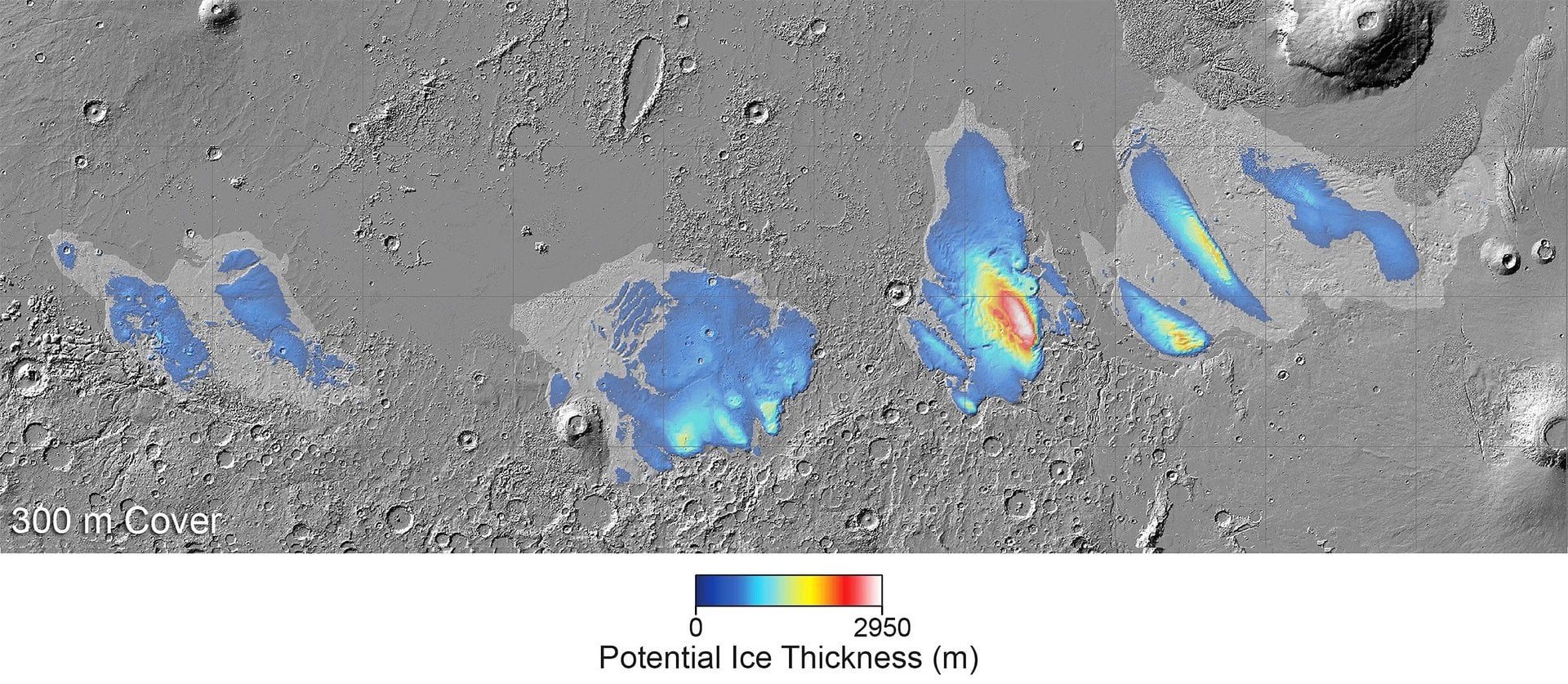 This map shows the ice thickness at Mars’s Medusae Fossae Formation (MFF) if we assume that the dust is 1000 feet thick. In this case, the total volume of water ice contained within the MFF deposits, if it melted, would be enough to cover Mars in an ocean of water approximately 3 metres deep (Credit: ESA)
The analysis evaluates each method across multiple criteria; energy requirements, equipment complexity, scalability from small exploration missions to large settlements, and reliability under varying Martian conditions. Temperature extremes, dust storms, and equipment degradation from the planet's corrosive soil all factor into determining which technologies would prove practical rather than merely theoretically possible.
As Inglezakis notes, much of Mars remains unexplored, and the search for accessible water continues. But understanding which extraction technologies could realistically function on the Red Planet proves equally crucial for planning sustained missions and eventual permanent settlement. The research provides a roadmap for making future Mars missions more self sufficient, transforming the planet's scattered water resources from tantalising discoveries into practical assets for human survival.
Source : Research examines technologies to access water on Mars