Universe Today
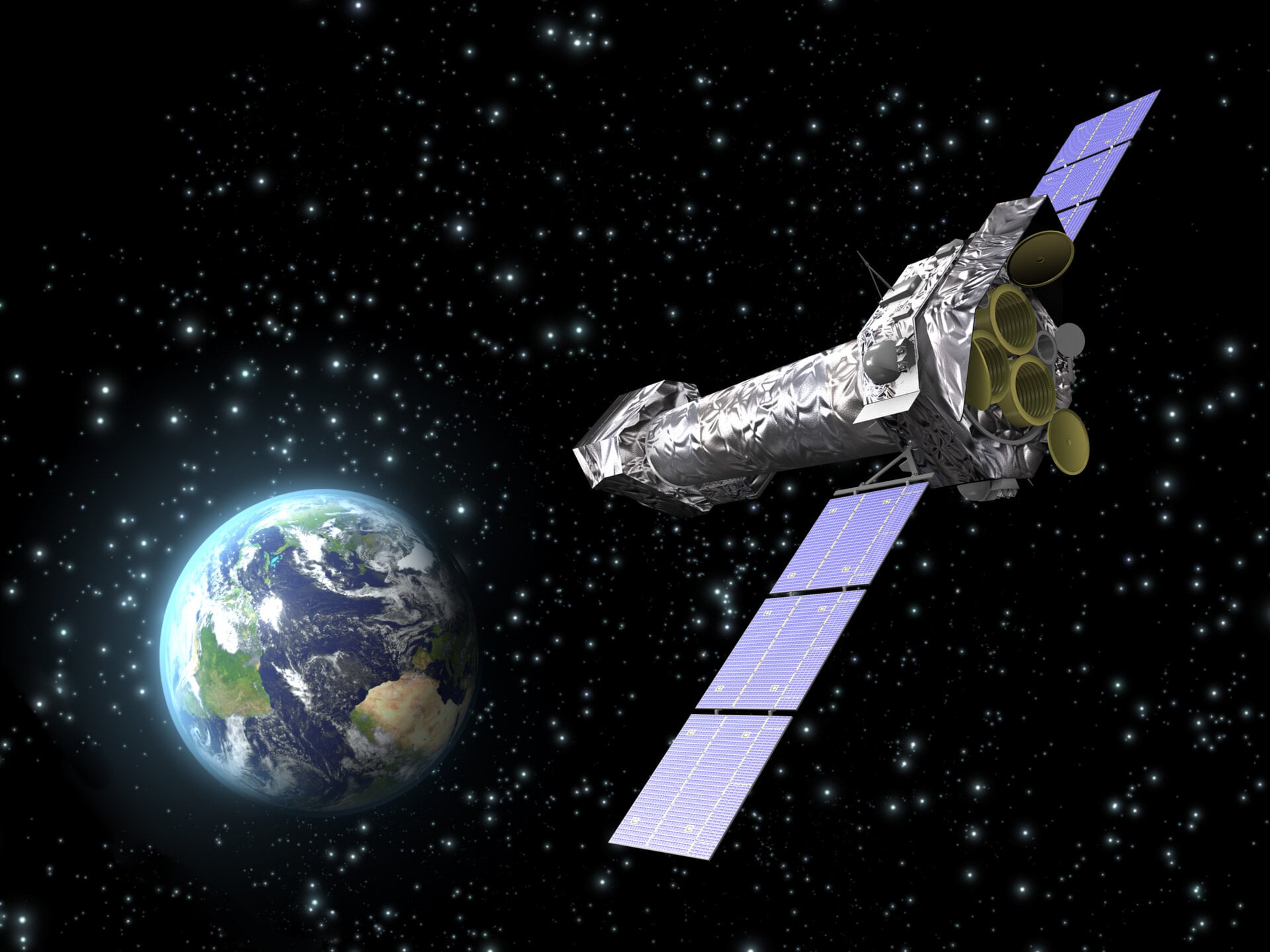
*ESA’s premier X-ray observatory images interstellar comet 3I ATLAS. *
Everyone’s favorite interstellar comet posed for one more portrait recently. The European Space Agency’s XMM Newton mission nabbed 3I/ATLAS on December 3rd from about 283 million kilometers distant. This comes as the comet is set to make its closest passage versus Earth this coming Friday, on December 19th.
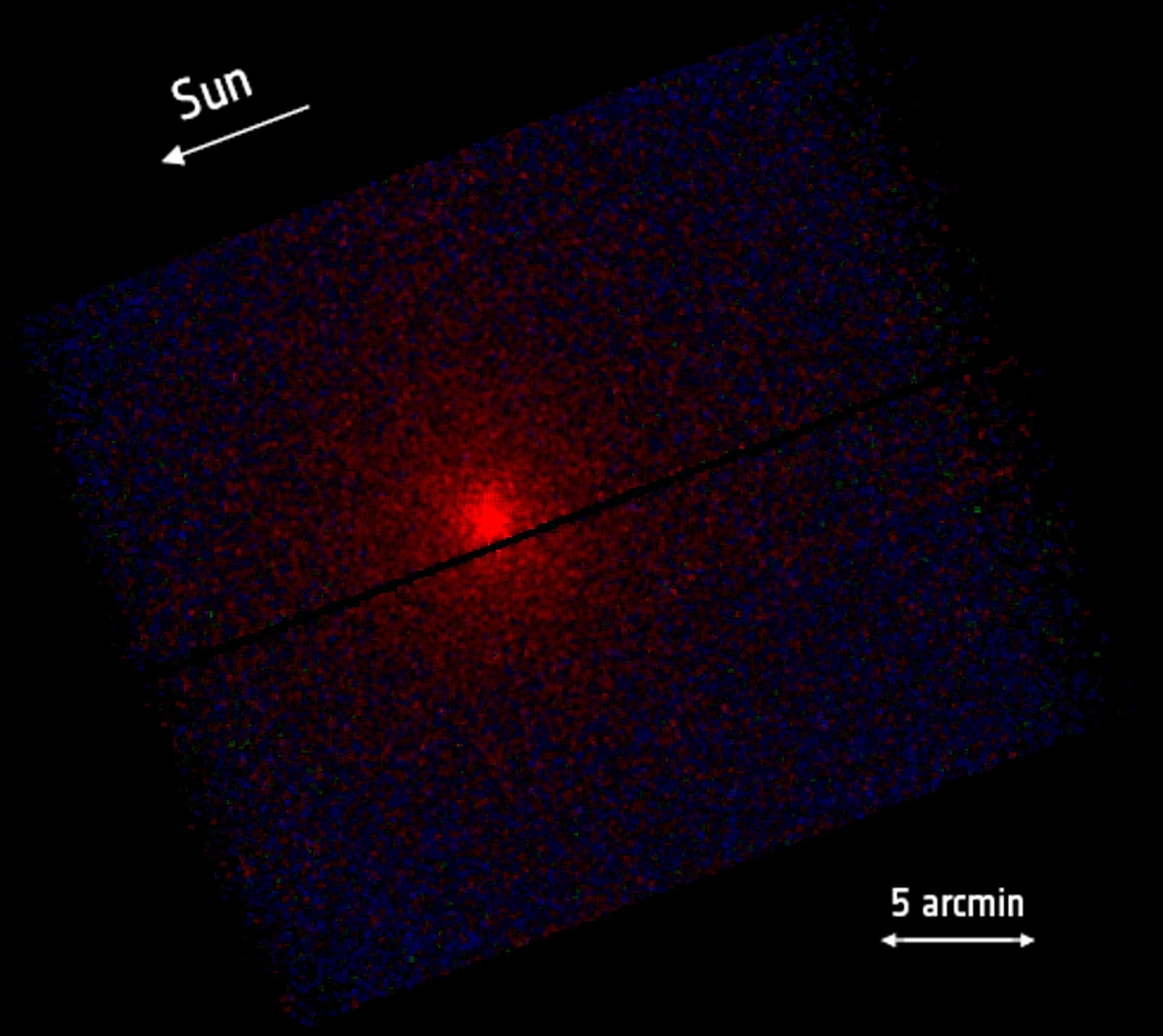 XMM-Newton's December 3rd capture of Comet 3I/ATLAS. Credit: ESA.
The image, while it’s arguably aesthetically underwhelming, contains a wealth of scientific data. The X-ray observatory used its most sensitive x-ray imager for the observation, the European Photon Imaging Camera (EPIC). The black streak in the image is a shadow from an interior vane in the EPIC instrument itself.
The image shows the coma of the comet glowing in low energy X-rays marked in red, as gas streamers interact with the solar wind. This interaction is due to carbon monoxide, carbon dioxide and water vapor. These detections are backed up by observations of the comet by SPHEREx and JWST, though x-ray assets such as XRISM and XMM-Newton are uniquely sensitive to diatomic hydrogen and nitrogen.
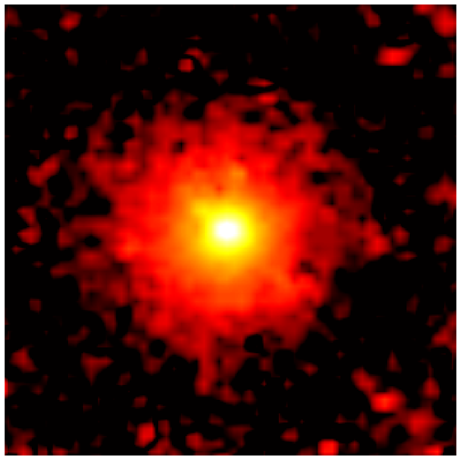 SPHEREx's view of 3I/ATLAS from early August. Credit: NASA.
“This makes X-ray observations a powerful tool,” the ESA said in a recent press release. "They allow scientists to detect and study gases that other instruments can’t easily spot.”
Output of these gases are almost invisible at ultraviolet and optical wavelengths. Hubble and ESA’s JUICE mission have already observed 3I/ATLAS at these wavelengths.
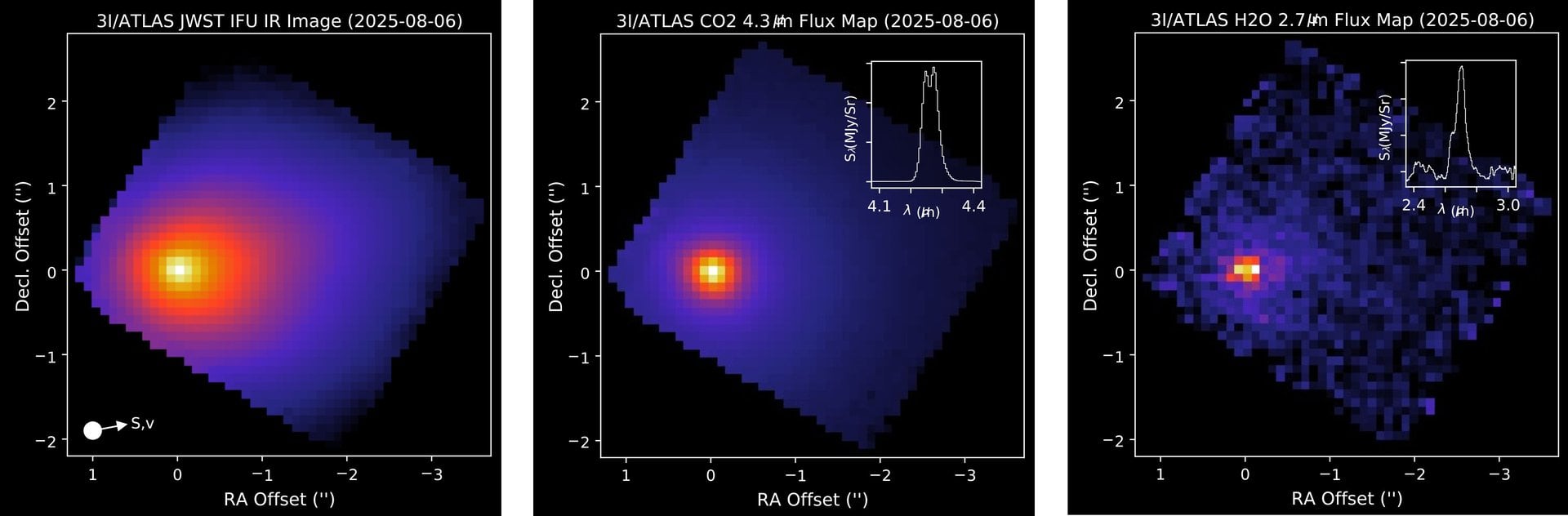 Combined images of comet 3I/ATLAS, courtesy of JWST. Credit: NASA.
Researchers suspected that the first interstellar object 1I/’Oumuamua seen passing through the inner solar system in 2017 contained exotic ices as well. But observations of ‘Oumuamua were relatively sparse, owing to the fact that the object was only discovered as it was on its way out of the solar system.
3IATLAS was first spotted in early July 2025, well before perihelion on October 29th. This gave researchers an opportunity to turn all available assets on the interstellar comet, both on and around Earth and across the solar system.
One of the most fascinating facts that has come out on the object is just how old 3I/ATLAS may be. It seems to hail from the galactic thick disk, making the comet at least 7 billion years old and possibly much older, more ancient than the solar system itself.
The comet passed just 0.19 Astronomical Units (AU) from Mars on October 3rd, and missions in orbit around the Red Planet all turned their gaze towards 3I/ATLAS. Even NASA’s Perseverance Rover on the surface of Mars got in on the act.
Astronomers are also observing what’s referred to as ‘non-gravitational motion’ from the comet, which isn’t as cryptic as it sounds. We see this same behavior from more prosaic solar system comets, as heating near the Sun gives way to out-gassing, which gives the comet a gentle push in the opposite direction.
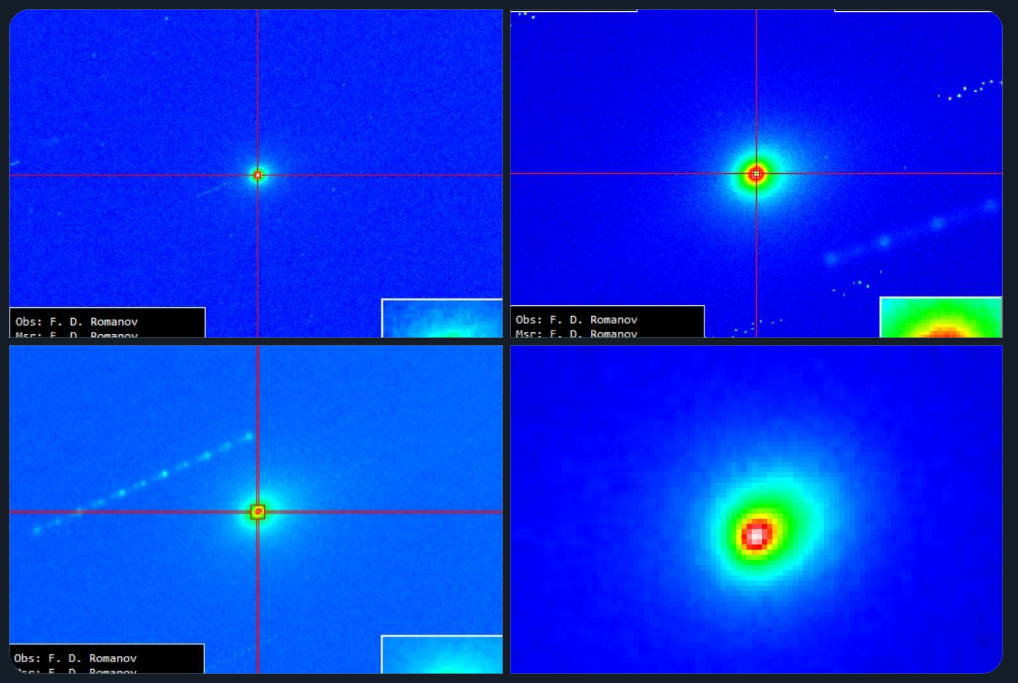 Remote iTelescope and Liverpool Telescope captures of Comet 3I/ATLAS from early December. Credit: Fillip Romanov.
And there’s more to come. 3IATLAS passes closest to Earth this week on Friday, December 19th at 6:02 Universal Time at 1.8 Astronomical Units (AU) or 269 million kilometers (167 million miles) distant. Although (as it always seems to be the case with comets) this passage is distant and unfavorable as seen from our fair planet, you can still tease out 3I/ATLAS as a +12th magnitude fuzzball tracking through the dawn sky in the constellation Leo the Lion for the remainder of 2025.
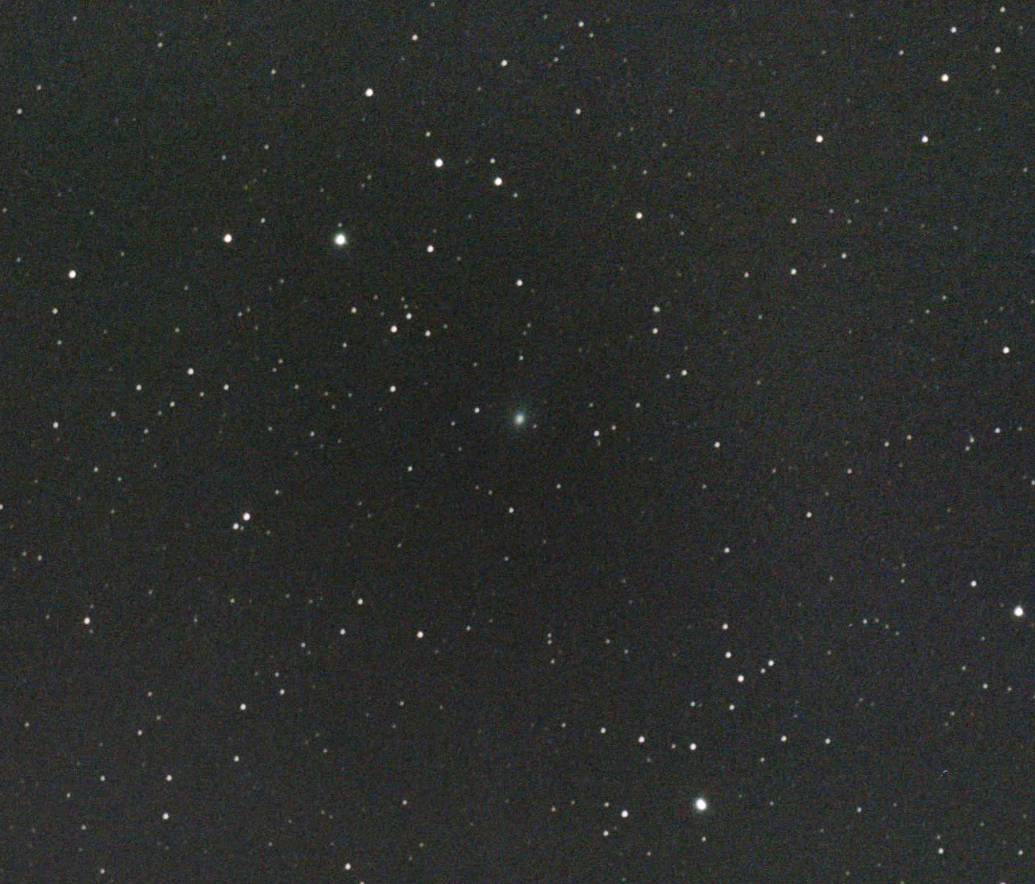 Our own humble image of interstellar comet 3I/ATLAS (the fuzzball in the center), taken with a DwarfLab Dwarf3 smartscope. Credit: Dave Dickinson.
2026 sees the comet receding from the inner solar system in the direction of the star Zeta Geminorum in the constellation Gemini the Twins.
3I/ATLAS made top astronomy headlines in 2025, though I suspect new sky surveys now online like the Vera C. Rubin Observatory's Simonyi Survey Telescope will reveal that interstellar comets are much more common than previously thought. For now, we can marvel at just what the discovery has taught us about the nature of our home galaxy, out beyond our solar system.