Universe Today
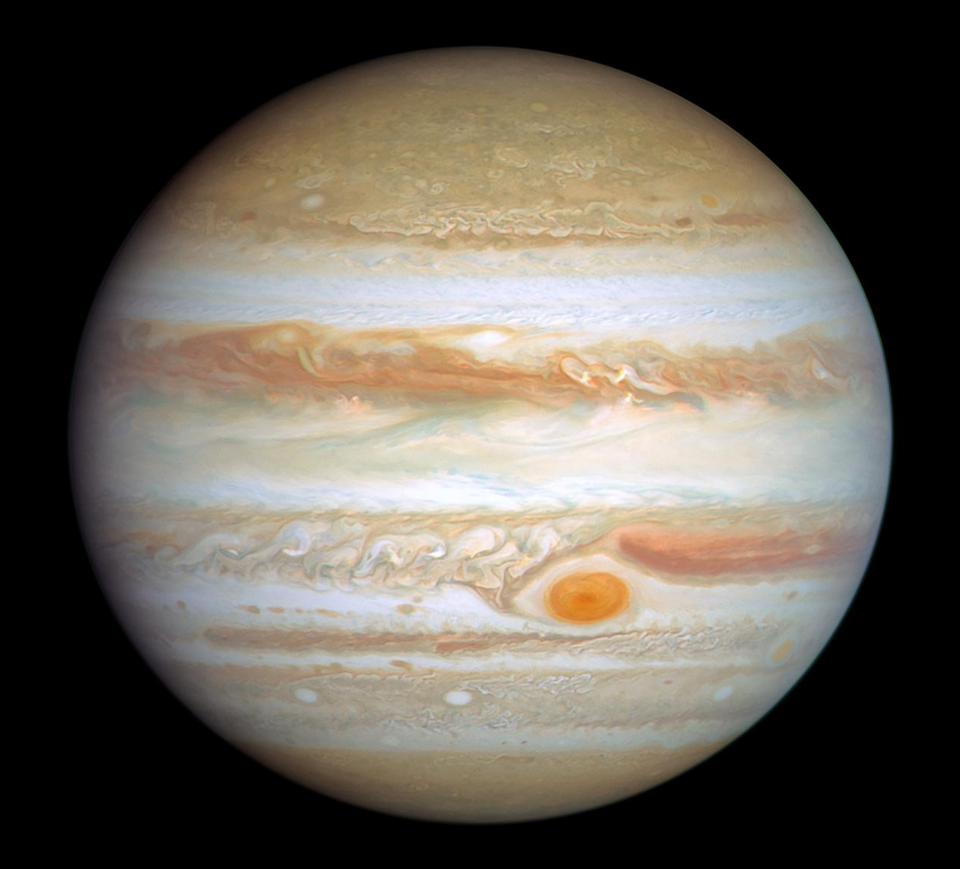
The giant planets weren't always where we find them today. Jupiter, Saturn, Uranus and Neptune formed in a more compact configuration and later underwent a violent reshuffling that scattered them to their current positions. Exactly what triggered this chaos remains uncertain, but researchers at the Laboratoire d'Astrophysique de Bordeaux and the Planetary Science Institute now propose a close encounter with a wandering substellar object during the Sun's youth.
The giant planet instability, as astronomers call it, explains numerous features of the Solar System. It accounts for Jupiter's co-orbital asteroids, the irregular satellites circling the giant planets, and the orbital structure of both the Kuiper belt and asteroid belt. The timing appears early, probably within 5-20 million years after the Solar System formed, based on meteorite evidence. The trigger, however, has remained elusive.
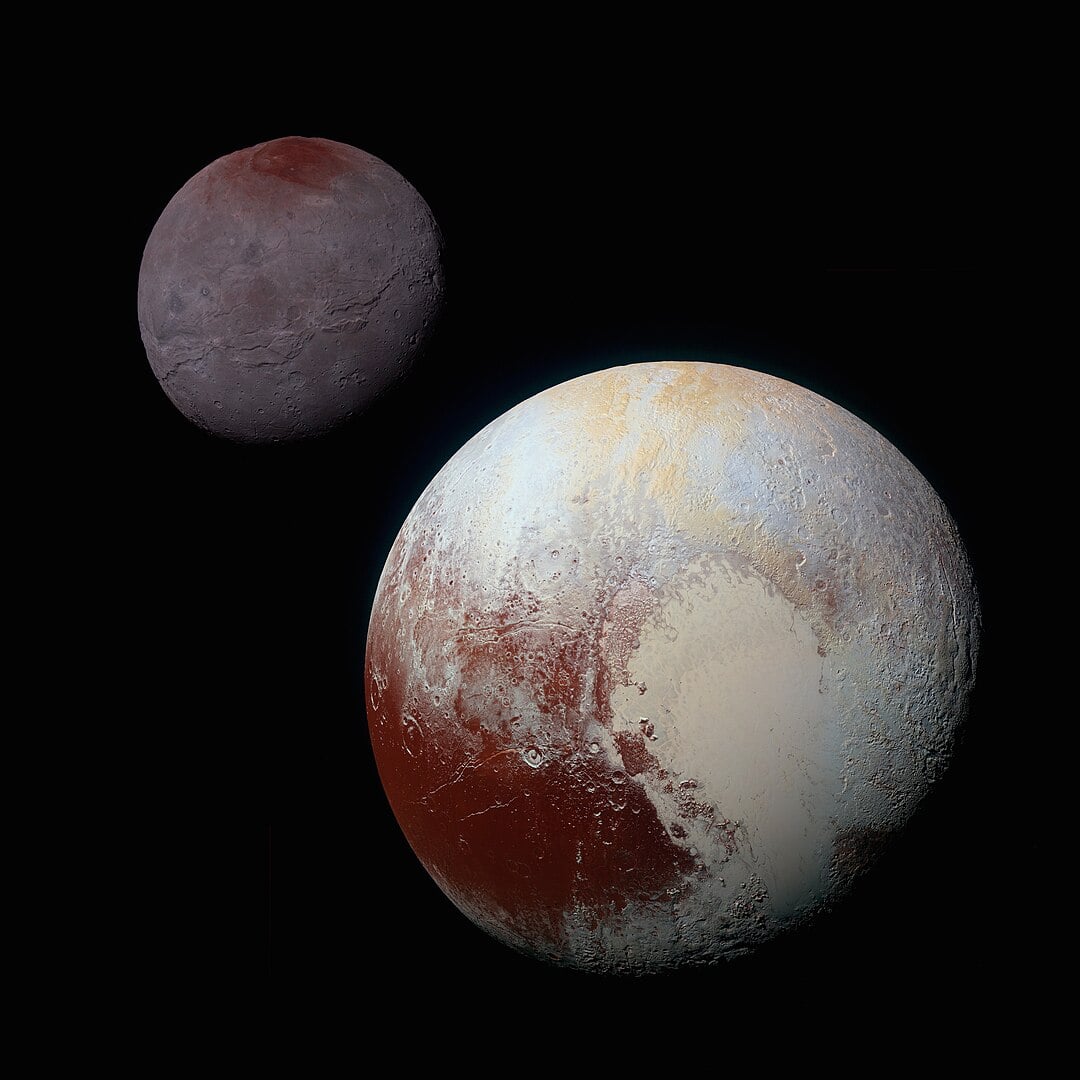 Pluto is one of the many Kuiper Belt Objects in our Solar System (Credit : NASA / Johns Hopkins University Applied Physics Laboratory / Southwest Research Institute)
Sean Raymond and Nathan Kaib ran 3000 computer simulations testing whether stellar flybys could destabilise the young planetary system. The Sun formed within a cluster of hundreds to thousands of stars, making close encounters inevitable. The team started each simulation with the giant planets in a resonant chain that would remain stable for over 100 million years if left undisturbed, then subjected the system to a single flyby.
The simulations explored flyby objects ranging from one Jupiter mass to ten solar masses, passing at distances between 1 and 1000 astronomical units with velocities up to 5 kilometres per second. Very strong flybys stripped planets away or over excited their orbits beyond recognition. Very weak flybys did nothing. But an intermediate range produced systems matching the present day Solar System.
The successful scenarios shared common characteristics. The flyby object had to be relatively low mass, between 3 and 30 Jupiter masses, placing it firmly in the brown dwarf or free-floating planet category. It needed to pass within roughly 20 astronomical units of the Sun, directly perturbing the planetary system rather than just the outer disk. Only 20 simulations, less than one percent of the sample, matched both the giant planets' orbits and preserved the cold classical Kuiper belt, a population of small bodies whose pristine orbits constrain how violent any ancient encounter could have been.
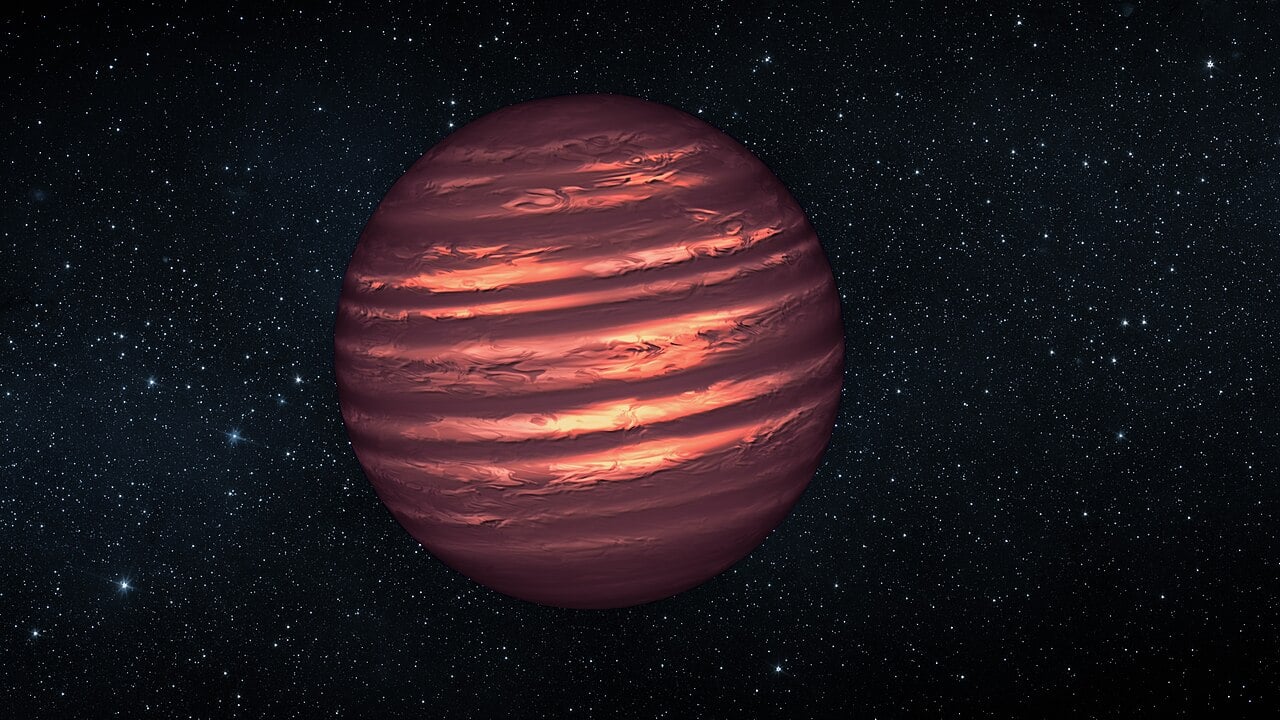 Artist impression of a brown dwarf (Credit : NASA/JPL-Caltech)
The probability calculation depends critically on the abundance of free floating planets and low mass brown dwarfs. Recent observations of young star clusters suggest these objects are more common than standard models predict. If their numbers are even modestly underestimated by a factor of four, the probability of a flyby triggered instability rises from roughly one percent to five percent.
The work offers a fourth possible trigger for the giant planet instability, joining scenarios involving gas disk dispersal, spontaneous destabilisation, and gravitational interactions with the outer planetesimal disk. Distinguishing between these mechanisms remains challenging, particularly since flyby triggered instabilities could still be delayed by tens of millions of years after the encounter itself.
Source : Was the Solar System's dynamical instability triggered by a (sub)stellar flyby?