 Universe Today
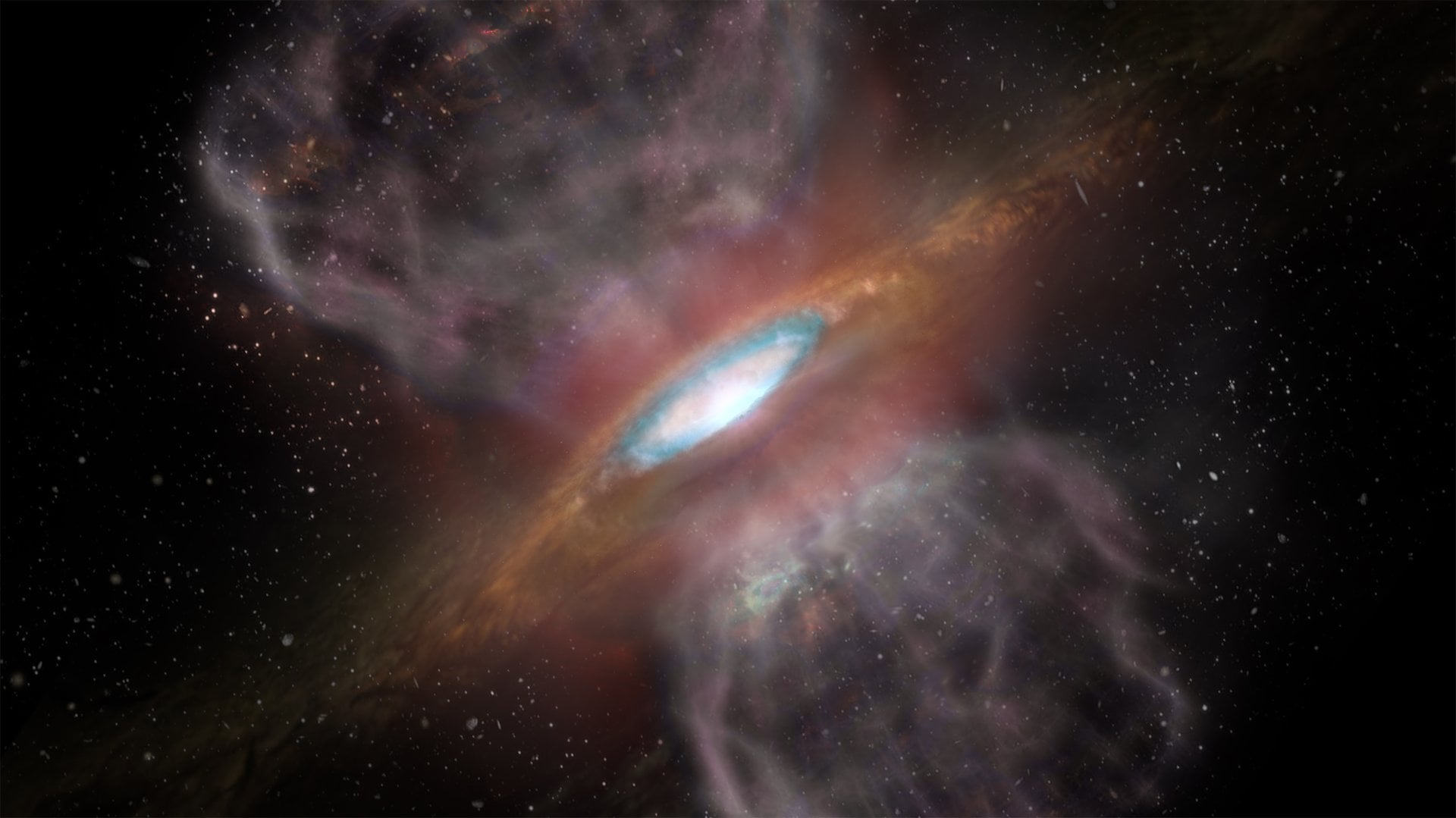
Astronomers have detected titanium oxide in gas form for the first time around a young, massive star. The detection offers a rare glimpse into the very earliest stages of solar system formation, before the formation of planets and asteroids.
The detection was made around a young protostar called Orion Source I, which lies some 1500 light-years from Earth. Orion Source I has not yet reached the main sequence phase of a star’s life cycle — it continues to accrete material from its surrounding molecular cloud.
Models of solar system formation have long held that certain rocky molecules, ones which are stable at high temperatures, act as the ‘seeds’ that make up the dust in a protoplanetary disk, and later form the basis for rocky planets like Earth and Mars. This includes elements like calcium, aluminum, and titanium. Only later do materials that vaporize easily – volatiles like water, for example – accrete to young solar system objects.
But it’s not exactly clear where these seeds form. Samples collected from our own solar system suggest that they form under high-temperature conditions. They are, as far as we can tell, the oldest solids ever formed in our solar system.
Now, for the first time, this detection of titanium oxide around Orion Source I is providing astronomers more direct evidence of vaporized rock at the dawn of a new star system.
“We're in a unique situation with this object, Orion Source I,” said Adam Ginsburg, Associate Professor at the University of Florida and a co-author on the paper announcing the discovery. “This object has a luminous enough star that it's evaporating the rock. We're seeing the rock evaporate from solid into gas, and so we can do the spectroscopy now and figure out what the rock is made of.”
Ginsberg and his coauthors are getting the first real glimpses at the formation environments of these rocky dust-seeding materials, which complements knowledge gathered from our own solar system.
“The exciting thing is we're seeing the titanium oxide; we can measure how much there is, and we can start comparing our measurements to how our own solar system formed,” Ginsburg said. “In our solar system, we can measure the ratios between different types of rocks, different elements, because we can grab those rocks and bring them into a lab.”
This isn’t the first time Orion Source I has provided valuable insights into solar system formation. In 2019, salty compounds were similarly detected in the protoplanetary disk.
While the salt was found mainly in the outer disk around the star, the titanium oxide was found closer in, at the base of the star’s outflow of material: a hotter, more extreme region where the material could be vaporized. Understanding the origin of this material is an important discovery for researchers trying to piece together exactly how a new solar system comes together, and offers a glimpse into the past of our own star and rocky neighbourhood.
The detection was published in The Astrophysical Journal Letters in 2026.