Universe Today
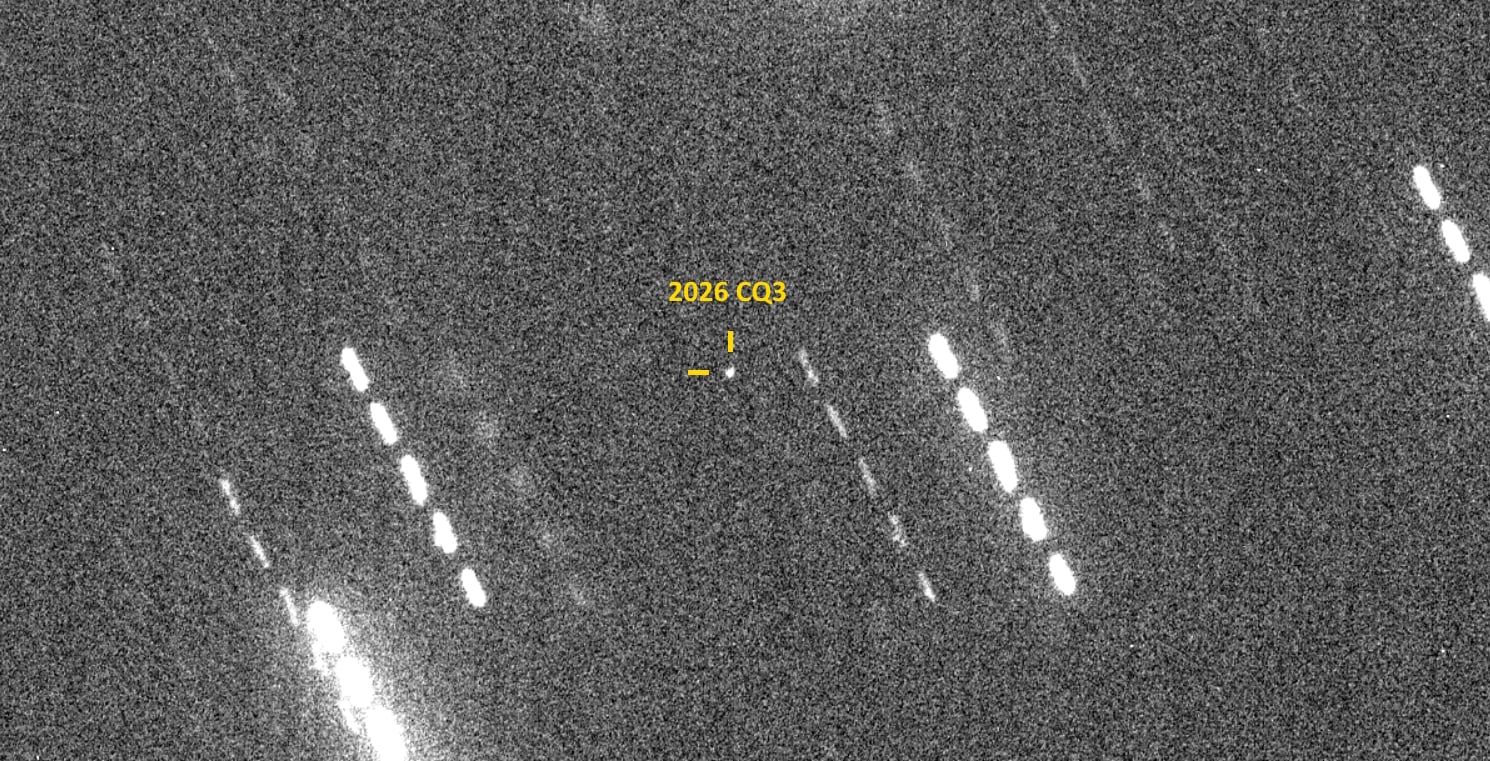
A recent discovery highlights how amateurs can still make asteroid discoveries in a brave new era of all-sky surveys.
It’s getting tough for amateur astronomers to breakthrough with new discoveries. Gone is the era of the lone amateur on a windswept hill sketching a star field from night to the next, looking for an errant ‘star’ that has moved against the background field heralding a new star or comet.
The modern era of all-sky surveys including Pan-STARRS, ATLAS and now the Vera C. Rubin Observatory has given amateur astronomers some stiff competition. But many amateurs have simply upped their game, and took their quest online. The ability to access remote observatories has really helped in this regard.
One recent discovery highlights this growing trend. Amateur astronomer Filipp Romanov was able to nab the fast-moving asteroid 2026 CQ3 flitting through the constellation Leo last month on the night of February 15th, 2026.
“I requested the imaging of 15 photos (with 60-second exposures on the 2-meter Liverpool Telescope) to confirm one of the Main Belt asteroids I had found.” Filipp told Universe Today. “When they were taken and I looked through them, I saw a fast-moving (about 18 arcseconds per minute) faint (+20th magnitude) object and immediately assumed—based on the speed of its movement—that it was most likely a near-Earth asteroid.” Indeed, such a fast apparent motion spans the diameter of the Full Moon in about a 100 minutes, suggesting a relatively close object. You would be able to see 2026 CQ3 moving against the starry background in the field of view of a telescope after just a few minutes.
“I made astrometric measurements and sent them under the temporary designation RFD0284 to the NEO Confirmation Page of the Minor Planet Center for the possibility of confirmation from other observatories.”
It’s easy to lose such a fast-mover, but Filipp was in luck: the McDonald Observatory in Texas tracked the asteroid down a few hours later on the same date, allowing astronomers to peg down its orbit with greater accuracy. Asteroid 2026 CQ3 passed 5 million miles (8 million kilometers) from the Earth on February 13th of this year and was missed by sky surveys. The asteroid orbits the Sun about once every 503 days. The 15 to 50-meter Amor asteroid will visit the Earth-Moon system one more time again for the 21st century on February 18th, 2037, on a much more distant pass 0.15 Astronomical Units (AUs) away.
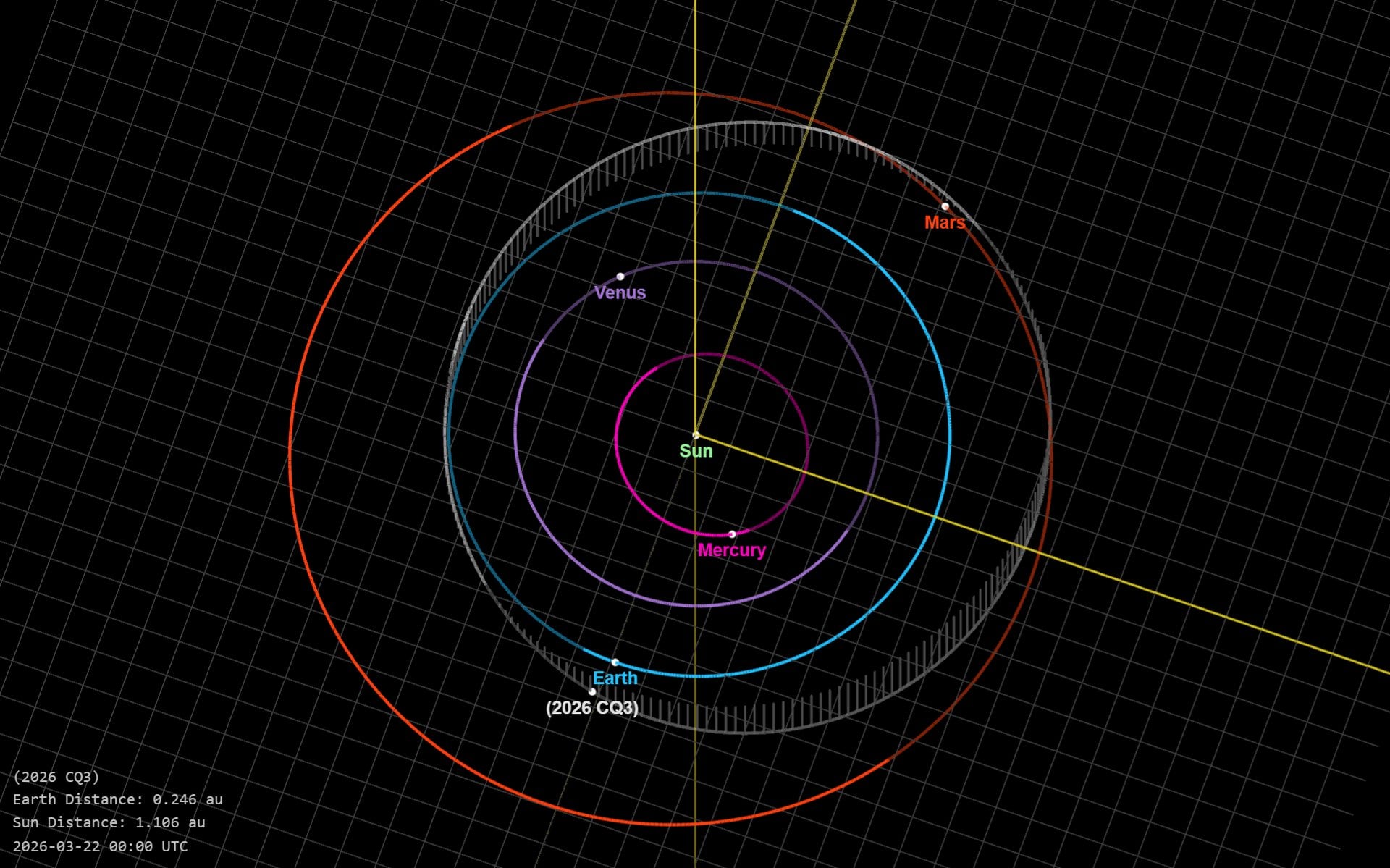 The orbit of asteroid 2026 CQ3. Credit: NASA/JPL.
This is Filipp’s second near-Earth asteroid find, after 2024 QS. Fillip’s recent rotation analysis and first authorship of a paper on this Apollo asteroid appeared in the recent issue of the Minor Planet Bulletin. Filipp’s current tally of 82 variable stars, 10 planetary nebulae candidates, 3 each extra-galactic novae and supernovae and 13 asteroids is impressive.
What’s even more impressive is that Filipp is self-educated in astronomy. He's never been a university student, but he plans to do so in the future. He accesses remote telescopes in several countries to make his discoveries. He does all of this from Far Eastern Russia, where he is temporarily located in Primorsky Krai.
 Amateur astronomer Filipp Romanov.
This year, three Main Belt asteroids discovered by Filipp at the Liverpool Telescope (LT) were named: (847420) Livtel = 2025 KN2 after the Liverpool Telescope, (875129) Abbeyridgeobs = 2024 SM9 after Abbey Ridge Observatory in Canada, and (875150) Burkegaffneyobs = 2025 KX5 after the Burke-Gaffney Observatory of Saint Mary's University in Halifax, Nova Scotia, Canada.
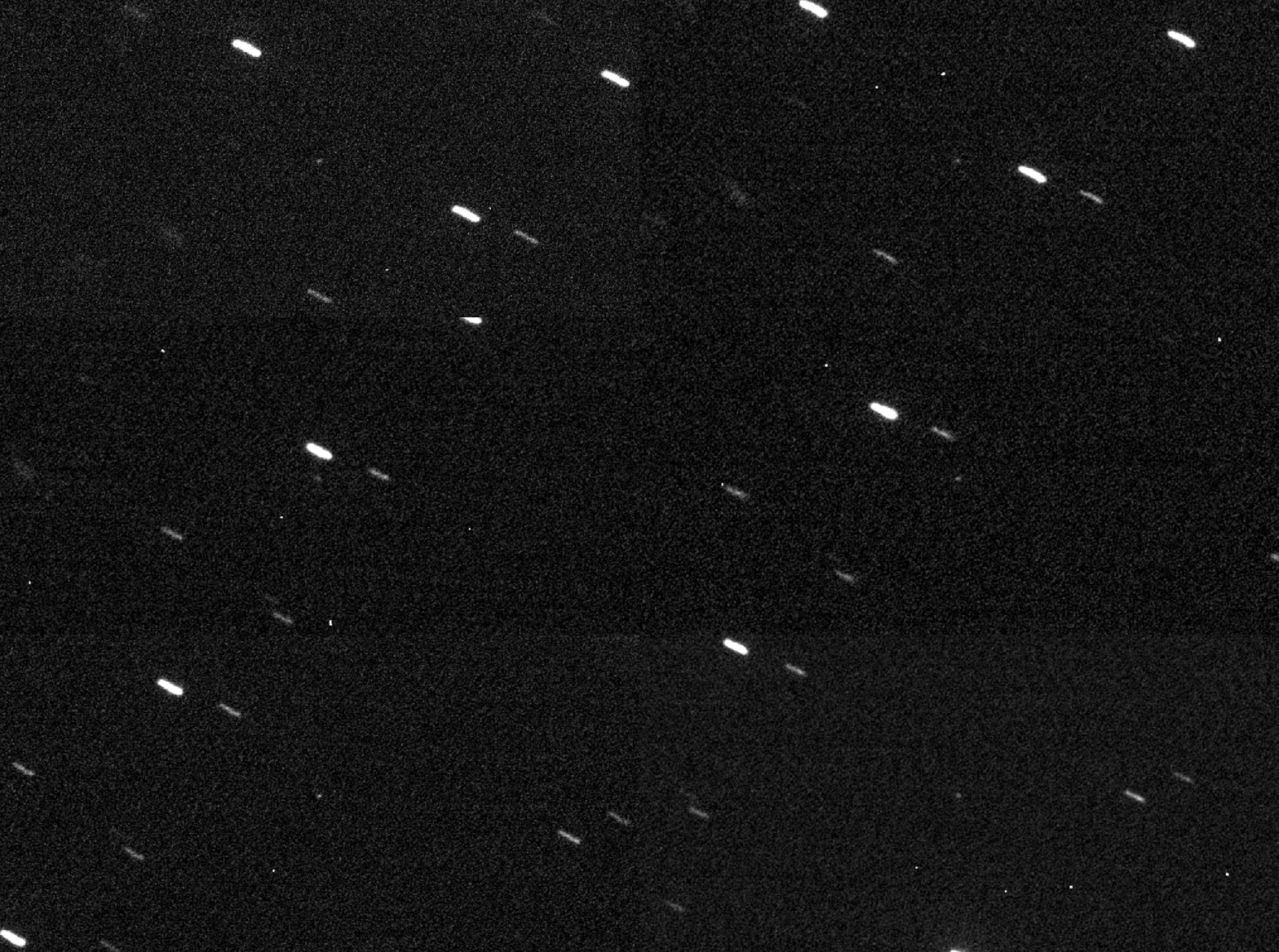 An animation of asteroid 2026 CQ3. Credit: Filipp Romanov/The Liverpool Telescope.
This is Filipp’s second near-Earth asteroid find. Of the 1.5 million known asteroids, 41,000 are Earth-crossers. We’ve also covered Filipp’s discovery of asteroids 679996 Mariyafilippovna and 679999 Mariyavarkiva, and 623826 Alekseyvarkin and 623827 Nikandrilyich for Universe Today.
Coincidentally, one of Filipp’s first observations was asteroid 2012 DA14 during its close Earth passage on February 15th/16th, 2013. If that date sounds familiar, it was also the same morning that an unrelated meteor exploded over Chelyabinsk, Russia.
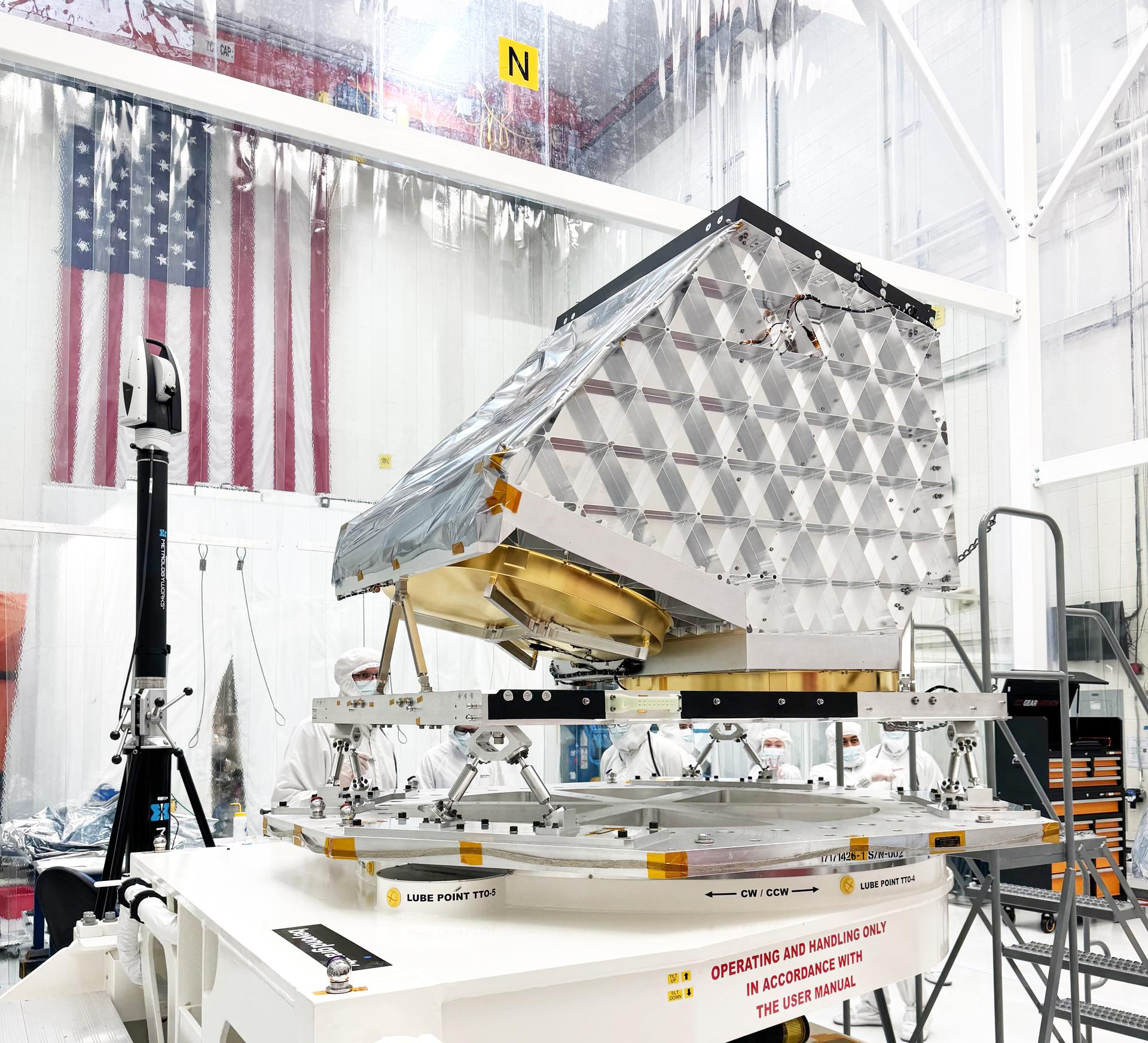 NEO Surveyor under construction. Credit: NASA/Space Dynamics Laboratory/Allison Bills.
The rise of the Vera C. Rubin Observatory and other automated all-sky surveys, along with the launch of NEO Surveyor set for late 2027 will soon raise the tally of known asteroids considerably, and push discoveries to ever fainter magnitudes. Vera C. Rubin and the Simonyi Survey Telescope at the heart of the system is set to begin the 10-year Legacy Survey of Space and Time this year. As a tour de force, Vera Rubin demonstrated its potential on first light last year, revealing 2,104 new asteroids on its very first time out.
Clearly, there are lots more asteroids out there awaiting discovery. It will be interesting to see just what sorts of strange new discoveries emerge from the fire hose of survey data that astronomers will soon have access to in the coming years, and how amateur astronomy will adapt. Filipp’s efforts are inspirational, and serve as a reminder to us all to ‘just get out there and do it.’