Universe Today

The Chinese didn't invent the rocket but they came remarkably close. More than a thousand years ago, during the Song Dynasty, Chinese engineers were packing black powder into bamboo tubes and launching fire arrows that hissed across battlefields on jets of smoke and flame. Those crude devices were the distant ancestors of every launch vehicle that has ever punched through Earth's atmosphere and there's a pleasing symmetry in the fact that, today, China operates one of the most capable and ambitious space programmes on the planet. From its first satellite in 1970 to a fully operational crewed space station orbiting overhead right now, the journey has been extraordinary. And in 2026, it's about to get even more interesting.
 The oldest depiction of rocket arrows. From the Huolongjing. The right arrow reads 'fire arrow,' the middle one is an 'arrow frame in the shape of a dragon,' and the left one is a 'complete fire arrow.'(Credit : 焦玉 (Jiāo Yù and 文言 (w:Liu Bowen) - 火龍經 (Huǒ Lóng Jīng))
China's Manned Space Agency has announced the mission schedule for the year ahead, and it reads like a programme firing on all cylinders. Two crewed Shenzhou missions are planned, along with a Tianzhou cargo resupply flight to keep the Tiangong space station stocked with supplies, equipment, and scientific payloads. That alone would make for a busy year.
There's also a genuinely significant scientific experiment buried in the schedule. One astronaut from the Shenzhou-23 crew will undertake a year long continuous stay aboard the station, a duration that pushes into territory previously explored only by Russian cosmonauts and a handful of NASA astronauts aboard the International Space Station. Keeping a human being healthy, functional, and psychologically resilient in microgravity for twelve months is one of the key challenges facing any agency planning deep space exploration. China wants to know what a year in orbit does to the human body, and this mission will generate data that feeds directly into its lunar ambitions.
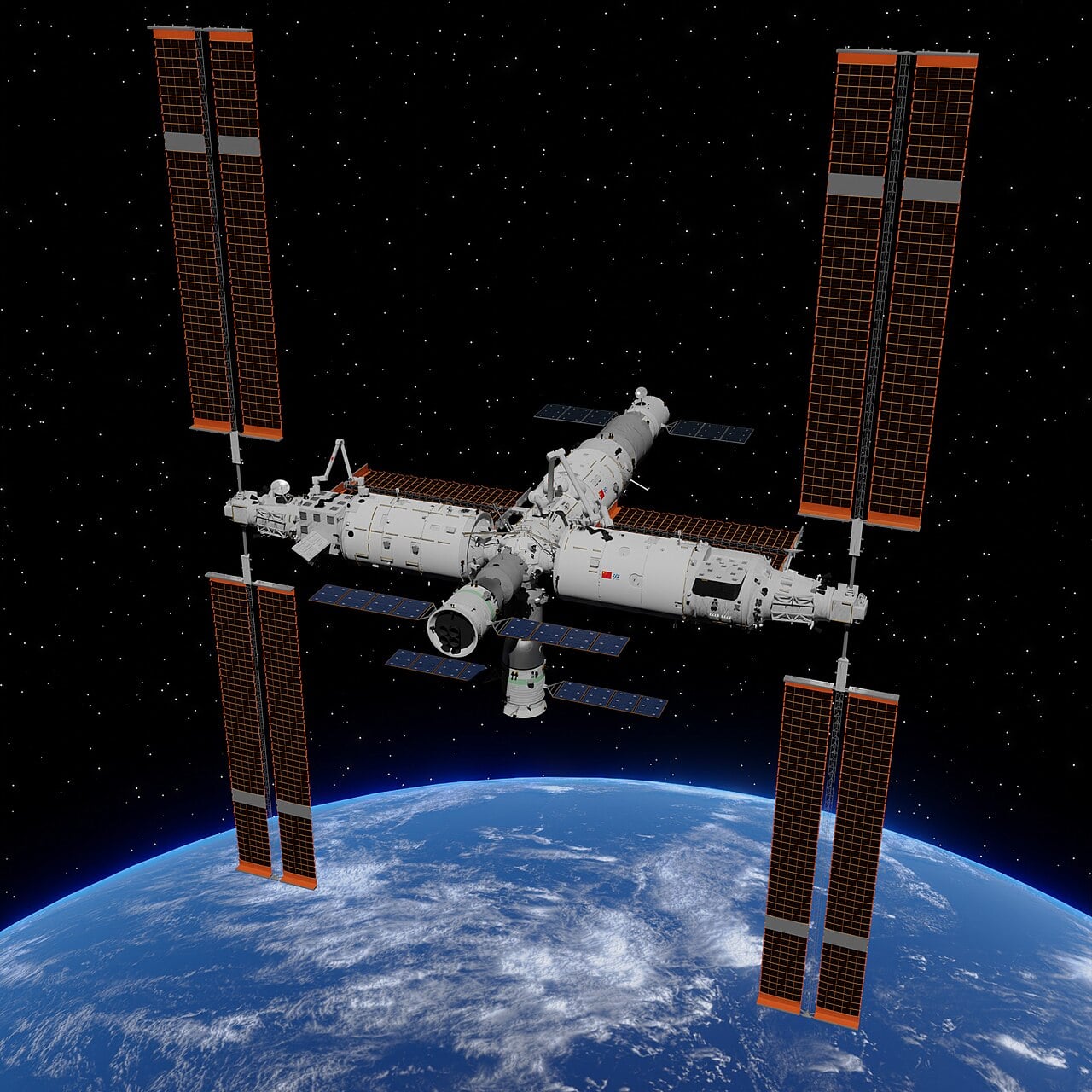 Artist impression of the completed maximum form of Chinese Tiangong Space Station (Credit : Shujianyang)
Because those ambitions are very real, and very close. China is targeting a crewed Moon landing by 2030, and the hardware to make it happen is taking shape. The Long March-10 rocket has completed its static fire test, with low altitude demonstration flights also ticked off the list. The Mengzhou crewed spacecraft, which will carry astronauts on the journey to and from the Moon, has passed both maximum dynamic pressure escape tests and zero-height abort tests (the kind of brutal safety validation that space agencies demand before they will trust a vehicle with human lives.) They have also completed landing and takeoff test on Earth of the Lanyue lunar lander, which will descend to the Moon's surface.
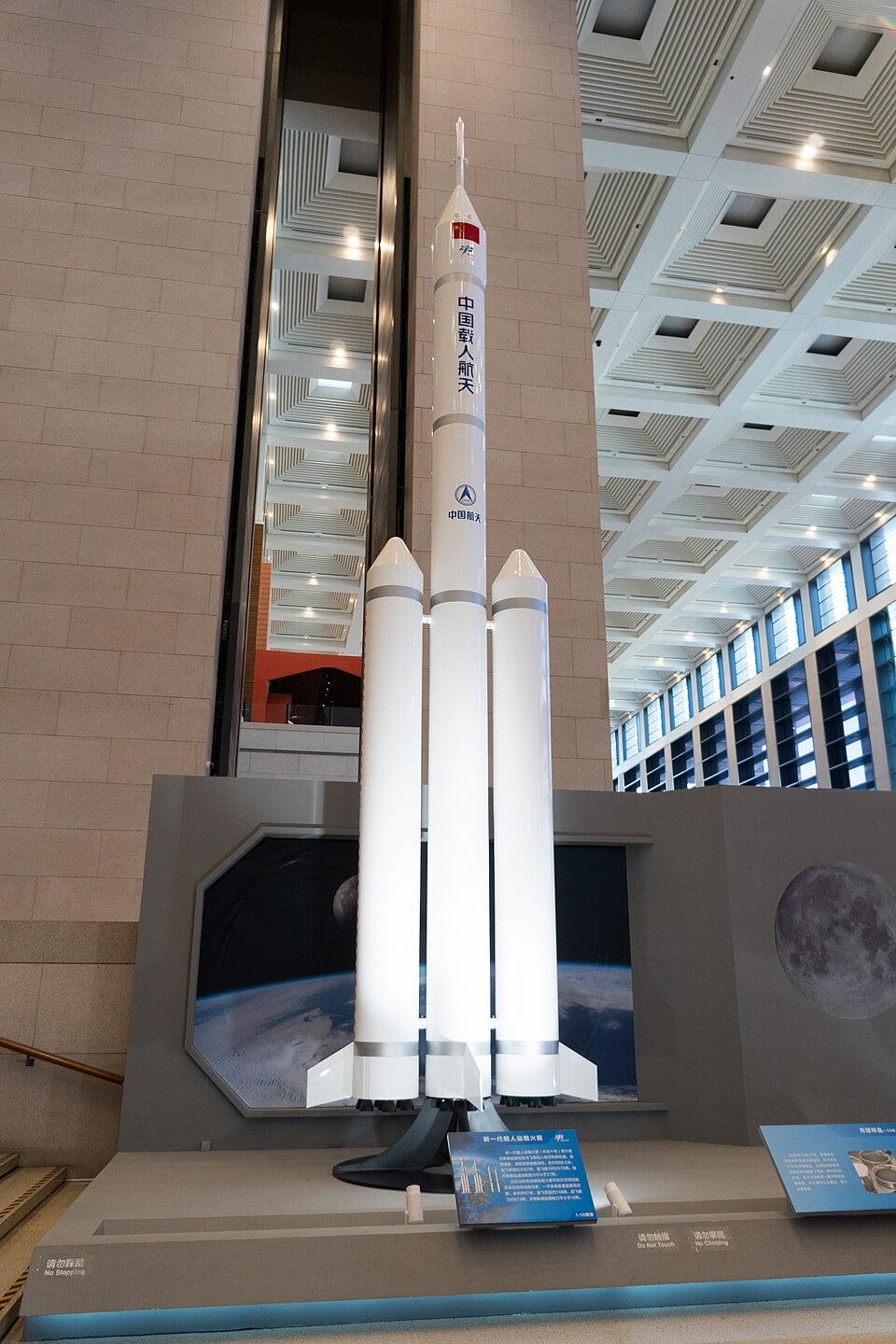 Long March 10 mockup displayed at the National Museum of China (Credit : Shujianyang)
None of this is small. The engineering challenges involved in landing people on the Moon and returning them safely are immense, and the fact that China is systematically ticking off test milestones on all three of its major flight systems simultaneously suggests a programme that is genuinely on track rather than simply projecting confidence.
Beyond the technology, China is also expanding the human geography of its space programme. A Pakistani astronaut is set to fly as a payload specialist aboard Tiangong, following an agreement signed in 2025. It's part of a broader pattern of international partnerships that Beijing has been building steadily, positioning its space station as a genuinely global facility in the years ahead.
Fifty six years after the first humans walked on the Moon, a second nation is methodically building everything it needs to do the same… and the countdown has already started.
Source : China's manned space program releases major tasks ahead