Universe Today
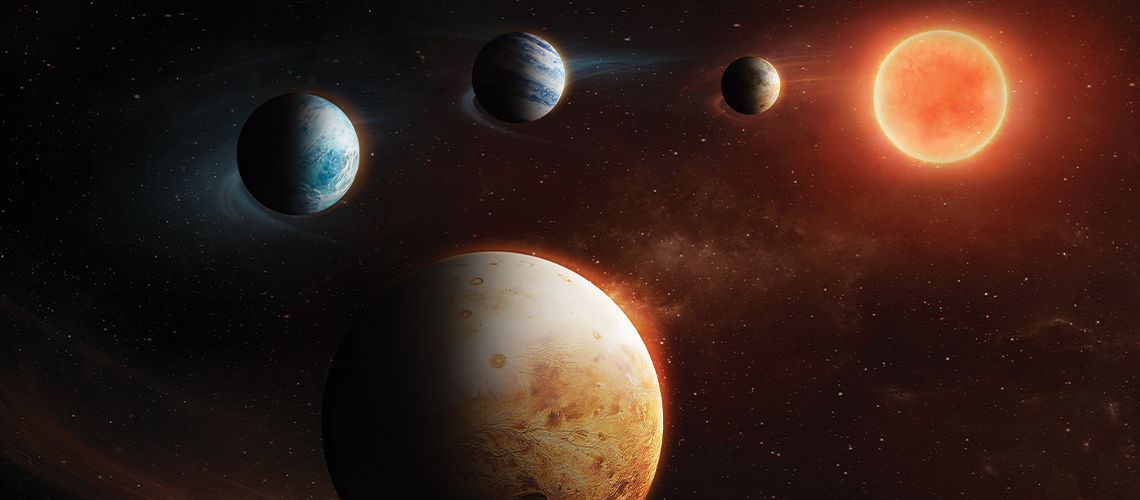
An inverted exoplanet system gives new insights on an old theory of formation.
We’re starting to see just how exceptional our own solar system and its history is, as more exoplanets are discovered. A fourth exoplanet discovery in the LHS 1903 system made by ESA’s CHEOPS mission places a rocky world right where it shouldn’t be. This ‘inside-out system’ could challenge our current understanding of planetary formation.
The late 20th century saw a tidy, if simplified look at planetary formation, modeled by our own solar system, with rocky terrestrial worlds close to the Sun, followed by gas and ice giants farther out. Now, the advent of the discovery of more than 6,128 known exoplanets and 4,560 exoplanet systems and counting, and the strange menagerie of hot Jupiters, pulsar-orbiting planets and more has shown us that our own placid solar system may be the exception to the rule.
The recent discovery of a fourth world in LHS 1903 system puzzled astronomers, with its potential to upend known theories of planetary formation. LHS 1903 is located 116 light-years distant in the northern hemisphere constellation Lynx, near the +4.6 magnitude star 21 Lyncis. The primary star is a type M red dwarf. The four planets consist of two rocky worlds (b and e, the innermost and outermost) while the two intermediate worlds (c and d) are mini-Neptune ‘gas dwarfs,' half a dozen times the mass of the Earth, and more than twice its diameter.
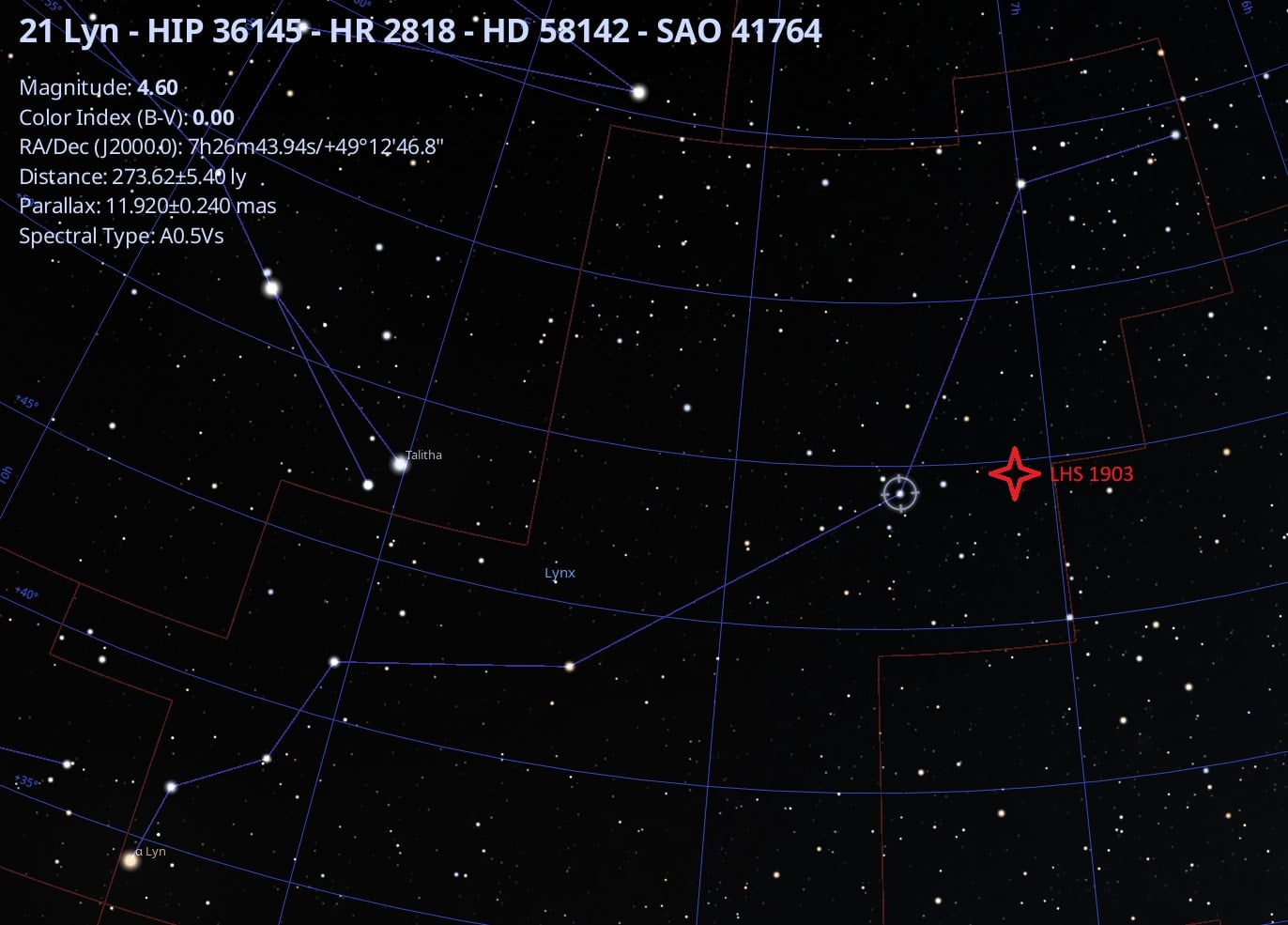 The location of the LHS 1903 system in the constellation Lynx. Credit: Stellarium.
NASA’s Transiting Exoplanet Survey Satellite (TESS) first detected the three inner transiting worlds in a series of observations between 2019 and 2023, and CHEOPS added the fourth world in 2026. Gaia ruled out the possibility for extra gas giants lurking farther out in the system, due to the lack of distortion seen in the astrometry noise nearby. With an 0.15 Astronomical Unit (AU) orbit for the outermost world LHS 1903e at 29 days, the entire system would fit neatly within the orbit of Mercury in our own solar system.
The study was published in the journal Science and carried out by an international team of astronomers from the University of Bern (UNIBE), the National Centre of Competence in Research PlanetS (NCCRPS) and the University of Geneva (UNIGE).
The European Space Agency’s Characterizing ExOPlanet Satellite (CHEOPS) mission was launched in 2019. With a 3.5 year nominal mission now still in extended operation, CHEOPS looks for transiting exoplanets. CHEOPS was designed, built, and is largely operated out of UNIBE and UNIGE located in Switzerland.
“It is thanks to the precision of CHEOPS that we were able to detect this new planet,” says Monika Lendl (UNIGE) in a recent press release. “Since rocky planets do not usually form beyond gas giants, this one completely overturns our theories!”
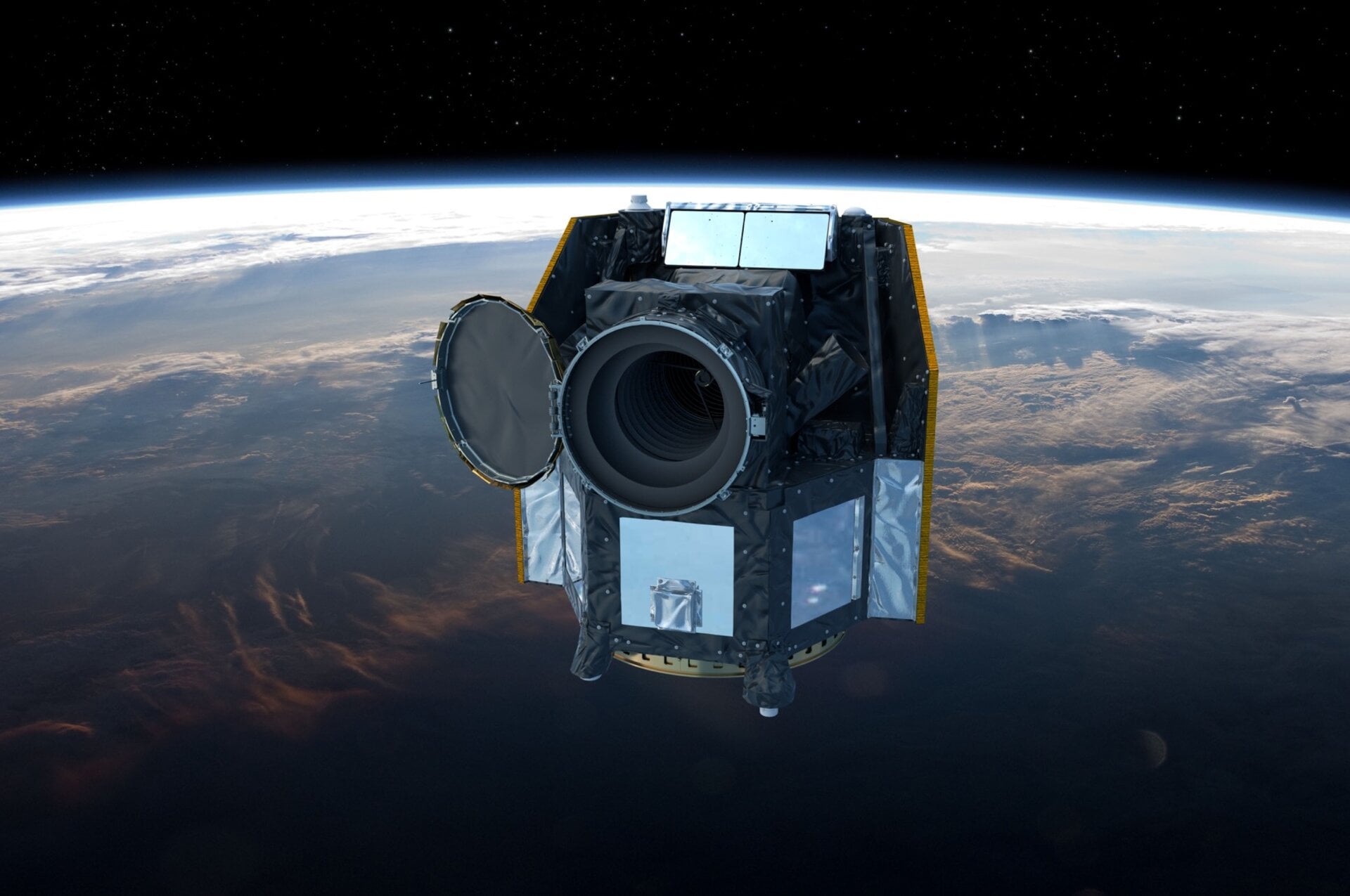 An artist's conception of CHEOPS in space. Credit: ESA.
Traditional theories of planetary formation eliminate the formation of gas giants closer in to the host star. High temperatures in the protoplanetary disk close in to the star exclude the accumulation of gas around rocky cores. Farther out, such gaseous envelopes can accumulate and persist.
Any fourth world around LHS 1903 was expected to follow this trend. The discovery of LHS 1903 defied expectations: did the errant world migrate to its current location, or was it perhaps struck by another object early in its formation, stripping it of its gaseous envelope?
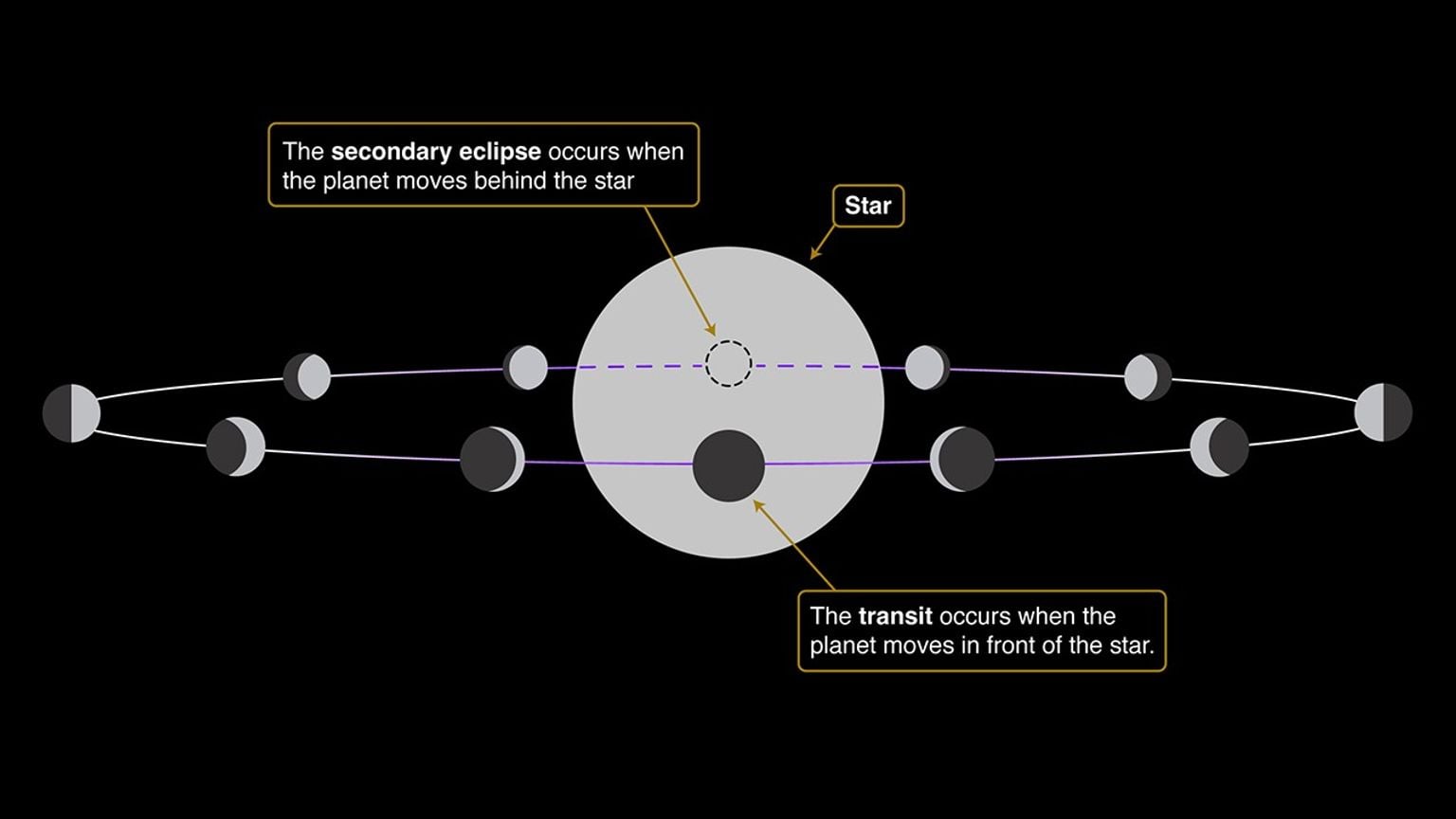 An example of an exoplanet transit. Credit: NASA.
Another idea many see this as the first example of an explanation purposed a decade ago. The four worlds formed in succession but separately, rather than together in the same span of time. This would see LHS 1903e simply starved out, without enough gas available to continue growth.
“Indeed, the fourth planet should have accumulated and retained a large amount of gas,” says Yann Alibert (Space Research and Planetary Sciences Division-UNIBE) in a recent press release. “Our hypothesis is that it formed after gas disappeared from the protoplanetary disk, and thus after the second and third planets of the system, which are gas giants.”
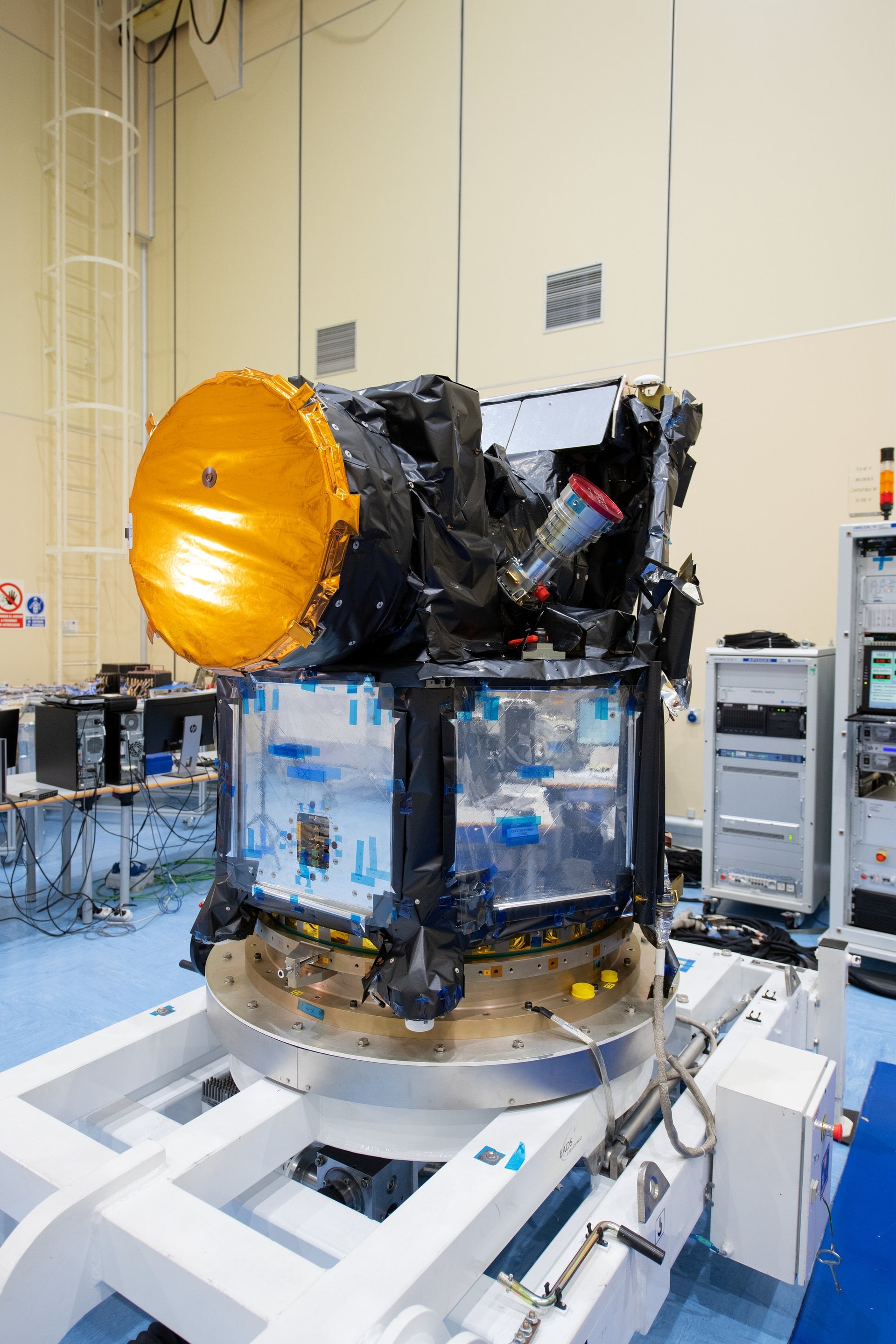 CHEOPS in the lab, ahead of launch. Credit: ESA.
LHS 1903 shows us an example of just how strange exoplanetary systems can be. As more worlds are discovered, more examples of this type of stalled formation may be found, as we add more exoplanets to the catalog of known worlds.