Universe Today
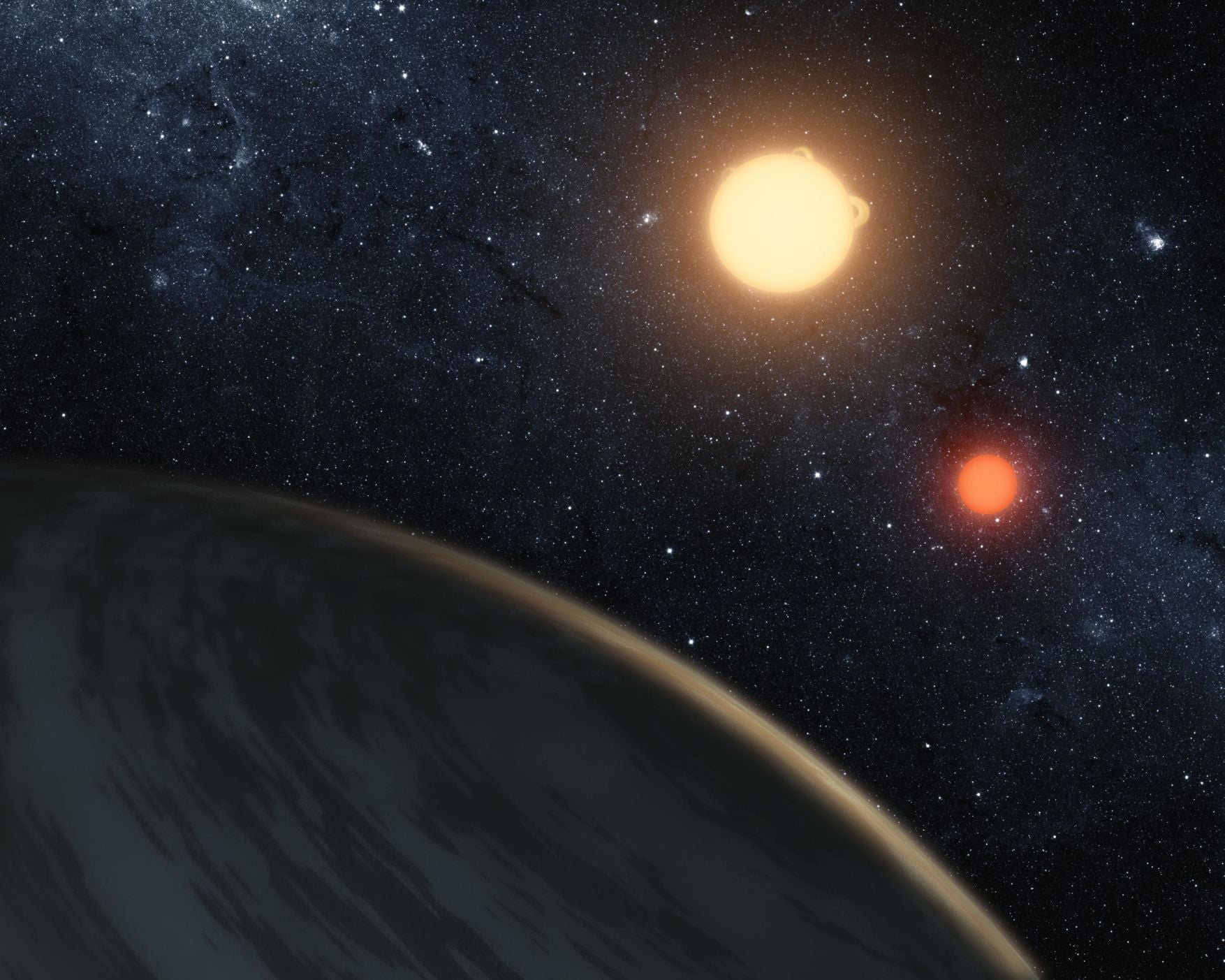
There's a distinct category of exoworlds out there that orbit two stars. They're called "circumbinary" planets and up until recently, astronomers had only found about 18 of them among the 6,000+ other known exoplanets and candidates. Now, a team at the University of New South Wales (UNSW) in Sydney, Australia, have found 27 more potential circumbinary worlds. They credit a new method, called "apsidal precession", for their finding.
The discoveries were made using data from NASA’s Transiting Exoplanet Survey Satellite (TESS). This space telescope was launched in 2018 with the mission to search for exoplanets and relies on the tried-and-true "transit method" to find stars. It basically points its wide-field cameras at a field of stars and monitors their brightnesses. If a planet in that field of view regularly orbits a star, then it will cause a tiny, periodic dip in the star's brightness during the transit. This is a great way to find worlds around distant stars, but it only works on those that have their planets cross between us and the star. If they are outside of our line of sight, chances are we won't see them. At least, not easily.
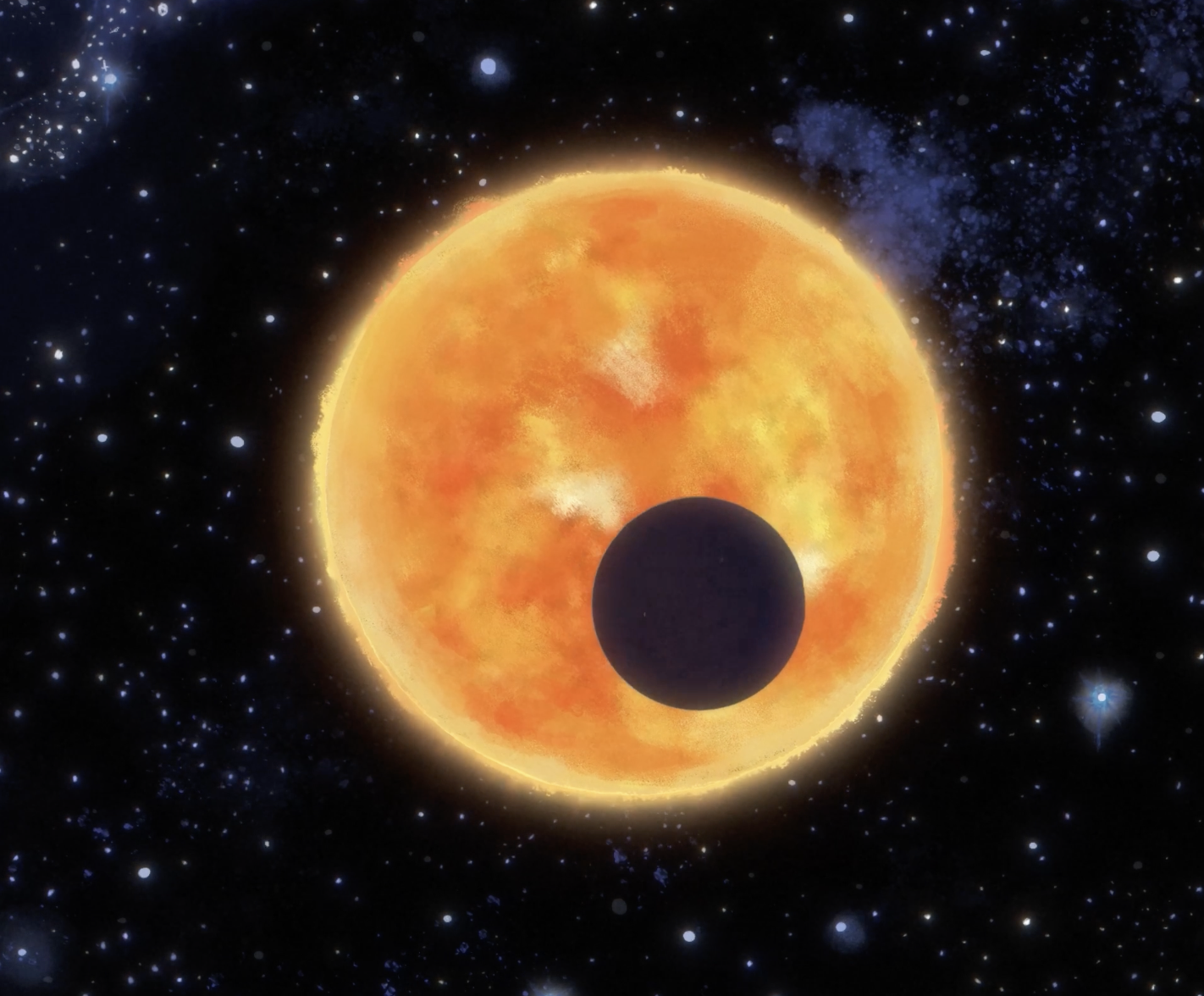 The transit method is where a planet crosses its star from our perspective. This causes a "mini-eclipse". This is how most planets have been discovered. Credit: UNSW Media.
Focusing on Apsidal Precession
Apsidal precession is a different way of looking for planets that could slip out of our view. It has been used to understand binary stars and their orbits, but using it for planetary searches is a new approach. It monitors how binary stars orbit and eclipse each other. If there's a variation in their eclipses, then it could mean that there's a planet (or some other third body) in the system.
It turns out that most of what astronomers know about exoplanets is affected by the way they're found, according to team leader, Margo Thornton, an astronomer and PhD candidate at UNSW. Most worlds are in single-star systems like outs, but she pointed out, systems like ours are in the minority. More than half of the stars in the galaxy are in binary or multiple star systems. "We've mostly found the easiest ones to detect," she said while discussing her group's new way of searching out circumbinaries.“This new method could help us uncover a large population of hidden planets, especially those that don’t line up perfectly from our line of sight. It could help reveal what the true population of planets in our Universe might look like.”
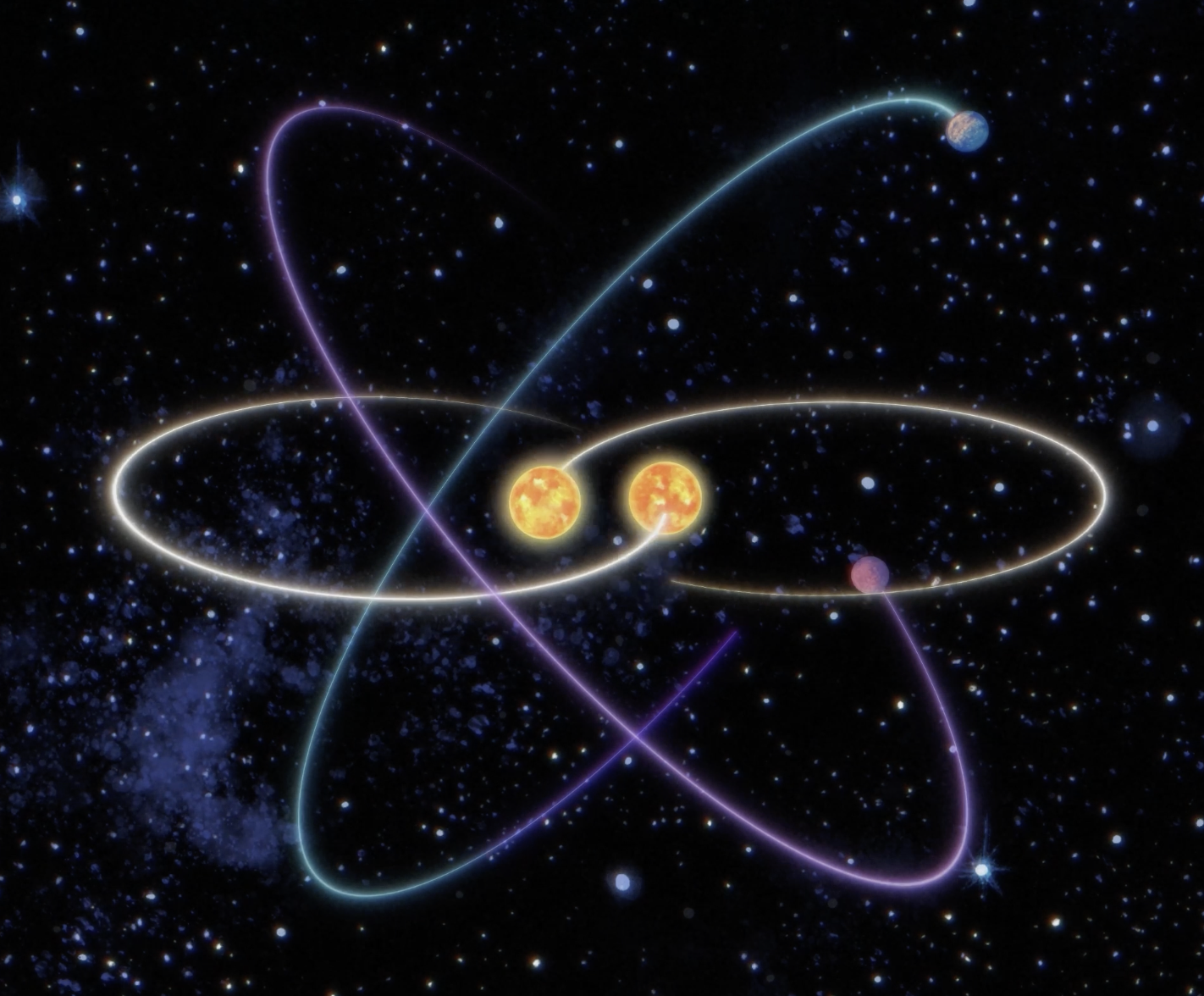 The apsidal precession method helps astronomers detect planets the transit method might have missed: for example, planets with an irregular orbit that doesn’t cross their or stars’ orbits from our perspective. Credit: UNSW Media.
Now that these potential circumbinary planets have been found in the TESS survey, the team has a lot of work ahead of it. “I’m excited about the potential for how many planets we could find with this method,” said Professor Ben Montet, astronomer and senior author on the study. “I wasn’t expecting to find 27 already at this point from the pilot study. “Now we get to start the really fun project of figuring out which ones are real planets.”
Characterizing Circumbinaries
The architecture of circumbinary planets may seem like science fiction. In fact, many people have seen the famous "Tatooine view" of two suns setting on that planet while Luke Skywalker watches them set as he dreams of space adventures. Finding them using the apsidal precession method opens up a whole new area of planetary study, particularly in alien systems. That, in turn, will help planetary scientists figure out how such places come into existence. “With this method so far, we have 27 strong planet candidates in environments completely unlike our own solar system,” said Ms. Thornton, who made these findings just one year into her PhD. “By learning more about different types of planets, we can better understand how planets form and evolve, especially in these complex environments with two stars.”
 Could sunset on one of the newly found circumbinaries (or their moons) look like this? Credit: UNSW Media.
The newly found worlds are a mixed bunch in terms of distance and physical makeup. Some are super-Neptune worlds while others are super-Jupiters. They lie anywhere from 650 light-years away to a distance of 18,000 light-years from Earth. “The candidates are scattered across both our southern and northern skies,” says Professor Montet. “This means that any time of the year, no matter when you’re looking, at least one of these star systems is out there visible for you to look towards – as long as you have a telescope.”
Those distances may seem far from us, but in reality, they're practically in the same neighborhood of the Milky Way as the Solar System. Montet says that they 27 just-discovered candidate worlds are part of 1590 binary systems nearby that could host worlds. “That implies there could potentially be thousands, or tens of thousands, of possible planets to be found with data from the Vera C. Rubin Observatory’s new 10-year sky survey, the Legacy Survey of Space and Time," said Montet. “So it’s a really exciting first step – and it also shows that there’s going to be a lot of work to do over the next few years.”
In addition to figuring out their formation histories and evolution, planetary scientists will have to ask how common such circumbinaries are and what the potential is for them to harbor life, according to Professor Montet. “If circumbinary planets do turn out to be habitable, that means life could be anywhere," said Montet. "Life could be everywhere. The sheer numbers are really exciting.”
For More Information
New Star Wars-like Planet Candidates with Two Suns Discovered