Universe Today
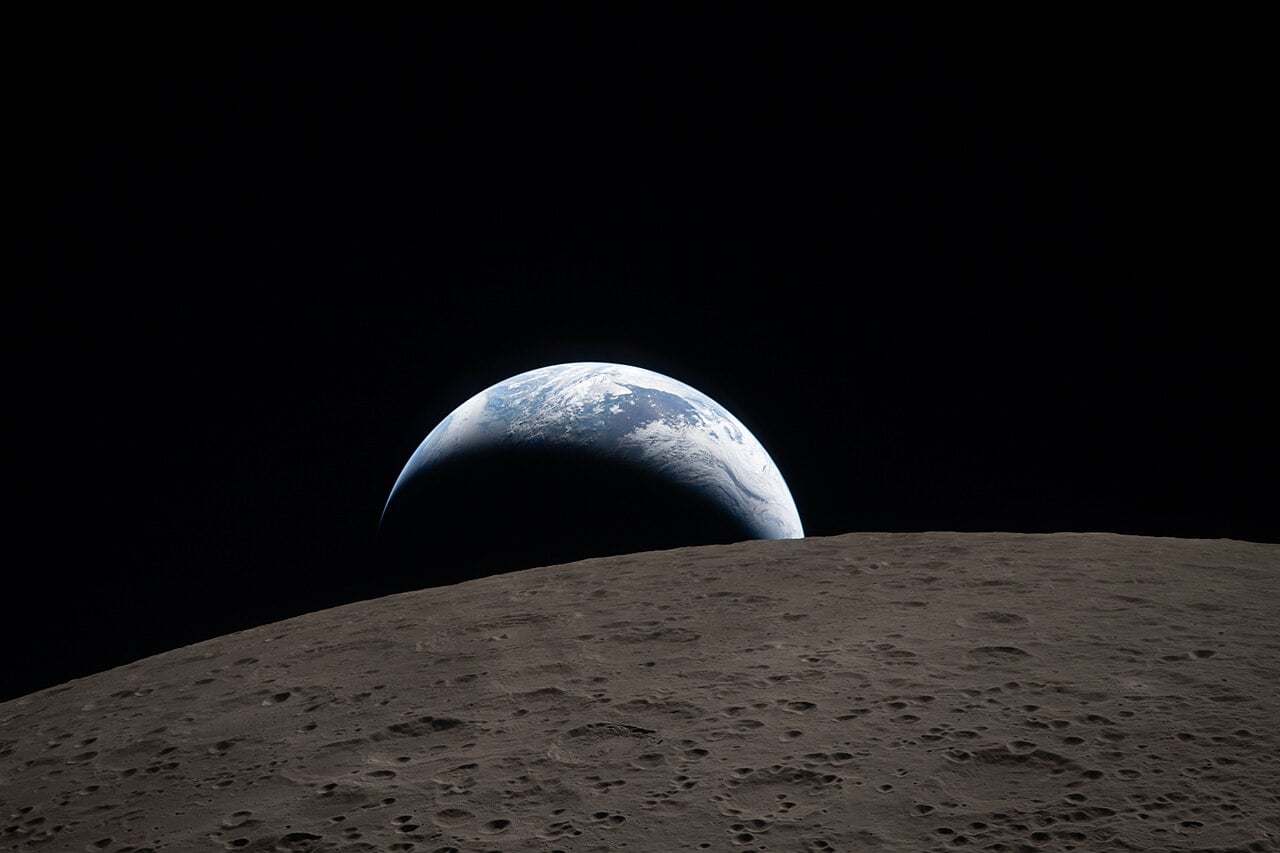
Cast your mind back to 1969, if you’re old enough. Before Neil Armstrong set foot on the lunar surface in July, NASA flew Apollo 9, a mission that never left Earth orbit. It docked the Command Module with the Lunar Module, tested the systems, proved the hardware worked together, and gave engineers the confidence to risk sending astronauts to the Moon. Without Apollo 9, Apollo 11 doesn't happen. NASA is about to do the same thing again.
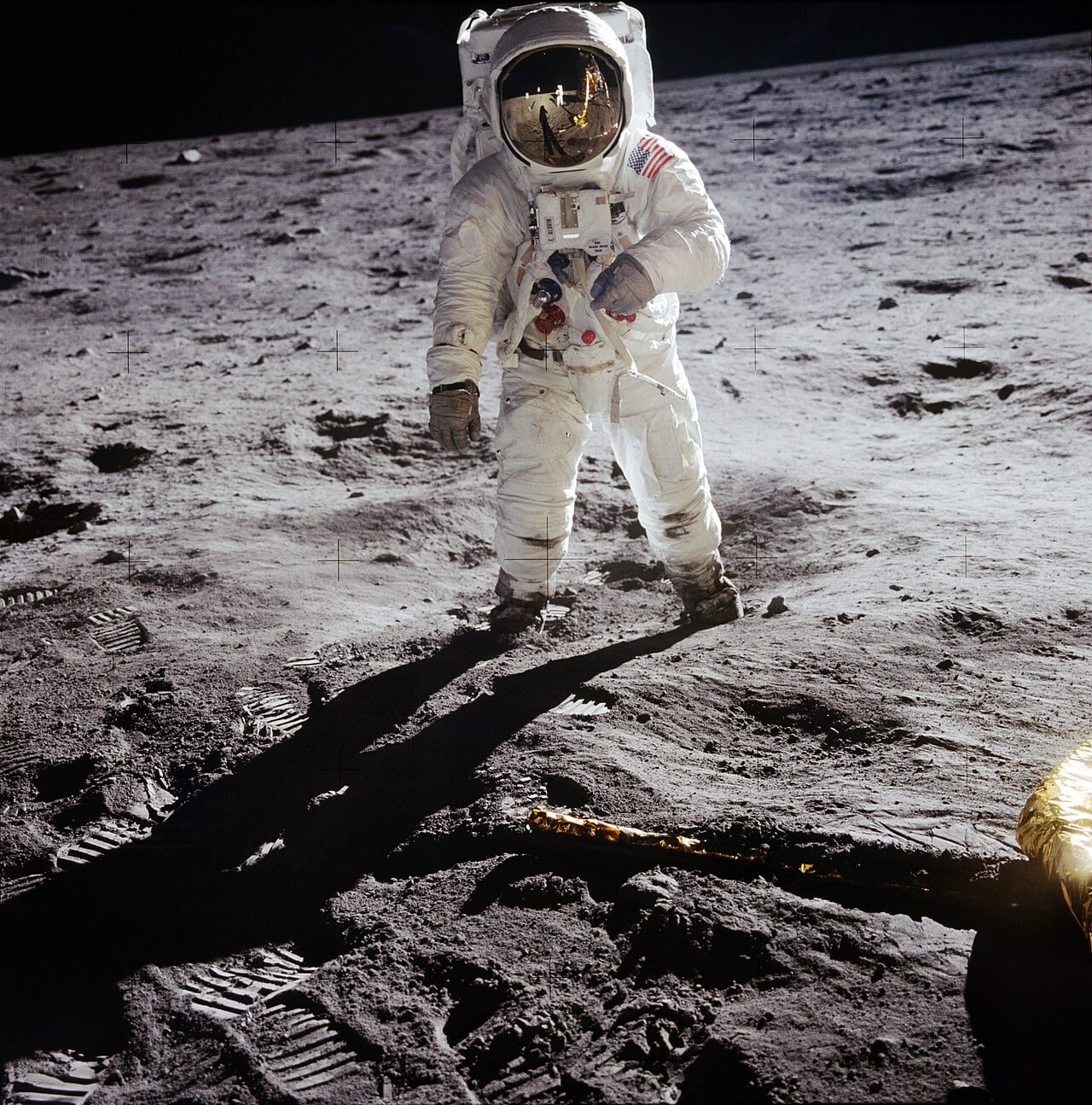 Buzz Aldrin on the Moon in a photograph taken by Neil Armstrong, who can be seen in the visor reflection along with Earth, the Lunar Module Eagle, and the U.S. flag (Credit : NASA)
The Artemis programme was formally established in 2017 with a clear ambition to return humans to the Moon for the first time since Apollo 17 in 1972, and this time stay. Artemis I, launched in November 2022 and sent an uncrewed Orion spacecraft around the Moon to test the rocket and capsule. Artemis II, just six weeks ago, did the same with a crew of four, the first humans to travel beyond low Earth orbit in over fifty years. The next step was expected to be the landing but it isn’t at least not yet.
Artemis III, now targeted for late 2027 has been redesigned as a crewed Earth orbit test flight, similar to Apollo 9. The Moon landing has moved to Artemis IV, scheduled for 2028. The reasons are practical though, delays in the development of both SpaceX's Starship lunar lander and Blue Origin's Blue Moon spacecraft made the original timeline untenable. So NASA has done what it does when the stakes are high enough, it’s added a rehearsal.
It’s more complex than usual though since, for the first time in history, NASA will coordinate a single launch campaign involving three separate spacecraft from multiple providers. The SLS rocket will carry a four person crew in Orion to low Earth orbit. Already waiting there will be SpaceX's Starship human landing system pathfinder and Blue Origin's Blue Moon Mark 2 pathfinder which will be launched separately by their commercial providers. Orion will then rendezvous and dock with them. For the first time, Orion's docking system will be demonstrated with crew aboard. The astronauts could even enter at least one of the landers once docked, rehearsing procedures that their successors will rely on for the actual lunar landing.
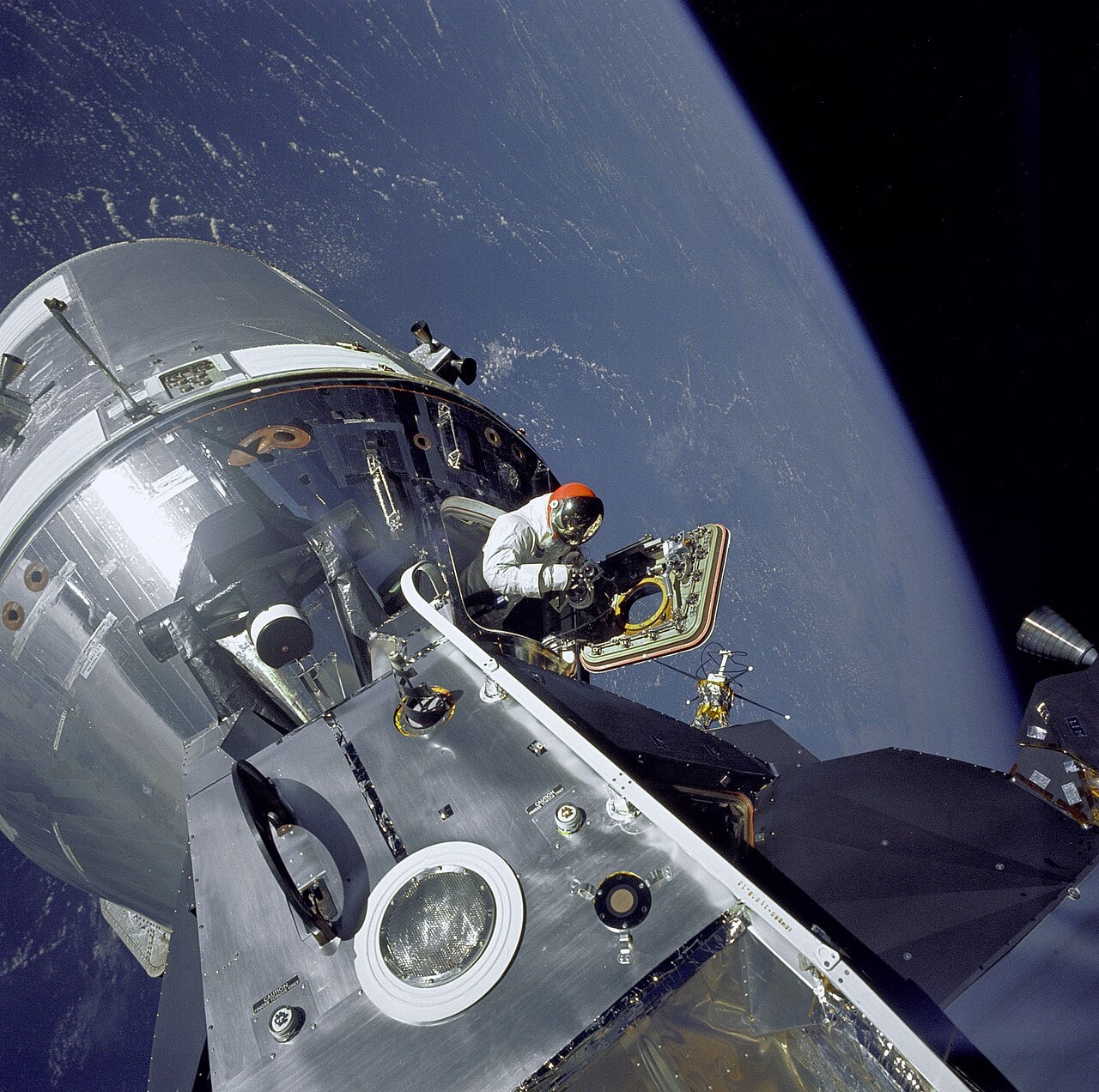 Command Module pilot David Scott performs a stand-up Extravehicular Activity from command module Gumdrop, seen from docked lunar module Spider during Apollo 9 (Credit : NASA)
One technical detail worth noting, instead of the usual upper stage rocket to boost Orion after launch, Artemis III will use what NASA calls a “spacer", a non propulsive structure with the same mass and dimensions as the real upper stage. The Orion service module, built by the European Space Agency, will instead handle the propulsion to circularise the orbit. This approach is deliberate, low Earth orbit gives NASA more launch windows for each element of the mission, improving the chances of getting everything into place successfully.
"Artemis III is one of the most highly complex missions NASA has undertaken, we're integrating more partners and interrelated operations into this mission by design.” - Jeremy Parsons, Moon to Mars acting assistant deputy administrator at NASA.
The crew will spend longer in space than during Artemis II, giving engineers more data on Orion's life support systems. An upgraded heat shield will be tested on reentry, enabling more flexible return profiles for future missions. NASA is also evaluating the AxEMU, the next generation spacesuit that will eventually be worn on the lunar surface and is seeking industry solutions for ground communications, since the Deep Space Network used for deep space missions won't be available in Earth orbit.
Source : NASA Outlines Preliminary Artemis III Mission Plans