Universe Today
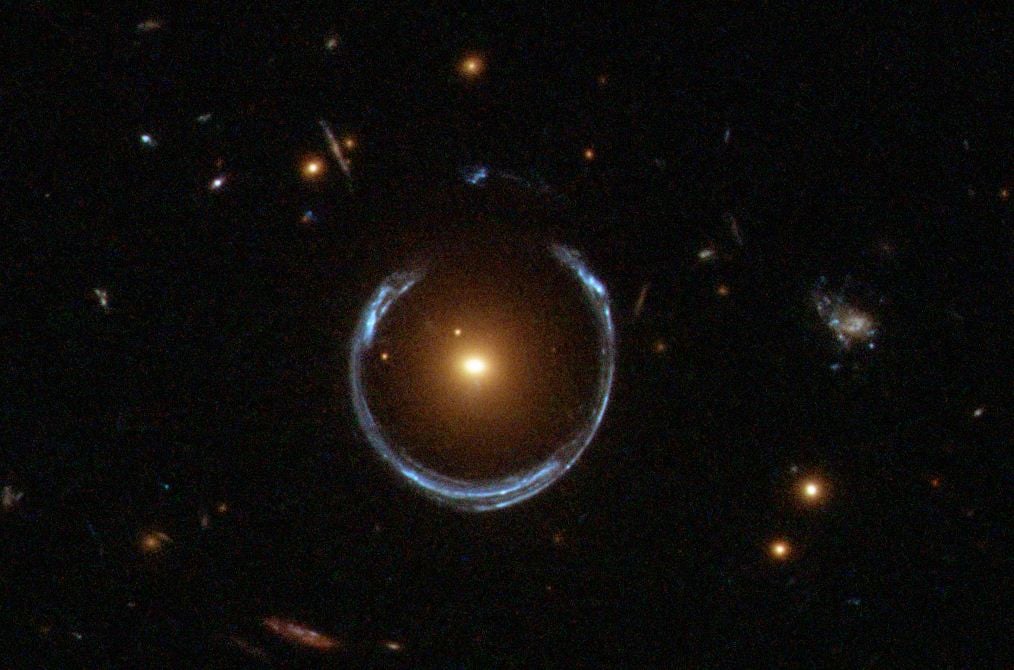
Dark matter is everywhere. It accounts for the vast majority of matter in the universe, yet it has no interaction with light, magnetism, or any other force along the electromagnetic spectrum. It passes through everything, through planets, through stars and even through you without leaving a trace. One of the only ways we know it exists at all is through the way it bends space around distant galaxies, adding extra pull that ordinary matter alone cannot explain.
Finding direct evidence of dark matter has been one of the great unsolved challenges of modern physics. Now a team led by MIT postdoctoral physicist Josu Aurrekoetxea has proposed a new and unexpected way to look for it, not by building detectors on Earth, but by reading the gravitational waves that arrive from black hole mergers across the universe.
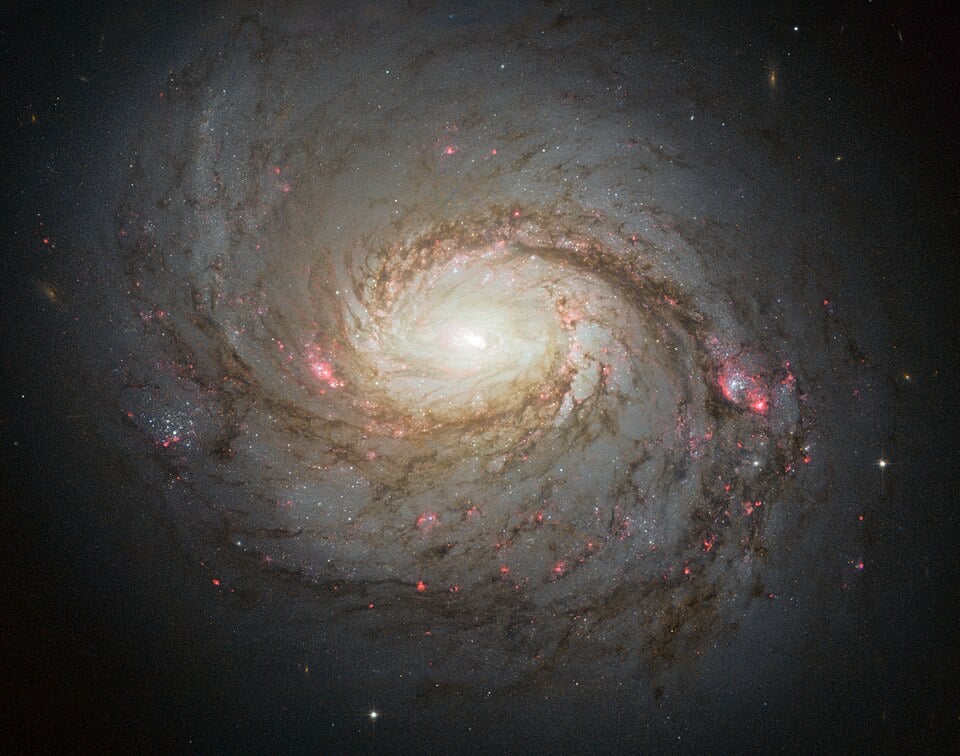 The rotation rate of spiral galaxies (such as M77 captured here) is just one of the ways that dark matter reveals itself (Credit : NASA/ESA)
The idea hinges on a remarkable phenomenon called superradiance. The idea is that dark matter consists of extraordinarily light particles, many orders of magnitude lighter than an electron and that behave not just as individual particles but as coordinated waves when they encounter a rapidly spinning black hole. When those waves brush against a spinning black hole, the black hole's own rotational energy transfers to the dark matter, amplifying it to extreme densities. The researchers describe it as like churning cream into butter, a diffuse ingredient concentrated into something far denser and more structured.
This process creates a thick dark matter cloud swirling around the black hole. When a second black hole spirals in to merge with it, it passes through that cloud. The interaction leaves a distinctive imprint on the gravitational waves produced by the merger, a subtle but specific pattern that differs from a merger in empty space.
The MIT team built a model that predicts exactly what that imprint should look like, then applied it to publicly available data from the LIGO, Virgo and KAGRA gravitational wave observatories, screening 28 of the clearest signals from their first three observing runs.
"We know that dark matter is around us. It just has to be dense enough for us to see its effects. Black holes provide a mechanism to enhance this density, which we can now search for by analysing the gravitational waves emitted when they merge,” - Josu Aurrekoetxea from MIT
Twenty seven showed exactly what you'd expect from black holes merging in a vacuum. But the twenty eighth, a signal catalogued as GW190728, showed something different. A pattern consistent with dark matter involvement.
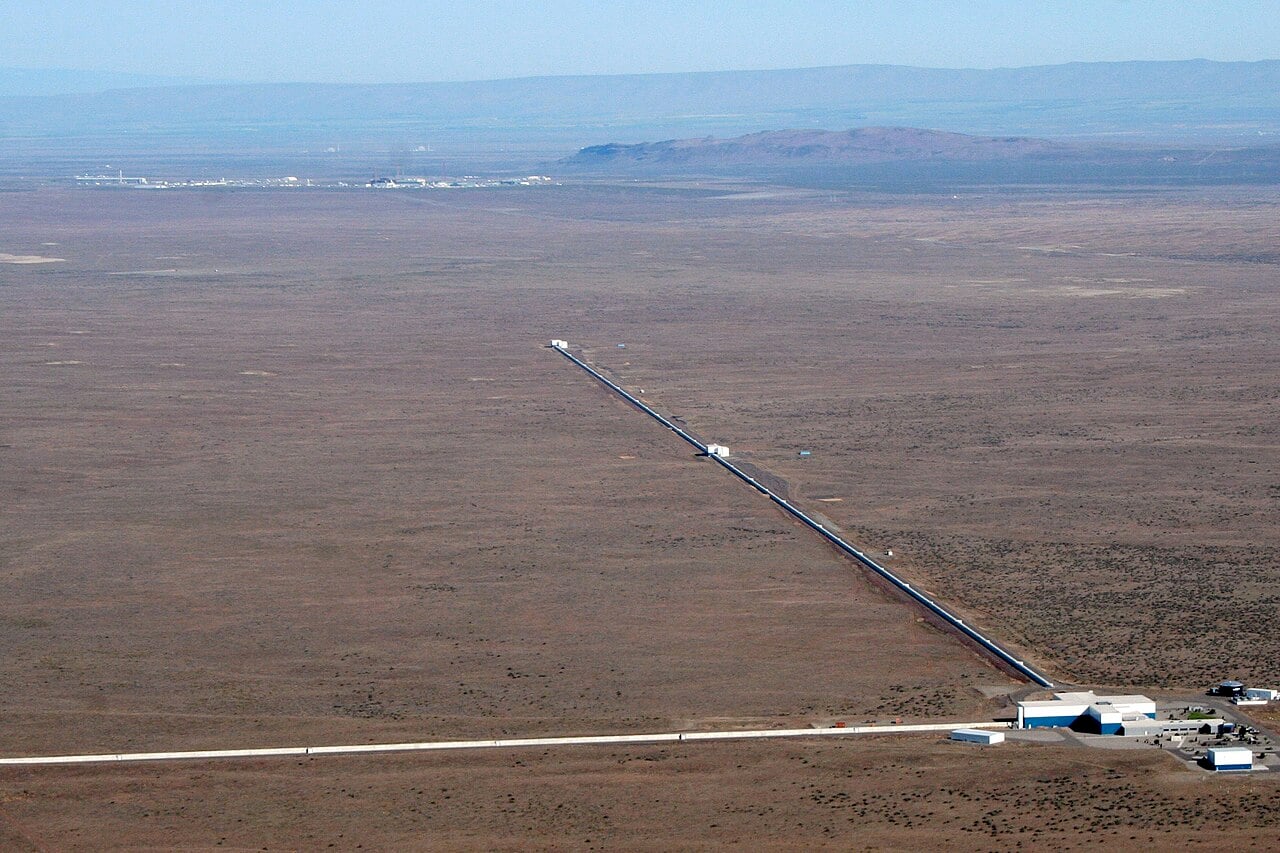 LIGO Hanford Observatory (Credit : LIGO Observatory)
The team are careful to stop short of claiming a detection, since this is a hint and not a confirmation. But it is the first time a gravitational wave signal has been flagged as a candidate dark matter imprint using a rigorous physical model, and it demonstrates that the technique works.
LIGO's fourth and fifth observing runs are generating gravitational wave detections at an unprecedented rate. Each new signal is another opportunity to screen for the fingerprint. If the team are right, dark matter has been hiding in plain sight for decades and we may finally have found a way to catch it.