Universe Today
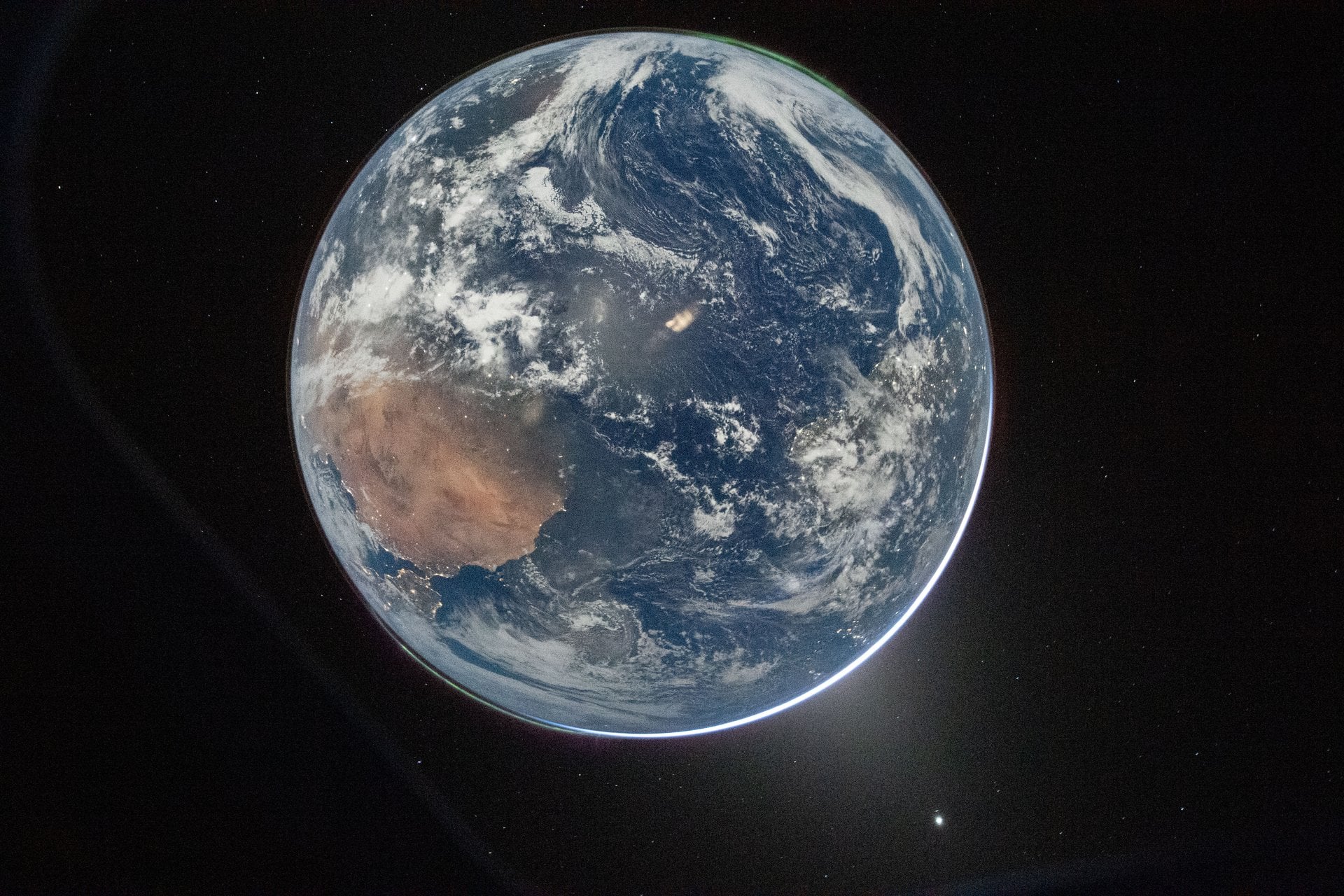
On April 1st, 2026, the Artemis II mission launched from Earth, carrying its four-person crew on a journey that will take them around the Moon. Since then, mission control has performed the Trans-Lunar Injection (TLI), while the crew has been performing proximity operations, testing flight instruments, and troubleshooting the Orion's systems (including the zero-g toilet). They've also taken the time to snap some candid photos of Earth to show how far they've traveled.
This includes the above photo, titled "Hello, World," that was taken on April 3rd by NASA astronaut Reid Wiseman, the Commander of the Artemis II mission, after the spacecraft (named Integrity) completed its TLI burn the day before. At the time, the crew had already finished the mission's previous burns - the Apogee Raise Burn (ARB), and Perigee Raise Burn (PRB) - and had looped back around Earth to begin its outbound flight.
Northern Africa is visible on the left side of the planet, along with Gibraltar and southern Spain. The eastern part of Brazil is visible on the opposite side of the globe, as indicated by the small patches of light that represent cities along the coast. The image also captures the Aurora Borealis and Aurora Australis, visible around the lower left and upper right of Earth (click the image to see them). Zodiacal light is also visible on the lower right side as the Earth eclipses the Sun.
Since the TLI burn, the lunar science team began building a guide to what the crew will observe on the lunar surface - a Lunar Targeting Plan (LTP) - starting tomorrow. This observation period will last approximately 6 hours and will consist of the crew documenting features such as craters, ancient lava flows, and cracks and ridges, thereby improving our understanding of how the Moon and the Solar System formed. These features formed as the Moon's lithosphere slowly shifted over time, making them a historical record of how conditions in the Earth-Moon System evolved over billions of years.
As the Integrity passes behind the Moon, the crew will take advantage of an hour-long solar eclipse to monitor the far side of the Moon for impactors. For this brief period, where the "Dark Side of the Moon" will actually live up to its name, these impacts will be visible as tiny flashes of light as meteoroids strike the surface. The crew will also take the opportunity to view the outermost layer of the Sun's atmosphere (the corona), which will be visible just beyond the Moon's edge. These operations will also set the stage for a crewed mission to the surface, which is now the Artemis IV mission, scheduled to launch in 2028.
Check out the latest imagery from the Artemis II mission on NASA's Artemis II Multimedia Resource Page and NASA's YouTube channel for continuing 24/7 coverage of the mission.
Further Reading: NASA