Universe Today
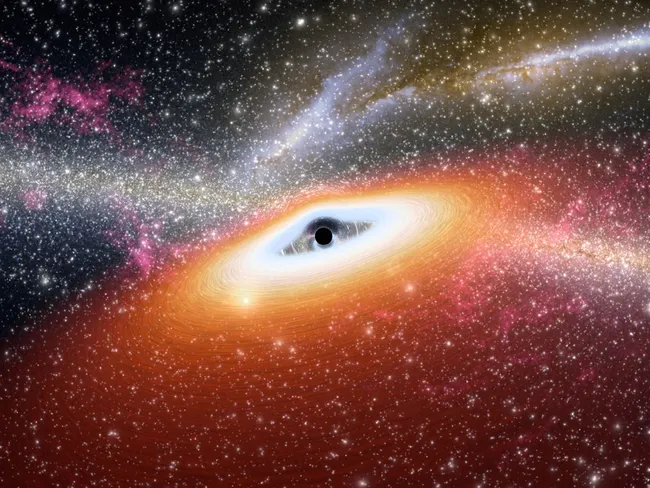
Black holes that are formed when massive stars die in spectacular supernova explosions, typically weigh several times as much as the Sun. But last November, LIGO, the gravitational wave detector that has been listening to the universe's most violent events since 2015, picked up a signal from something far lighter. At least one of the objects involved almost certainly weighed less than a single solar mass. And that shouldn't be possible through any known process of stellar evolution. So the question remains, what was it?
Nico Cappelluti and Alberto Magaraggia, astrophysicists at the University of Miami, think they know. Their new study, published in the Astrophysical Journal, makes the case that the signal is consistent with a primordial black hole, a type of black hole not formed from a dying star, but from the extreme density of the universe itself in the first fleeting moments after the Big Bang.
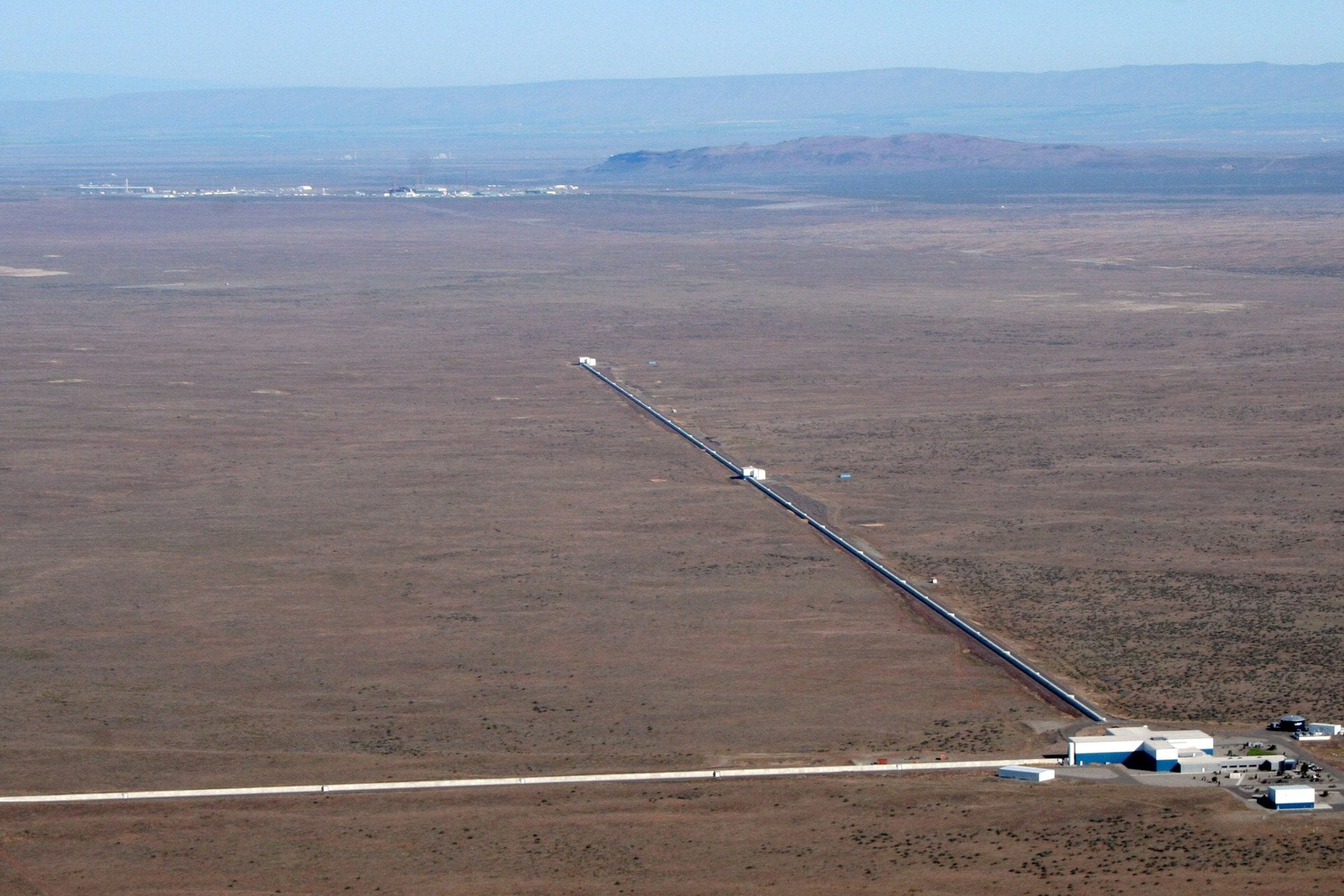 *LIGO Hanford Observatory (Credit : LIGO)
The idea has been around since the 1960s, first proposed by Soviet physicists Yakov Zeldovich and Igor Novikov, and later expanded by Stephen Hawking. In the earliest instants of the life of the universe, matter was compressed into such an extraordinarily dense state that some regions may have collapsed directly into black holes before a single star had formed. These objects, if they exist, could range from asteroid sized to enormous, but they've never been directly detected. Until, possibly now!
"The most plausible explanation for the LIGO signal, which lacks any conventional astrophysical explanation, is the detection of a primordial black hole,” - Nico Cappelluti from the University of Miami.
The team modelled how many such objects should exist, how often they should merge, and how frequently LIGO should detect them. The answers lined up encouragingly with what has actually been observed, one rare event, exactly as the theory predicts.
Primordial black holes, if they exist in sufficient numbers, could account for dark matter, the invisible substance that makes up around 85 percent of all matter in the universe. Despite decades of searching, we still have no idea what dark matter actually is but we can observe its effects. Primordial black holes are one of the most compelling candidates, and a confirmed detection would transform cosmology overnight.
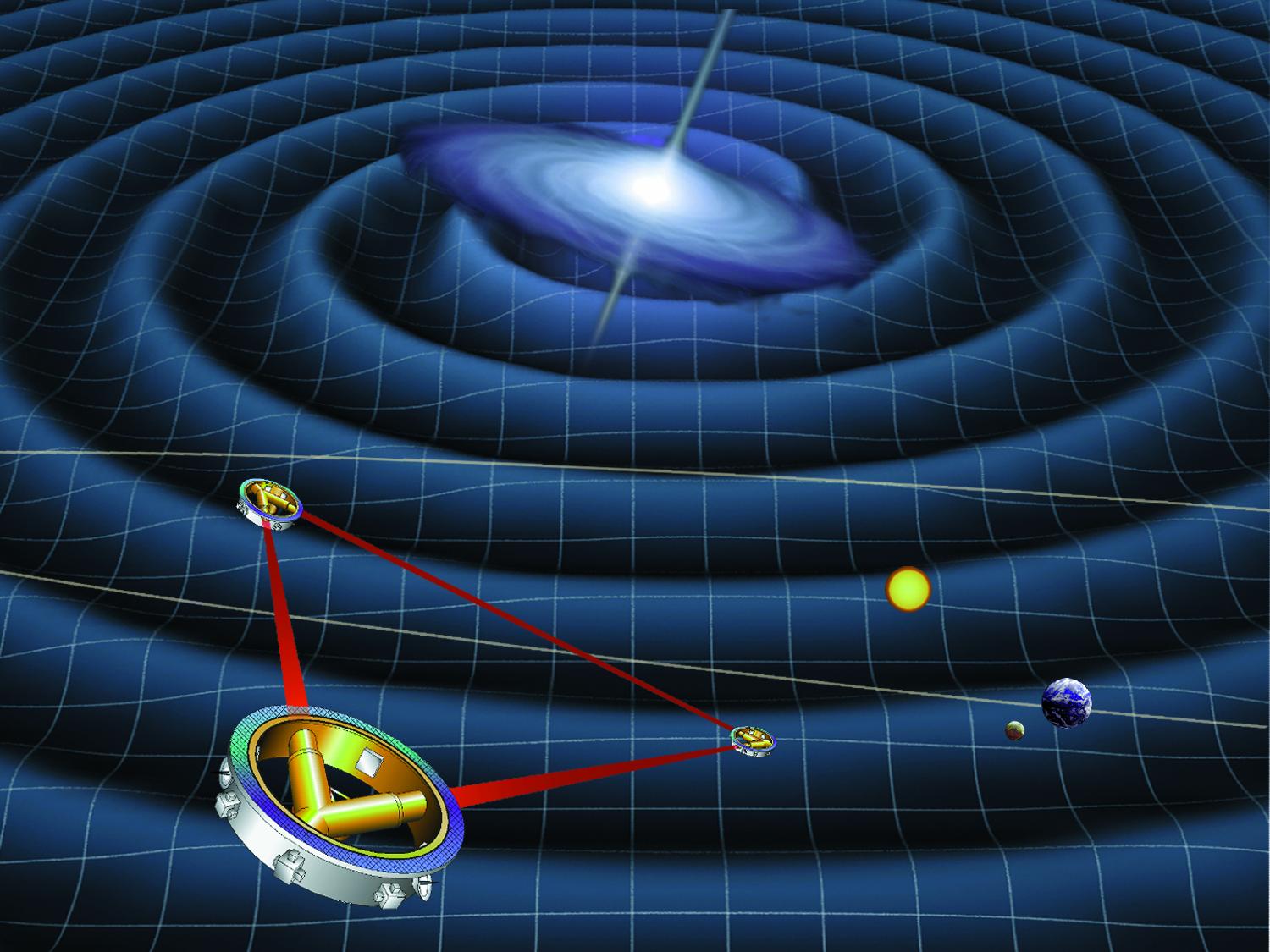 Artist impression of LISA, the Laser Interferometer Space Antenna (Credit : NASA)
For now, it remains tantalisingly unconfirmed. One signal is suggestive, not conclusive but another such event or several will grow confidence in their theory. The next generation of detectors including LISA, the Laser Interferometer Space Antenna launching in 2035 and the ground based Cosmic Explorer, ten times more sensitive than LIGO, will push the search back further in time.