Universe Today
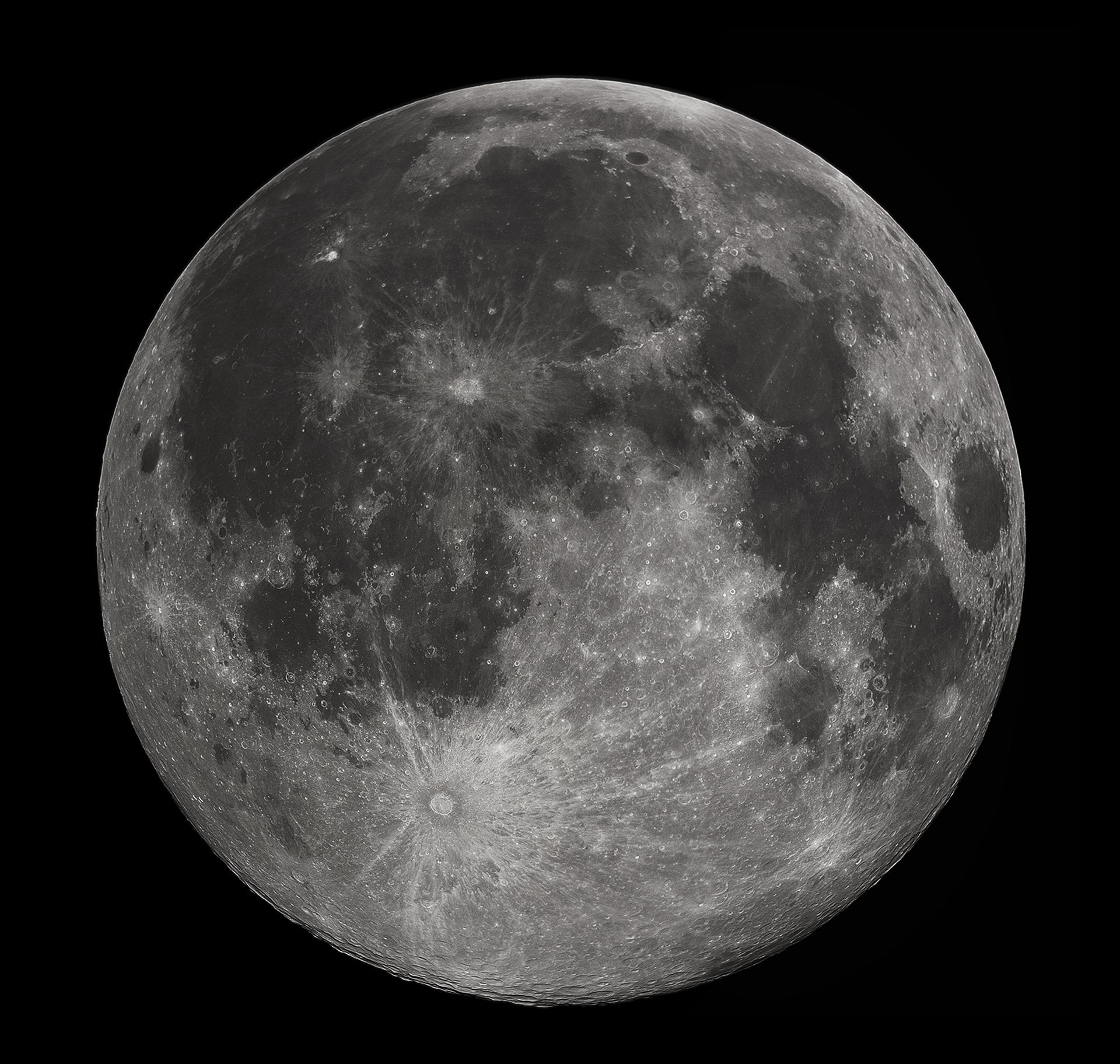
If you want to live on the Moon, you need water. Not just for drinking though since water can be split into hydrogen and oxygen to make rocket fuel and breathable air. Carrying enough of it from Earth for any serious long term mission would be impossibly expensive. But the Moon may already have what future explorers need, locked away as ice in the permanently shadowed craters near its south pole.
Finding it precisely and reliably, in enough quantity to be useful is the challenge facing mission planners. And NASA thinks it has exactly the right tool for the job. The Neutron Spectrometer System, or NSS, is a compact instrument that can detect the presence of hydrogen underground without drilling a single hole. Hydrogen, of course, is the H in H₂O so find it, and you've likely found water. NASA is providing the NSS to LUPEX, a lunar rover mission led jointly by Japan's JAXA and India's ISRO, due to arrive at the Moon's south pole no earlier than 2028.
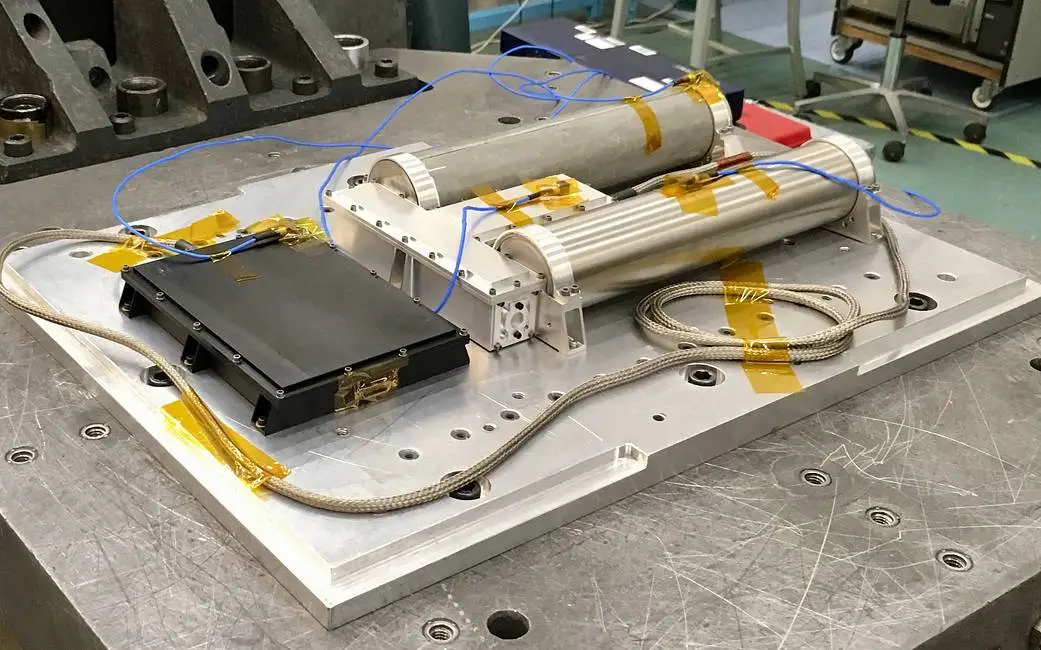 Components of the Neutron Spectrometer System undergo testing on the vibration table (Credit : NASA)
The Moon's surface is constantly bombarded by cosmic rays which knock neutrons loose from the lunar soil. Those neutrons rattle around underground and eventually escape into space, but when they encounter hydrogen atoms, something interesting happens. Hydrogen and neutrons are almost identical in mass, making them remarkably efficient at exchanging energy in a collision. Hydrogen rich soil absorbs more medium energy neutrons, so fewer escape. A deficit of these neutrons at the surface is a tell tale sign of hydrogen buried below.
The NSS detects these escaping neutrons using tubes filled with helium-3, a rare gas exquisitely sensitive to neutron interactions. When a neutron strikes a helium-3 atom, it produces an electrical pulse that can be counted and analysed, building up a picture of hydrogen concentration down to a depth of about three feet.
"There is currently a gap in our understanding of how lunar ice is distributed at small scales, the only way to understand the 'where' and 'how much' of lunar ice is by exploring on the surface.” - Rick Elphic, NSS lead at NASA's Ames Research Center.
The LUPEX instrument won't be working alone. NASA has developed a family of NSS instruments for different missions, steadily building a more complete picture of the Moon's water resources. Another will fly aboard NASA's VIPER rover, and a fourth is destined for the MoonRanger micro-rover developed by Carnegie Mellon University.
Together, they'll map the lunar south pole's hidden water in unprecedented detail, identifying the best sites for future human exploration and, ultimately, for a permanent human foothold beyond Earth.
Source : NASA's Water-Hunting Tool Will Help Scout Moon's South Pole