Universe Today
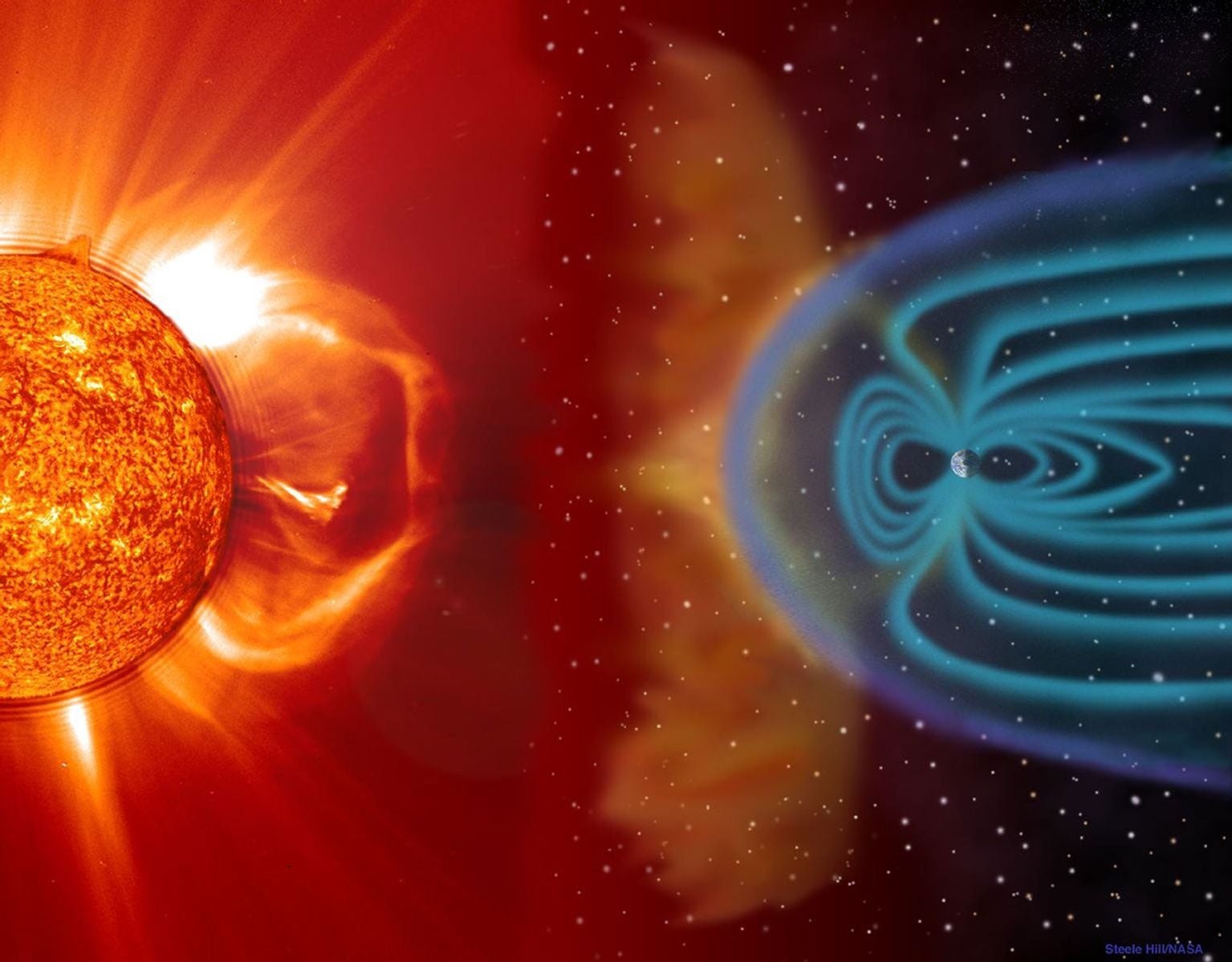
The Sun constantly emits charged particles (aka. solar wind) that interact with planets and their atmospheres, creating the protective bubble known as the heliosphere at the edge of the Solar System. While Earth's magnetic field protects life on the surface from much of this radiation, fast solar winds can directly affect GPS, aviation, electrical grids, and satellite and radio communications. These winds are linked to coronal black holes, temporary dark regions in the Sun's corona that contain cooler, less dense plasma.
These "black holes" provide wide-open channels for high-speed streams of solar wind thanks to their "open" magnetic field lines. A new paper by Khagendra Katuwal and R.T. James McAteer - an astronomy graduate student and the Deputy Provost and Professor of Astrophysics at New Mexico State University (NMSU), respectively - examines the connection between coronal holes and solar wind streams. The conclusions he presents have the potential to improve our understanding of how the Sun's magnetic structure influences space weather.
As part of his study, titled “Unipolarity of the Solar Magnetic Field in Equatorial Coronal Holes,” recently published in The Astrophysical Journal, Katuwal and McAteer studied 70 coronal holes using data from the Solar Dynamics Observatory (SDO). This space telescope, which launched in 2010, is the first mission sent to space as part of NASA's Living With a Star (LWS) Program. Its goal is to study solar activity to improve our understanding of the Sun-Earth system and the origin of the solar wind.
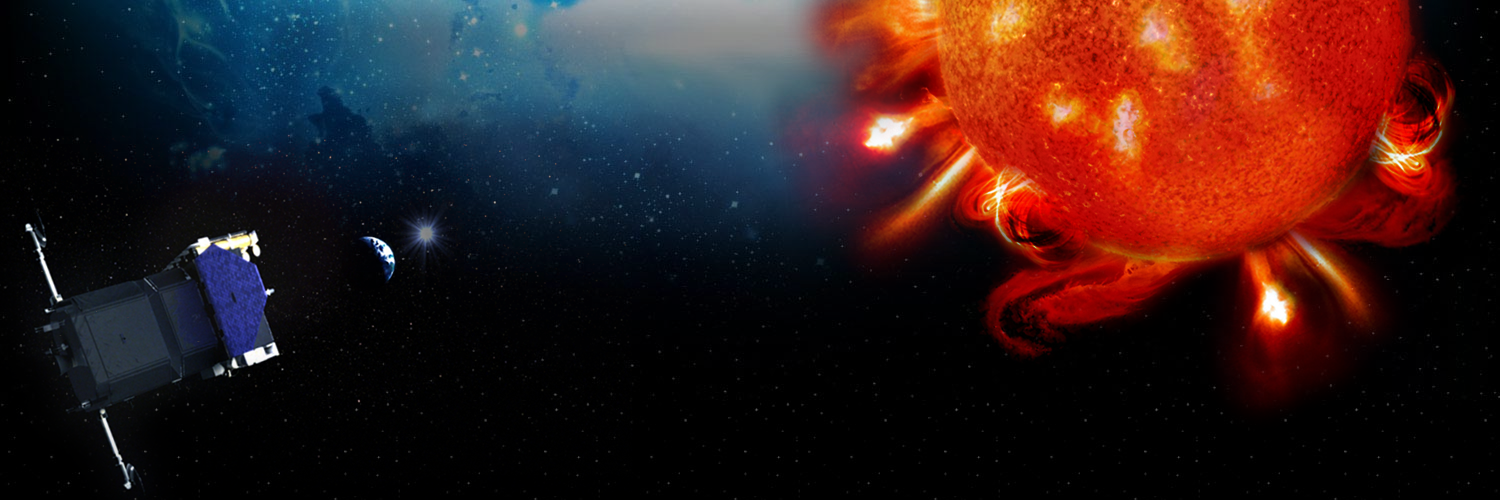 Artist's impression of NASA's Solar Dynamics Observatory (SDO). Credit: NASA/SDO
Katuwal began researching coronal holes after studying heliophysics under McAteer, which inspired him to propose a solar research project. In particular, Katuwal was interested in how magnetically imbalanced regions on the Sun are connected to high-speed solar wind streams. “I chose to study coronal holes because they are believed to be the source of fast solar wind,” said Katuwal in a NMSU news release. “I became fascinated by simple but fundamental questions. Is the solar wind we measure near Earth really coming from coronal holes? How does their magnetic structure produce this fast solar wind?”
By identifying changes in magnetic conditions, he hoped to strengthen space weather forecasting models, thereby reducing the risk to systems affected by solar activity. This has always been a challenge for astronomers since the mechanisms behind the formation of coronal holes and how they connect out into space (or stay ‘open’) have been elusive. "Regions with open field lines are unbalanced," said McAteer. "Particles escape more easily, and so the solar wind will be fast and dense. Khagendra has created a set of parameters that now lets us define what we mean when we say ‘unbalanced.’"
Upon analyzing the SDO data, they found that around 88% of the coronal holes studied showed a significant imbalance in their magnetic fields. Looking ahead, Katuwal plans on using data from the Daniel K. Inouye Solar Telescope - the world’s most powerful solar telescope, located in Hawai'i - to study small features on the Sun and learn more about why coronal black hole regions become unbalanced. As he summarized:
These findings help us better understand the magnetic conditions that produce high-speed solar wind streams from coronal holes. Because these fast solar wind streams can disturb Earth’s magnetic environment, improving our knowledge of their origin helps scientists make more accurate space-weather forecasts.
Understanding the magnetic structure of coronal holes allows us to connect small-scale magnetic physics on the Sun to large-scale space weather effects that impact our technology. That connection between fundamental physics and real-world impact strongly motivates me.
Further Reading: NMSU