Universe Today
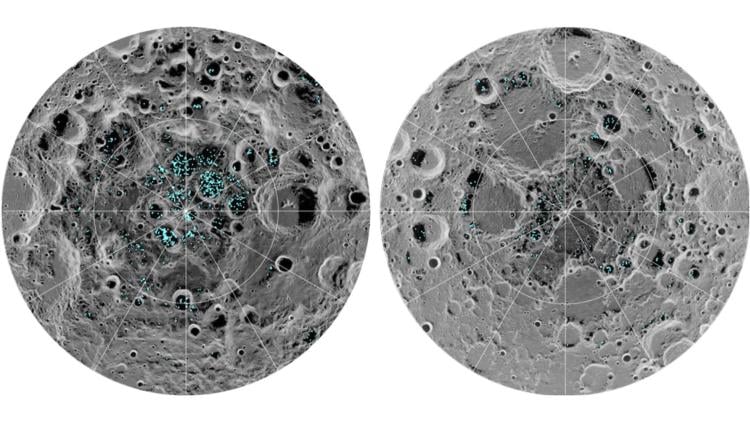
When India's Chandrayaan-1 orbiter released the Moon Impact Probe (MIP) into the Shackleton crater on the Moon, they confirmed something scientists had speculated about for decades. The Moon, an airless and vacuum-desiccated body, has abundant sources of water ice around its poles! Located in the many craters that litter the region, these permanently shadowed regions (PSRs) prevent this water from being exposed to sunlight, which would cause it to sublimate and be lost into space.
The question of how and when the Moon acquired its water has been the subject of much debate. Until recently, scientists were generally of the opinion that it was deposited by asteroids and comets during the Late Heavy Bombardment period (ca. 4.1 to 3.8 billion years ago). However, contemporary findings suggest that this water may have been deposited slowly over time. This includes a recent paper by scientists from the Laboratory for Atmospheric and Space Physics (LASP) and the Planetary Science Institute (PSI), which found that the Moon's water accumulated over billions of years.
The study was led by Oded Aharonson, a Professor of Earth and Planetary Sciences at the Weizmann Institute of Science, as well as a LASP and PSI researcher. He was joined by Paul O. Hayne & Norbert Schörghofer, a planetary scientist at LASP and an astrophysics Professor at the University of Colorado Boulder, and a Senior Scientist at the PSI, respectively. Their findings were recently published in the journal Nature Astronomy.
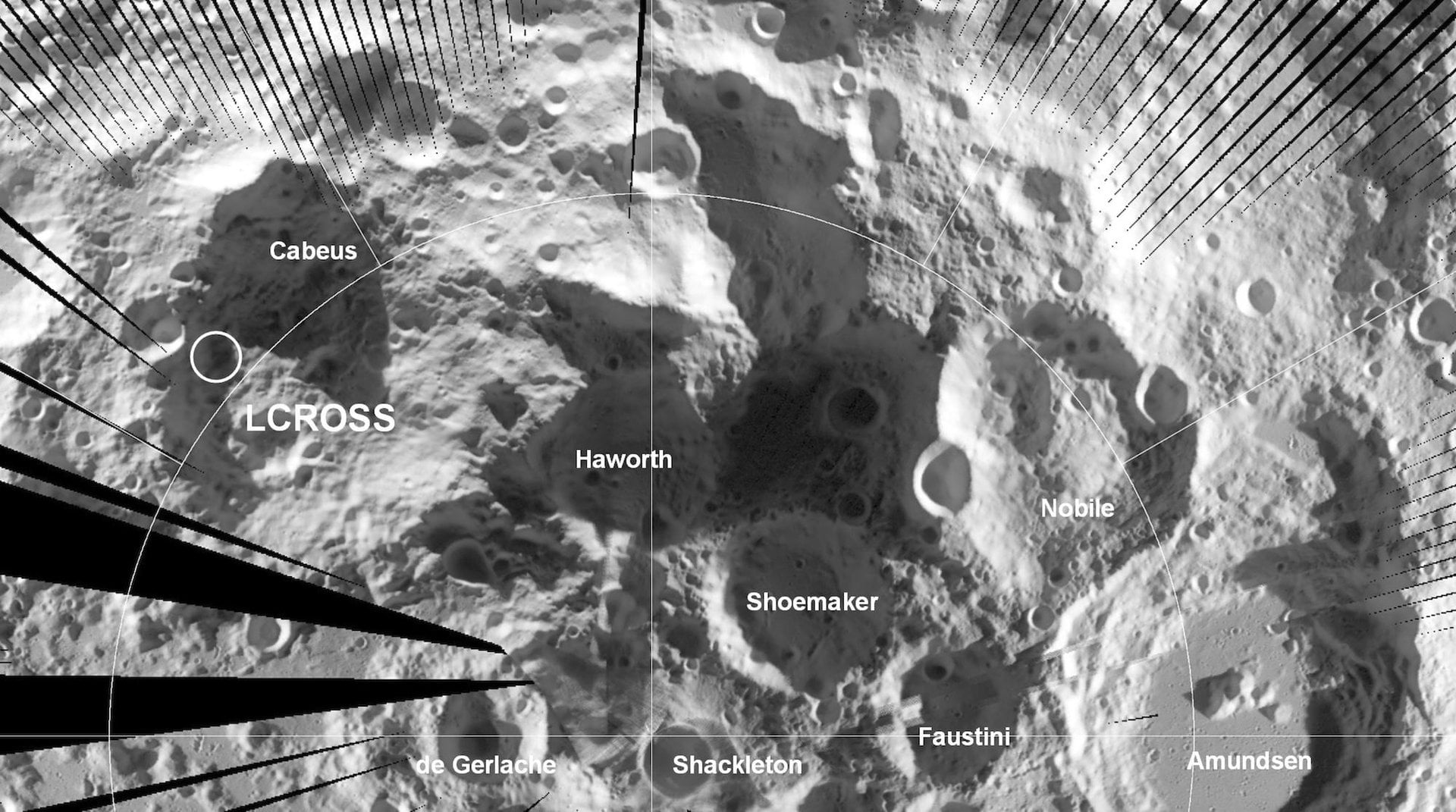 Craters near the moon's South Pole as seen by NASA's Lunar Reconnaissance Orbiter. New research suggests that Haworth Crater might be an especially good spot to look for ice. Credit: NASA
The presence of ice water on the Moon is not only a goldmine for planetary scientists but also vital to the creation of lunar bases in the South Pole-Aitken Basin. In recent years, NASA, the ESA, China, and Russia have all announced plans to build habitats near PSRs to ensure access to these deposits. In addition to providing a source of drinking water and irrigation for crops, water can be chemically dissociated to produce liquid hydrogen (LH2) and oxygen (LOX) propellant.
Evidence for water on the Moon dates back to the Apollo missions, which brought home rock samples containing trace amounts of water. At the time, this was written off as contamination, but subsequent studies have verified these initial findings. However, this water results from solar wind particles (including protons) interacting with elemental oxygen in lunar regolith. In more recent years, multiple missions - including NASA's Lunar Reconnaissance Orbiter (LRO) - have uncovered evidence of abundant water ice existing in the "cold sinks" of PSRs around the poles.
Addressing the question of how it got there, Aharonson, Hayne, and Schörghofer used lunar surface temperature data from the LRO's Diviner Lunar Radiometer Experiment (DLRE) and a series of computer simulations to estimate the evolution of craters on the lunar surface. “Finding water beyond Earth in liquid and usable form is one of the most important challenges in astronomy,” said Aharonson in CU Boulder Today news release.
These simulations produced a list of the moon’s cold traps that have been darkest the longest, and revealed something very interesting. According to LAMP's readings, the moon’s oldest and darkest craters are also where the greatest signs of ice are found. The Hawthorn Crater, which sits near the lunar South Pole, has likely been in shadow for more than 3 billion years, making it a top candidate for future exploration. Said Haynes:
It looks like the moon’s oldest craters also have the most ice. That implies the moon has been accumulating water more or less continuously for as much as 3 or 3.5 billion years. What’s clear is that the ice has a patchy distribution. It’s not concentrated in the same quantities in every crater. And there was no great explanation for that.
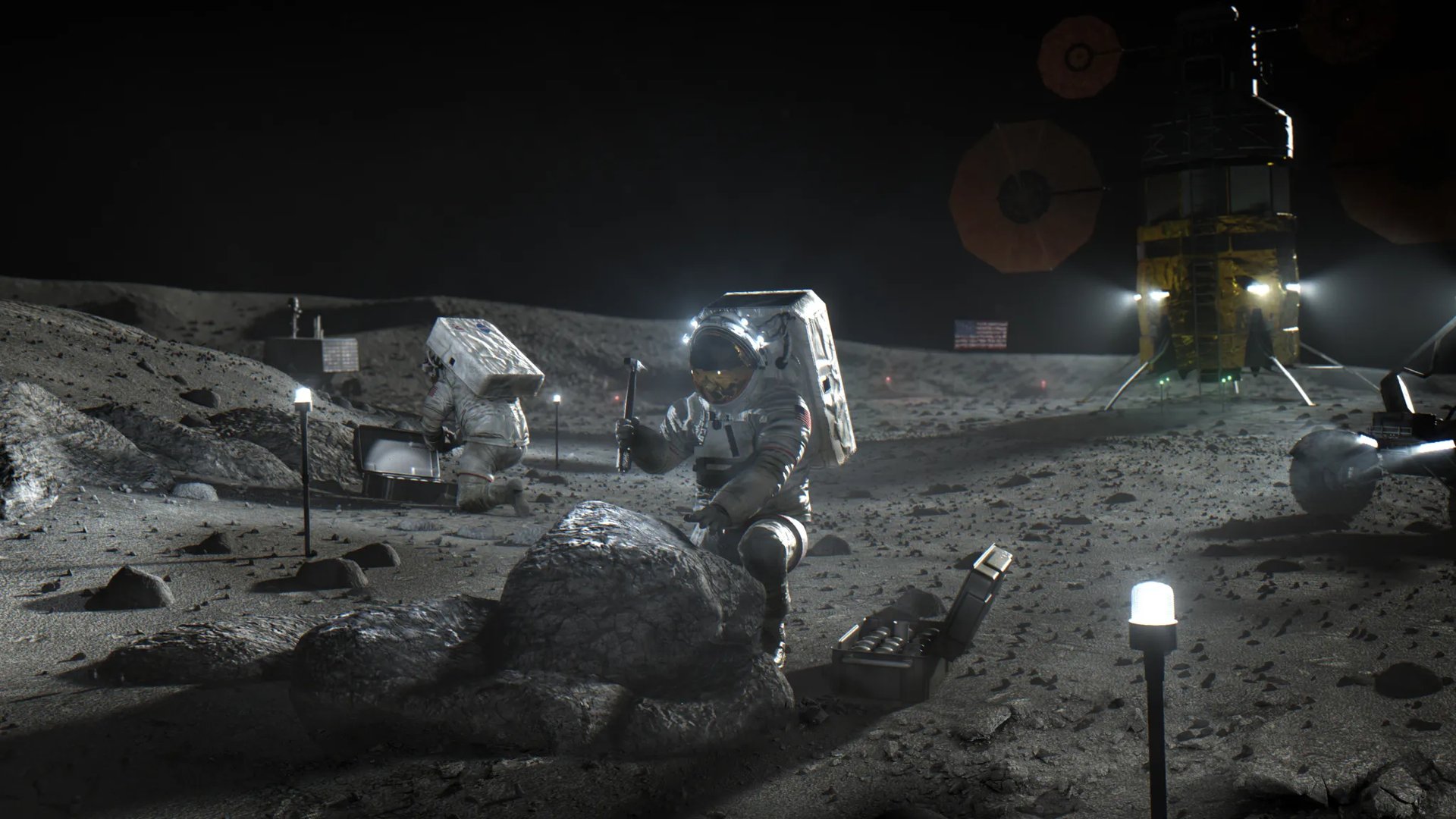 Artist's impression of Artemis astronauts performing extra-vehicular activity (EVA) on the lunar surface. Credit: NASA
As for where the water came from, their study identified several possible sources, including volcanism in the distant past that could have transported water from the lunar interior to the surface. Other sources likely included comets and asteroids, as well as solar wind. While the team’s findings can’t pinpoint the exact source of this water, they were able to rule out the possibility that it arrived in a single large delivery in the distant past.
Regardless, their findings indicate that the deposits of water ice observed in the Moon's polar regions built up in PSRs over billions of years. They also note that the Moon's orientation (its tilt relative to Earth) has changed over time, meaning that craters currently in shadow may not have always been that way. “Ultimately, the question of the source of the moon’s water will only be solved by sample analysis,” said Hayne. “We will need to go to the moon to analyze those samples there or find ways to bring them from the moon back to Earth.”
This could consist of a robotic sample-return mission exploring Hawthorne or other PSRs, or a crewed mission. The latter will likely be one of the main objectives of the Artemis astronauts, or the taikonauts that China hopes to land on the Moon beginning in 2030. In the meantime, researchers need to collect more detailed observations, and Hayne's group at CU Boulder is developing a new instrument for that purpose. It's called the Lunar Compact Infrared Imaging System (L-CIRiS), which NASA plans to deploy near the moon’s South Pole in late 2027
Further Reading: CU Boulder