Universe Today

The Sun is far more than a steadily glowing sphere as our ancestors once thought. Across its surface and atmosphere, countless tiny features flicker in and out of existence, magnetic loops hundreds of times larger than Earth, and plasma flows in ways that still puzzle scientists. Understanding this complexity requires more than just looking harder, it requires looking from multiple angles at once.
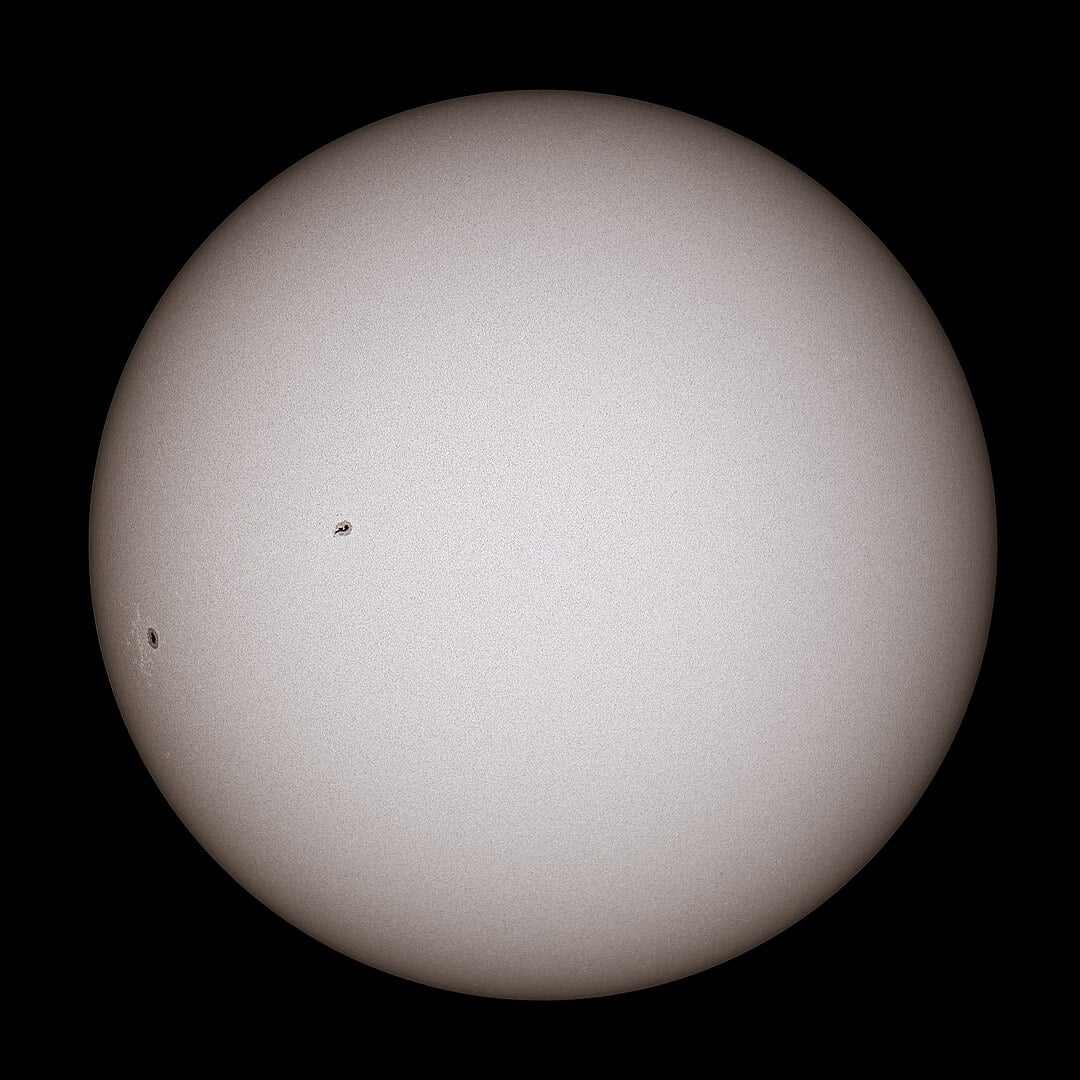 The Sun photographed on the 8th of May, 2019 in white light (Credit : Matúš Motlo)
In October 2022, astronomers achieved exactly that. The National Science Foundation's Daniel K. Inouye Solar Telescope, near the summit of Maui's Haleakalā, coordinated with the European Space Agency's Solar Orbiter spacecraft to observe the same decaying active region on the Sun. One instrument watched from Earth, the other from a position one third of the way closer to the Sun, creating a new stereoscopic view of our local star.
The precision involved staggers the imagination. Imagine standing at one end of a football field, with the Sun represented by a chair at the far end. On that chair sits a five pound note or dollar bill if you are not from UK, this represents the Solar Orbiter's field of view. Within that piece of paper, a tiny coin represents Inouye's observing window. The structures being studied? Smaller than half the penny's thickness. That's the level of detail now being captured across 150 million kilometres away.
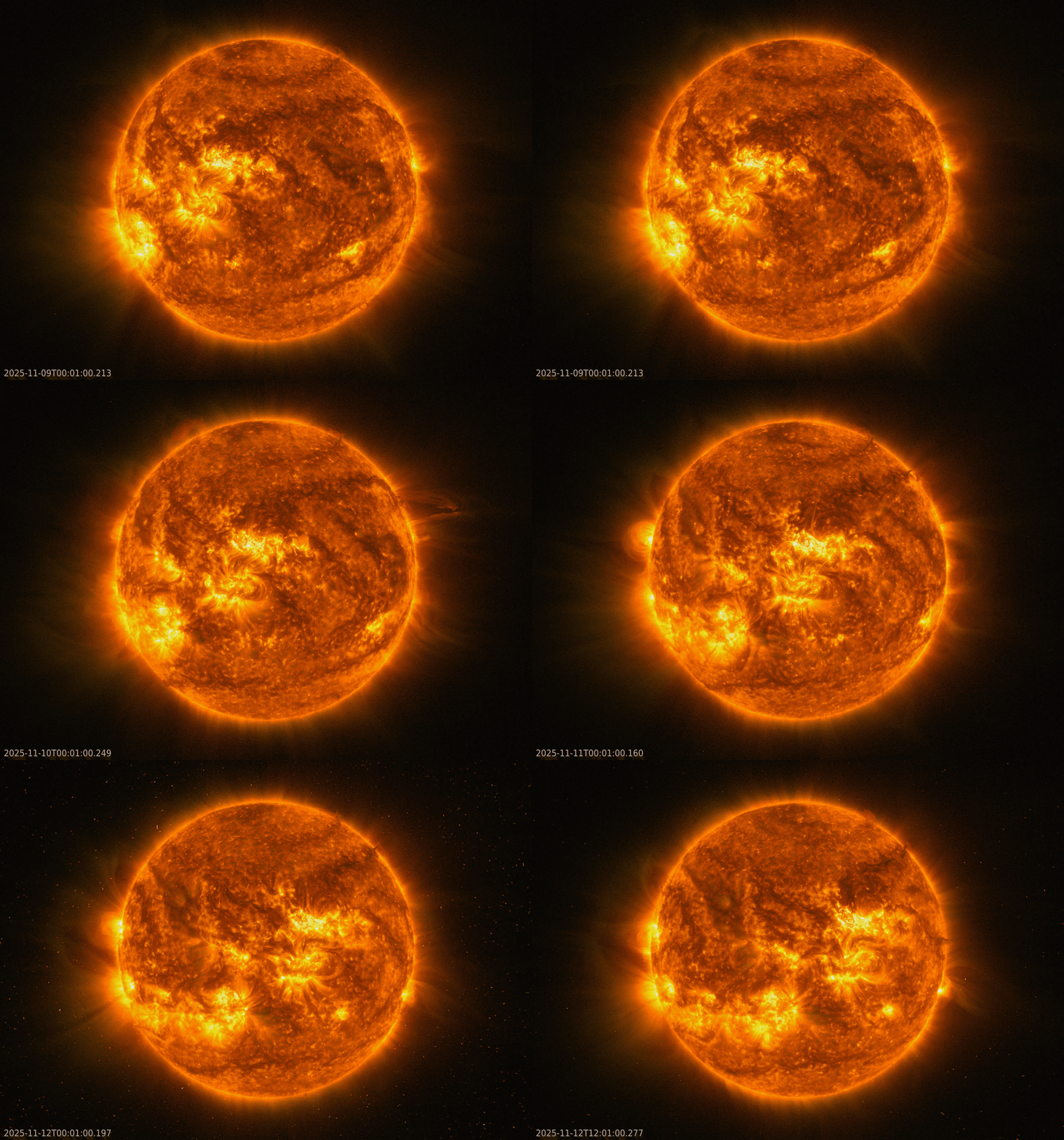 The ESA-led Solar Orbiter mission was flying close to Earth at the time and caught the Sun’s outburst on camera. This video shows data from the spacecraft’s Extreme Ultraviolet Imager (EUI) instrument recorded on 9–12 November 2025 (Credit : ESA)
What makes this collaboration transformative isn't just the technical achievement, impressive though it is. The Inouye excels at observing the Sun's middle layers, the photosphere and chromosphere, while Solar Orbiter captures the hotter, more ethereal transition region and corona from space. Together, they trace structures from their roots deep in the solar atmosphere up through to the outer layers, creating a complete picture impossible to achieve with either instrument alone.
The observations revealed structures called "campfires," tiny extreme ultraviolet brightenings scattered across the Sun that had largely escaped notice until recent advances in instrumentation. Each campfire seems insignificant on its own, but they occur in staggering numbers.
According to Krzysztof Barczynski, the solar physicist who led this research, "although each structure is small, their huge numbers mean they could have a powerful collective influence on the Sun's atmosphere, and even affect much larger solar formations."
These fleeting features may hold answers to longstanding questions about how the Sun's outer atmosphere reaches temperatures exceeding one million degrees Celsius while the visible surface below remains comparatively cool at around 5,500 degrees. By coordinating high resolution ground observations with space based perspectives, scientists can now track how these small scale events interact with larger magnetic structures and contribute to heating the solar corona.
Source : Two Eyes on the Sun: Unveiling Solar Dynamics with Coordinated Observations