Illustration of Kepler-186f, a recently-discovered, possibly Earthlike exoplanet that could be a host to life. Scientists could use this one or one like it to measure planetary entropy production as a prelude to exploration. (NASA Ames, SETI Institute, JPL-Caltech, T. Pyle)
To date, astronomers have confirmed the existence of 4,301 extrasolar planets in 3,192 star systems, with another 5,650 candidates awaiting confirmation. In the coming years, next-generation telescopes will allow astronomers to directly observe many of these exoplanets and place tighter constraints on their potential habitability. In time, this could lead to the discovery of life beyond our Solar System!
The only problem is, finding evidence of life requires that we know what to look for. According to a new study by an interdisciplinary team of scientists from the University of California Santa Cruz (UCSC), radioactive elements might play a role in planetary habitability. Future studies of rocky exoplanets, they argue, should therefore look for specific isotopes that indicate the presence of long-lived elements like thorium and uranium.
Artist's impression of Betelgeuse. Credit: ESO/L. Calçada
Starting in late 2019, Betelgeuse began drawing a lot of attention after it mysteriously started dimming, only to brighten again a few months later. For a variable star like Betelgeuse, periodic dimming and brightening are normal, but the extent of its fluctuation led to all sorts of theories as to what might be causing it. Similar to Tabby’s Star in 2015, astronomers offered up the usual suspects (minus the alien megastructure theory!)
Whereas some thought that the dimming was a prelude to the star becoming a Type II supernova, others suggested that dust clouds, enormous sunspots, or ejected clouds of gas were the culprit. In any case, the “Great Dimming of Betelgeuse” has motivated an international team of astronomers to propose that a “Betelgeuse Scope” be created that cant monitor the star constantly.
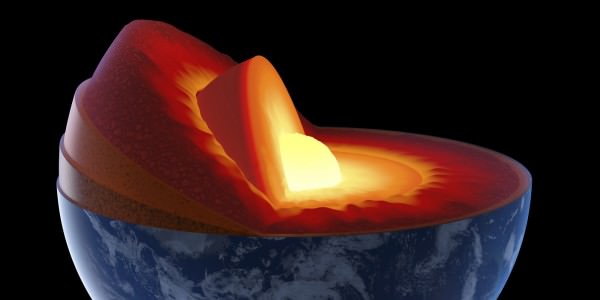
The Earth's layers, showing the Inner and Outer Core, the Mantle, and Crust. Credit: discovermagazine.com
Like all the other terrestrial planets, (Mercury, Venus, and Mars) the Earth is made up of many layers. This is the result of it undergoing planetary differentiation, where denser materials sink to the center to form the core while lighter materials form around the outside. Whereas the core is composed primarily of iron and nickel, Earth’s upper layer are composed of silicate rock and minerals.
This region is known as the mantle, and accounts for the vast majority of the Earth’s volume. Movement, or convection, in this layer is also responsible for all of Earth’s volcanic and seismic activity. Information about structure and composition of the mantle is either the result of geophysical investigation or from direct analysis of rocks derived from the mantle, or exposed mantle on the ocean floor.
The Earth's layers, showing the Inner and Outer Core, the Mantle, and Crust. Credit: discovermagazine.com
There is more to the Earth than what we can see on the surface. In fact, if you were able to hold the Earth in your hand and slice it in half, you’d see that it has multiple layers. But of course, the interior of our world continues to hold some mysteries for us. Even as we intrepidly explore other worlds and deploy satellites into orbit, the inner recesses of our planet remains off limit from us.
However, advances in seismology have allowed us to learn a great deal about the Earth and the many layers that make it up. Each layer has its own properties, composition, and characteristics that affects many of the key processes of our planet. They are, in order from the exterior to the interior – the crust, the mantle, the outer core, and the inner core. Let’s take a look at them and see what they have going on.
Modern Theory:
Like all terrestrial planets, the Earth’s interior is differentiated. This means that its internal structure consists of layers, arranged like the skin of an onion. Peel back one, and you find another, distinguished from the last by its chemical and geological properties, as well as vast differences in temperature and pressure.
Our modern, scientific understanding of the Earth’s interior structure is based on inferences made with the help of seismic monitoring. In essence, this involves measuring sound waves generated by earthquakes, and examining how passing through the different layers of the Earth causes them to slow down. The changes in seismic velocity cause refraction which is calculated (in accordance with Snell’s Law) to determine differences in density.
Model of a flat Earth, with the continents modeled in a disk-shape and Antarctica as an ice wall. Credit: Wikipedia Commons
These are used, along with measurements of the gravitational and magnetic fields of the Earth and experiments with crystalline solids that simulate pressures and temperatures in the Earth’s deep interior, to determine what Earth’s layers looks like. In addition, it is understood that the differences in temperature and pressure are due to leftover heat from the planet’s initial formation, the decay of radioactive elements, and the freezing of the inner core due to intense pressure.
History of Study:
Since ancient times, human beings have sought to understand the formation and composition of the Earth. The earliest known cases were unscientific in nature – taking the form of creation myths or religious fables involving the gods. However, between classical antiquity and the medieval period, several theories emerged about the origin of the Earth and its proper makeup.
Most of the ancient theories about Earth tended towards the “Flat-Earth” view of our planet’s physical form. This was the view in Mesopotamian culture, where the world was portrayed as a flat disk afloat in an ocean. To the Mayans, the world was flat, and at it corners, four jaguars (known as bacabs) held up the sky. The ancient Persians speculated that the Earth was a seven-layered ziggurat (or cosmic mountain), while the Chinese viewed it as a four-side cube.
By the 6th century BCE, Greek philosophers began to speculate that the Earth was in fact round, and by the 3rd century BCE, the idea of a spherical Earth began to become articulated as a scientific matter. During the same period, the development of a geological view of the Earth also began to emerge, with philosophers understanding that it consisted of minerals, metals, and that it was subject to a very slow process of change.
Illustration of Edmond Halley’s model of a Hallow Earth, one that was made up of concentric spheres. Credit: Wikipedia Commons/Rick Manning
However, it was not until the 16th and 17th centuries that a scientific understanding of planet Earth and its structure truly began to advance. In 1692, Edmond Halley (discoverer of Halley’s Comet) proposed what is now known as the “Hollow-Earth” theory. In a paper submitted to Philosophical Transactions of Royal Society of London, he put forth the idea of Earth consisting of a hollow shell about 800 km thick (~500 miles).
Between this and an inner sphere, he reasoned there was an air gap of the same distance. To avoid collision, he claimed that the inner sphere was held in place by the force of gravity. The model included two inner concentric shells around an innermost core, corresponding to the diameters of the planets Mercury, Venus, and Mars respectively.
Halley’s construct was a method of accounting for the values of the relative density of Earth and the Moon that had been given by Sir Isaac Newton, in his Philosophiæ Naturalis Principia Mathematica (1687) – which were later shown to be inaccurate. However, his work was instrumental to the development of geography and theories about the interior of the Earth during the 17th and 18th centuries.
Another important factor was the debate during the 17th and 18th centuries about the authenticity of the Bible and the Deluge myth. This propelled scientists and theologians to debate the true age of the Earth, and compelled the search for evidence that the Great Flood had in fact happened. Combined with fossil evidence, which was found within the layers of the Earth, a systematic basis for identifying and dating the Earth’s strata began to emerge.
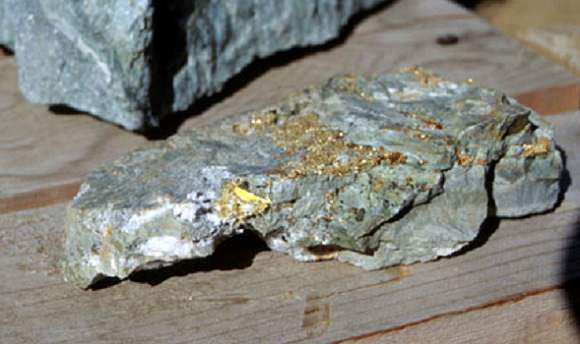
The growing importance of mining in the 17th and 18th centuries, particularly for precious metals, led to further developments in geology and Earth sciences. Credit: minerals.usgs.gov
The development of modern mining techniques and growing attention to the importance of minerals and their natural distribution also helped to spur the development of modern geology. In 1774, German geologist Abraham Gottlob Werner published Von den äusserlichen Kennzeichen der Fossilien (On the External Characters of Minerals) which presented a detailed system for identifying specific minerals based on external characteristics.
In 1741, the National Museum of Natural History in France created the first teaching position designated specifically for geology. This was an important step in further promoting knowledge of geology as a science and in recognizing the value of widely disseminating such knowledge. And by 1751, with the publication of the Encyclopédieby Denis Diderot, the term “geology” became an accepted term.
By the 1770s, chemistry was starting to play a pivotal role in the theoretical foundation of geology, and theories began to emerge about how the Earth’s layers were formed. One popular idea had it that liquid inundation, like the Biblical Deluge, was responsible for creating all the geological strata. Those who accepted this theory became known popularly as the Diluvianists or Neptunists.
Another thesis slowly gained currency from the 1780s forward, which stated that instead of water, strata had been formed through heat (or fire). Those who followed this theory during the early 19th century referred to this view as Plutonism, which held that the Earth formed gradually through the solidification of molten masses at a slow rate. These theories together led to the conclusion that the Earth was immeasurably older than suggested by the Bible.
HMS Beagle in the Galapagos Islands, painted by John Chancellor. Credit: hmsbeagleproject.otg
In the early 19th century, the mining industry and Industrial Revolution stimulated the rapid development of the concept of the stratigraphic column – that rock formations were arranged according to their order of formation in time. Concurrently, geologists and natural scientists began to understand that the age of fossils could be determined geologically (i.e. that the deeper the layer they were found in was from the surface, the older they were).
During the imperial period of the 19th century, European scientists also had the opportunity to conduct research in distant lands. One such individual was Charles Darwin, who had been recruited by Captain FitzRoy of the HMS Beagle to study the coastal land of South America and give geological advice.
Darwin’s discovery of giant fossils during the voyage helped to establish his reputation as a geologist, and his theorizing about the causes of their extinction led to his theory of evolution by natural selection, published in On the Origin of Species in 1859.
During the 19th century, the governments of several countries including Canada, Australia, Great Britain and the United States began funding geological surveys that would produce geological maps of vast areas of the countries. Thought largely motivated by territorial ambitions and resource exploitation, they did benefit the study of geology.
The Earth’s Tectonic Plates. Credit: msnucleus.org
By this time, the scientific consensus established the age of the Earth in terms of millions of years, and the increase in funding and the development of improved methods and technology helped geology to move farther away from dogmatic notions of the Earth’s age and structure.
By the early 20th century, the development of radiometric dating (which is used to determine the age of minerals and rocks), provided the necessary the data to begin getting a sense of the Earth’s true age. By the turn of the century, geologists now believed the Earth to be 2 billion years old, which opened doors for theories of continental movement during this vast amount of time.
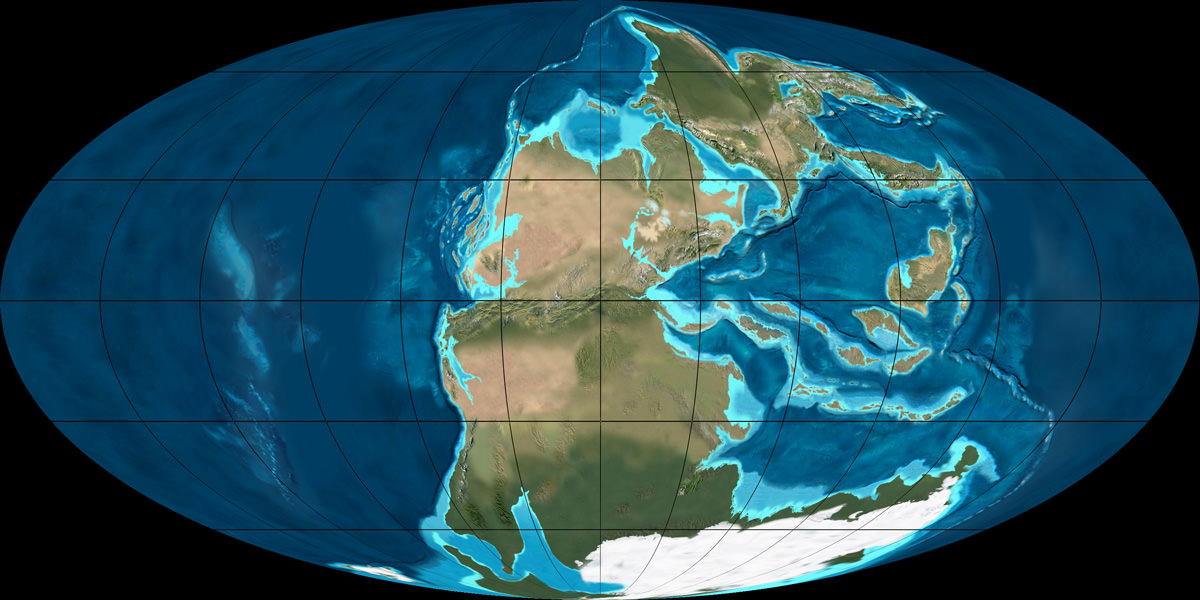
In 1912, Alfred Wegener proposed the theory of Continental Drift, which suggested that the continents were joined together at a certain time in the past and formed a single landmass known as Pangaea. In accordance with this theory, the shapes of continents and matching coastline geology between some continents indicated they were once attached together.
The super-continent Pangea during the Permian period (300 – 250 million years ago). Credit: NAU Geology/Ron Blakey
Research into the ocean floor also led directly to the theory of Plate Tectonics, which provided the mechanism for Continental Drift. Geophysical evidence suggested lateral motion of continents and that oceanic crust is younger than continental crust. This geophysical evidence also spurred the hypothesis of paleomagnetism, the record of the orientation of the Earth’s magnetic field recorded in magnetic minerals.
Then there was the development of seismology, the study of earthquakes and the propagation of elastic waves through the Earth or through other planet-like bodies, in the early 20th century. By measuring the time of travel of refracted and reflected seismic waves, scientists were able to gradually infer how the Earth was layered and what lay deeper at its core.
For example, in 1910, Harry Fielding Ried put forward the “elastic rebound theory”, based on his studies of the 1906 San Fransisco earthquake. This theory, which stated that earthquakes occur when accumulated energy is released along a fault line, was the first scientific explanation for why earthquakes happen, and remains the foundation for modern tectonic studies.
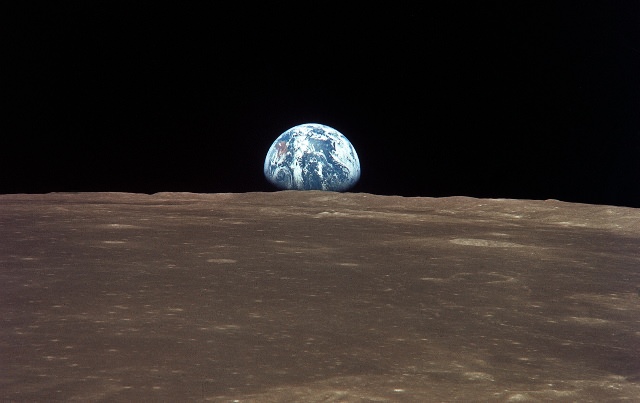
Earth viewed from the Moon by the Apollo 11 spacecraft. Credit: NASA
Then in 1926, English scientist Harold Jeffreys claimed that below the crust, the core of the Earth is liquid, based on his study of earthquake waves. And then in 1937, Danish seismologist Inge Lehmann went a step further and determined that within the earth’s liquid outer core, there is a solid inner core.
By the latter half of the 20th century, scientists developed a comprehensive theory of the Earth’s structure and dynamics had formed. As the century played out, perspectives shifted to a more integrative approach, where geology and Earth sciences began to include the study of the Earth’s internal structure, atmosphere, biosphere and hydrosphere into one.
This was assisted by the development of space flight, which allowed for Earth’s atmosphere to be studied in detail, as well as photographs taken of Earth from space. In 1972, the Landsat Program, a series of satellite missions jointly managed by NASA and the U.S. Geological Survey, began supplying satellite images that provided geologically detailed maps, and have been used to predict natural disasters and plate shifts.
Earth’s Layers:
The Earth can be divided into one of two ways – mechanically or chemically. Mechanically – or rheologically, meaning the study of liquid states – it can be divided into the lithosphere, asthenosphere, mesospheric mantle, outer core, and the inner core. But chemically, which is the more popular of the two, it can be divided into the crust, the mantle (which can be subdivided into the upper and lower mantle), and the core – which can also be subdivided into the outer core, and inner core.
The inner core is solid, the outer core is liquid, and the mantle is solid/plastic. This is due to the relative melting points of the different layers (nickel–iron core, silicate crust and mantle) and the increase in temperature and pressure as depth increases. At the surface, the nickel-iron alloys and silicates are cool enough to be solid. In the upper mantle, the silicates are generally solid but localized regions of melt exist, leading to limited viscosity.
In contrast, the lower mantle is under tremendous pressure and therefore has a lower viscosity than the upper mantle. The metallic nickel–iron outer core is liquid because of the high temperature. However, the intense pressure, which increases towards the inner core, dramatically changes the melting point of the nickel–iron, making it solid.
The differentiation between these layers is due to processes that took place during the early stages of Earth’s formation (ca. 4.5 billion years ago). At this time, melting would have caused denser substances to sink toward the center while less-dense materials would have migrated to the crust. The core is thus believed to largely be composed of iron, along with nickel and some lighter elements, whereas less dense elements migrated to the surface along with silicate rock.
Earth’s Crust:
The crust is the outermost layer of the planet, the cooled and hardened part of the Earth that ranges in depth from approximately 5-70 km (~3-44 miles). This layer makes up only 1% of the entire volume of the Earth, though it makes up the entire surface (the continents and the ocean floor).
The Earth’s layers (strata) shown to scale. Credit: pubs.usgs.gov
The thinner parts are the oceanic crust, which underlies the ocean basins at a depth of 5-10 km (~3-6 miles), while the thicker crust is the continental crust. Whereas the oceanic crust is composed of dense material such as iron magnesium silicate igneous rocks (like basalt), the continental crust is less dense and composed of sodium potassium aluminum silicate rocks, like granite.
The uppermost section of the mantle (see below), together with the crust, constitutes the lithosphere – an irregular layer with a maximum thickness of perhaps 200 km (120 mi). Many rocks now making up Earth’s crust formed less than 100 million (1×10⁸) years ago. However, the oldest known mineral grains are 4.4 billion (4.4×10⁹) years old, indicating that Earth has had a solid crust for at least that long.
Upper Mantle:
The mantle, which makes up about 84% of Earth’s volume, is predominantly solid, but behaves as a very viscous fluid in geological time. The upper mantle, which starts at the “Mohorovicic Discontinuity” (aka. the “Moho” – the base of the crust) extends from a depth of 7 to 35 km (4.3 to 21.7 mi) downwards to a depth of 410 km (250 mi). The uppermost mantle and the overlying crust form the lithosphere, which is relatively rigid at the top but becomes noticeably more plastic beneath.
Compared to other strata, much is known about the upper mantle, thanks to seismic studies and direct investigations using mineralogical and geological surveys. Movement in the mantle (i.e. convection) is expressed at the surface through the motions of tectonic plates. Driven by heat from deeper in the interior, this process is responsible for Continental Drift, earthquakes, the formation of mountain chains, and a number of other geological processes.
Computer simulation of the Earth’s field in a period of normal polarity between reversals. Credit: science.nasa.govThe mantle is also chemically distinct from the crust, in addition to being different in terms of rock types and seismic characteristics. This is due in large part to the fact that the crust is made up of solidified products derived from the mantle, where the mantle material is partially melted and viscous. This causes incompatible elements to separate from the mantle, with less dense material floating upward and solidifying at the surface.
The crystallized melt products near the surface, upon which we live, are typically known to have a lower magnesium to iron ratio and a higher proportion of silicon and aluminum. These changes in mineralogy may influence mantle convection, as they result in density changes and as they may absorb or release latent heat as well.
In the upper mantle, temperatures range between 500 to 900 °C (932 to 1,652 °F). Between the upper and lower mantle, there is also what is known as the transition zone, which ranges in depth from 410-660 km (250-410 miles).
Lower Mantle:
The lower mantle lies between 660-2,891 km (410-1,796 miles) in depth. Temperatures in this region of the planet can reach over 4,000 °C (7,230 °F) at the boundary with the core, vastly exceeding the melting points of mantle rocks. However, due to the enormous pressure exerted on the mantle, viscosity and melting are very limited compared to the upper mantle. Very little is known about the lower mantle apart from that it appears to be relatively seismically homogeneous.
The internal structure of Earth. Credit: Wikipedia Commons/Kelvinsong
Outer Core:
The outer core, which has been confirmed to be liquid (based on seismic investigations), is 2300 km thick, extending to a radius of ~3,400 km. In this region, the density is estimated to be much higher than the mantle or crust, ranging between 9,900 and 12,200 kg/m3. The outer core is believed to be composed of 80% iron, along with nickel and some other lighter elements.
Denser elements, like lead and uranium, are either too rare to be significant or tend to bind to lighter elements and thus remain in the crust. The outer core is not under enough pressure to be solid, so it is liquid even though it has a composition similar to that of the inner core. The temperature of the outer core ranges from 4,300 K (4,030 °C; 7,280 °F) in the outer regions to 6,000 K (5,730 °C; 10,340 °F) closest to the inner core.
Because of its high temperature, the outer core exists in a low viscosity fluid-state that undergoes turbulent convection and rotates faster than the rest of the planet. This causes eddy currents to form in the fluid core, which in turn creates a dynamo effect that is believed to influence Earth’s magnetic field. The average magnetic field strength in Earth’s outer core is estimated to be 25 Gauss (2.5 mT), which is 50 times the strength of the magnetic field measured on Earth’s surface.
Inner Core:
Like the outer core, the inner core is composed primarily of iron and nickel and has a radius of ~1,220 km. Density in the core ranges between 12,600-13,000 kg/m³, which suggests that there must also be a great deal of heavy elements there as well – such as gold, platinum, palladium, silver and tungsten.
Artist’s illustration of Earth’s core, inner core, and inner-inner core. Credit: Huff Post Science
The temperature of the inner core is estimated to be about 5,700 K (~5,400 °C; 9,800 °F). The only reason why iron and other heavy metals can be solid at such high temperatures is because their melting temperatures dramatically increase at the pressures present there, which ranges from about 330 to 360 gigapascals.
Because the inner core is not rigidly connected to the Earth’s solid mantle, the possibility that it rotates slightly faster or slower than the rest of Earth has long been considered. By observing changes in seismic waves as they passed through the core over the course of many decades, scientists estimate that the inner core rotates at a rate of one degree faster than the surface. More recent geophysical estimates place the rate of rotation between 0.3 to 0.5 degrees per year relative to the surface.
Recent discoveries also suggest that the solid inner core itself is composed of layers, separated by a transition zone about 250 to 400 km thick. This new view of the inner core, which contains an inner-inner core, posits that the innermost layer of the core measures 1,180 km (733 miles) in diameter, making it less than half the size of the inner core. It has been further speculated that while the core is composed of iron, it may be in a different crystalline structure that the rest of the inner core.
What’s more, recent studies have led geologists to conjecture that the dynamics of deep interior is driving the Earth’s inner core to expand at the rate of about 1 millimeter a year. This occurs mostly because the inner core cannot dissolve the same amount of light elements as the outer core.
The freezing of liquid iron into crystalline form at the inner core boundary produces residual liquid that contains more light elements than the overlying liquid. This in turn is believed to cause the liquid elements to become buoyant, helping to drive convection in the outer core. This growth is therefore likely to play an important role in the generation of Earth’s magnetic field by dynamo action in the liquid outer core. It also means that the Earth’s inner core, and the processes that drive it, are far more complex than previously thought!
Yes indeed, the Earth is a strange and mysteries place, titanic in scale as well as the amount of heat and energy that went into making it many billions of years ago. And like all bodies in our universe, the Earth is not a finished product, but a dynamic entity that is subject to constant change. And what we know about our world is still subject to theory and guesswork, given that we can’t examine its interior up close.
As the Earth’s tectonic plates continue to drift and collide, its interior continues to undergo convection, and its core continues to grow, who knows what it will look like eons from now? After all, the Earth was here long before we were, and will likely continue to be long after we are gone.
Diagram showing the transfer of thermal energy via conduction. Credit: Boundless
Heat is an interesting form of energy. Not only does it sustain life, make us comfortable and help us prepare our food, but understanding its properties is key to many fields of scientific research. For example, knowing how heat is transferred and the degree to which different materials can exchange thermal energy governs everything from building heaters and understanding seasonal change to sending ships into space.
Heat can only be transferred through three means: conduction, convection and radiation. Of these, conduction is perhaps the most common, and occurs regularly in nature. In short, it is the transfer of heat through physical contact. It occurs when you press your hand onto a window pane, when you place a pot of water on an active element, and when you place an iron in the fire.
This transfer occurs at the molecular level — from one body to another — when heat energy is absorbed by a surface and causes the molecules of that surface to move more quickly. In the process, they bump into their neighbors and transfer the energy to them, a process which continues as long as heat is still being added.
Heat conduction occurs through any material, represented here by a rectangular bar. The rate at which it is transfers depends in part on the thickness of the material (rep. by A). Credit: Boundless
The process of heat conduction depends on four basic factors: the temperature gradient, the cross section of the materials involved, their path length, and the properties of those materials.
A temperature gradient is a physical quantity that describes in which direction and at what rate the temperature changes in a specific location. Temperature always flows from the hottest to coldest source, due to the fact that cold is nothing but the absence of heat energy. This transfer between bodies continues until the temperature difference decays, and a state known as thermal equilibrium occurs.
Cross-section and path length are also important factors. The greater the size of the material involved in the transfer, the more heat is needed to warm it. Also, the more surface area that is exposed to open air, the greater likelihood for heat loss. So shorter objects with a smaller cross-section are the best means of minimizing the loss of heat energy.
Last, but certainly not least, is the physical properties of the materials involved. Basically, when it comes to conducting heat, not all substances are created equal. Metals and stone are considered good conductors since they can speedily transfer heat, whereas materials like wood, paper, air, and cloth are poor conductors of heat.
Conduction, as demonstrated by heating a metal rod with a flame. Credit: Thomson Higher Education
These conductive properties are rated based on a “coefficient” which is measured relative to silver. In this respect, silver has a coefficient of heat conduction of 100, whereas other materials are ranked lower. These include copper (92), iron (11), water (0.12), and wood (0.03). At the opposite end of the spectrum is a perfect vacuum, which is incapable of conducting heat, and is therefore ranked at zero.
Materials that are poor conductors of heat are called insulators. Air, which has a conduction coefficient of .006, is an exceptional insulator because it is capable of being contained within an enclosed space. This is why artificial insulators make use of air compartments, such as double-pane glass windows which are used for cutting heating bills. Basically, they act as buffers against heat loss.
Feather, fur, and natural fibers are all examples of natural insulators. These are materials that allows birds, mammals and human beings to stay warm. Sea otters, for example, live in ocean waters that are often very cold and their luxuriously thick fur keeps them warm. Other sea mammals like sea lions, whales and penguins rely on thick layers of fat (aka. blubber) – a very poor conductor – to prevent heat loss through their skin.
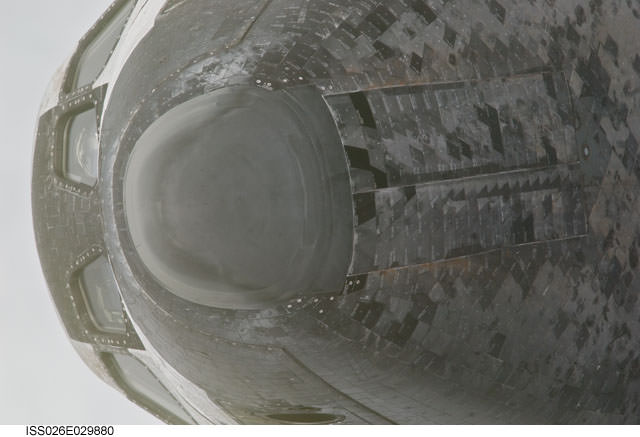
This view of the nose section of space shuttle Discovery, build of heat-resistance carbon-composites. Credit: NASA
This same logic is applied to insulating homes, buildings, and even spacecraft. In these cases, methods involve either trapped air pockets between walls, fiber-glass (which traps air within it) or high-density foam. Spacecraft are a special case, and use insulation in the form of foam, reinforced carbon composite material, and silica fiber tiles. All of these are poor conductors of heat, and therefore prevent heat from being lost in space and also prevent the extreme temperatures caused by atmospheric reentry from entering the crew cabin.
See this video demonstration of the heat tiles on the Space Shuttle:
The laws governing conduction of heat are very similar to Ohm’s Law, which governs electrical conduction. In this case, a good conductor is a material that allows electrical current (i.e. electrons) to pass through it without much trouble. An electric insulator, by contrast, is any material whose internal electric charges do not flow freely, and therefore make it very hard to conduct an electric current under the influence of an electric field.
In most cases, materials that are poor conductors of heat are also poor conductors of electricity. For instance, copper is good at conducting both heat and electricity, hence why copper wires are used so widely in the manufacture of electronics. Gold and silver are even better, and where price is not an issue, these materials are used in the construction of electrical circuits as well.
And when one is looking to “ground” a charge (i.e. neutralize it), they send it through a physical connection to the Earth, where the charge is lost. This is common with electrical circuits where exposed metal is a factor, ensuring that people who accidentally come into contact are not electrocuted.
Insulating materials, such as rubber on the soles of shoes, is worn to ensure that people working with sensitive materials or around electrical sources are protected from electrical charges. Other insulating materials like glass, polymers, or porcelain are commonly used on power lines and high-voltage power transmitters to keep power flowing to the circuits (and nothing else!)
In short, conduction comes down to the transfer of heat or the transfer of an electrical charge. Both happen as a result of a substance’s ability to allow molecules to transfer energy across them.
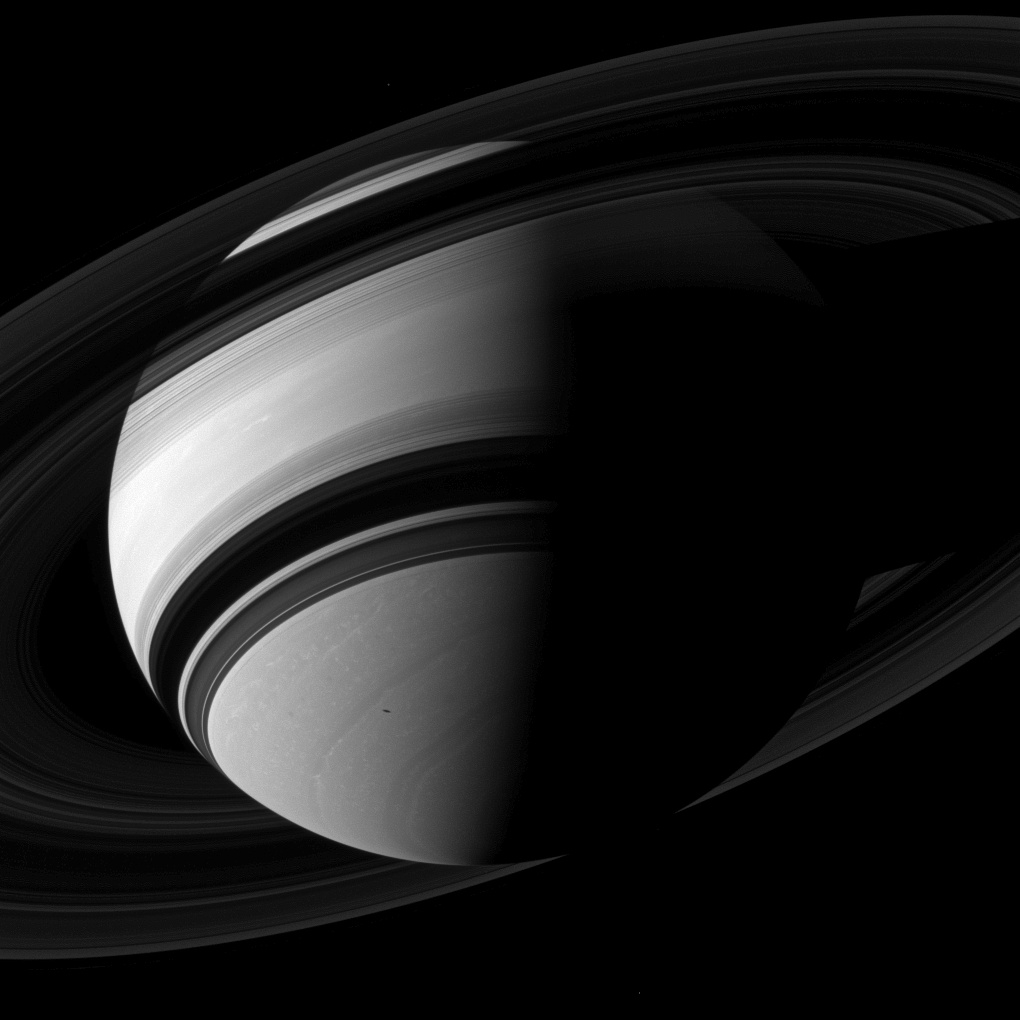
Saturn seen by the Cassini spacecraft in late 2012. If you look carefully, you can spot the shadow of Mimas in the image. Credit: NASA/JPL-Caltech/Space Science Institute
The mystery of Saturn’s bright, youthful appearance is a step closer to resolution. And it actually has to do with gas.
Layers of gas within the ringed giant trap heat emanating from the center, preventing the planet from cooling off as it was expected to do as it aged, according to a model developed by a European science team.
“Scientists have been wondering for years if Saturn was using an additional source of energy to look so bright, but instead our calculations show that Saturn appears young because it can’t cool down,” stated Gilles Chabrier, a physics and astronomy professor at the University of Exeter and part of the research team.
“Instead of heat being transported throughout the planet by large scale (convective) motions, as previously thought, it must be partly transferred by diffusion across different layers of gas inside Saturn. These separate layers effectively insulate the planet and prevent heat from radiating out efficiently. This keeps Saturn warm and bright.”
A raw image of Saturn taken May 4, 2013, as seen through the eyes of the Cassini probe. Credit: NASA/JPL/Space Science Institute
You can also see layered convection on Earth, pointed out scientists. In this instances, salty water stays underneath colder and less salty liquid. The salt trap stops water from moving between the layers, also stopping heat from transferring.
The findings were published in Nature Geoscience and included participation from the University of Exeter in England and the Ecole Normale Supérieure de Lyon in France.
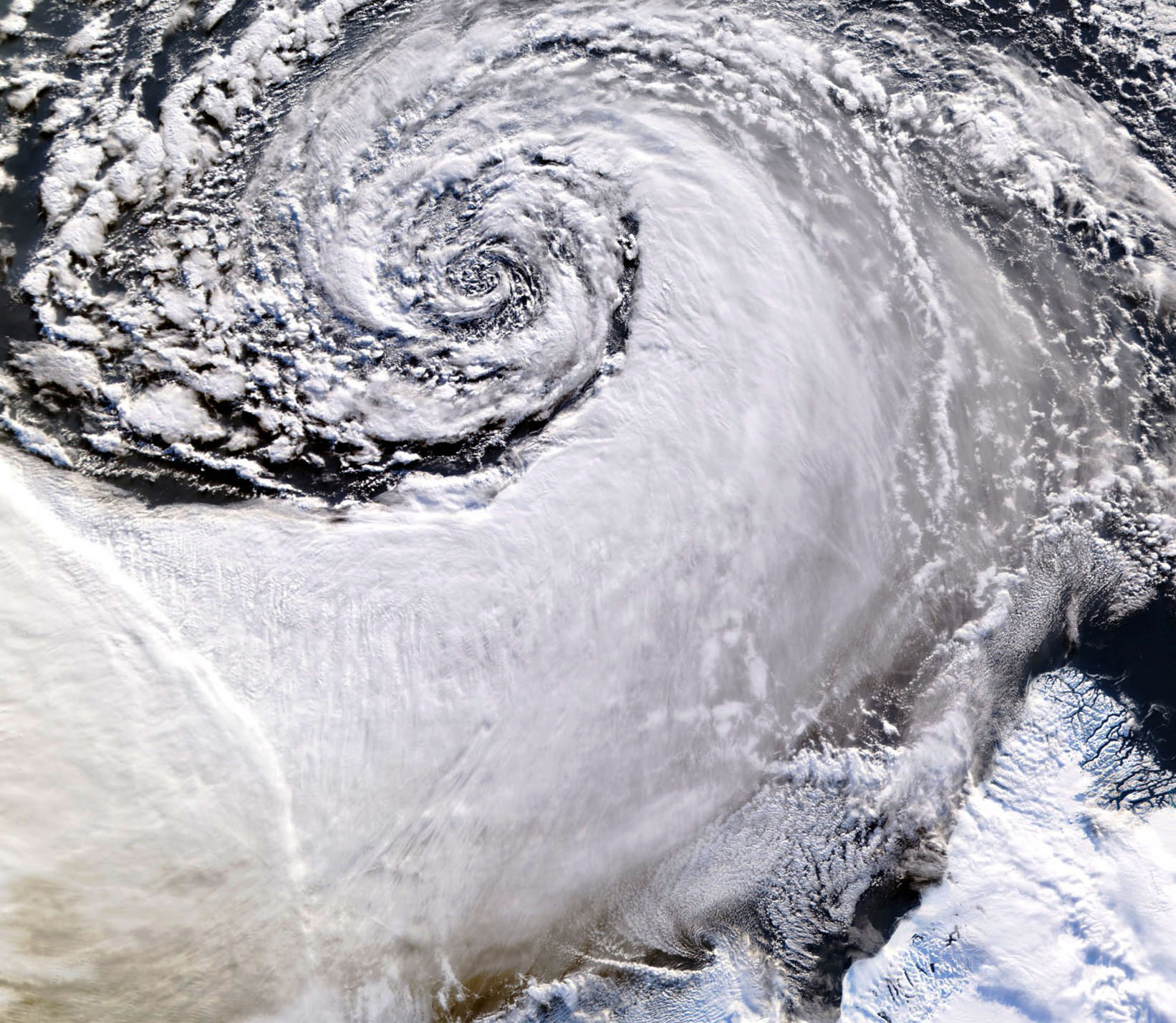
Satellite image of a cloud vortex off the coast of Greenland (NASA/MODIS/Chelys)
Looking south across the southern tip of Greenland, this satellite image shows an enormous cloud vortex spiraling over the northern Atlantic ocean on January 26, 2013. An example of the powerful convection currents in the upper latitudes, these polar low cyclones are created when the motion of cold air is energized by the warmer ocean water beneath.
Sometimes referred to as Arctic cyclones, these spiraling storms can bring gale-force winds and heavy snowfall over a wide area of ocean during their 12- to 36-hour lifespans. Hurricane-type storms don’t only form in the tropics!
This image was captured by the MODIS instrument on NASA’s Aqua satellite from its polar orbit 705 km (438 miles) above the Earth. The view has been rotated so south is up; the southernmost tip of Greenland can be seen at lower right. Click for an impressive high-resolution view.
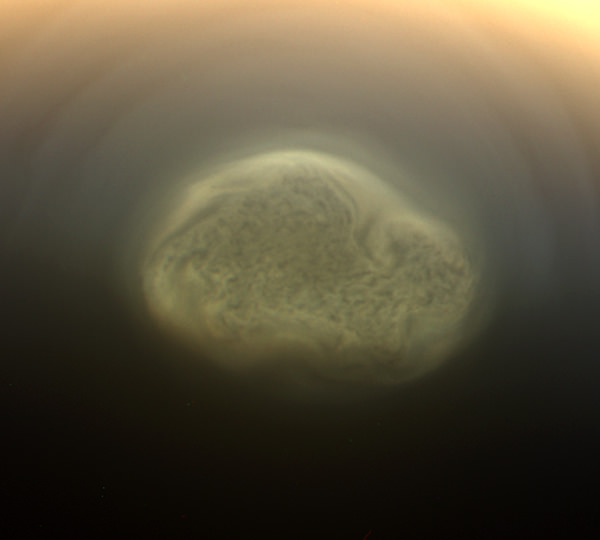
View of Titan's South Pole, showing a vortex. Credit: NASA
Thanks to Cassini’s new vantage point granted by its inclined orbit researchers have gotten a new look at the south pole of Titan, Saturn’s largest moon. What they’ve recently discovered is a swirling vortex of gas forming over the moon’s pole, likely the result of the approach of winter on Titan’s southern hemisphere.
What we’re seeing here is thought to be an open cell convection process in Titan’s upper atmosphere. In open cells, air sinks in the center of the cell and rises at the edge, forming clouds at cell edges. However, because the scientists can’t see the layer underneath the layer visible in these new images, they don’t know what other mechanisms may be at work.
Titan has already been seen to have a thicker area of high-altitude haze over its north pole, and as autumn progresses toward winter in Titan’s south during the course of Saturn’s 29.7-year-long orbit this may very well be the beginnings of a southern polar hood.
An animation of this southern vortex can be found here.
“We suspect that this maelstrom, clearly forming now over the south pole and spinning more than forty times faster than the moon’s solid body, may be a harbinger of what will ultimately become a south polar hood as autumn there turns to winter. Of course, only time will tell.”
– Carolyn Porco, Cassini Imaging Team Leader
Discoveries like this are prime examples of why it was so important for Cassini to have an extended, long-duration mission around Saturn, so that seasonal changes in the planet and moons could be closely observed. New seasons bring new surprises!
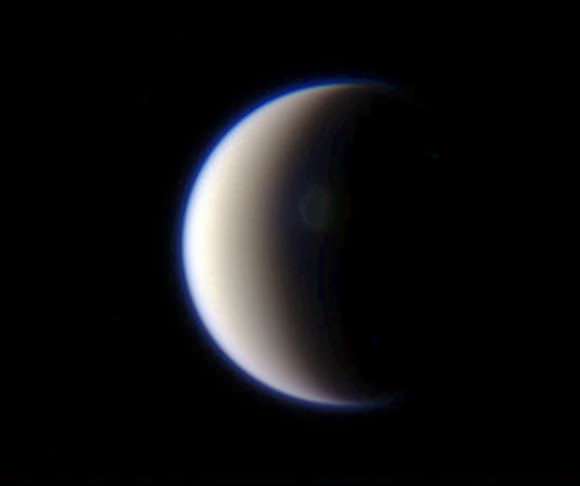
The southern vortex structure was also captured in raw images acquired by Cassini on June 28. A color-composite made from three of those raw images is below (the vortex can be seen at center just right of the terminator):
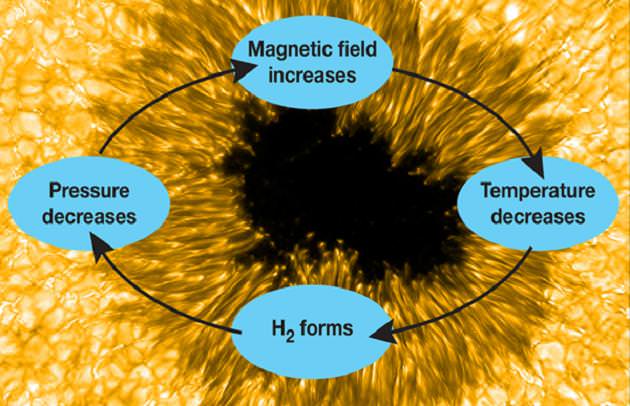
During the initial stage of sunspot emergence and cooling, the formation of H2 may trigger a temporary "runaway" magnetic field intensification. The magnetic field prevents the flow of energy from inside the sun to the outside, and the sunspot cools as the energy shines into space. They form hydrogen molecules that take half the volume of the atoms, thus dropping pressure and concentrating the magnetic field, and so on. (adapted from Jaeggli, 2011; sunspot image by F. Woeger et al
[/caption]
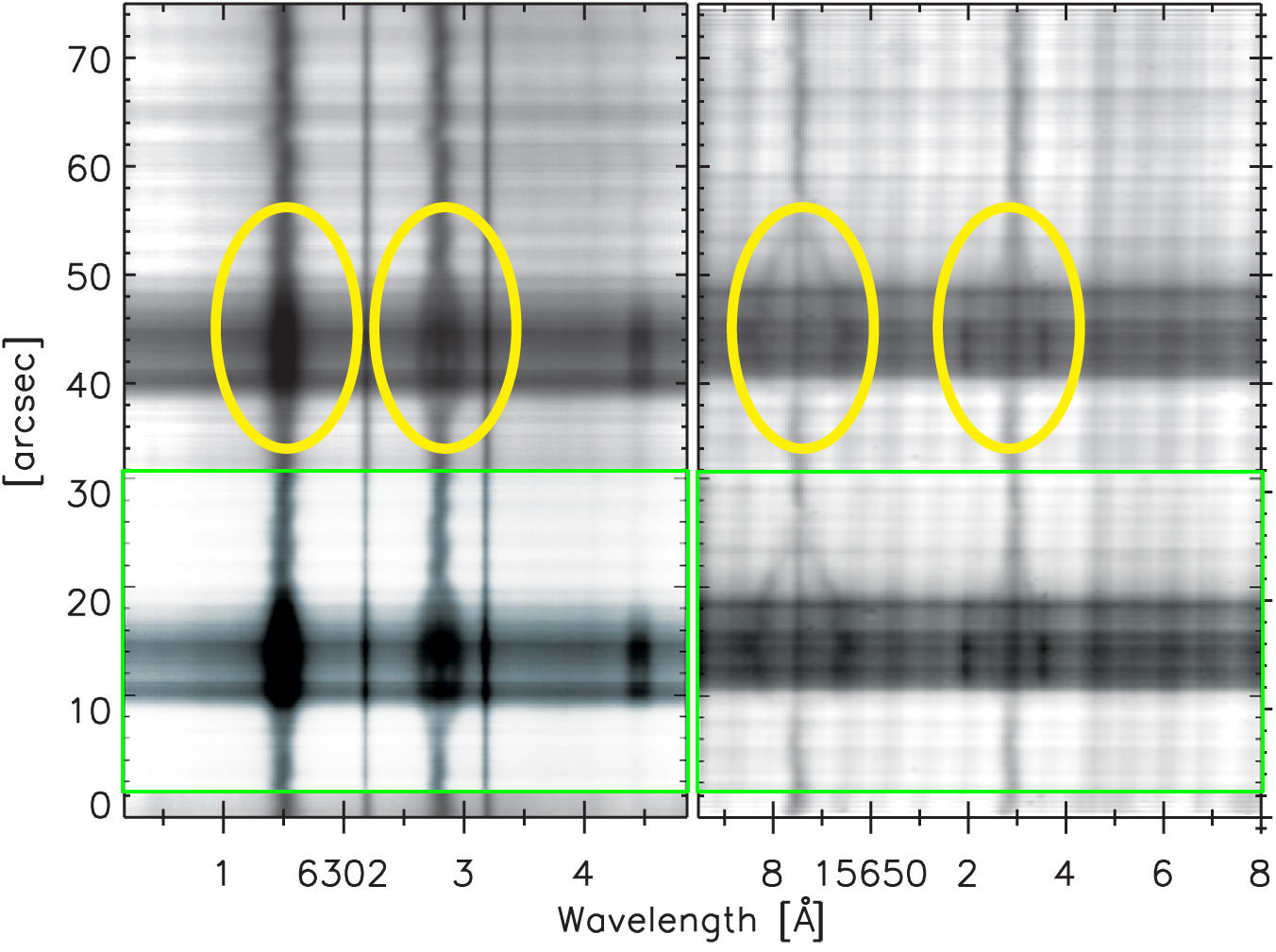
Although well over 40 years old, the Dunn Solar Telescope at Sunspot, New Mexico isn’t going to be looking at an early retirement. On the contrary, it has been outfitted with the new Facility Infrared Spectropolarimeter (FIRS) and is already making news on its solar findings. FIRS provides simultaneous spectral coverage at visible and infrared wavelengths through the use of a unique dual-armed spectrograph. By utilizing adaptive optics to overcome atmospheric “seeing” conditions, the team took on seven active regions on the Sun – one in 2001 and six during December 2010 to December 2011 – as Sunspot Cycle 23 faded away. The full sunspot sample has 56 observations of 23 different active regions… and showed that hydrogen might act as a type of energy dissipation device which helps the Sun get a magnetic grip on its spots.
“We think that molecular hydrogen plays an important role in the formation and evolution of sunspots,” said Dr. Sarah Jaeggli, a recent University of Hawaii at Manoa graduate whose doctoral research formed a key element of the new findings. She conducted the research with Drs. Haosheng Lin, also from the University of Hawaii at Manoa, and Han Uitenbroek of the National Solar Observatory in Sunspot, NM. Jaeggli now is a postdoctoral researcher in the solar group at Montana State University. Their work is published in the February 1, 2012, issue of The Astrophysical Journal.
You don’t have to be a solar physicist to know about the Sun’s 11 year cycle, or to understand how sunspots are cooler areas of intense magnetism. Believe it or not, even the professionals aren’t quite sure of how all the mechanisms work… especially those which cause sunspot forming areas that retard normal convective motions. Of the things we’ve learned, the spot’s inner temperature has a correlation with its magnetic field strength – with a sharp rise as the temperature cools. “This result is puzzling,” Jaeggli and her colleagues wrote. It implies some undiscovered mechanism inside the spot.
NOAA 11131 sunspot region (Dec. 6, 2010) was the most intense spot measured in this study, but far from the largest the Sun can produce. The two bottom images show the strength of the magnetic field (C) and the contrast between the interior of the spot and the surrounding photosphere (D). The first graph (A) shows how OH starts to appear in the penumbra and continues to rise as the magnetic field strength rises. Because OH forms at a lower temperature than H2, its presence implies the quantity of hydrogen molecules that could be present (B). (adapted from Jaeggli et al, 2012)
One theory is that hydrogen atoms combining into hydrogen molecules may be responsible. As for our Sun, the majority of hydrogen is ionized atoms because the average surface temperature is assessed at 5780K (9944 deg. F). However, since Sol is considered a “cool star”, researchers have found indications of heavy-element molecules in the solar spectrum – including surprising water vapor. These type of findings might prove the umbral regions could allow hydrogen molecules to combine in the surface layers – a prediction of 5% made by the late Professor Per E. Maltby and colleagues at the University of Oslo. This type of shift could cause drastic dynamic changes where gas pressure is concerned.
“The formation of a large fraction of molecules may have important effects on the thermodynamic properties of the solar atmosphere and the physics of sunspots,” Jaeggli wrote.
With direct measurements being beyond our current capabilities, the team then measured a proxy – the hydroxyl radical made of one atom each of hydrogen and oxygen (OH). According to the National Solar Observatory, “OH dissociates (breaks into atoms) at a slightly lower temperature than H2, meaning H2 can also form in regions where OH is present. By coincidence, one of its infrared spectral lines is 1565.2nm, almost the same as the 1565nm line of iron, used for measuring magnetism in a spot and one of the lines FIRS is designed to observe.”
Spectral lines are the unique "fingerprints in light" that all atoms and molecules produce. In the presence of a magnetic field in a hot gas, some lines split, betraying the presence and strength of the magnetic fields. Each line corresponds to electrons giving up energy in discrete amounts, or quanta, as light. Imposing a magnetic field on the atom makes the electrons produce multiple lines instead of one. The spread of these lines is a direct measure of the strength of the magnetic field, and is greater in the red and in the infrared spectrum. This image depicts sunspot spectra taken by FIRS with lines centered at 630.2nm (left) and 1564.8nm (right). Note the broadened area in the color ellipses, indicating line splitting inside a spot, and how the broadening is greater at the longer wavelength. Contrast is adjusted to enhance visibility in the inset boxes.
By combining both old and new data, the team measured magnetic fields across sunspots, and the OH intensity inside spots, judging the H2 concentrations. “We found evidence that significant quantities of hydrogen molecules form in sunspots that are able to maintain magnetic fields stronger than 2,500 Gauss,” Jaeggli commented. She also said its presence leads to a temporary “runaway” intensification of the magnetic field.
As for the anatomy of a sunspot, magnetic flux boils up from the Sun’s interior and slows surface convection – which in turns stops cooler gas which has radiated its heat into space. From there, molecular hydrogen is created, reducing the volume. Because it is more transparent than its atomic counterpart, its energy is also radiated into space allowing the gas to cool even more. At this point the hot gas primed by the flux compresses the cooler region and intensifies the magnetic field. “Eventually it levels out, partly from energy radiating in from the surrounding gas. Otherwise, the spot would grow without bounds. As the magnetic field weakens, the H2 and OH molecules heat up and dissociate back to atoms, compressing the remaining cool regions and keeping the spot from collapsing.”
For now, the team admits that additional computer modeling is required to validate their observations and that most of the active regions so far have been mild ones. They’re hoping that Sunspot Cycle 24 will give them more fuel to be “cool”…
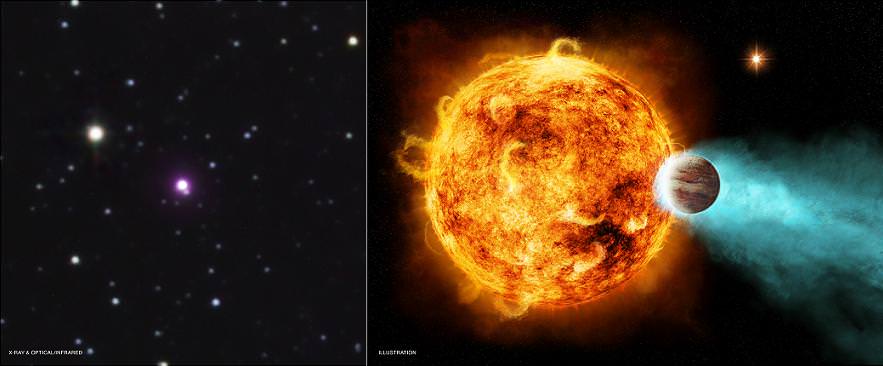
Credit: X-ray: NASA/CXC/Univ of Hamburg/S.Schröter et al; Optical: NASA/NSF/IPAC-Caltech/UMass/2MASS, UNC/CTIO/PROMPT; Illustration: NASA/CXC/M.Weiss
[/caption]
Some 880 light years away, a star named CoRoT-2a is busy decimating one of its planets – CoRoT-2b. Orbiting the parent star at a distance of over two million miles is dangerous business in this cosmic neighborhood. While the intrepid exoplanet might be about a thousand times the size of Earth right now, it’s getting about five million tons of matter stripped away from it every second. Thanks to new data from NASA’s Chandra X-ray Observatory and the European Southern Observatory’s Very Large Telescope, we’re able to take a closer look at this high-energy process for an even better understanding of how planets may – or may not – survive the process of forming a solar system.
“This planet is being absolutely fried by its star,” said Sebastian Schroeter of the University of Hamburg in Germany. “What may be even stranger is that this planet may be affecting the behavior of the star that is blasting it.”
Discovered by the French Space Agency’s Convection, Rotation and planetary Transits (CoRoT) satellite in 2008, this hot system is estimated to be between about 100 million and 300 million years old. The active parent star is assumed to be completely formed, yet its high magnetic activity is producing a bright x-ray signature comparable to that of a younger star. What could be causing the deviation that racks CoRoT-2b with a hundred thousand times more radiation than we receive from Sol?
“Because this planet is so close to the star, it may be speeding up the star’s rotation and that could be keeping its magnetic fields active,” said co-author Stefan Czesla, also from the University of Hamburg. “If it wasn’t for the planet, this star might have left behind the volatility of its youth millions of years ago.”
However, CoRoT-2a might not be alone. There’s a possibility that it’s a binary system with the companion positioned at roughly a thousand AU. If so, why can’t the x-ray instruments detect it? The answer is… it is not feeding on a planet to keep it active. CoRoT-2b’s huge size and proximity make for an intriguing combination. For as long as it lasts…
“We’re not exactly sure of all the effects this type of heavy X-ray storm would have on a planet, but it could be responsible for the bloating we see in CoRoT-2b,” said Schroeter. “We are just beginning to learn about what happens to exoplanets in these extreme environments.”






![Computer simulation of the Earth's field in a period of normal polarity between reversals.[1] The lines represent magnetic field lines, blue when the field points towards the center and yellow when away. The rotation axis of the Earth is centered and vertical. The dense clusters of lines are within the Earth's core](https://www.universetoday.com/wp-content/uploads/2010/03/Geodynamo_Between_Reversals-e1449100829326.gif)