[/caption]
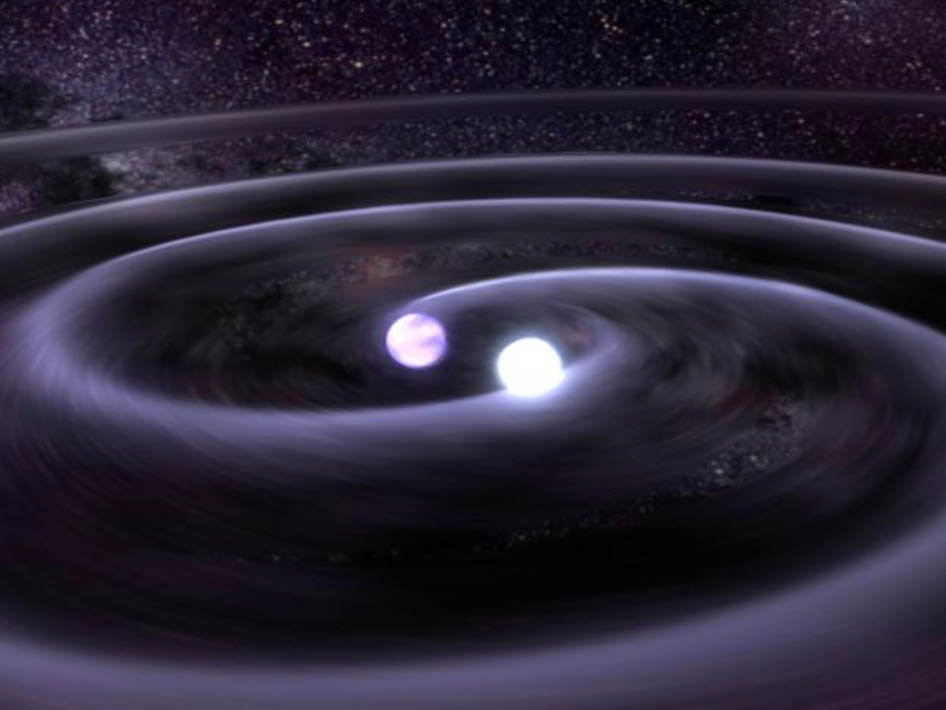
Astronomers have recently discovered an exotic star system which has shed some light on the mass and age of one of the systems rare stellar components. Using data from World’s largest optical telescope, the Very Large Telescope (VLT) in Chile, the team has had a new insight into the properties of the unusual T-dwarf stars. Its believed there are around 200 of these stars in our Galaxy but this is the first one to be discovered as part of a binary star system which has given astronomers an extra special insight into their properties.
The system, that has been dubbed the ‘Rosetta Stone’ for T-dwarf stars, was studied by a team led by Dr Avril Day-Jones of the Universidad de Chile and included Dr David Pinfield of the University of Hertfordshire and other astronomers from the University of Montreal. They first identified the dwarf star, which has a temperature of around 1000 degrees compared to our Sun at 5500 degrees, in the UKIRT Infra-red Deep Sky Survey while searching for the coolest objects in the Galaxy. They found to their surprise, that the T-dwarf star was joined by a companion blue star, later revealed to be a cool white dwarf. The pair have now been given the ‘memorable‘ name of 1459+0857 A and B.
The binary system is the first of its type to be discovered as, whilst both types of stars have been identified individually, they have never been found gravitationally bound to one another. The two stars are about 0.25 light years apart (compared to our nearest star at just over 4 light years away) but despite the distance and the weak gravitational interaction between the stars, they remain in orbit and will do so until the two stars slowly fizzle out to a dark and cool death.
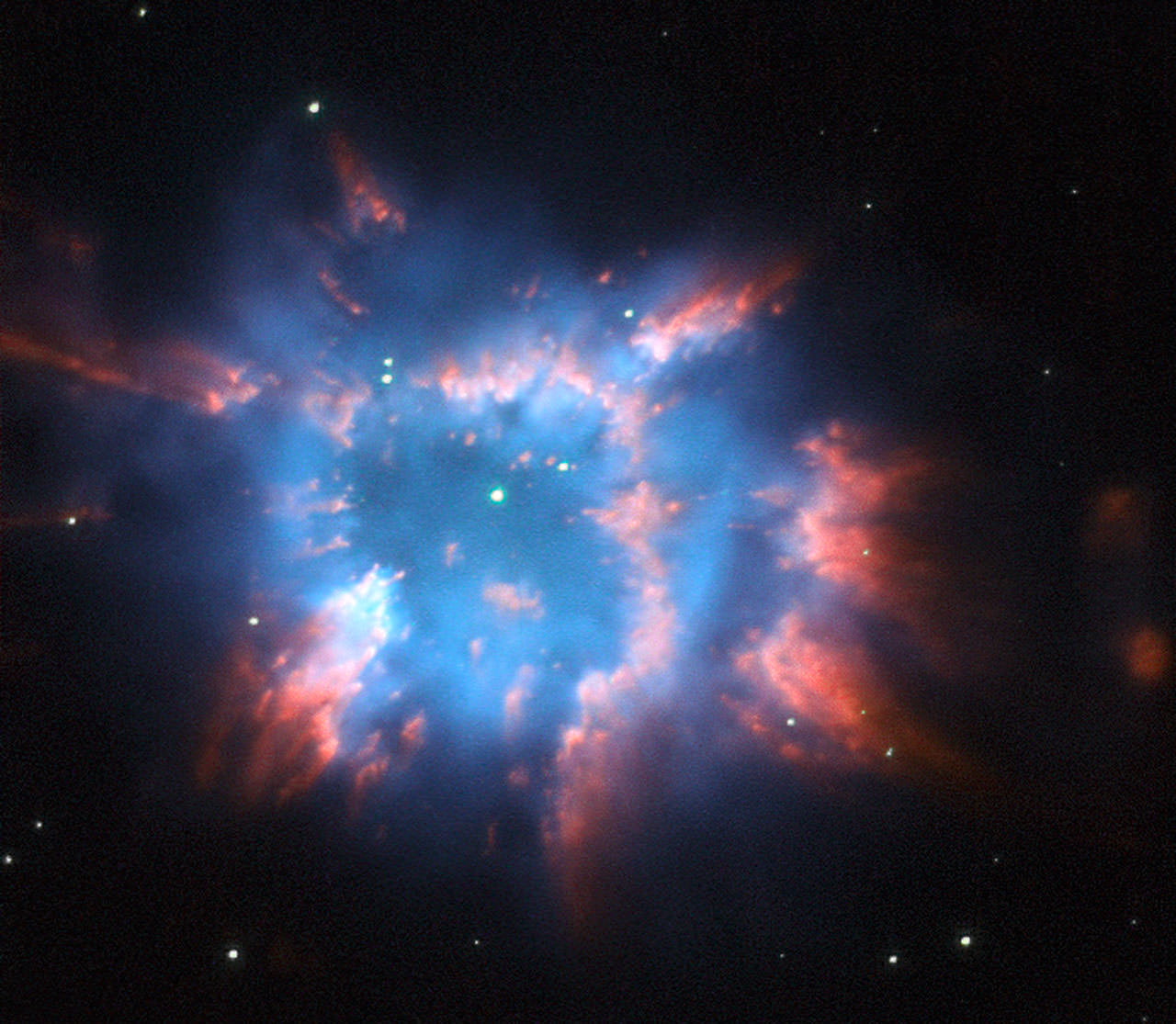
The T-dwarf stars are an exotic breed which lie on the border between a star and a planet, much like our own Solar System giant, the planet Jupiter. They are not massive enough for nuclear reactions to take place in the core so from their birth, they simply cool and fade. The presence of methane too is a pointer to their cool nature as it gets destroyed at higher temperatures and so is not found in fully fledged stars. The companion star, the white dwarf, is a star at the end of its life. When average stars like the Sun die, their outer layers will blow off into space, leaving behind a planetary nebula and a cooling, dying stellar core. With the new binary system, the white dwarf star lost a significant amount of matter and so its gravitational pull weakened, slowly increasing the distance between the two companions. The planetary nebula has long since dissipated and from looking at the white dwarf, we can tell that this weak, fragile system has existed for several billions of year.
The discovery of this binary system has allowed the team to test the physics of cool stellar atmospheres that exist on these strange, failed stars and to measure its mass and age, providing an opportunity for astronomers to study other low mass objects. “The discovery is an important stepping stone to improve astronomers ability to measure the properities of low-mass star like objects (brown dwarfs). ” Dr Pinfield told Universe Today. “Only be accurately measuring these properties will we be able to understand how these objects form and evolve over time. Brown dwarfs are just as numerous as stars in the Milky Way, but their nature is not yet well understood. As such, this new discovery is helping astronomers interpret an important but mysterious population of objects that are quite common in our Galactic backyard.”
Mark Thompson is a writer and the astronomy presenter on the BBC One Show. See his website, The People’s Astronomer, and you can follow him on Twitter, @PeoplesAstro