Ryan Anderson

Extrasolar Volcanoes May Soon be Detectable

by Ryan Anderson on September 7, 2010

We’ve all seen pictures of erupting terrestrial volcanoes from space, and even eruptions on Jupiter’s moon Io in the outer solar system, but would it be possible to detect an erupting volcano on an exoplanet? Astronomers say the answer is yes! (with a few caveats) It’s going to be decades before telescopes will be able [...]

{ Comments on this entry are closed }

Herschel Finds Water Around a Carbon Star

by Ryan Anderson on September 5, 2010

There’s something strange going on around the red giant star CW Leonis (a.k.a. IRC+10216). Deep within the star’s carbon-rich veil, astronomers have detected water vapor where no water should be. CW Leonis is similar in mass to the sun, but much older and much larger. It is the nearest red giant to the sun, and [...]

{ Comments on this entry are closed }

White sand, blue water, sunny skies, pina coladas. When you think of “extreme environments” I doubt the Caribbean is high on your list. But a team of scientists from Woods Hole Oceanographic institute and NASA’s Jet Propulsion Laboratory, exploring the 68-mile-long Mid-Cayman rise deep beneath the surface of the Caribbean, have discovered the deepest known [...]

{ Comments on this entry are closed }

WISE Mission Completes All-sky Infrared Survey

by Ryan Anderson on July 20, 2010

If you take a lot of digital pictures, you’re probably familiar with the frustration of keeping track of dozens of files, and always running out of hard drive space to store them. Well, the scientists and engineers on NASA’s Wide-field Infrared Survey Explorer (WISE) mission have no pity for you. Their spacecraft just finished photographing [...]

{ Comments on this entry are closed }

Next time you hear someone complaining that it’s too hot outside, you can make them feel better by pointing out that at least their planet isn’t so hot it is vaporizing into space. Unless of course you happen to be speaking to someone from the gaseous extrasolar planet HD 209458b. New observations from the Hubble [...]

{ Comments on this entry are closed }

Ice Caves Possible on Mars

by Ryan Anderson on June 9, 2010

New results published in the journal Icarus suggest that caves on Mars may provide future astronauts with more than just shelter. In many locations, even far from the poles, the caves may actually trap water ice. Ice caves are made of rock, but they contain ice year-round. (Not to be confused with glacier caves, which [...]

{ Comments on this entry are closed }

Mars Polar Cap Mystery Solved

by Ryan Anderson on May 26, 2010

The shape of the two-mile-tall Texas-sized ice cap at the north pole of Mars has puzzled scientists for forty years, but new results to be published in a pair of papers in the journal Nature on May 27 have put the controversy to rest. The polar caps of Mars have been known since the first [...]

{ Comments on this entry are closed }

An artist’s rendition of colliding planets, the most likely explanation for the warm dust observed around HD 131488. Image credit: Lynette Cook for Gemini Observatory/AURA Five-hundred light years away, worlds are colliding, and they’re made of nothing we’ve ever seen. Last week at the 215th American Astronomical Society meeting, UCLA astronomers announced that they had [...]

{ Comments on this entry are closed }

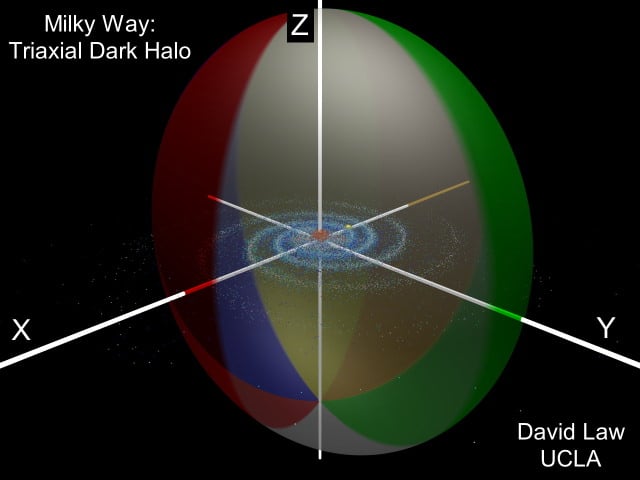
This illustration shows the visible Milky Way galaxy surrounded by a “squashed beachball”-shaped dark matter halo. Source: UCLA Our galaxy is shaped like a flat spiral right? Not if you’re talking about dark matter. Astronomers announced today that the Milky Way’s dark matter halo, which represents about 70% of the galaxy’s mass, is actually shaped [...]

{ Comments on this entry are closed }

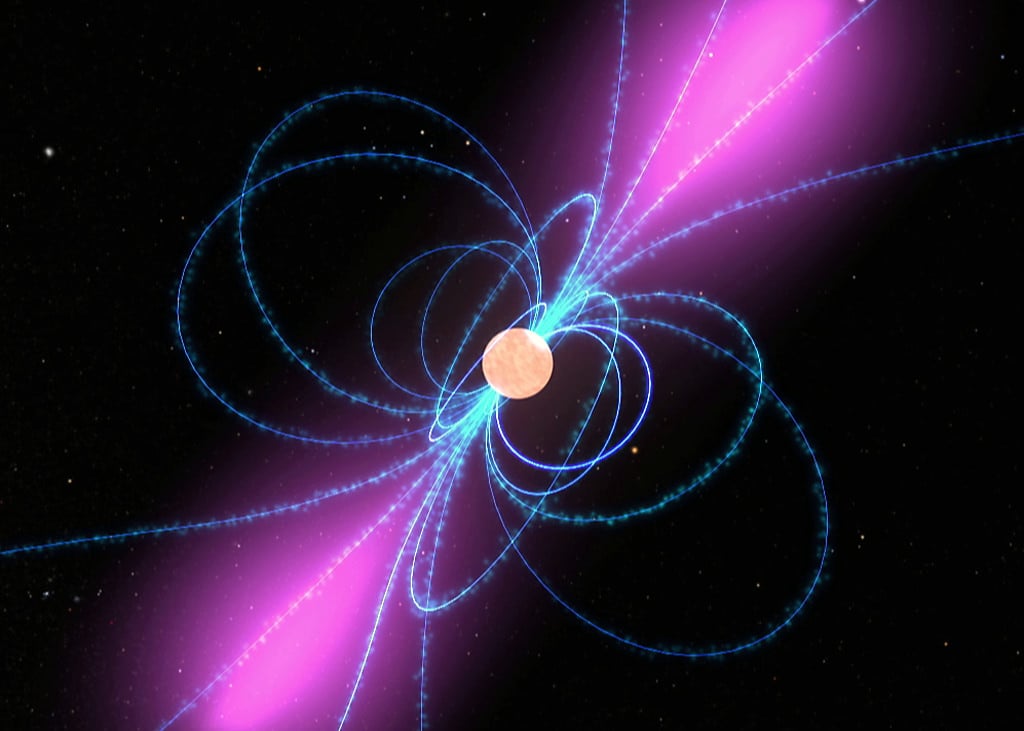
This illustration shows a pulsar’s magnetic field (blue) creates narrow beams of radiation (magenta). Image credit: NASA How do you detect a ripple in space-time itself? Well, you need hundreds of precision clocks distributed throughout the galaxy, and the Fermi gamma ray telescope has given astronomers a new way to find them. The “clocks” in [...]

{ Comments on this entry are closed }

New Images Suggest More Recent Lakes on Mars

by Ryan Anderson on January 5, 2010

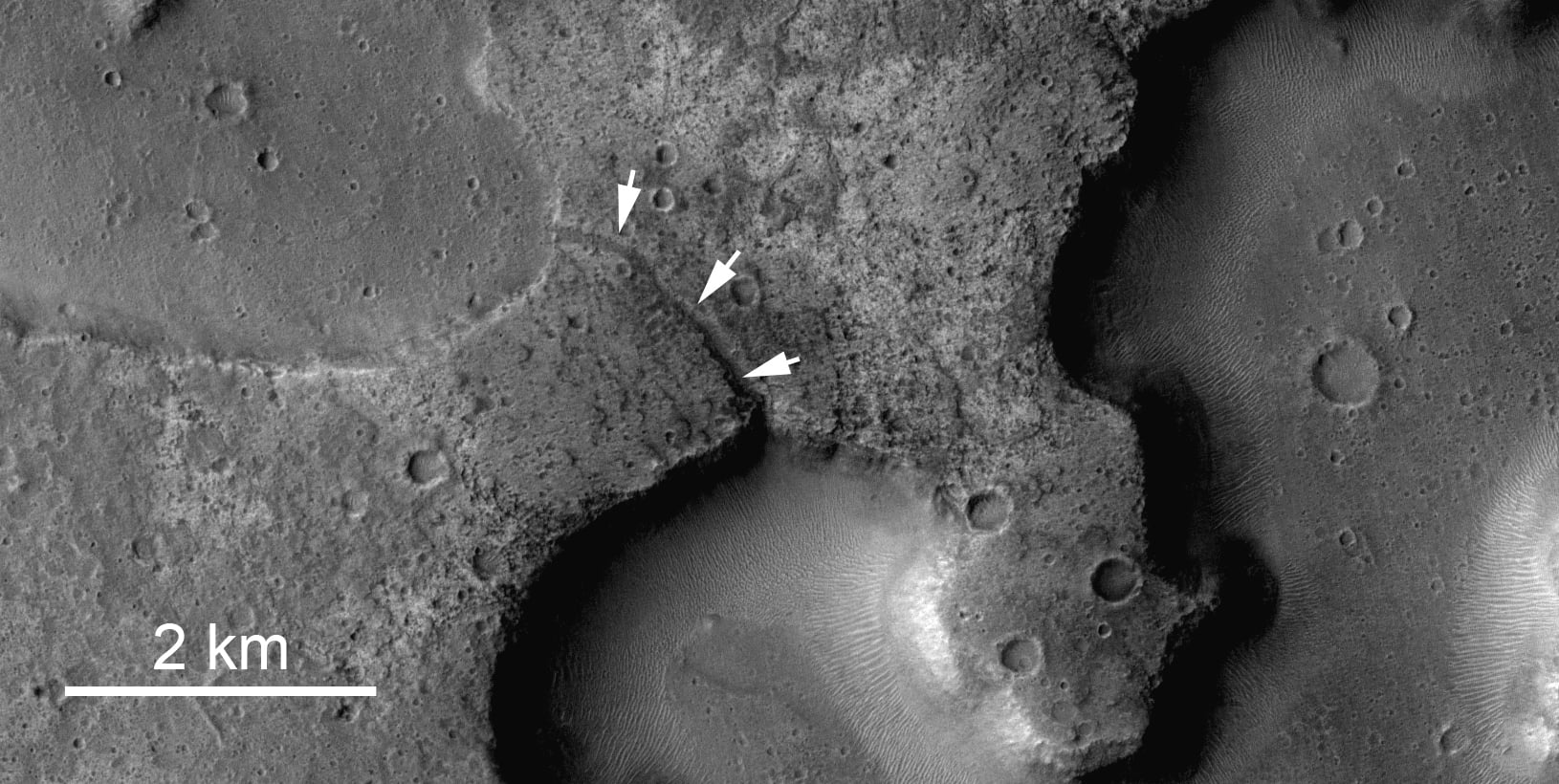
Image of a channel between putative lakes from the Context Camera (CTX) onboard NASA’s Mars Reconnaissance Orbiter (MRO). Modern Mars is frigid and dry, but new evidence suggests that in some locations on the equator there may have been lakes as recently as 3 billion years ago. Researchers from Imperial College London and University College [...]

{ Comments on this entry are closed }

Kaguya Discovers a Lava Tube on the Moon

by Ryan Anderson on November 25, 2009

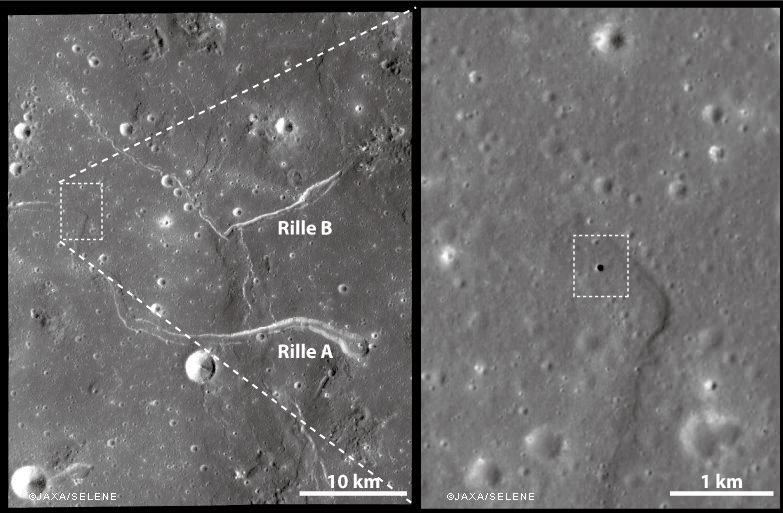
Future lunar astronauts may want to brush up on their spelunking skills: the first lava tube has been discovered on the moon. In a recent paper published in Geophysical Research Letters, Junichi Haruyama and colleagues report that they have discovered a mysterious hole in the lunar surface in high resolution images from the Kaguya spacecraft. [...]

{ Comments on this entry are closed }

Black Hole Drive Could Power Future Starships

by Ryan Anderson on November 19, 2009

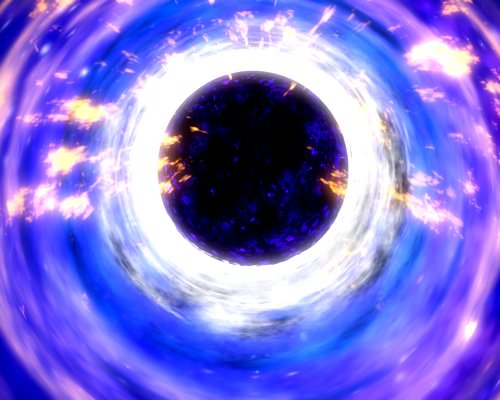
What would happen if humans could deliberately create a blackhole? Well, for starters we might just unlock the ultimate energy source to create the ultimate spacecraft engine — a potential  “black hole-drive” –  to propel ships to the stars. It turns out black holes are not black at all; they give off “Hawking radiation” that [...]

{ Comments on this entry are closed }