Want to stay on top of all the space news? Follow @universetoday on Twitter

Artists concept of the stardust spacecraft flying throug the gas and dust from comet Wild 2. Credit: NASA/JPL
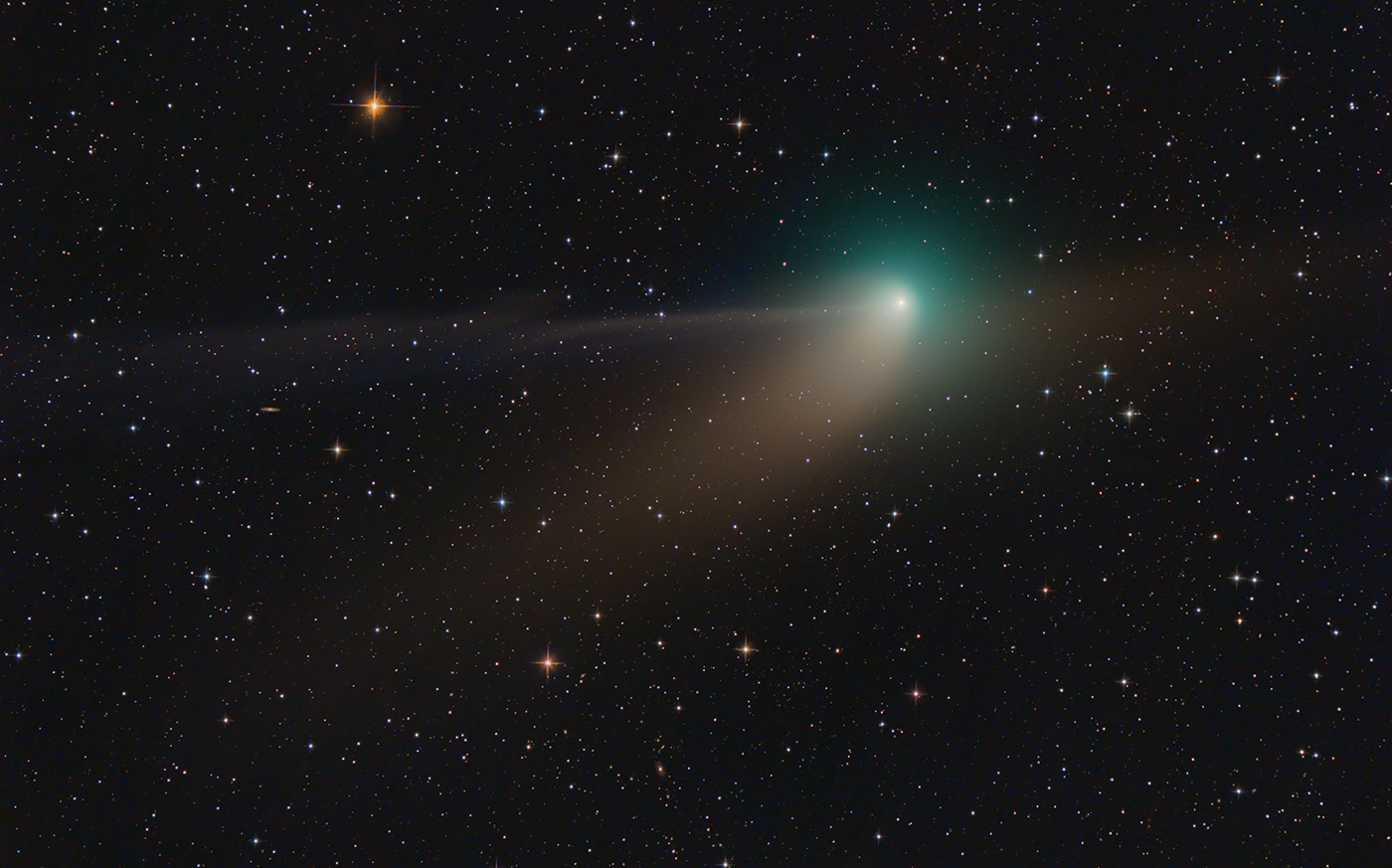
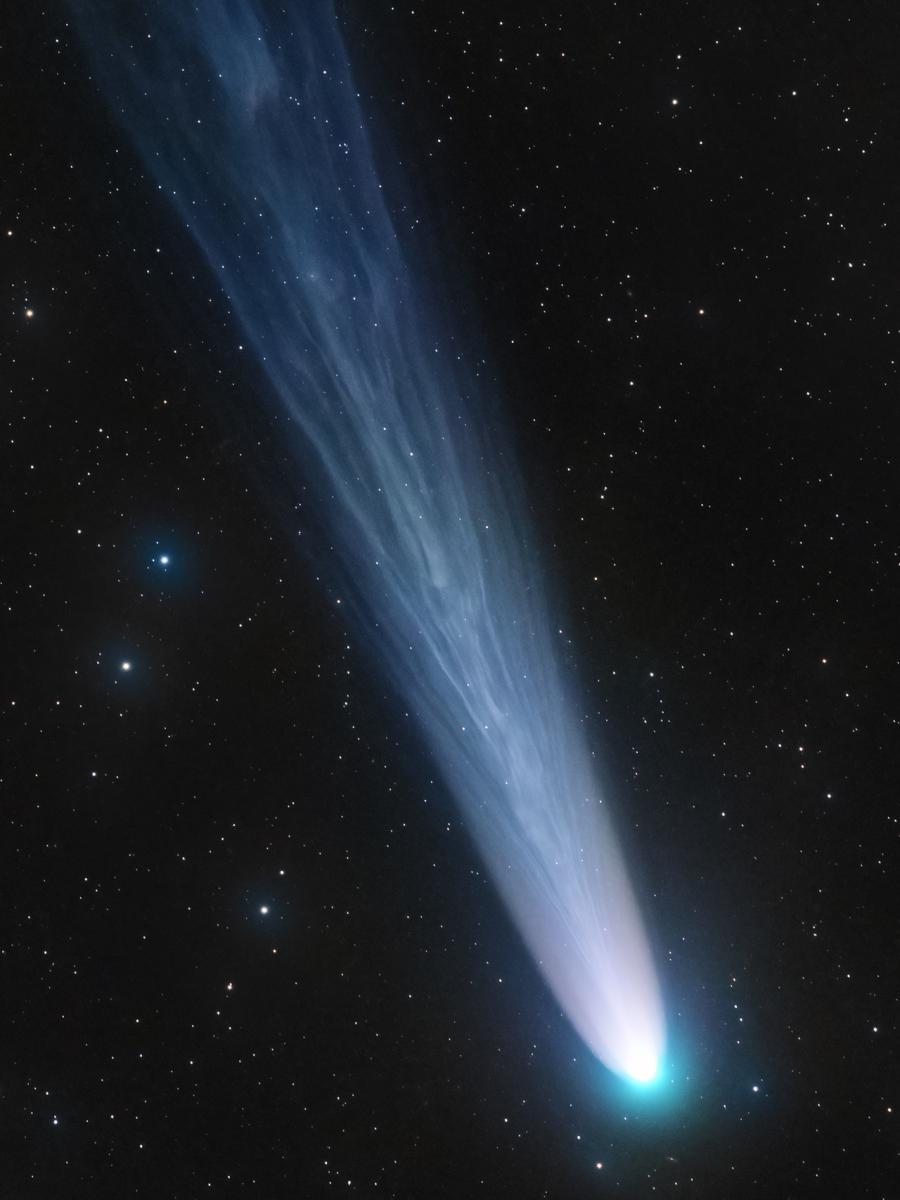
The streams of dust and gas each form their own distinct tail, pointing in slightly different directions. The tail of dust is left behind in the comet’s orbit so that it often forms a curved tail called the antitail. At the same time, the ion tail, made of gases, always points directly away from the Sun. This gas is more strongly affected by the solar wind than dust and follows magnetic field lines instead of an orbital trajectory. Parralax viewing from the Earth may sometimes mean the tails appear to point in opposite directions.
Ion tails have been observed to extend 1 AU (150 million km) or more. The observation of antitails contributed significantly to the discovery of solar wind. The ion tail is formed as a result of solar ultra-violet radiation acting on particles in the coma. Once the particles have been ionized, they attain a net positive electrical charge which in turn gives rise to an induced magnetosphere around the comet. The comet and its induced magnetic field form an obstacle to outward flowing solar wind particles. As the relative orbital speed of the comet and the solar wind becomes supersonic, a bow shock is formed upstream of the comet, in the flow direction of the solar wind. In this bow shock, large concentrations of cometary ions congregate and act to load the solar magnetic field with plasma, such that the field lines drape around the comet forming the ion tail.
There is a good article about the comet tail here. Here on Universe Today we have an article about the strange acting Comet Lulin. Astronomy Cast has a good episode about space dust in general.
Sources: NASA SpacePlace, NASA StarChild
Comments on this entry are closed.