
[/caption]
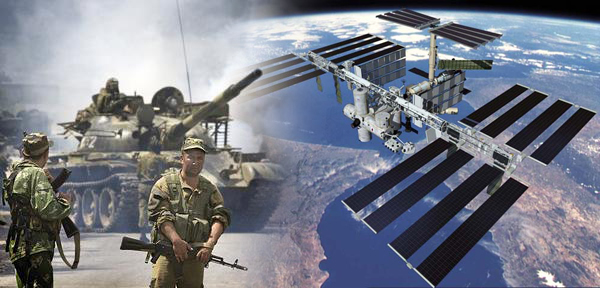
The conflict between Georgia and Russia over the disputed region of South Ossetia may have huge consequences for NASA’s ability to send astronauts to the International Space Station in the future. The US has criticised the Russian military action, prompting concerns for the future NASA use of the Russian Soyuz space vehicle. This comes at a particularly critical time, as concerns were already high due to the Shuttle decommissioning in 2010. The US is only allowed to use Soyuz up until 2011 as that is when the exemption from the Iran Non-Proliferation Act runs out. If US-Russian relations turn even more sour, an extension to the exemption may not be allowed, freezing the US out of any involvement with routine manned access into space. US Senator Bill Nelson (Democrat), an outspoken critic of the government’s funding of the US space program, has brought these concerns to light blaming the Bush administration for an over reliance on Russia for future space access…
The Iran Non-Proliferation Act of 2000 was signed by US Congress as a means to encourage Russian involvement in the nuclear ambitions of Iran to cease. The Act restricts US funding to Russia by limiting all purchasing of technology and services relating to the Space Station. A waiver was granted to NASA so the US could make use of the Russian Soyuz space vehicle, and it was hoped that the waiver would be renewed in 2011 so the US could still have manned access to space during the “5-year gap” between Shuttle decommissioning and Constellation completion. However, the lawmakers in Congress will be very reluctant to renew the waiver if relations between the US and Russia degrade, throwing NASA into a very difficult situation once the Shuttle is mothballed. This concern has been amplified since the military action in the disputed region of South Ossetia in Georgia, a US ally.
Regardless of whether the waiver gets renewed, Senator Nelson is deeply suspicious of Russia’s intentions when NASA will need to take Soyuz flights after 2010. Deteriorating US-Russia politics may result in “Russia denying us rides or charging exorbitant amounts for them,” he said on Tuesday. In response to the problem with the renewing of the Act waiver in light of the recent Georgia violence, he stated:
“It was a tough sell before [to Congress], but it was doable simply because we didn’t have a choice. We don’t want to deny ourselves access to the space station, the very place we have built and paid. It’s going to be a tougher sell now unless there are critical developments during the next 48 to 72 hours.” – US Sen. Bill Nelson
So have there been any critical developments in Georgia? Today, US Defence Chief Robert Gates warned that relations between the US and Russia will be damaged “for years” if Russia does not step down from aggressive operations in the region. The Russian Foreign Minister Sergei Lavrov responded by saying the rebelling Abkhazia and South Ossetia regions will never integrate back under Georgian rule. He also stated that the military has started to hand back the Georgian town of Gori, although a military presence will remain. So no, although the brunt of the military action by Russia appears to have calmed, there will still be huge pressure on the region and innocent civilians will be caught in the middle for some time to come.
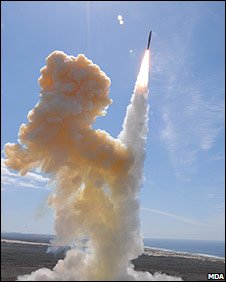
As if to make matters worse the US and Poland have just signed a defence deal, hosting part of the US missile shield to protect against rogue states launching missiles into Europe and the US. Russia has outright rejected the US proposal, saying that a US controlled system near its border will destabilize the military balance in the region. Today’s signing will only contribute to the tension between the two nations.
For further details on the US-Poland missile plans, see Poland “agrees” to host controversial US missile defence system.
Nelson strongly believes the Iran Non-Proliferation Act waiver is “dead on arrival. Nobody thinks it’s going to happen, and the reality is there is no back-up plan for the space station.” Many critics believe the Act will have a self-defeating effect as it will stop NASA from accessing the $100 billion ISS investment. “There will be consequences not just for Russia but for the U.S. too,” Nelson added.
Sources: Florida Today, Orlando Sentinel, BBC
Well I know it’s been said before but how about we EXTEND the Damned Shuttle. Yes, it’s old and outdated, but it is at least something we can SUPPORT from within our own Borders. *Smacks Forehead*
I think you will find that the supply chain for the shuttle components has already been shut down. The manufacturing capability for critical components no longer exists.
I don’t know what the real costs are but the Soyuz isn’t free. All that money going to a foreign government when it could be spent at home.
One of the problems is that the high payload and large passenger capability of the shuttle are now unnecessary and cost considerably more than the Soyuz. Still we should bite the bullet and keep the shuttle operational until we have a replacement.
Depending on the Russians just makes the political quagmire all that more difficult to overcome.
I firmly believe that the shuttle should not be mothballed in 2010. Our ability to get to and from the ISS will be compromised if the Russians balk at letting nour astronauts fly on their Soyuz rockets. NASA was talking about “retiring” one of the shuttles before 2010 anyway so the retired orbiter could be used to replace parts on one of the other two. I don’t think that the U.S. can justify a 4 to 5 year gap that would occur between the shuttles retiring to the start of manned flights and the start of the Constellation program.
But at present (and in the last years also), while still both Shuttles and Soyuzes do approach the ISS, you already do rely significantly on the Russian contribution. I suppose that it would already be problematic under current conditions, if Putin declared non-cooperation on the ISS, while the Shuttles are still alive. Besides access to the ISS, what services else would be concerned?
Since now the “International” Space Station was merely driven bi-national. I guess you missed to inspire less questionable partners and to motivate them to participate equitably.
Just recently, the Europeans showed that they can do an excellent service for the ISS when boosting her with the ATV. The European and Japanese space industries whould have been glad if they had obtained some orders, while you gave the opportunities to the Russians. And because the Russians would think twice to intimidate several partners at once, the active involvement of other partners would stabilize the Russian attitude towards the ISS.
It was a fault not to inspire the Europeans.
It isn’t just about extending the shuttle, or holding out for improved relations with foreign countries. It’s also about private enterprise. We put all our eggs in the basket of governmental sponsorship. Every time the political winds blow and change, we get different commitments to things that should be politically neutral. Until we follow the model of diverification in our investment strategy with space, we’re stuck with what the whimsy, folly and in this case tragedy of politics.
Well the positive aspect is that if the russians make it costly/hard/impossible for the US to access ISS it’ll teach the whitehouse good geopolitical manners…
Arrogance has never paid off ; criticsing others about the exact same thing one has done is very damaging & we will see the results of this decisive east/west conflict in the coming months.
The fall of US, then US puppy EU and the rising of Russia, China and India. Economically, gepolitically & what interests us here, spatially.
The ISS/Space access issue is too bad for science & US population interest’s in space though. That’s what you get for having impulsive mentally-ill rednecks falcons at the whitehouse.
to hell with NASA and to hell with the russians. it is the time of the private sector.
I fear things will get worse. There will be fallout from Russia’s actions (which are a huge display of bad geopolitical manners and arrogance by the Russians, how that is the US’s fault is beyond me) and now the Russians are threatening Poland this morning. International cooperation is a good thing, but the US should never be caught in a situation where we have to rely on another country for space transport. I hope we learn an important lesson as we figure out how to recover.
I like Warren Platts comment.
sOI must be Vladimir Putin’s retarded pot smoking kid.
Extend the shuttle.
The United States (and even the Europeans) have a large scale of launchers for different quantums of payloads into different orbits or even into interplanetary space. But America has only one system for manned spaceflight (the Russians, by the way, too). America had a diversity of manned space ships during the history of NASA: Mercury, Gemini and Apollo. Why was it not possible to keep the ability of access to earth orbit with an alternative system? Something proven, cheap and reliable for backup purposes?
This situation clearly illustrates the pitfalls that come with foreign entanglements that George Washington warned us about. What are the options?
(1) Keep the shuttle going: but that’s really a step backwards.
(2) Start a crash program to get the Ares rockets up and running: but that’s going to require Congress to pony up many more billions of $.
(3) Just wing it: let’s hope the Russians don’t humiliate us too much.
(4) Preemptively withdraw from the ISS before the Russians effectively kick us out (my favorite): Why not? Sure we’ve spent $100 billion on the place. But we’ve already learned most of the lessons that are to be learned from the ISS. Let’s offer to sell the US components for something like $30 billion payable over ten years at 0% interest. Russia is flush with cash for once, they can afford it.
Then we take that $3 billion per year plus the billions we save from our ongoing commitments to the ISS and use it to develop a brand new space station to be placed in a low inclination orbit that would actually be useful as a life boat for missions to the Moon and beyond.
The fundamental problem with the ISS is the 54 degree inclination of it’s orbit. That takes a lot of extra rocket fuel to reach the ISS from Cape Canaveral or equatorial launch sites. Retreat to the ISS was never an option for the Columbia crew because the delta-v required was just too much.
Bottom line: the US and Russian space programs need to get divorced. It was a dysfunctional relationship from the very beginning of Apollo-Soyuz mission. The resultant codependency has prevented both the Russian and US space programs from being where they should be in the 21st century. As in any divorce, we need to figure out who gets the house. Since the 54 degree orbit is basically a “Russian” orbit, it’s natural that they should get it; but the US should be compensated somewhat for their share of the asset. Better an amicable separation sooner rather than an acrimonious split later on.
To David R:
Amen to that!
Ah, geeze, something that once was proudly to be called “Space Station Freedom” might as well just be called “Space Station Communism” now. Damn you Clinton!!!!
I , too, agree with Warren Platts’ comments. But I also remember reading that the Jules Verne ATV made by the ESA was “man-rated” meaning that it could be outfitted to ferry people to( & supposedly from) the ISS and that engineers were already exploring this possibilty. Maybe it’s time to fast track that line of research, though admittedly time is not on our side for this option.
Doesn’t this scenario kinda parallel the war between the US & the Soviet Union that erupts during the mission to Jupiter in the book-movie 2010?
I sure as heck hope that the co-operation between the Russians, the EU and America can keep the ISS a viable outreach to low Earth orbit space and the possibilities beyond.
The long term goal is what is really worth pursuing. The sniping, negative comments will only keep humankind from reaching its full potential.
I don’t mind the US getting $30 billion from Russia to build another more useful Space Station. However, once the Russians run out of money, and show once again their lack of expertise in keeping a space station in orbit, I will miss seeing the ISS pass overhead, but will eagerly look forward to its spectacular plummeting firely death into Planet Earth.
If they were afraid of losing ISS access after the shuttle is retired, why not pump money into the constellation program to speed it up?
Why not push cots?
Why not go with a better solution than delaying new ships to recommission old ones?
Why is most likely because some folks feel the ISS should be a bigger priority than the moon…. which is silly.
Going back to the moon and preparing for mars are the two biggest missions going. Replacing the ISS in function would be a trivial affair in comparison.
If it came to a choice, drop the ISS in the sea and continue reaching for the moon.
The Russian Space Agency cannot maintain the ISS, since too much of non-Russian technology is assembled. It should be impossible for them to keep the space complex going without spare parts and knowledge from the American partner. Probably, the ISS will be doomed as soon as one of the two partners leaves the project.
“sOI must be Vladimir Putin’s retarded pot smoking kid.”
–Oh, you must mean Medvedev, yeah, he’s like a kid in a way.
It seems we have painted ourselves into a corner not thinking the unthinkable! Yes, this is a lot like “2010”, except the movies’ focus was on personalities not the more serious consequences of misguided planning.
Warren Platt your 4th plan is ace
and i say stuff the russians
Shame that every-one is bickering and fighting.
Just imagine what the people of this world could do if we worked together.
Who knows we could have reached for the stars.
Very sad.
Theres so much hate in this world that I just don’t wont to know anymore.
I know a few Russians. They are astronomers. They are so keen to talk to other astronomers in other countries. Some of them belong to peace organizations too. Not every-one in Russia agrees with what their government does. The same goes for people in every country in the world. All most people want to do is live their lives in peace and do the best for their families. Isn’t it about time we started to look at the similarities that all of us have and not the differences.
Sell the ISS to our “partners”. Take the loss and move on. It was just an investment that did not pay off. Happens all the time. The Russians and soon the Chineese and Japaneese will have the ability to get to the ISS. They also have the money to maintain it. Let them make the most of it.
Dave S pleads for sale:
“Let them make the most of it.”
a meeting place for international symposia
a maximum security prison
a rehab hospital for overweight
a film-studio for special effects
an aerospace museum
a restaurant (“at the End of the Universe”)
a spacy cemetery
a house of pleasure
a clubhouse for spaceflight hobbyist
a gymnasium for microgravity sports
dollhopf says: “The Russian Space Agency cannot maintain the ISS, since too much of non-Russian technology is assembled. It should be impossible for them to keep the space complex going without spare parts and knowledge from the American partner. Probably, the ISS will be doomed as soon as one of the two partners leaves the project.”
NASA is scheduled to defund the ISS after 2016. Yet I agree would be a shame to see it crash and burn. So we give them the tech specs and owners manuals for those fancy American-made toilets and such so that they can fix such things themselves.
And why not, Mr. Platts. Therewith NASA would start a new line of business. Either cosmic second-hand car dealer or space estate agent. I’m not sure on that. Maybe it is space retail business. And if there is demand on the ISS anytime past 2016, NASA can buy it back.
You mentioned above that the “fundamental problem with the ISS is the 54 degree inclination of it’s orbit. That takes a lot of extra rocket fuel to reach the ISS from Cape Canaveral or equatorial launch sites.”
Can’t the ISS be brought into an orbit with smaler inclination? It would be a once-only affair.
Herr Dollhpf,
Trust me. The cost of rocket fuel that would have to be lofted in order to move the ISS to a lower inclination orbit would be more than the cost of a brand new station. The old Skylab had about 10,000 cubic feet of lebensraum compared to the ISS’s 15,000 cubic feet. Indeed, a properly designed new station would have more usable volume than the ISS with a single launch using the proposed Ares V rocket.
The ISS is the boondoggle the boondoggle to end all boondoggles. It would be no loss to NASA to just walk away.
I have been blogging extensively on this for the past couple of days and have come to the following conclusions.
1. We can leave things at Status Quo and hope the Russians don’t bite us in the ass when the Shuttle is decommissioned.
2. Accelerate the Constellation Program while keeping the Shuttle in service. The expense of thsi option is the fact that the Constellation will use the existing Shuttle Launch facilities and that in order for Constellation to use those, they will have to be reconfigured for Ares I and Ares V. Most of the expense would have to be to construct new launch pads for Ares while keeping 39A and 39B in operation for Shuttle Missions.
3. Abandon our “go-it-alone” approach and get with our European partners to develop their ATV into a Crew Return Vehicle. We might be able to use the Orion capsule. All that would be required is to intergrate the two. However, this might prove to be impossible since one would need lower level access to the ATV Cargo area through the bottom of the capsule, thus requiring the designers of the capsule to start from scratch.
It might be noted here that the Europeans are reaching a milestone in their decision process on the ATV late this year.
http://www.npr.org/templates/story/story.php?storyId=93728802
This would be a perfect time to approach them. The other thing to mention is that not only are the Russians participating in the development of the ATV upgrade, our Japanese partners are participating as well. We could do well to join all the partners in upgrading the ATV and make access to the ISS truly International.
From my point of view abandoning the space station is not a wise option. After such an investment, I could not see the political will existing for another significant investment in space like the ISS. It is in more likelihood that abandoning the ISS would be seen as caving into the Russians, leaving them with a truly wonderful piece of hardware. With our European partners suitably brought to heel by the fact that most of their heating oil and Natural gas comes from Russia (they only need turn off the tap in the dead of winter to prove that point) the ISS could be maintained and even expanded. Eventually we would be shut out even though we provided most of the money, hardware and construction personnel to this facility. Political will for continued funding of the manned space program would evaporate. Abandoning the ISS would truly mean that America would abandon her space program and that is something that should not be allowed to happen. The Space Program is truly a political animal and as such is governed by those rules. Private industry is not at present inclined to either fund or supply access to space without a major government investment. Once that ball is rolling though, it is likely it would continue. You have the one off’s like Virgin Galactic which is nice, but you have to have a place to go and do things and that is what the ISS is for.