
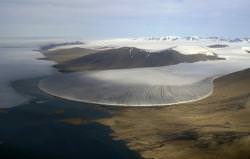
Nine key geographical factors have been highlighted as Earth’s critical climate controllers most at risk of slipping past their “tipping points”. This means that once damage reaches a certain point, there can be no recovery; the damage will continue in a downward spiral, amplifying global warming and environmental damage on historic scales. And as if climate news couldn’t get any worse, one such tipping point is only a year away…Â
You can’t move these days for articles about climate change, global warming and environmental disasters. All this talk about impending doom and gloom can often lull you into a detached reverie thinking “what the hell can I do about it anyway?” Although sometimes the outlook seems hopeless, scientists are stepping up a gear to understand what is happening and why humans are having such an impact on our world. In the quest to understand the effects we are having on the planet, new research has drawn up a list of nine key factors and processes likely to change the Earth’s climate most dramatically. It is hoped that once we understand how these processes work, and how long we have until the point of no return, action could be taken to allow the climate to heal.
Prof. Tim Lenton from the University of East Anglia, UK, has identified when the tipping points are likely to occur for the nine key geological factors, and the next one is most likely going to be the collapse of the Indian summer monsoon, which is variable at best. The list is as follows (plus predicted time to tipping point):
- Arctic sea-ice melt (approx 10 years)
- Greenland ice sheet decay (more than 300 years)
- West Antarctic ice sheet decay (more than 300 years)
- Atlantic thermohaline circulation collapse (approx 100 years)
- El Nino Southern Oscillation increase (approx 100 years)
- Indian summer monsoon collapse (approx 1 year)
- Sahara/Sahel greening and West African monsoon disruption (approx 10 years)
- Amazon rainforest dieback (approx 50 years)
- Boreal Forest dieback (approx 50 years)
Many of the factors seem obvious. The melting of the Arctic ice for instance will cause a global rise in sea levels and a loss of ice cover causing Earth’s albedo to decrease (reflectivity decreases), amplifying the greenhouse effect. Also, El Nino in the South Pacific will occur more often, causing rapid and extreme changes in the large-scale weather structure; hurricanes, flooding, droughts and unseasonal shifts in the jet stream will become more and more common.
Some of the factors are perhaps less obvious. For instance, the collapse of the Atlantic thermohaline circulation would have a counter-intuitive effect on the north Atlantic, actually cooling the waters around Europe, North America and the Arctic. The thermohaline drives the circulation of the oceans, so should the Atlantic thermohaline collapse, water from the equator will stop drifting north, providing the warmth at such high latitudes. This effect is unlikely to slow the melting of the Arctic ice-sheets, but it will have devastating effects on biodiversity in the region.
“Society must not be lulled into a false sense of security by smooth projections of global change […] Our findings suggest that a variety of tipping elements could reach their critical point within this century under human-induced climate change. The greatest threats are tipping of the Arctic sea-ice and the Greenland ice sheet, and at least five other elements could surprise us by exhibiting a nearby tipping point.” – Prof Lenton
Although worrying, many of the tipping point projections could be averted should strong action be taken by the international community and individuals alike – after all, we can all contribute in some way.
Source: Telegraph.co.uk
People all over the world are slow to change. They dont understand that the climate situation is in such risk, unless most people know it. There should be some sort of international alarm news, that really makes people realize how serious it is, and that we all have to change our lifestyle radically right now, before it is too late. Surely it is a better option for people to change their lifestyle rather than to let the climate and the resulting disastrous effects, take control of our fate.
Do these models have chaotic factors included or have they been statistically removed, or smoothed out of calculation?
consuming and greed brought us to what we look at now, the righteous are always few, masses are blind to what is right or bad.
goodluck humand kind
Option 1
Firm controls on human births, very unlikely as Europe can’t even control its borders (immigration)
Option 2
Seriously adapt to a simpler way of life reducing carbon emissions etc. very unlikely as the rich & posh stock of life will unexcept the new way of life.
Option 3
Relocate to another galaxy LOL
I still can’t see the connection with man kind and climate change, there are clearly cycles going back millions of years, we are currently sitting on a 100,00 year high. CO2 levels are a response to climate change not a cause – (if it was a cause then the massive increase in CO2 mankind has caused would have had an enormous difference, not just the 1 or 2 degrees we measure today) – I think Canute set a good example.
…hurricanes, flooding, “checkers” and unseasonal shifts…
perhaps you meant “droughts”?
With no solid scientific proof that mankind is in any way responsible for global warming, so many are ready to crush the economies of the great nations and trap the third world nations in poverty.
They can’t tell us with any confidence what the weather will be next week, yet using computer models written by those with agendas, assumptions and ignorance, we’ll confidently look forward dozens and hundreds of years.
The Earth has cooled and warmed before, it will do it again. There are cycles we are just learning about. While it is possible mankind could be impacting a cycle, we need proof.
Lastly, given the long history of climate change on this planet (far exceeding human history), why would we jump to the conclusion that the current climate is the one that should stay for the rest of the history of the Earth?
It is time to stop bickering and start doing something – climate change is real, regardless of its source. Tipping points are chaotic and certainly real too.
The irony is that practical solutions to these short-term tipping points (Indian monsoon collapse and chaotic change to central African climate patterns) will benefit those economies directly – these societies cannot survive intact unless other countries help buffer the impacts of their droughts. The future is with alternative energy sources, we can’t afford to waste time arguing about anthropogenic vs non-anthro (causation may be irrelevant and a waste of time).
The change here is not towards more Bono “awareness concerts” and US gov’t setting up “development funds” but a fundamental change in how we relate to other countries. Do something to benefit your fellow humans today!
can anybody explain to what does Sahara/sahel greeninig mean? Does it mean a reversal of the desertification?
You know, I cared in the 70s when it was drilled into our heads. I cared so much that there is no, “are you green enough,” test I can’t pass. I don’t run the water when I brush my teeth, stopped using regular light bulbs YEARS ago. Guess how much I care about Global Warming now? I don’t. Not even a little bit. It’s been proven to me for over 30 years now that I have nothing to do with it. It’s not in my control.
As a matter of fact, my 60 something cousin once removed said that they were warned about Global Warming when SHE was a kid in the 50s.
There is nothing we can do about it. You want change? Talk to the governments (who have no intention of changing) and the businesses creating the problem (who also will not change). Regular people are not the problem and I refuse to spend another second caring about it nor will I embrace someone else’s guilt.
Wow, ignorant people do so like to rant. I know these responses don’t represent the cross section of people who come to this blog, thank goodness.
Yes, go ahead, make excuses for your behaviour. It’s business, not people, who cause it. Right, and businesses aren’t run by people. And businesses don’t respond to what people are telling them en masse. Yes, our governments need to be heavily involved so that business is forced to change…but unless we put pressure on them, they will certainly do nothing. And saying climate change is natural and that we aren’t causing it is the height of hubris. You’re right, you are smarter, better informed and make it your life’s work to know. Here’s something to chew on. Pollution (nobody uses that word anymore) is bad. Bad directly and indirectly. You don’t want it in your air and you don’t want it in your mitochondria. Carbon dioxide is pollution. It is potentially dangerous. The more there is, the more likely that it is causing global warming. Those are facts. We create far more than can be absorbed naturally. We are destroying the world’s ability to absorb as much as it did just last week (forest destruction). If you want to carry on as if nothing is happening saying things like global economy and standard of living, then go ahead. It doesn’t change the facts. The world was never meant to have 7 billion animals all at the TOP of the food chain. Nature would never have allowed that to happen…and tries very hard to balance that number on a regular basis. You are just frightened of change and want to keep driving your SUV with personal impunity. Thank goodness we’re not all ostriches with our heads stuck in the sand.
Bottom line, we don’t have any records to prove what cycles the earth has gone through and what it will go through. Im sure humans aren’t helping by dumping extra C02 into the atmosphere, but I can ask people to prove me wrong by asking what exactly is happening and prove that it hasn’t happened in the past as a natural cycle and they can’t. And even in this article, people don’t see the facts.
Atlantic thermohaline circulation collapse (approx 100 years). This will in fact cool temperatures around the Northern Hemisphere with no currents to drive warmer water up. This will result in a deep freeze in the northern hemisphere. So much for global warming.
Bottom line, we don’t have any records to prove what cycles the earth has gone through and what it will go through. Im sure humans aren’t helping by dumping extra C02 into the atmosphere, but I can ask people to prove me wrong by asking what exactly is happening and prove that it hasn’t happened in the past as a natural cycle and they can’t. And even in this article, people don’t see the facts.
Atlantic thermohaline circulation collapse (approx 100 years). This will in fact cool temperatures around the Northern Hemisphere with no currents to drive warmer water up. This will result in a deep freeze in the northern hemisphere. So much for global warming. Since the north will deep freeze, earths albedo will increase again, and then we are back to a nice cold earth.
I just don’t understand how dumb people can be by making claims about the future with no historical evidence to back it up. Shall I refer to science vs religion? Its like trying to prove the existance of god, which we all know has not been done.
and Peter, Earth is physically able to sustain 12 billion people if we were all to eat on an equal level.
If nothing is done to lower the human population by family planning and other humane ways, nothing can be done to solve ecological/economic disaster. And I would love to be wrong on this view. My opinion is based on simple math, not great knowledge of science. Please give me good evidence to prove I’m wrong about this!
The melting of the Arctic ice for instance will cause a global rise in sea levels…
Direct rise of sea levels will be minimal because Arctic ice is already on the ocean. But ice-free Arctic will naturally speed up melting in Greenland.
Atlantic thermohaline circulation collapse (approx 100 years). This will in fact cool temperatures around the Northern Hemisphere with no currents to drive warmer water up. This will result in a deep freeze in the northern hemisphere. So much for global warming. Since the north will deep freeze, earths albedo will increase again, and then we are back to a nice cold earth.
Let’s see… first global warming disrupts weather patterns in tropical and temperate regions resulting in a major worldwide food crisis. At the same time, productivity in the north increases as temperatures rise rapidly which somewhat dampens the catastrophe. Then, a sudden freezing followed by a total collapse of agriculture in north.
I hope you were sarcastic.
We are living on an energy debt of 150 million years, built up in about 150 years (for the sake of easy numbers). That can’t be repaid year by year.
It is wonderful that we live in an age where we can understand this and marvel at how small and insignificant we are.
It is far too late to do anything meaningful about it.
As long as mankind is controlled by their animal instincts we will never change.The only way we are ever going to truly move forward is to reign the animal inside us that halts our evolution with the tool called fear.Fear is illogical hence the human animal is illogical because it constantly lives in fear of change or fear of the unknown until it destroys us.The only way humans will evolve is to restore the balance that once was in our mind and body.Restoring the balance between the animal and the human.The balance between omega 3 and omega 6 fatty acids.The omega 3 is the human and the omega 6 is the animal and it is the animal that guides us toward our doom.The key to our evolution are the omega 3 fatty acids that will awaken dormant functions of our brain and gradually unleash our full potential.Our humanity.Powers beyond you dreams are within you reach.One must only reach out.Take a leap of faith and try it.You have nothing to loose only your money that you will not be able to spend if your stupidity takes you to your grave.
By restoring the balance of mind we will restore the balance of nature.
My two cents:
Nature and the universe always have a way of “balancing” things out. This is both the brilliance and the b-tch of Mother Nature.
Most humans think in terms days and months, not large time cycles. Rightfully so, to any person, who cares what happened 100k years ago or what is going to happen 100k years from now? I am just sharing a different broader perspective. The earth has been and will continue to go through these cycles. Although we have some control over certain decisions we make in our day to day life, on the grand scale of things, whether we like it or not, we are just along for the ride. Things such as solar flares, cosmic radiation, supernovae, asteroids and comets floating around were set in motion from the very beginning and we are floating around in it unable to change the big course. Asteroids hit, kills dinosaurs and other mass extinctions. Terrible as it is, without them, we would not be here.
In the question of whether or not humans are causing global warming, let’s stop arguing and agree that both are correct. There are facts to support BOTH human related warming along with normal cyclical climate change. Typical earthly climate change cycles happen about every 100’s of thousands of years. Guess what, the last one was about 100,000 years ago. We are overdue. Although only 100 years of data is a hardly significant sample, I mean, how well did people really track weather back 100 years ago or even 50 years ago? Mercury thermometers and note pads? So we have maybe 20 years of very good data and 10 years of really accurate data with satellites etc… Either way the arctic ice is disappearing which is a bad thing. So can we agree that both are right so we can re-direct our energies to fixing it?
Everyone talks about reducing CO2. This is not a bad thing. But very few talk about the other side of the equation. CO2 recycling. It’s called PLANTS AND TREES. It is simple math; if you dramatically increase the CO2 output and wipe out a significant amount of the materials that turn the CO2 back into Oxygen, something is going to snap. So if we were to all start planting stuff, and stop the deforestation of the rain forests, the CO2 levels would also decrease. If you remove the plants, it doesn’t matter if we all stopped breathing; the CO2 isn’t going to drop.
As the rest of the world is trying to impose all sorts of regulations on the countries who produce the CO2, There is no talk or mention of penalizing countries which remove the globes natural CO2 Filter. This has an equally if not greater negative impact on the whole world. The problem is that there is no revenue in growing trees and not cutting them down. Imagine if everyone planted a few extra plants or trees a year all over the earth…. how hard is that? Certainly couldn’t hurt.
Back to the whole “balancing things out” concept. This is the really crappy part but inevitable.
Just like in an overpopulated herd of deer, if there are more stomachs than the food to fill them, Nature “thins the herd” and “balances” the population out to equal the available resources. Sucks, but that’s how it works. “Keep up or something will take your placeâ€?. It is both amazing and terrible at the same time.
Humans are the only species which are “De-evolving” due to our ability to cure diseases, prolong life with drugs, Humans who would not normally survive do, and thus continue to propagate certain weaker genetic defects. This is not evolution but the reverse. As evident, by a population which have shrinking I.Q.s, height, muscle mass and have more health problems. Compare the number of people on some sort of drugs today vs. 50 years ago. These skills and abilities have caused our population to get way out of natural balance.
The big pink elephant in the middle of the room which nobody talks about is the population explosion. We can’t adequately support the 6 Billion or so people on earth today, let alone the 11-12B projected in only a few years. This means; more food needed, more CO2 generated, more land needed which remove the CO2 Filters (plants). This is a nasty vicious cycle without a happy ending.
Unfortunately the only way to do that is to bring the global population in balance with the Earth’s resources. Latest estimates I have read, put that number at about 4 Billion people to maintain balance. This is where we were before CO2 and temperature really started to change. However due to the scale tipping the wrong way already, to correct it, we would need to push the scale to the other side a bit to eventually balance. This means a population of about 3 Billion people. Given that we are on a course of 11-12B people in a few years, you do the math…. You can’t argue with the fact that the earth can only support a limited number of people before something breaks. Either way, Mother Nature will have her way.
In addition to making continued advancements in the reduction of CO2 per person, If people are not willing to have no more than 1 – 2 children for a while, the population will continue to explode until nature has to re-actively step in. Slowing population growth pro-actively in this way through education would reduce the world population by approx 50% in about 100 years. There is no way to regulate this realistically nor do I think it is right to do. The first step is to get people to understand that overpopulation is like an asteroid about to hit the earth. Measures have to be taken. If properly educated and given the choice, it will be up to human kind to decide its fate and how the population becomes more balanced.
A major climate change and sea levels rising would certainly fix the overpopulation problem though. In fact it would do two things. Over a long time, 100+ Years, bring things back into balance and would cause a major leap in evolution for humans, with only the strongest surviving. Not that I am happy about this as it relates to me or my family, I am just stating what I think is cause and effect. Sucks for those who don’t make it, but over time it would improve the human species.
All that being said, the most important aspect of all this is how do we help the globe sustain the largest population without having to have Mother Nature “correct it”? One of the main answers we should be looking for is “The Global Resource Balance Equation” The relationship and ratios of how much CO2 each person puts out and creates through cars, electricity etc… How Much vegetation is required to recycle the CO2 generated by each person in square miles? How much food is required per person, how much land is needed to support all of these different variables etc… This would not have been even closely possible without the newest generation of supercomputers and may even exceed their current computing power. If we had a better answer on what “balance” meant, we could attack the problem on a number of fronts, not just making cars have better gas mileage.
Changing variables such as population growth, or land mass of vegetation, CO2 use per person all would impact the other. Al Gore saying he is “carbon neutral� doesn’t really help. In order to fix the problem, we need to all be carbon negative. Either use less CO2 or do things that filter more of it. That part is not rocket science.
If we agree that Mother Nature is on a course to “correct” the balance by “Substantially” reducing the global population through starvation and flooding, natural disasters, disease etc…, which has already started by the way if you read the newspaper, there should be nothing off the table to fix this.
Any way you slice it, by reducing each person’s overall CO2 output through technology AND increasing the amount of vegetation globally, the earth will be able to support more happy healthy people.
In the end that is the goal isn’t it?
Balance WILL happen one way or another, either we do it, or Mother Nature will “thin the heard” for us…
That’s my Two Cents.
Two cents well spent, Bob! Finally someone mentions overpopulation (someone besides me–the old man with not a lot of knowledge to compete here). Thank you, Bob
I’m ready to relocate. Let’s go, Natasha!
>It is time to .. start doing something – Jamey
The ‘something’ that needs to be done is to reduce the human population to its pre-industrial level. The globe is caught in a Malthusian trap. Famine and savagery are a ‘natural’ solution. Is anyone betting that a better way will be implemented?
There is no point in giving up, if EVERYONE would do their bit, than it could still make a difference. If everyone would have an attitude, of ” there is nothing i can do about it anyway”, then we might as well just all drop dead right now.” then nothing would ever get better. At least the scientists have found these results, so that we know. A little late, though! So stop arguing, and start doing. We really cant waist any more time arguing.
Stop driving, start walking!
Dont fly anymore.
That is what is necessary for a severe climate change crisis like this. Think about the choices you have, live in a luxury way, and destroy it all, or live humble but at least have the hope that this planet will be inhabitable for your children as well. “Tough decision” ?!!!
And do expect the rich and spoiled to want proof that it is mankind that is affecting the climate, especially, businesses, oil companies, etc. People that are too comfortable to even consider changing their lifestyle, will off course not want to realize that this is an ALARM. Beeeep beeep beeeep. Or should we take the bell and bang it in your head so that you will finally get it.
Just how stupid can people be?!
and yes, the planet he planet may recove eventually, but the human population will not!
Not if our ocenas will stop circulating oxygen, not if we dont have any trees left, and not if the ice melts. So just keep wasting everything, keep consuming, drown in your materialism, capitalism, and so called “democracy”. But dont be surpriced if man kind drowns too.
Finally, the REALLY intelligent people come out. Thank you, Kenneth Roger, for mentioning overpopulation!
When it comes to population control Europe and North America do not have a birth problem, we only have an immigration problem, and that’s from the Middle East, Africa and Southeast Asia. It appears that their idea of birth control is to kill all the rest of us so they can continue their single minded procreation, until that’s corrected nothing will change.
Everyone talks about reducing the human population but it’s really not as easy as that. If we impose a limit on the number of children in this generation then by this we also impose a limit on the number of working people in the next 30 years. If, say, today’s adults only have half the replacement number of children then when the children grow into working age, they will have to have at least double the productivity of today’s working age in order to maintain living standards for the elderly. The uneven population distribution will also require future workers to hugely expand on infrastructure and healthcare becaue the elderly need more care than the working class do! Machines have already minimized our need for human workforce but few countries have an unemployment rate of 50%…
The “healthy” goal should be to keep the global population as steady as possible (1-2 children per family) through education rather than enforcement, while doing everything in our power to develop sustainably on the global scale. But we do need to develop – we can’t go back to running naked in a rainforest just because otherwise we run into problems…
Sustainability need not reduce our living standards – scientific research helps to make environmentally friendly choices the more comfortable ones too. What comfort have we lost by getting rid of CFCs in aerosols? What comfort have we lost by using energy-saving lightbulbs, cheaper recycled paper, or water-saving toilets?
I think we need to be a bit more optimistic here. Sure, there are obviously many problems in the world including global warming, but instead of panic and arguing about what causes them, we need to start thinking of SOLUTIONS to survive – we need ways to move forward.
If a volcanic eruption or any other natural disaster is predicted, it’s all “natural”, but we’ll still try to do everything to minimize the damage it causes. So why exactly does it matter what causes global warming? The fact is that it is happening – instead of refusing to care because it can’t be proved conclusively not to be all natural, we need to consider how to slow it down (if possible at all), and how to solve the problems it is already bound to cause.
I’m so happy more people ARE talking about the population problem.
Nature balances up
Over due global pandemic occurs
Educate people. Above all, educate girls. Education has a very strong effect on the number of children. (1) People learn childcare and family planning, (2) they unlearn stupid prejudices, (3) they have other things to do than procreate, (4) their living standards inevitably increase which means they don’t have to resort on inefficient agriculture or eat bushmeat and such.
Yeah, the planet is warming, and yeah, human activity has had a hand in part of that. How much is debatable. But as others have observed, we have gone though climate cycles before. We will again. Speaking of irreversible tipping points is science gone politically correct.
We are in greater danger of sudden global cooling than warming. An asteroid impact or increased volcanism could suddenly snap our world into the deep freeze. Think Tambora, and the 1816 “Year Without a Summer�. Go back 75,000 years and think Toba. Sudden global cooling from this supervolcano almost drove the human population to extinction.
Of all species, mankind is the only species that has the ability to choose how it will control its population. A bazillion years of evolution screams at us to procreate prolifically. If we limit births, then we control our population. If not, then disease, starvation, or predation does it for us. Warfare is predation specialization. We have the ability to choose how we will control our population; not if.
Well said Steve!
IF Mankind wanted to try and make a difference then reduce the methane released into the atmosphere by his actions. This would have some effect at least.
Let’s go to another planet and try to make it habitable!!
Why is Mars so much cooler than Venus when their atmospheres each contain 95-96% CO2. Is it because Mars is further from the Sun? I really hope that I live long enough to see this Global Warming theory debunked. Looks as though I only have to wait a year or so for the first tipping point to appear (or not)
Volcanic activity on the surface & in the oceans creates a bigger effect on the worlds weather than we do.
We are the top prediter & we are too successful. Somewhere someone is eating it & turning it into human protein.
With all the diseases & conflict the human population is still growing at a prodigious rate.
Nature will redress the balance with or without us.
It sounds like we all agree that “one way or another” things will balance themselves out.
Sucks, but thats the deal.
Interesting Article
This photo from space shows how the exhaust from ships gets into the air and actually creates clouds. If you read on, it says that these types of clouds reflect more light than ordinary clouds which has a cooling effect which offsets global warming…. This is from the exact same people who brought you the tipping point article.
HELLO? Are they saying what I think they are saying?
Here is our solution, put more pollution in the air to block the sun to cool things off…. 🙂
http://www.space.com/imageoftheday//image_of_day_080131.html
Ships plow the sea along the northwest coast of North America, near British Columbia, Canada, leaving streaky clouds that form around the exhaust in their wake.
Clouds form when water molecules coalesce onto small atmospheric particles, whether they are dust and sea salt or human-generated aerosols. Water molecules cling readily to the particles pumped out in ship exhaust, creating the long contrail-like clouds called ship tracks.
These visible trails give scientists a unique opportunity to understand how human emissions influence Earth’s climate. Most emissions — from things such as power plants and cars — occur over land where the constantly churning air makes them difficult to track. By contrast, the relatively calm air over the oceans allows scientists to easily see the effects of ship emissions.
Ship tracks have shown that clouds forming around man-made aerosols are brighter than natural clouds, meaning they reflect more sunlight back into space and decreases the overall light reaching the Earth’s surface. This represents the cooling effect of aerosols which has helped offset the effects of global warming.
NASA’s Aqua satellite captured this image of ship tracks over the Pacific Ocean on January 21, 2008.
For every point there is a counterpoint.
Just an interesting tidbit showing that we have no clue what is going on.
Yes, let’s get all worried over asteroid impacts. Sure. Less likelihood now than at any time in history, but lets live life around the probability. And they have WMD on them too, don’t they?
Steve, the world will support 12 billion no better than it supported 6 billion. There would be more wars, more destruction from natural disasters (as we’d live in unsafe areas), more poor, more genocide, and less hope. You live there if you like.
And where do you get off saying we don’t have any evidence of what the climate has been like? Read a book, ostrich boy! What do you think the climatologists are doing with the Greenland ice sheet? Recording mammoth prints? The percentages of gases in the atmosphere are recorded in ice, rock and trees! We have great records, not to mention written history itself. You skeptics are all we need to know the human race is in trouble.
Is it global warming, global cooling, or global climate change? Only Mother Nature and Father Time know. Enjoy yourself, it’s later than you think!
Everyone not to worry! All the trends point to run-away global warming unless the world gets its act together. And that aint gonna happen anytime soon. And the world getting together may never happen. It is almost certain that mother nature will eventyally “prune the herd.” I suspect the correction will come in a really bad form. You can count on it. Fortunately, none of us alive today will be around to see this adjustment. The pruning will probably go down within the next two centuries. Again, not to worry. There will be survivors to start the global warming cycle all over again. It’s human nature.
The consumer can only do so much. 1000 years ago, people KNEW that the Earth was the center of the Universe. 500 years ago, people KNEW that the Sun was the center of the Universe. And now, people KNOW that global warming is our fault.
I’m just happy that whatever happens, the Earth will still be here. Who cares about the humans, especially if we screwed things up for ourselves? I think it would be a great irony if we took a perfect environment and made it unlivable for ourselves.
Noone knows what it is. Again I will refer to the fact we don’t know what the —- is going to happen. We have no documented proof, or history of what cycles this planet goes through every so odd number of years. Im not disputing humans are adding the the warming cycle, but the effects may be less than what we figure. Im all for solutions as I am heavily involved with local enviromental politics, but without a documented history, there really is no basis to go by to bad bad we are affecting things.
Wow! Look at all the responses! Has anybody mentioned that CO2 only comprises 0.03% of the atmosphere? Ya really think humans are “tipping the balance”? Search “Malankovitch Cycles”. We’ve been in a continuing warming period for about 10,000 years. It should continue for at least another few hundred years no matter what we do. We should be adapting, not wasting time with expensive and feeble attempts to stop a long term natural event. Yeah – I’m one of those desenting scientists that don’t exist.
we mitght as well forget it.. we passed the point of no return in the 80’s… powers that be know this but dont want to cause alarm. the human race is just a blip, a diseease that the earth will be much beter off without. no ones going to cry when we are gone 🙂
I thought more CO2 in the troposphere would result in more photosynthesis and therefore more O2 in the troposphere. Also, more green plants around the world. Yet, I have not seen any data on increases in O2 in our troposphere or data on increases in green plants??
We are having our coldest, snowiest winter here in Minnesota in 20 years.
Global warming? Bah. It is a liberal myth.
Hi guys its me again, I have been watching all this and I have the solution. We will begin all over again, so I would like two of you to return with me to Eden and we will have a nother flood to deal with the rest of you. Sorry about this, but it seems the best way to deal with all the mess you have made.
Oh and there is no heaven, so I wont be seeing you there.
So could your two representitives meet me on Mt ararat, next wedenesday?
For the rest of you, shame, look what you have done to my lovely planet, anmd the Janaese killing my lovely whales, well I have something special for them!
YHVH
you know, George Carlin did say that if the earth wanted to it could shake us off like a bad case of fleas…
I think we should be more concerned with cleaning our environment rather than whether or not it’s warming. Clean air, clean water, alternative energy sources, eco friendly food production so we can feed our world, sanitation and so on. If sea levels do rise and people migrate inland, does it matter if we can’t breathe our air or have access to fresh water?
I agree, the cycle is going to happen whether we like it or not. The question is how much and when
Another theory I read regarding the natural cycle attributed part of the equation to the position of the earth as it relates to where it is spinning in the milkyway. Think of a kids playground with the thing that you sit on and all the kids spin until someone gets launched off. Imagine that in addition to spinning counter clockwise, it was on a roof of a car moving forward. On the left side you are moving backwards relative to the motion of the car thus your forward speed and movement are slower. Think less wind and bugs… On the right side you swing around and are now moving in the same direction as the car thus the combined speed is greater than the car alone. Think more wind, bugs etc…
It takes our solar system approximately 250,000 years to take a trip around. Scientists have calculated that our heating cycle happens about every 100,000 years in sync with the earth whipping around the backside of the milky way and starts moving in the same direction as the milky way is moving. As we go faster we suck in the wake of all the cosmic radiation and solar winds from the stars infront of us more than when we are on the backside going against the flow which is when it gets colder.
Although that may be a bit out there… if you haven’t noticed, there is a lot of strange stuff we have discovered in the last 5 years. it was on space.com and some nasa guys came up with it.
That being said, even if the cycle falls under the “Sh-t happens” category, we have the ability to do just about anything if there is the proper focus and will to do it.
Simple math… # of People x lbs of CO2/person needed – amount of green to absorb said lbs of CO2 = balance.
Either drop the amount of CO2 used per person via more efficient cars, light bulbs, solar, wind, water etc… , reduce the population through educating people not to have litters of children, increase the amount of plants and greens to absorb the CO2 or here is a crazy Idea…. Do all three….
So far all we have started to do is the first. Kudos for GM and others to finally make some huge progress on more efficient cars and trucks… have you seen the Volt…?? pretty cool.
Now lets work on the other two and maybe we could put a dent in things….
Here is a cool site to calculate your “Carbon Foot Print”
http://green.yahoo.com/calculator/
http://green.yahoo.com/18seconds/ This one is very cool… I have changed to CFL;s and not only are the green, but they have saved me a ton of money in energy costs… BONUS….
I’m so happy God is getting in on the discussion! God, can you help me win the Lotto?
http://www.universetoday.com/2008/02/06/could-nitrogen-pollution-give-tropical-flora-a-much-needed-boost/#more-12725
Remember the whole mother nature finds a way to balance things out? Interesting article regarding the CO2 scrubbing I spoke of earlier. It seems that nitrogen pollution also helps plants grow.
Interesting……
I find all these comments fascinating. It would be even more interesting to know what sort of education each commenter has received. I myself am a highschool teacher with a degree in physics and a minor in biochemistry. From that perspective it seems that the concept that humans can influence environment is obvious. Tiny bacteria created the oxygen rich environment that we take for granted today, billions of years ago. If an unintelligent micro-organism can completely change the atmosphere of this planet, its not much of a stretch to realize that we can too. The study of physics reveals that many types of systems exhibit tipping point behavior. As usual, the press has distorted the concept a bit. Specifically, no tipping point is irreversible. It would be more accurate to describe such points as discontinuites, areas where small changes give extremely large results. Sometimes these are referred to as nonlinear responses. For example, the speed at which an ice cube melts is a factor of the surrounding temperature (radiant heat, convection and conduction) and the surface area of the ice cube. For an ice cube out of your freezer, this is a relatively stable and linear process. For a glacier, this is not a linear process. The glacier melts at a linear rate until it loses so much mass that it can no longer support its own weight, then pieces break off. Often a lot of pieces break off, which causes the surface area of the ice to increase at a geometric rate (literally to the 3rd power). And in response, the rate of melting of the glacier also increases geometrically. Voila’, there’s the tipping point. But of course, the glacier can be refrozen. It is true, however, that the rate at which snow is deposited and forms a new glacier is much, much slower than the accelerated melting of a fractured glacier. That’s why we’re losing the sea ice. You might also note that the sea ice, when its at the bottom of a glacier, is partially holding that glacier in place… Remove the sea ice and the glacier begins sliding downhill (which it does anyway) at a much faster rate. Which causes it to fracture and melt faster; you can see some complex cause and effect relationships here. What I hope you are beginning to realize is that it doesn’t take huge changes to make a big difference if that small change happens at the right time and place. But as some many have pointed out, we don’t have to do anything. The natural processes of physics will occur without our intervention. If, one the other hand, you personally would like to survive and see your descendents survive, I’d suggest you get started now. Remember, the only infinite resource we have is stupidity.
Overpopulation is an eco-fascist myth propagated by the powerful and overprivileged, such as His Royal Asshole Prince Philip and his band of feudal romanticists in the WWF. These bastards want to effectuate a “die-off” of billions of human beings in order for them to preserve their rotten way of life. They work actively to prevent the infrastructure of human society to evolve to such an extent that the available resources can be extracted and distributed in the most economic and rational way for the benefit of all mankind. The natural conclusion to this “philosophy” is war. “Race war,” “clash of civilizations,” whatever they call it, we know its true cause.
Check this out:
http://www.cephasministry.com/nwo_prince_philip_environmentalism.html
Let’s ALL step back, take a DEEEP breath……………………and now, breathe……
Yes, the earth has been through cycles of heating & cooling before. Yes scientists are not EXACTLY sure how confident their models are.
BUT… one thing they DO (mostly) agree on is that whatever the cause, WE’RE NOT HELPING
It shouldn’t be about guilt, political correctness or knee-jerk (over) legislation.
When people cared in the 70’s politicians looked at them as loonies, weirdos, ‘commies’ & layabouts. Now these concerns form part of many politicians’ campaigns. They probably still don’t care BUT they’ve noticed.
People power is important, the more we know, the more we DEMAND to know, the beeter able we can change our own behaviour (so many people expect others to sort out the mess at little or no expense to themselves) & influence power-brokesa & business (they don’t care unless it affects their bottom line – hit ’em in the pocket, they soon sit up)
Over-population is also a problem. As rightly pointed out means more people streching the planet’s resources. Some people have already taken the step to not have children based on this concern.
Others may think it’s all bean curd-eating nonsense, & I admit, the issues & problems aree waaay to involved for any single simple answer to work. But I think siting back & doing nothing is not an option.
Everyone can do their bit – the point is it doesn’t have to be earth-shatteringly amazing (in some instances, such grandiose gestures may do more harm than good)
To not even try is worse than to try & fail
Here in Alaska the Sea Ice is down past southern west coast and headed to the North Pacific. Our Interior is in a deep Freeze of -70s for several weeks with no relief in sight. Time for Al Gore to
get writing his next Book on Global Cooling for his next Nobel Peace Prize
Okay, you have me convinced; I am now going to lead a life of immesurable self-loathing and misanthrophy to convince myself that humanity (with the possible exception of myself and my elite band of friends and relations) is a disease on the planet, a mistake, The Thing That Should Not Be, etc.
I alone am the sole arbiter of fate; I judge six billion current human individual lives, as well as the five billion preceeding us, owrthless – just a waste of time and energy on the part of nature, evolution, or whatchamacallit
However, since there are evidently enough resources on this planet to fend for everyone – and doubble that number – I still think it’s an excellent idea to develop the economical system and infrastructure required for all six billion + to have a good time and enjoy their new-found meaninglessness. I mean, what a relief, really!
I think a few comments here have come close to the point, but perhaps it needs to be stated again.
No matter how much we pollute and destroy the environment here on this planet, unless we blow it up, we cannot damage the earth! Sure we might wipe out all of the plants and animal that exist today (including ourselves) but within another 10 or so million years the bacteria will repair the damage and the whole cycle can begin anew.
So go ahead, argue the point, pollute the environment, over populate, over eat, over use; do whatever, but don’t worry about the earth. It doesn’t need us or our help. It will be fine – eventually!
Some posters here seem to take great comfort in the idea that humans will be wiped out and the earth will replenish itself.
If that gives you comfort, well, hold on to it. We all need comfort.
But don’t pretend that this is based on any kind of scientific certainty, any more than other comfortable messages about what may happen in the future.
Remember that even before the effects of GW have really kicked in, humans have been bringing on the sixth great extinction since the beginning of life.
Now add to that the likely effects of GW, warming that, with the total melting of the Arctic ice cap in the next few years, may be taking on a momentum of its own.
Humans are having the destructive force on the living systems of the planet of at least two dinosaur-extinguishing asteroids. There is no precedent for this level of eco-destruction in the archeological record.
Earlier extinctions took tens of millions of years to return the earth to something like the pre-extinction levels of biodiversity.
We can’t know how much longer it will take organisms to re-evolve from our double- (at least)wammy. A one-order of-magnitude lengthening of the recovery time pushes us into the hundreds-of-millions-of-years zone, and that is the time period within which the sun will expand enough to wipe out any possible life on the planet.
So if George Carlin’s quip “The earth is fine, it’s the humans who are f’d” gives you comfort, go with it. Like I said, we all need comfort from where-ever we can get it.
But this is not a scientifically certain statement.
We may well be destroying the only living earth that ever will be.
Stop denying. Stop flying and driving (or drive as little as possible). Eat lower on the food chain and eat local. Stop buying useless crap. Insulate your home. And insist that government, business and other institutions start taking this seriously by rationing carbon and limiting then phasing out fossil fuel extraction.
Note that most of these things actually improve one’s quality of life.
It may well be too late to prevent very bad things from happening, but that does not relieve us of the moral responsibility to do (and stop doing, in the case of flying…) what we can.
Hey,
I saw this really great movie last night… “They Live”… with none other than Roddy Piper the ex Pro Wrestler. This is one of those really bad movies from the 80’s. Interestingly, In this movie from the early 80’s, they were warning about global warming, CO2, Fluorocarbons etc…
They plot or lack thereof was that there were aliens living among us and you could only see them with these special glasses. The point relevant to this blog is that the aliens were purposely warming the climate to be more like “home”.
Who knows? Maybe the earth is getting prepped for the “invasion”…. 🙂
All of you who doubt global warming and refuse to acknowledge the expert opinions, which btw are based on research and evidence, probably think evolution is also just a theory.
Fact: the earth is warming and people have greatly influenced how rapidly carbon dioxide has accumulated; things would be even worse if not for condensation trails reflecting so much of the incoming solar energy.
Fact: the theory of evolution is not just a theory. The theoretical part is how it happened, not whether it happened.
Couldn’t you just use nuclear weapons to “counter out” global warming? Just nuke a remote area, using a very large number of nukes in the same spot, and cause a mild nuclear winter – just enough to cool the earth off by enough for everything to go back to normal. Im not saying we shouldn’t cut down on pollution, but would intentionally causing a nuclear winter(not an ice age, but just enough nukes to balance out the temperature) work as a “stop gap” measure if we don’t do it fast enough and push ourselves over the edge?
You people are all idiots if you honestly believe anything we do could possibly affect the earth’s future. The earth has been surviving for millions of years and dealt with hundreds of destructive species long before we humans came onto the scene.She’ll deal with us regardless of what we do.
yes T Williams, the gaia theory is what you are referring too, is indeed an interesting point. the earth has be evolving as such for millions of years, slowly adapting to new situations by balancing all its elements. in current climates the balancing would be a natural culling of homo-sapiens. probably through some pretty severe weather and climate changes.
on the bright side, we probably wont live to see all the ramifications of our actions, as they will stretch for many thousands of years.
ps. to the people who keep saying that CO2 peaking is a natural cycle and we are due for it to happen, i would like to point out that never. i repeat never. in the history of earth have we had this current level of CO2. our levels now are much greater than all the tipping points in the past.
i shudder think what the next tipping will be like
The Tropical Rain Forest
By: Adriana Brent
Humans over time have come up with machines that cut down trees and it disrupts the land and population. When they cut down trees, the trees fall on plants wee need for medicines. Some people still live there in the Rain Forest and this causes more trouble for them too because they get the supplies and food they need to survive there in the enviroment they live in.
BTW (im only 12 years old)
Surely the tipping point was sociological, and we went past it, at the latest, in the mid 1980s.
Why are the social sciences, such as what rats do when there are 100 in a cage for ten, not included in the “science of global warming.”
May God protect us all.Thank you Jesus Christ.
???? ???? ?????????? ????? ?? ????? ??????. ??? ???????, ?????? ??? ? ???