Universe Today
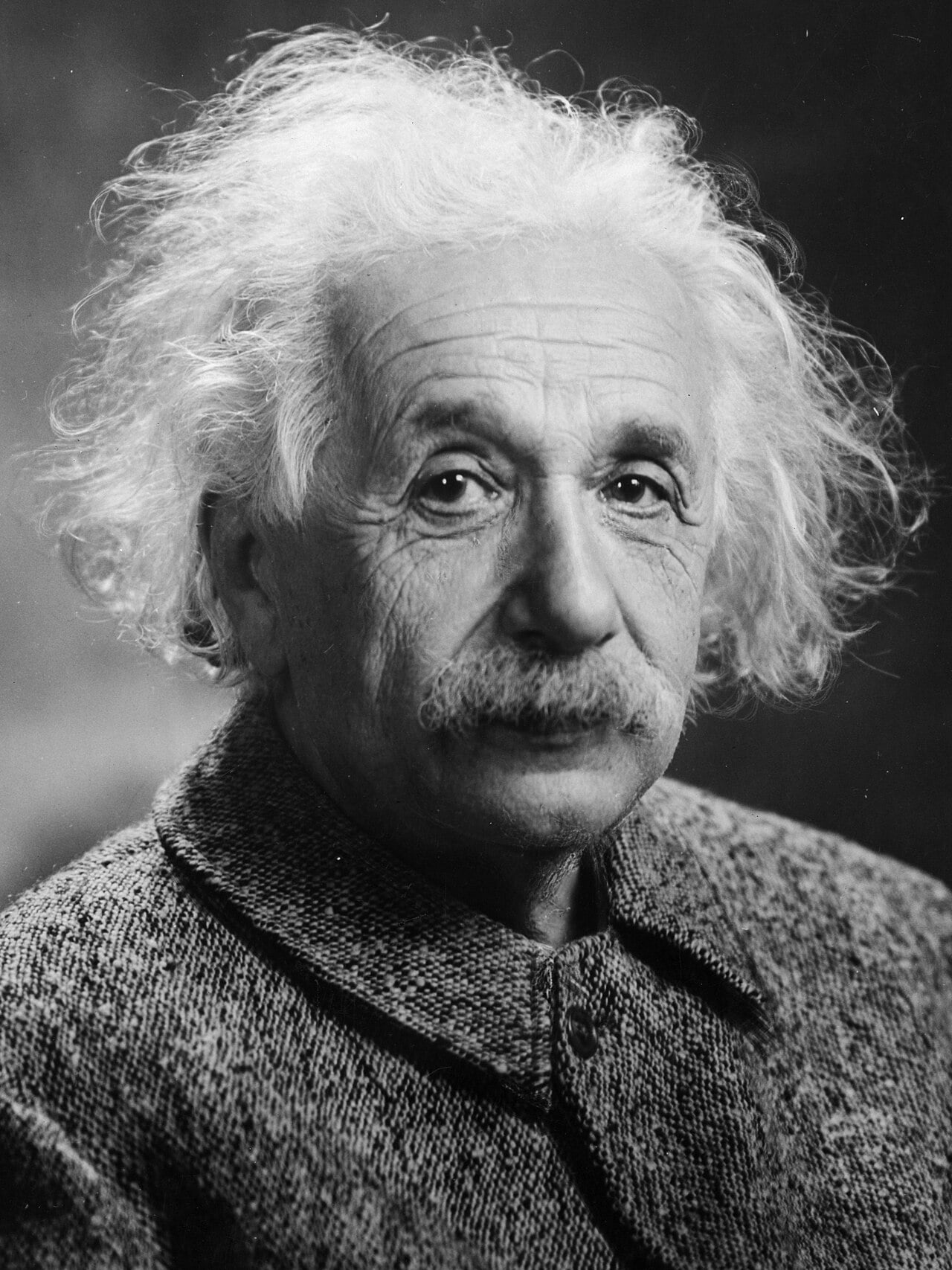
Imagine you were traveling at the speed of light, racing alongside a single photon, the fastest possible thing in the universe. What would you see? What would the universe look like to you? Einstein wondered the exact same thing. As a teenager he imagined what it would be like to race a bicycle alongside a beam of light (listen, we didn't have rockets yet, so a bicycle was the best he had to work with).
After decades of toil, he arrived at his answer. What's it like to travel at lightspeed? You can't. You just can't. You never get to know what the universe is like from a photon's point of view. It isn't a bad question, or a stupid one. It's just a malformed one.
And that insight reveals something genuinely strange about the universe: your experience of reality is shaped by your speed. A photon has a different conception of reality, one that simply does not map onto our own. And the best part is that we don't even have to reach lightspeed to see the weirdness start leaking out.
Let me get one thing out of the way first. In special relativity, which is honestly my favorite flavor of relativity and the way we're going to approach today's question, when we talk about perspectives and views we are really talking about rest frames. The easiest way to think about a rest frame is as your own point of view. In relativity there is no such thing as perfect, absolute stillness. All motion is referenced against other objects. You see a baseball whiz past you, and from your perspective you are perfectly still while the baseball does the whizzing. You are in your own rest frame. You always are, in fact, because you are always you.
But the baseball has its own rest frame too, which is its own point of view. From its perspective, IT is perfectly still and YOU are the one rushing past in the opposite direction. Who's right? Who's wrong? Which account of the universe, yours or the baseball's, is the correct one? Relativity's answer: it's all relative. Both perspectives are perfectly valid, and neither one is more correct than the other. It just means that when we talk about motion, we first have to specify which frame of reference we're working from. I am still and the baseball is moving fast, from my reference frame.
The same goes for stillness. If you and I are standing next to each other, I can say that you are at rest, with respect to my frame of reference. So when we ask about the point of view of some particular object, whether it's you or me or a baseball or a photon, what we're really asking is what the universe looks like from a frame of reference at rest with that object. You know. Like racing your bicycle to catch a beam of light.
I know I'm deep in the relativity weeds here, and I'm doing it on purpose, for two reasons. One, it's cool stuff. Two, I need this language to explain what happens with light itself. When we ask what the universe looks like to a photon, we are really asking what the perspective is from a frame of reference at rest with respect to a photon.
And the answer is: light has no rest frame.
Light has no rest frame. There is no frame of reference that sits at rest with respect to a beam of light. There just isn't. The entire machinery of relativity is built from this single insight. Einstein realized it was impossible to catch up with light. Here's one of the arguments he used: light is a wave of electricity and magnetism, and if you caught up with it the wave would appear frozen in place. But a frozen wave isn't waving, and if it isn't waving then it isn't light anymore, which rather defeats the purpose of the exercise.
So we can't talk about what the universe is like from the point of view of a photon because, strictly speaking, a photon has no point of view. It has no sense of time, or space, or duration, or length, or measurement, or speed, or anything else we normally bundle into the idea of a perspective.
I know this is weird. But everything about relativity is weird. Some of it we just get used to. The price of relativity is that measurements of time and space become relative to your speed and your point of view. Moving clocks run slow. Moving rulers shrink. All of that is the toll we pay to make the real prize work: the laws of physics stay the same for everyone.
I've done plenty of episodes on relativity, so we're all old hands by now. Sure, cute, if one twin takes a rocket ride and comes home they'll be younger than the twin who stayed. Neat. But we're a lot less used to following relativity all the way to its conclusion. Effects like time dilation and length contraction get worse the closer you get to lightspeed. Which means that at lightspeed itself, they break. They stop. Time and space stop meaning anything at all, because our very idea of spacetime rests on clocks and rulers obeying the laws of relativity, and those laws were built to operate below the speed of light.
But none of that stops us from getting CLOSE to the speed of light and watching what happens. And the nice thing about almost-but-not-quite lightspeed is that I don't have to spend the whole rest of this series telling you the question is unanswerable, which would get old fast.
Oh, and your speed doesn't just change your measurements of time and space. It quite literally edits the universe you experience.
In Part 2, we start warping that view, as the entire cosmos compresses into a blazing cone of light aimed straight at your face.