Universe Today
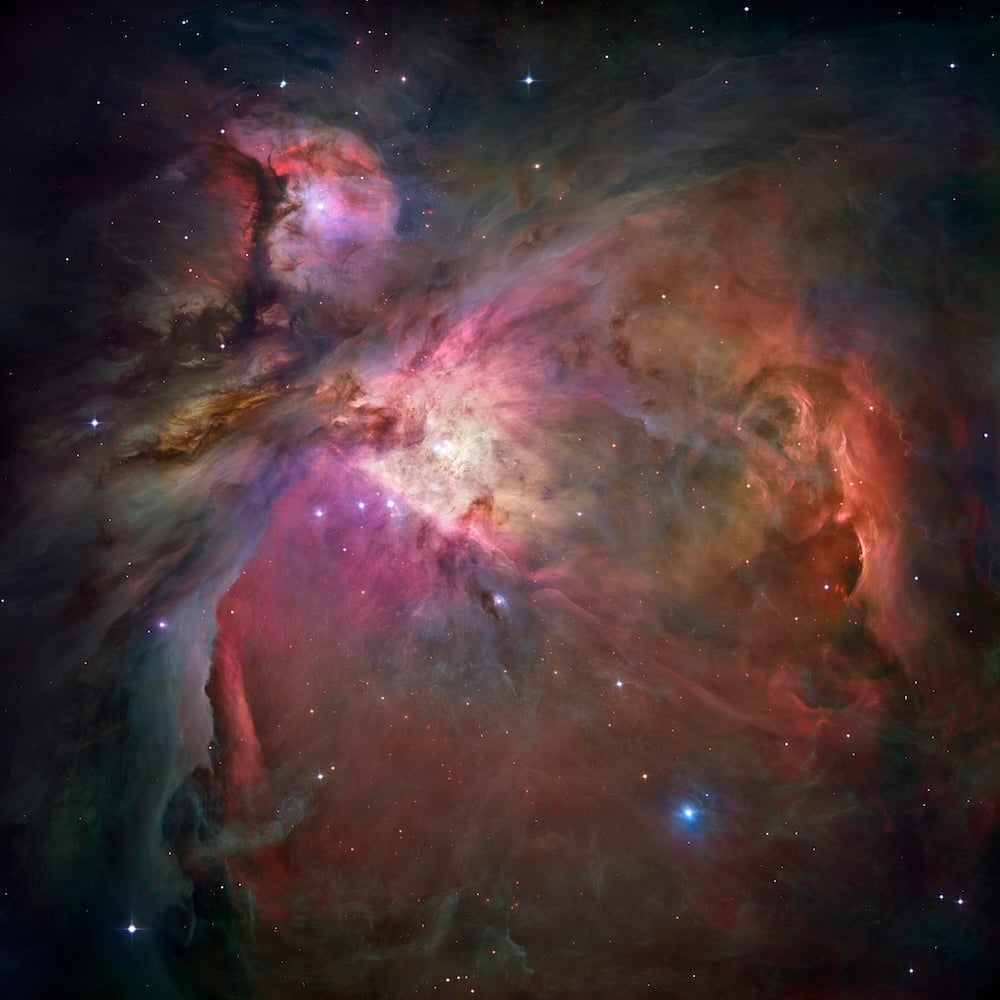
Think of the night sky and you probably picture stars as individual points of light, scattered at random. But stars are rarely born alone. They arrive in vast clusters, forged deep inside enormous clouds of gas, and within each cluster the variety is staggering. Some stars are cool, dim, and modest, only a fraction of the Sun's bulk. Others are stellar monsters, ten times heavier than our Sun and blazing with a hundred thousand times its brilliance. They burn fast and die young, but while they last, they dominate everything around them.
What decides which kind of star you get? For a long time, the honest answer it seems, was simply chance. The mass of any individual star within a cluster was assumed to be essentially random. But a team of astrophysicists from Nanjing University and the University of Bonn has just shown that assumption was wrong, and not slightly wrong, but fundamentally wrong.
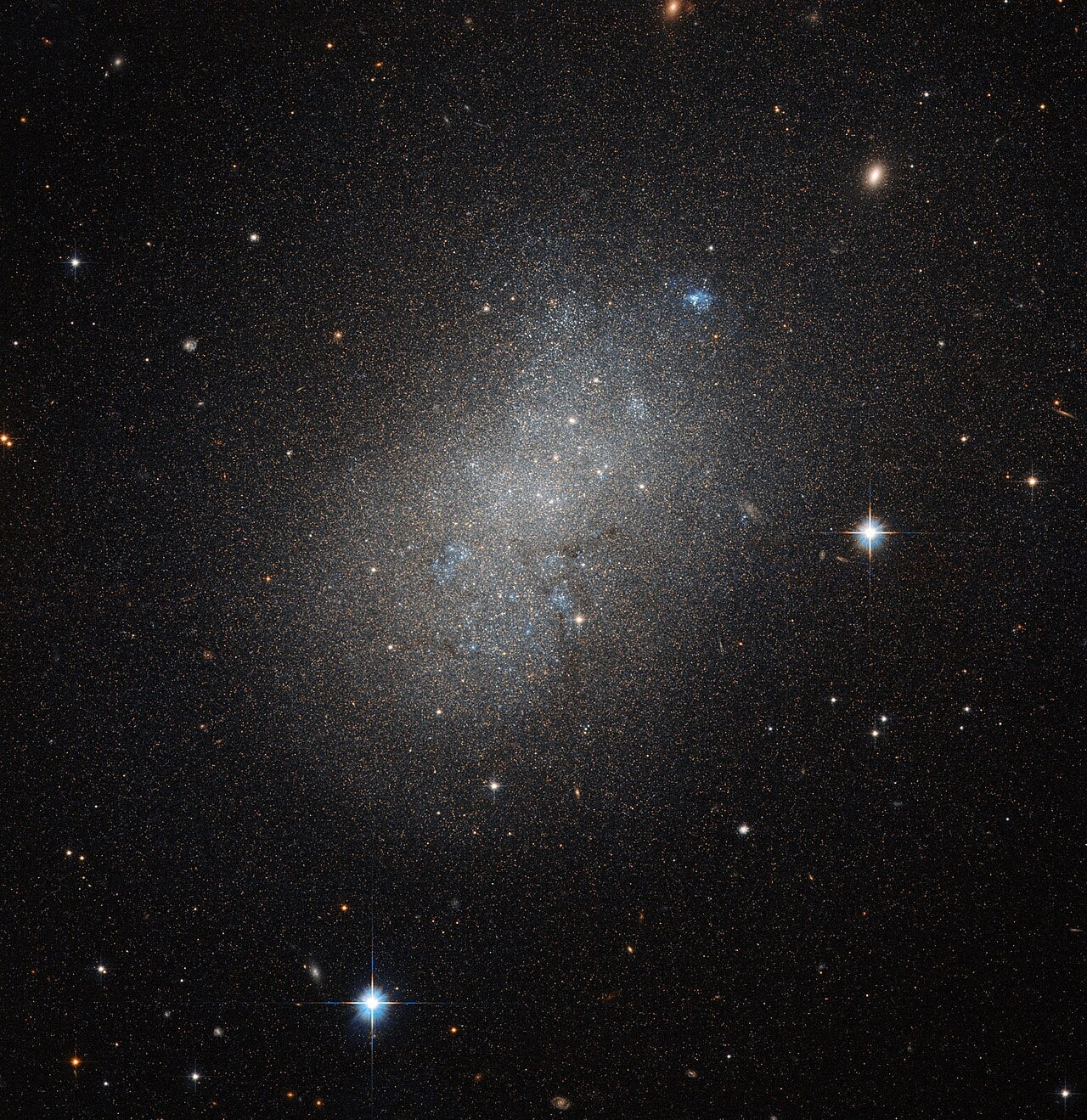 The mass of a dwarf galaxy like NGC 5264 may well determine the maximum mass of a new star (Credit : ESA/Hubble)
It turns out the total mass of the star cluster itself sets the rules. A small, lightweight cluster simply cannot produce extreme stars. A dwarf galaxy, with its comparatively modest gravitational resources, will never birth a star more brilliant than our Sun. But a massive elliptical galaxy, one that forged close to ten billion stars in a frantic ten million year burst in the early Universe will routinely produce millions of these stellar giants. The cluster's mass it seems, is the blueprint and the stars it produces are the inevitable result.
The groundwork for this idea goes back to 2006, when Professor Pavel Kroupa of the University of Bonn and his doctoral student Carsten Weidner first showed that the most massive star in any cluster is determined by the cluster's overall mass. Kroupa developed this into a concept called optimal sampling which is a framework for predicting the whole population of stars from a single number. What was missing was an explanation for why nature behaves this way.
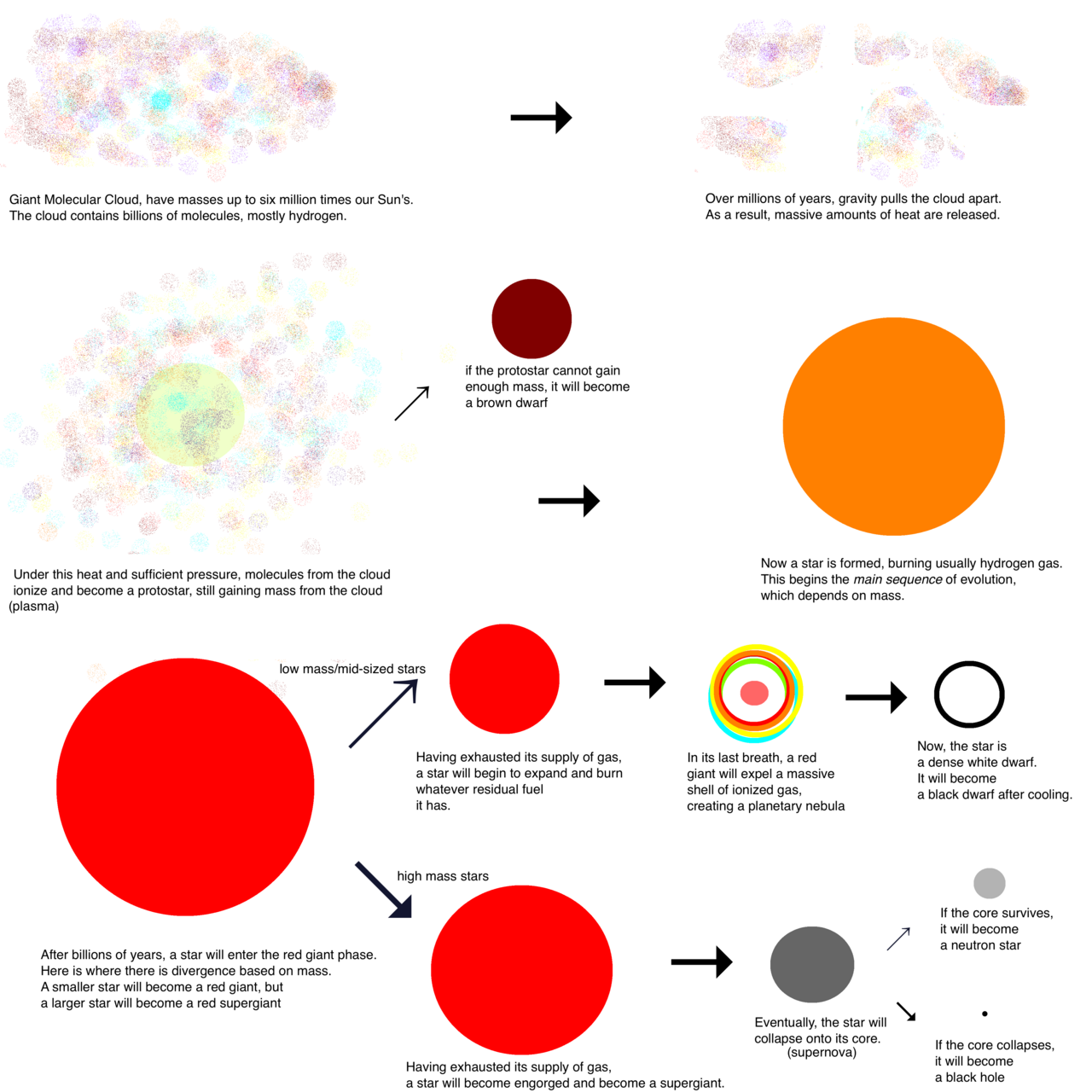 Schematic showing the evolution of star (Credit : BedrockPerson)
That explanation has now arrived. Dr. Eda Gjergo from Nanjing University applied a mathematical tool called Shannon entropy to show that star formation always follows the most ordered, efficient path available. Of all the ways mass could be distributed among newborn stars, the Universe consistently picks the option least dependent on random microscopic events. Star formation, it turns out, is wonderfully self regulating.
Modelling how a galaxy evolves used to require thousands of separate calculations to account for statistical randomness. Now however, knowing the mass of a star forming region is enough to predict its output with precision, slashing the computing power needed and opening the door to far more efficient galaxy simulations. More fundamentally, it rewrites what we thought we knew. Small dwarf galaxies, the research confirms, produce no massive stars at all. That single correction ripples through the entire theory of the matter cycle in the Universe, and a host of existing calculations will need to be revisited.
Source : Cosmic Order Inside Star Clusters