Universe Today
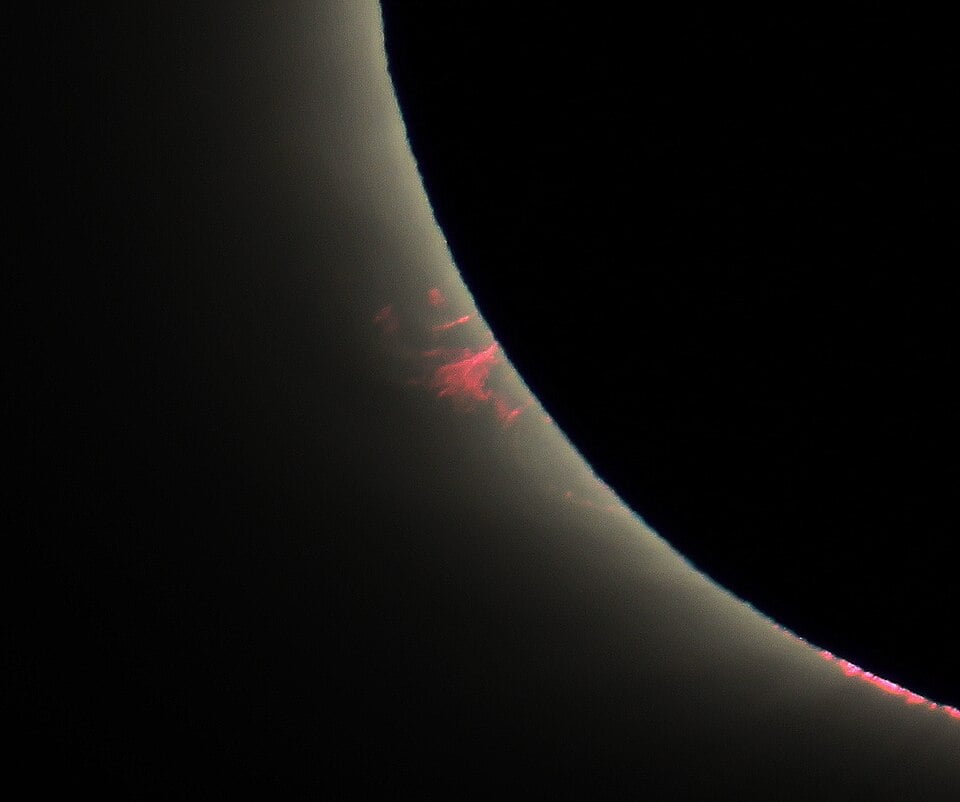
Imagine a mountain range many times larger than the entire Earth, floating in mid-air, held up by nothing you can see. It sounds like something from a fantasy novel but that is essentially what solar prominences are and for decades, scientists have struggled to explain how they exist at all.
A team at the Max Planck Institute for Solar System Research in Germany has just published the most realistic simulations yet of how these extraordinary structures form and survive, and the results shed new light on one of the Sun's most dramatic, and potentially dangerous features.
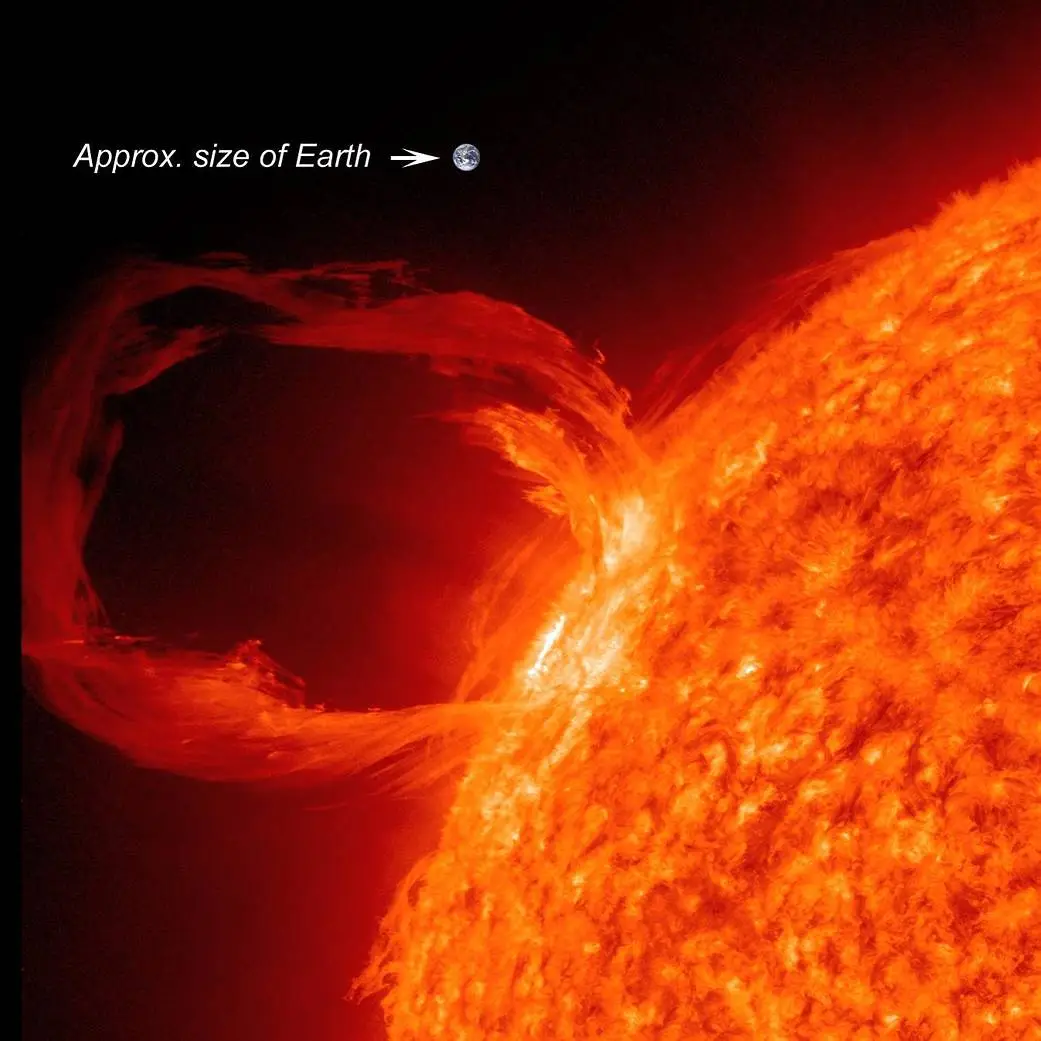 Solar prominence (Credit : NASA)
Solar prominences are vast clouds of superheated gas that erupt from the Sun's surface and hang suspended in its outer atmosphere, the corona. They can stretch for hundreds of thousands of kilometres, dwarfing anything in our Solar System, and yet they are made of material far cooler than their surroundings. The corona burns at over a million degrees. The prominences within it sit at around ten thousand degrees which is cool enough, in solar terms, to be considered almost cold. It’s as if a giant iceberg were floating inside a furnace, refusing to melt.
What keeps them there is the Sun's magnetic field. Loops of magnetic force arch out of the Sun's surface and create dips where cooler plasma can collect and be held in place. But for a prominence to survive for weeks or even months, as many do, it needs a constant supply of fresh material. Lose that supply, and it fades. If it doesn't fade quietly, it will erupt, hurling billions of tonnes of charged particles into space. If that cloud reaches Earth, the consequences can range from spectacular auroras to serious disruption of power grids and satellites.
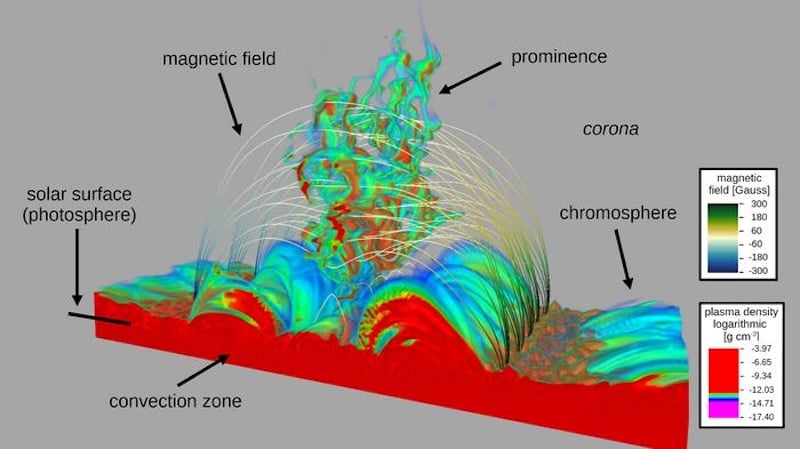 The new computer simulations are based on a magnetic field structure that is often associated with prominences: the magnetic field lines in the corona form a double arc with a small dip in the middle. As the calculations show, the flame-like prominence forms in this dip and remains trapped there. All relevant layers of the Sun were taken into account, from the corona, the Sun’s outer atmosphere, to parts of the convection zone below the Sun’s surface (Credit : MPS)
Understanding what keeps prominences fed and what eventually tips them into eruption matters enormously for space weather forecasting. The new simulations are the first to model not just the Sun's outer atmosphere, but the turbulent layers beneath its visible surface as well. What they found is that two processes work together. Small bursts of magnetic turbulence deep in the Sun's lower atmosphere fire jets of cooler plasma upward, where it becomes trapped in those magnetic dips and begins to accumulate. At the same time, hotter plasma flowing along the magnetic arches cools and condenses, adding to the structure from above. It is a constant, delicate balancing act with material raining back down even as fresh material is pushed up to replace it.
The result is something that looks impossibly fragile but is, in reality, extraordinarily well supplied. Like a waterfall that is always falling but never runs dry. Whether these new simulations will eventually help us predict when a prominence is about to erupt remains to be seen. But for the first time, we have a genuinely complete picture of how the Sun builds these magnificent, impossible structures and keeps them alive.
Source : Solar prominences: supply mechanisms in the Sun's corona