Universe Today
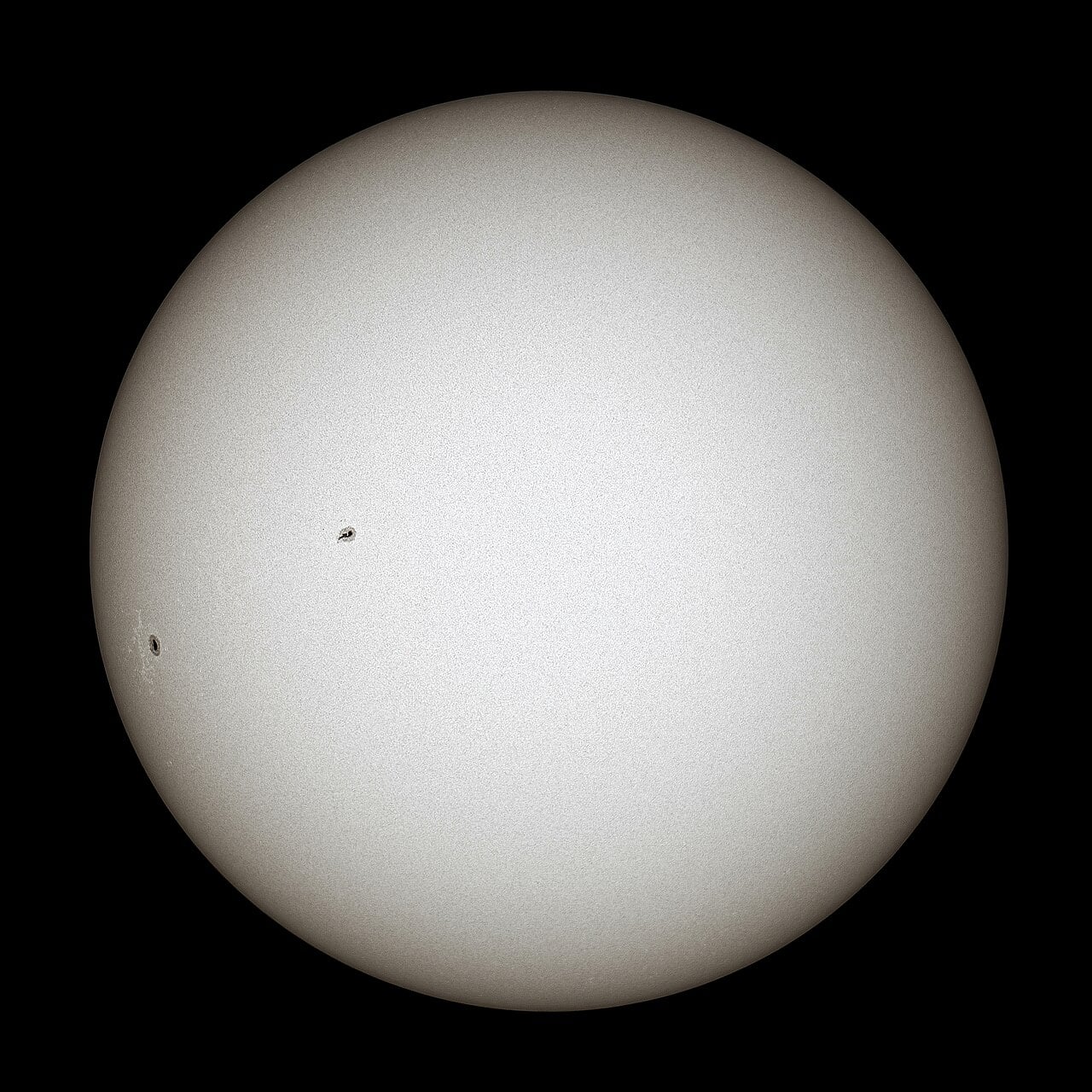
Our Sun is a middle aged, average star sitting in an unremarkable corner of the Milky Way. It fuses hydrogen into helium at its core, bathes its planets in light and heat, and has been doing so for around 4.6 billion years. Nothing about it immediately suggests a dramatic past. But look closer, and the questions start to stack up.
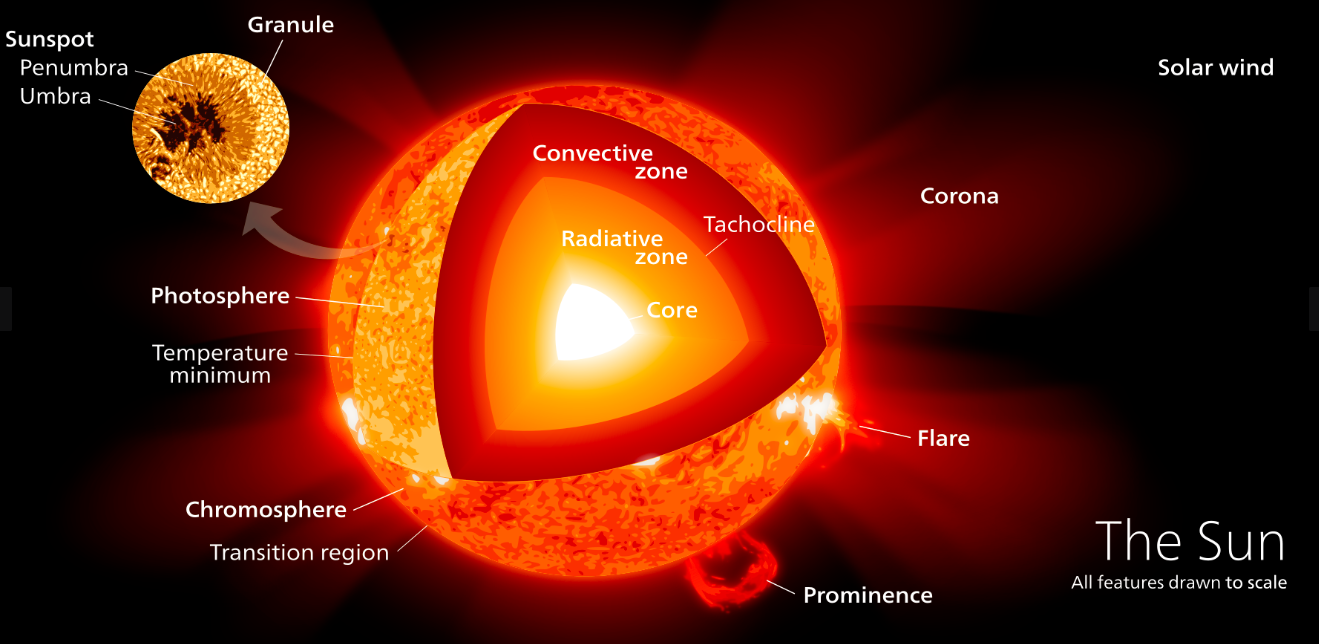 Artists impression of the interior of the Sun (Credit : Kelvinsong)
Here's one question worth thinking about for a while. Why are we here? Not philosophically, but geographically. Our Sun sits in a relatively calm, suburban stretch of the Milky Way, far from the violent, radiation soaked environment at the galactic centre. It wasn't always this way, and scientists have long suspected that the Sun formed much closer to the core before migrating outward. What's been missing is the evidence for exactly how that happened. Now, a team from Tokyo Metropolitan University has found it, and the answer is stranger and more wonderful than anyone expected.
The researchers turned to one of astronomy's most remarkable datasets, the Gaia satellite's catalogue of almost two billion stars. From this extraordinary set of data, they identified 6,594 solar twins, stars so similar to our Sun in temperature, surface gravity, and chemical composition that they might almost be siblings. It's the largest collection of solar twins ever assembled, around thirty times bigger than previous surveys, and it gave them a family portrait of stars like ours, stretching back billions of years.
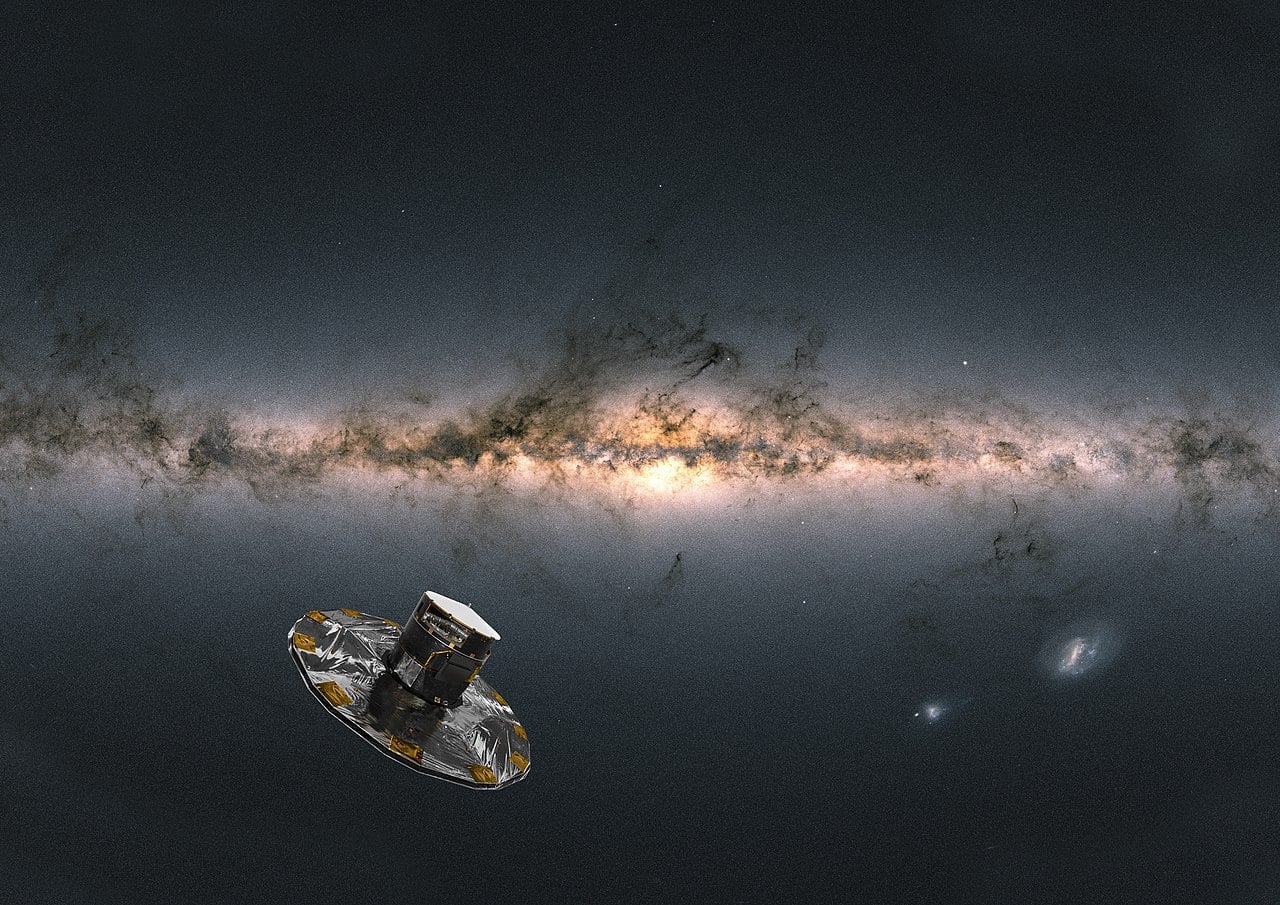 Artist impression of ESA's Gaia satellite observing the Milky Way (Credit : ESA/ATG medialab)
When they mapped the ages of these twins, a striking pattern emerged. There is a pronounced cluster of solar twins aged between four and six billion years, positioned at roughly the same distance from the galactic centre as we are today. Our Sun falls squarely within that group. This isn't coincidence the team suggest. What the data reveals is a mass migration, a wave of Sun like stars that left the galactic core together during that same window of time, carrying our own star along with them.
That raises an obvious question. Why then? The answer may lie in the galactic bar, the enormous rotating bar like structure of stars that dominates the Milky Way's centre and creates what astronomers call a corotation barrier, effectively a gravitational fence that should make large scale stellar escape difficult. The timing of the migration suggests the bar was still forming during that period, perhaps temporarily lowering the fence just long enough for stars to slip through in large numbers.
The centre of the Milky Way is an extraordinarily hostile place, flooded with radiation and gravitational disruption. By escaping to quieter outskirts, our Sun found the stable conditions that life needs. We didn't just get lucky, we left at exactly the right moment, swept along in a tide of stars just like ours, bound for somewhere a little more habitable.
Source : We are not alone: Our Sun escaped together with stellar 'twins' from galaxy center