Universe Today
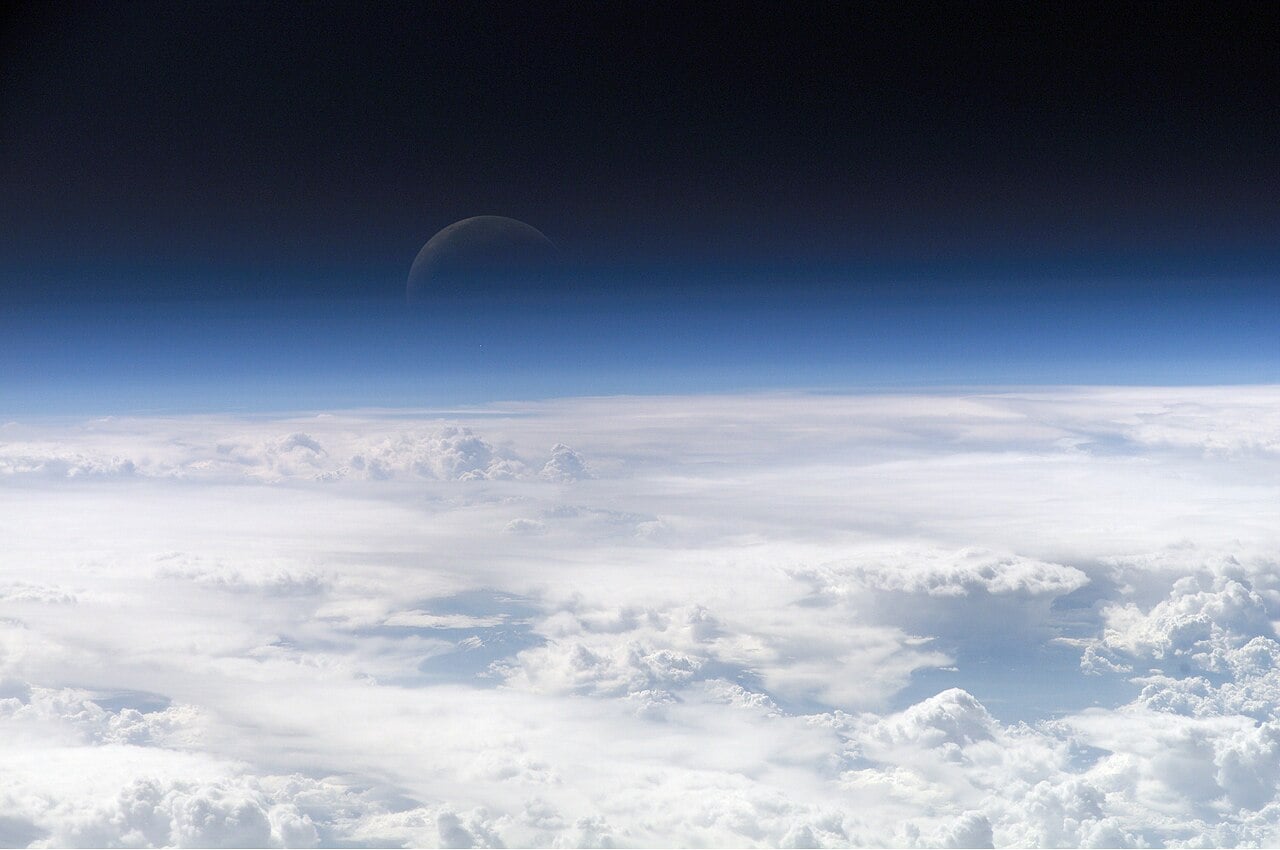
Here is a problem that has been quietly gnawing at astronomers for decades. The standard approach to detecting life on other worlds involves scanning exoplanet atmospheres for oxygen, methane and ozone, whose presence is difficult to explain without biology. It's a clever idea, but it carries a hidden flaw. That entire shopping list was written by studying Earth. It is, inevitably, a search for life like us.
The list of ways that chemistry alone can accidentally mimic these biosignature gases is growing faster than the list of new ways to detect life. Each new false positive scenario demands even more information about the planet to rule it out and there is a genuine question about whether that information can ever be gathered exhaustively. After sixty years of astrobiology, these biosignature concepts themselves have remained surprisingly static.
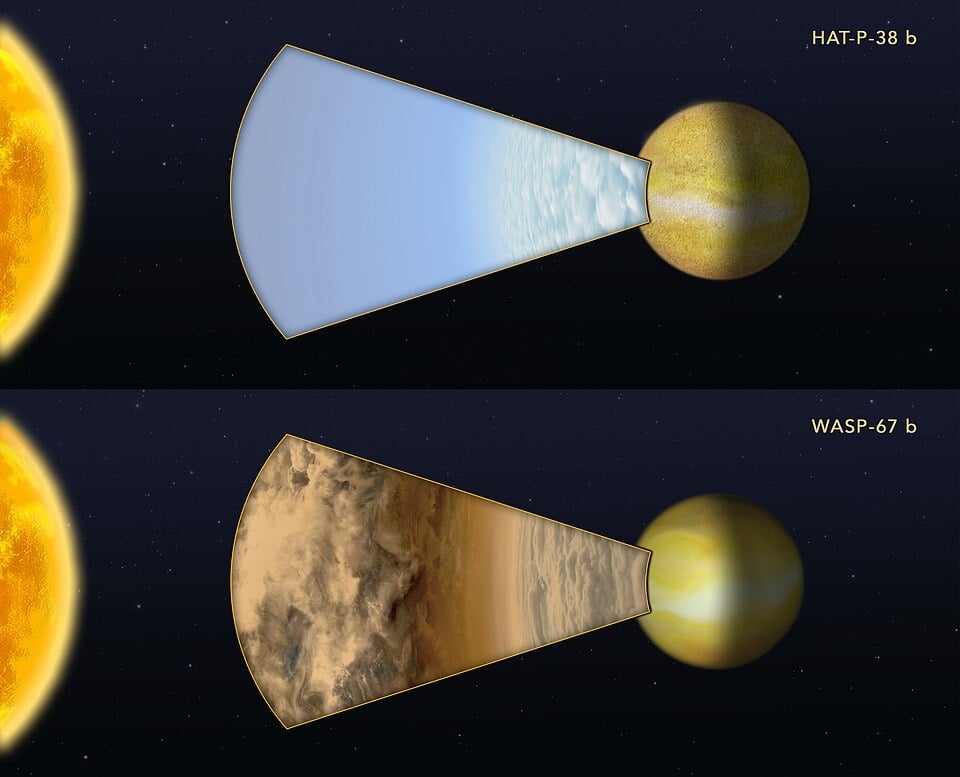 The study for life on exoplanets has largely been restricted to absolute measure of the components of the atmosphere (Credit : ESA/Hubble)
That is the problem Sara Walker, Professor of Astrobiology at Arizona State University, and her colleagues are trying to solve. Their answer draws on Assembly Theory, and it starts from a genuinely different place.
Assembly Theory doesn't ask what molecules are present in an atmosphere. Instead it asks how hard they were to make. Every molecule can be assigned an Assembly Index, a minimum number of construction steps required to build it from basic chemical building blocks. Simple molecules are easy to assemble by chance but truly complex ones, requiring many sequential steps, don't arise without something doing a great deal of deliberate selection. When you find a planetary atmosphere rich in molecules that are extraordinarily hard to construct randomly, and where the chemistry shows signs of deep interconnection (molecules sharing and reusing chemical fragments, exploring the full possibility space of available bonds) something has been at work beyond ordinary physics. That something, the theory argues, is almost certainly life.
Crucially, the theory makes no assumptions about what that life actually is. No specific metabolism, biochemistry, or molecular machinery is presumed. It is, in the researchers' own terms, agnostic to life's specific instantiation. It simply suggests where life might exist.
Comparing Earth's atmosphere to Venus, Mars, and various exoplanet archetypes, Earth's atmosphere stands out as the most complex by this measure, independent of any observational bias. Earth and Venus have a similar diversity of chemical bonds available to them, yet Earth's atmosphere contains far greater molecular diversity above any given abundance threshold. Earth’s biosphere, it seems is allowing a much more exhaustive exploration of chemical possibility than Venus manages.
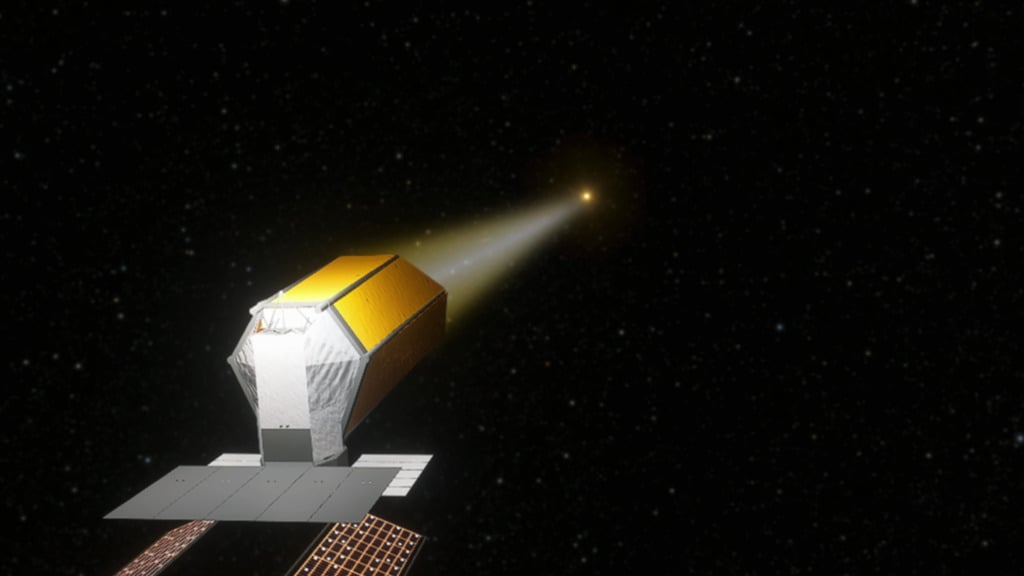 Artist impression of the Habitable Worlds Observatory (Credit : NASA)
The framework is being designed with the Habitable Worlds Observatory in mind, NASA's next flagship telescope, chosen specifically to directly image Earth like planets and search their atmospheres for signs of life. Rather than returning a simple alive or dead verdict, an Assembly Theory analysis would produce a continuous complexity score, placing planets on a spectrum from purely abiotic to richly biotic, and potentially capturing the gradual transition between the two rather than demanding a hard boundary.
It is also, unlike many theoretical biosignature frameworks, directly measurable. Assembly values can be calculated from infrared spectroscopy, the very technique space telescopes use to read distant atmospheres. The universe has had nearly fourteen billion years to experiment with chemistry. Assuming it only ever arrived at one solution for life seems, on reflection, like a very Earth centric bet.