Universe Today
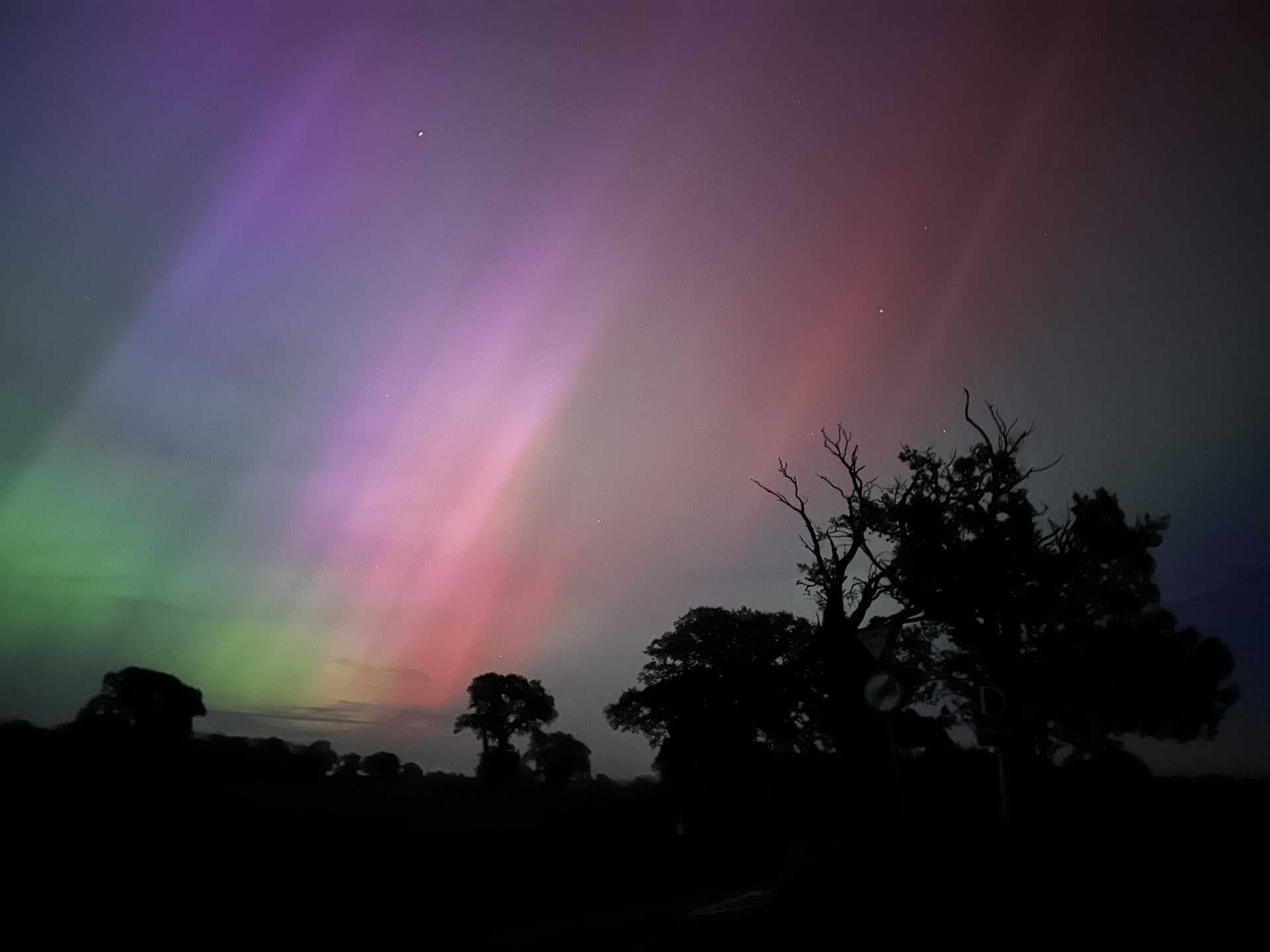
I've been fortunate enough to witness the aurora on several occasions over the years, and each sighting leaves an impression that never quite fades. There's something about watching the sky transform from gentle curtains of light into something far more dramatic that stays with you. Within minutes, the aurora can erupt into intense waves of green and red that ripple and dance across the sky. These spectacular events, called magnetospheric substorms, represent some of Earth's most powerful displays of atmospheric electricity and they're exactly the kind of experience that burns itself into memory.
Scientists have long puzzled over what triggers this sudden transition from calm aurora to storm. Now, researchers at the University of Southampton have identified a telltale radio signal that appears just as these storms begin, a discovery that could finally explain the mechanism behind one of nature's grandest performances.
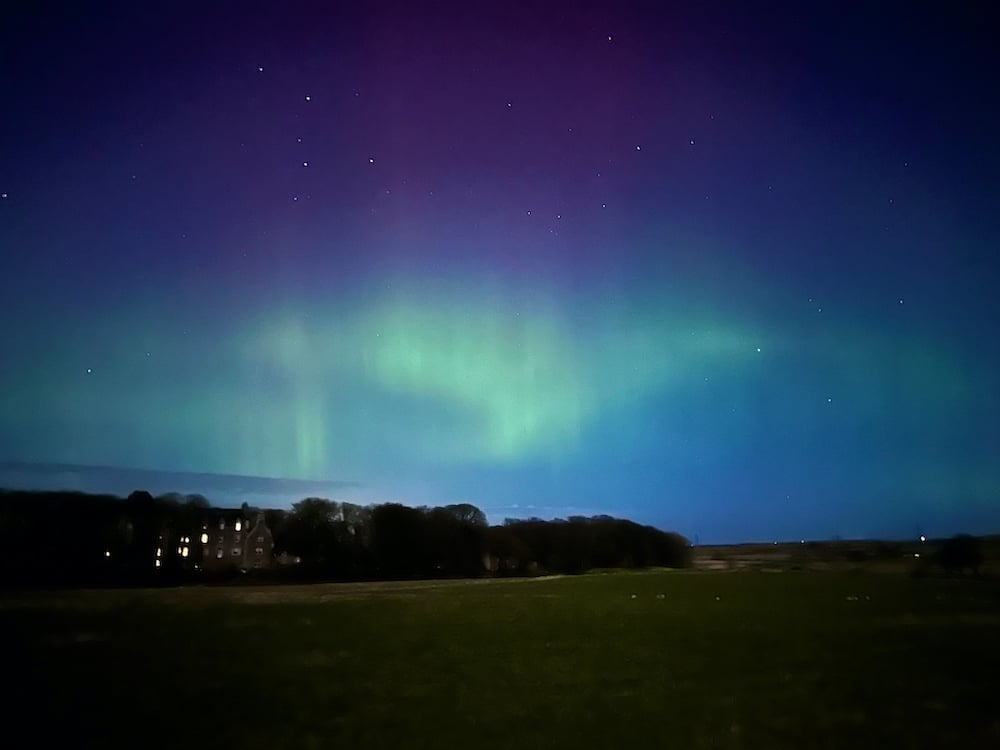 The aurora usually start off gently before intensity increases
The key lies in something called auroral beads. Almost always, before a substorm erupts, observers see a necklace like pattern appear in the aurora with multiple luminous points strung across the sky like pearls on a thread. These beads are the warning sign, the curtain rising before the main act. But what exactly causes them, and how do they trigger the subsequent storm?
The Southampton team examined data from multiple sources, from ground based observatories in Finnish Lapland, imaging satellites, and crucially, radio antennae aboard spacecraft including NASA's Polar and Japan's Arase missions. They focused on auroral kilometric radiation, naturally occurring radio emissions produced in near Earth space directly above the aurora.
> "Auroral substorms are caused by the accumulation and then release of magnetic energy stored in Earth's magnetosphere during its interaction with the solar wind flow. However, what exactly triggers this energy to suddenly unload in spectacular fashion isn't fully understood.” - Dr. Daniel Whiter from the University of Southampton
Lead author Dr. Siyuan Wu explains that the fine structures visible in these emissions reveal the formation of small scale electric potential structures along magnetic field lines connected to the auroral beads. The periodicity and speed at which these structures propagate show remarkable consistency across multiple independent datasets.
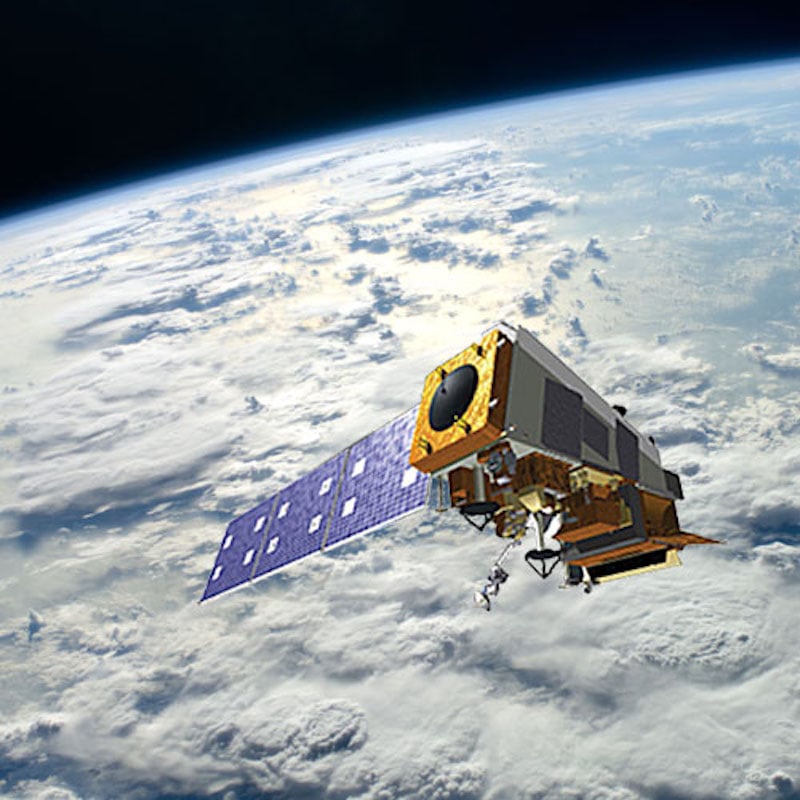 NASA's Polar Orbiter (Credit : NASA)
What they found was striking. At the precise moment auroral beads become visible, a distinct burst appears in the radio emissions. This signal intensifies dramatically at substorm onset.
NASA's Polar Orbiter (Credit : NASA)
What they found was striking. At the precise moment auroral beads become visible, a distinct burst appears in the radio emissions. This signal intensifies dramatically at substorm onset.
It suggests scientists aren't seeing random fluctuations but rather a fundamental physical process at work. The radio emissions provide direct evidence of what's happening along the magnetic field lines connecting space to atmosphere, evidence that was previously invisible because researchers had never examined this particular radio signature in detail.
The researchers believe this could represent a universal mechanism operating in the magnetospheres of other planets. Both Jupiter and Saturn generate their own auroras, and understanding the physics driving Earth's substorms may illuminate what happens in those alien atmospheres as well. The mystery isn't completely solved though and there's still work to determine exactly how these electric structures trigger the energy release. But for the first time, scientists have a clear signal to follow, a radio breadcrumb trail leading toward understanding why aurora storms erupt when they do.
Source : Scientists close in on solving the mystery behind intense auroral storms