Universe Today
Long before Earth existed, before the Sun ignited, the materials that would eventually become our Solar System drifted through the darkness between stars. These interstellar clouds, vast expanses of ice, gas, and dust stretching across light years, held within them the chemical seeds of everything that would follow; rocky planets, gas giants, and perhaps even life itself. Understanding exactly how those primordial materials transformed into worlds remains one of astronomy's most long standing mysteries.
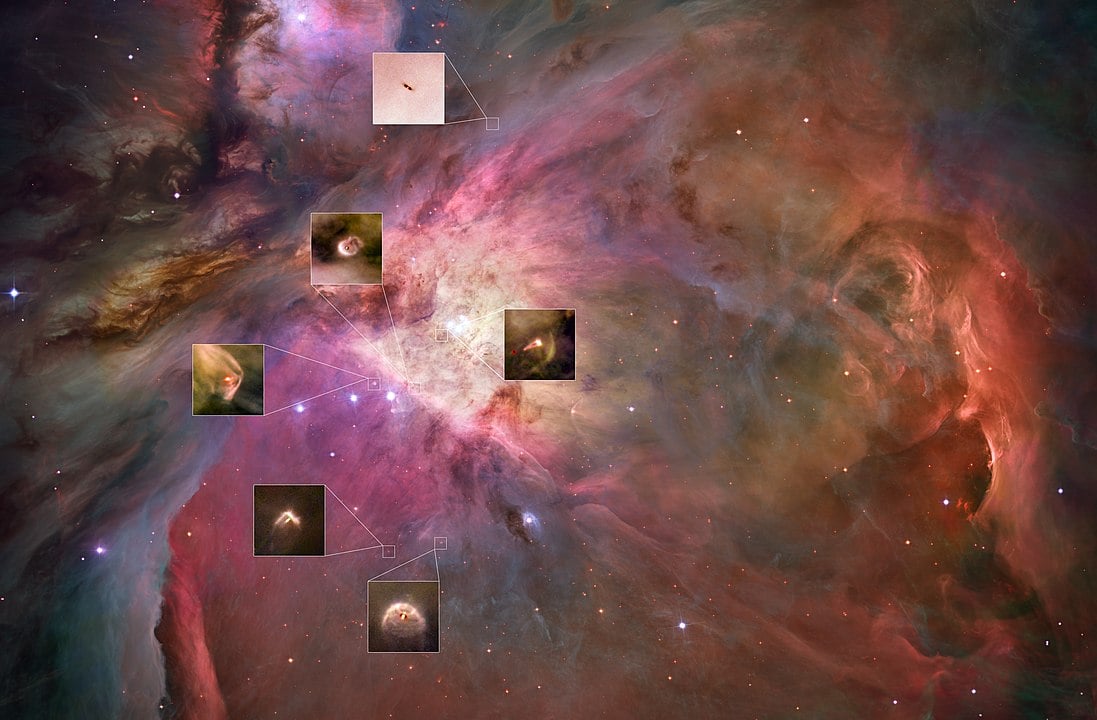 The formation of planetary systems like those in the Orion Nebula are the subject of the new NOUR Laboratory (Credit : ESA/Hubble)
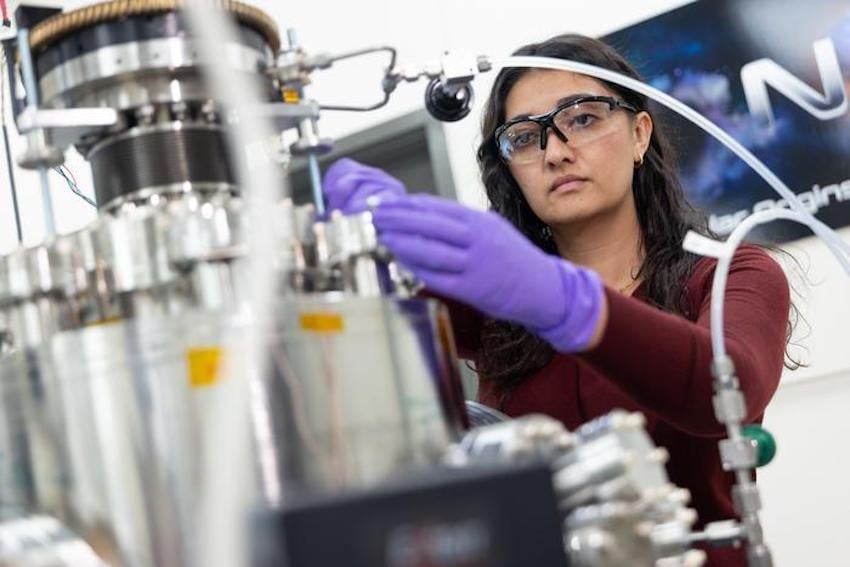
The Southwest Research Institute has just opened a new laboratory designed to solve it. The Nebular Origins of the Universe Research (NOUR) Laboratory, led by Senior Research Scientist Dr. Danna Qasim, will recreate the extreme conditions of pre-planetary environments to trace the chemical journey from interstellar cloud to planetary surface.
The approach centres on simulation. Two main vacuum chambers will mimic different stages of chemistry found in deep space. One chamber recreates the conditions inside dark interstellar clouds, where temperatures hover just a few degrees above absolute zero and complex organic molecules form on ice covered dust grains. The other simulates what happens when stellar radiation bathes these ices in ultraviolet light, driving reactions that produce even more sophisticated molecules including components of DNA and RNA.
"We are examining the chemistry of ice, gas and dust that have existed since before our Solar System formed, connecting the dots to determine how materials in those clouds ultimately evolve into planets. By simulating the physico-chemical conditions of these pre-planetary environments, we can fill key data gaps, providing insights that future NASA missions need to accomplish their goals.” - Dr. Danna Qasim from Nebular Origins of the Universe Research Laboratory.
The laboratory's focus aligns directly with priorities outlined in the 2022 National Academies Decadal Survey, which called for better understanding of Solar System origins, planetary evolution, and the search for life. Multiple space missions depend on precisely this kind of foundational knowledge. NASA's Moon to Mars vision, planning long term lunar exploration and eventual crewed missions to Mars, needs to understand how water and organic compounds are distributed across our planetary neighbourhood.
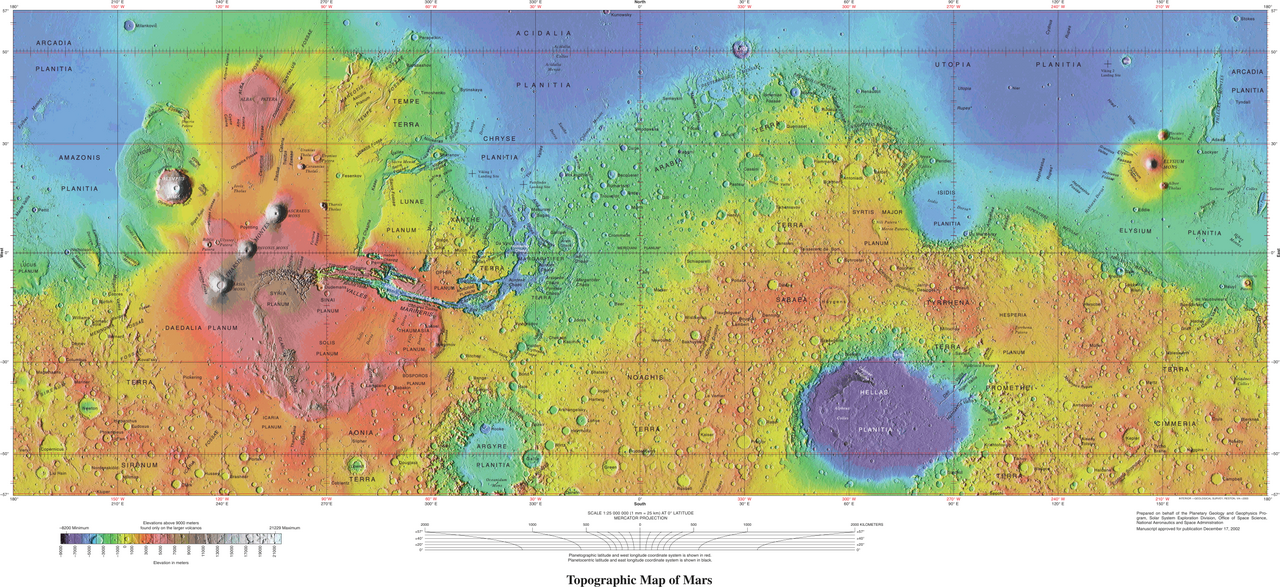 The NOUR Laboratory will help probe the mysteries of the surface of Mars and other worlds in our Solar System (Credit : U.S. Geological Survey)
Initial experiments will investigate sulphur and phosphorus, two elements essential to life as we know it. Researchers want to understand how these materials were incorporated into planetary building blocks billions of years ago. Beyond creating new molecules in vacuum chambers, the laboratory will also analyse returned samples from the Moon, asteroids, comets, and eventually Mars using a liquid chromatography-mass spectrometer, comparing chemistry found in space to actual materials.
The implications stretch beyond pure science. By understanding the chemical inventory of pre-planetary environments, researchers can identify potential chemical markers that might indicate life and determine whether they originated through biological processes or were simply inherited from earlier stages. It's detective work on the grandest scale, following chemical breadcrumbs back through time to the very origins of planetary systems.
Source : New SwRI laboratory to study the origins of planetary systems