Universe Today
We have been searching for signals from other civilisations for over sixty years. Radio telescopes on Earth have swept the sky, listened patiently, and found nothing but silence. It is a search that demands extraordinary sensitivity and that is the problem, Earth and our very existence itself is getting in the way.
Every mobile phone, every Wi-Fi router, every radar system and broadcasting tower on the planet pumps radio waves into the surrounding environment. For a radio telescope trying to detect a faint, distant signal from an alien civilisation, this constant noise is like trying to hear a whisper at a rock concert. The interference doesn't just make the job harder. In some frequency ranges, it makes it almost impossible. This is exactly why scientists have long dreamed of placing a radio telescope on the far side of the Moon.
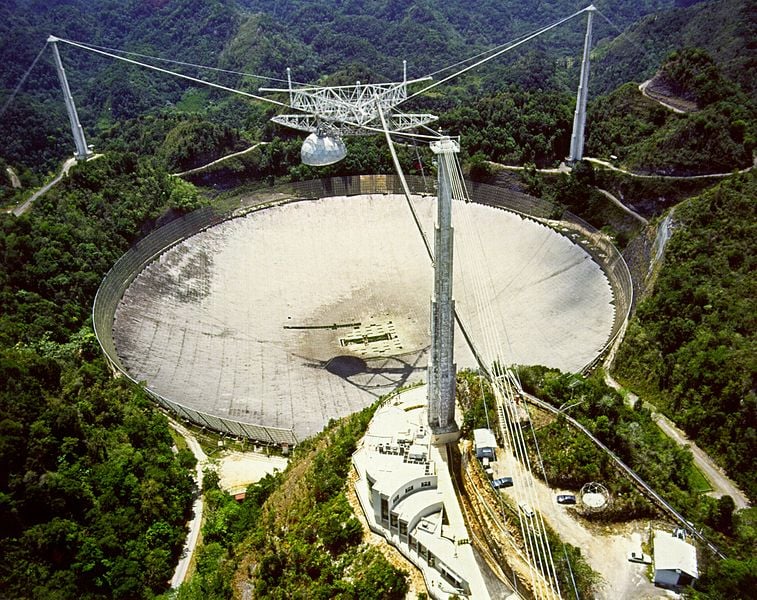 Aerial view of Arecibo Observatory in December 2012 which has been used in the search for life (Credit : H. Schweiker/WIYN and NOAO/AURA/NSF)
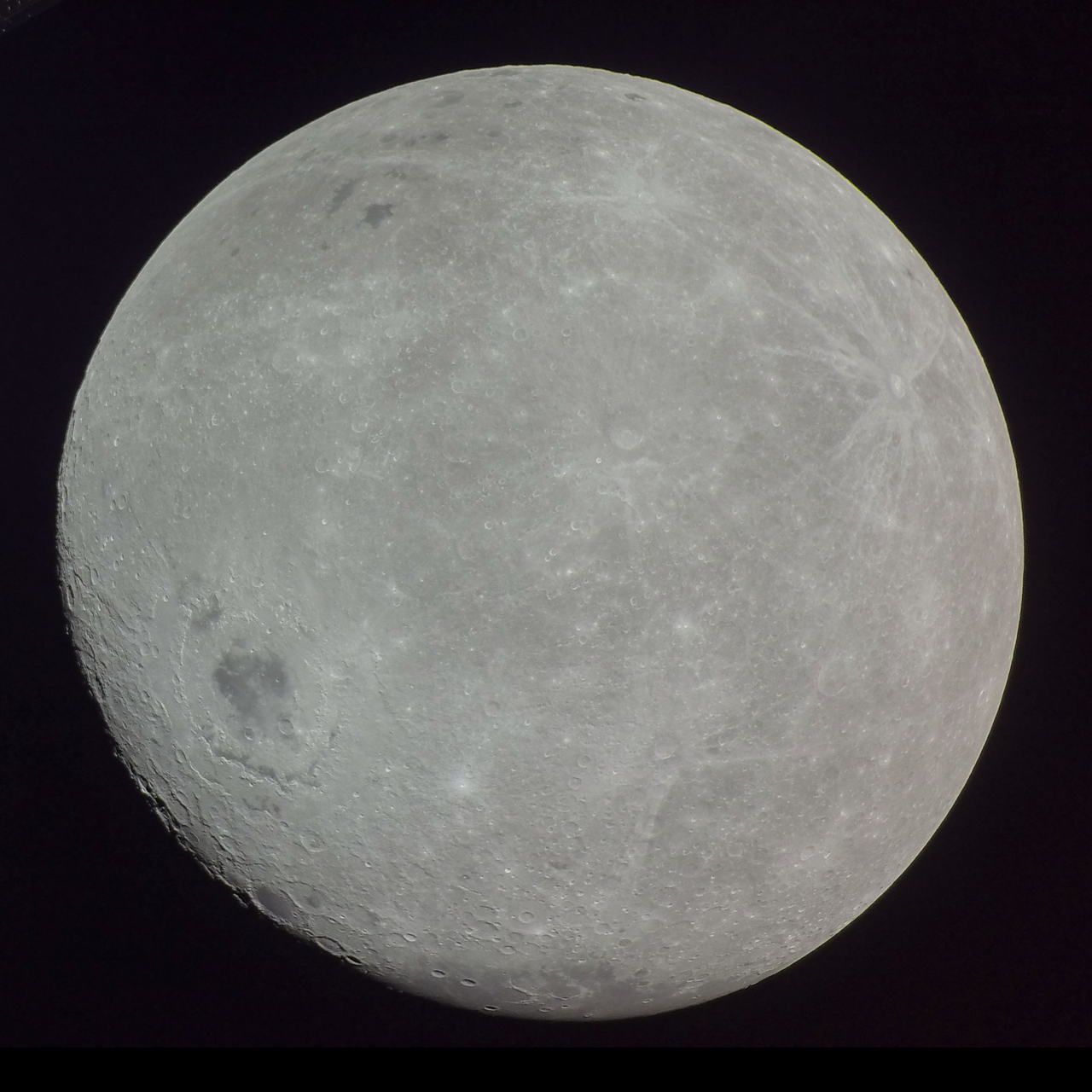
Tidal interactions between the Moon and Earth mean that one side of our natural satellite never faces Earth. From that frozen, ancient terrain, our planet is permanently hidden below the horizon, taking all of its radio noise with it. It’s only spotted on occasion when spacecraft and astronauts like those on board Artemis 2 journey around and get a glimpse of the Moon’s hidden hemisphere.
Radio telescopes placed on the far side can gain from the most radio quiet environment that humanity has ever had access to and no ground based telescope can come close to matching. In January 2019, China's Chang'E-4 mission became the first spacecraft in history to soft land there giving us the first time to try and listen without interference from ourselves.
Now, a research team has used data from the low frequency radio spectrometer aboard the Chang'E-4 lander to conduct the first ever SETI search from the lunar far side. Their goal was to look for technosignatures, periodic signals that repeat at regular intervals in a way that natural processes cannot easily explain. A repeating pattern in the radio spectrum, arriving like clockwork, would be a strong candidate for something artificial, something intentional.
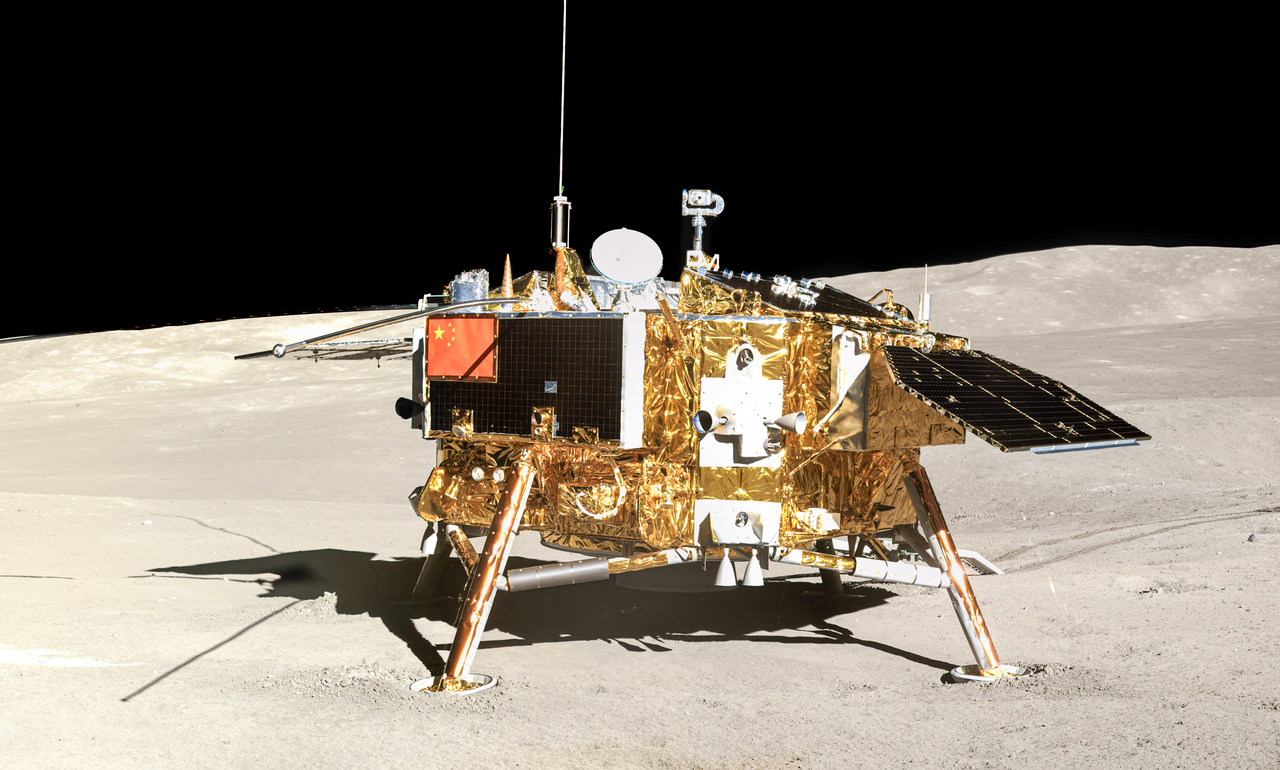 The Chang’e-4 lander imaged by the Yutu-2 rover on the lunar far side (Credit : CSNA/Siyu Zhang/Kevin M. Gill)
The team developed a sophisticated analysis model to sift through the data, combining statistical techniques to strip out noise, align signals between the lander's antennas, and hunt for both regular timing patterns and the kind of structured frequency signatures that a transmitting technology might produce.
The result? Nothing! No signal. No credible candidate. Nothing that could not be explained by natural or instrumental causes. But here is the thing, that is not a failure. It is a beginning. As Carl Sagan once put it “Absence of evidence is not evidence of absence!”
Chang'E-4 was never designed as a dedicated SETI instrument. Its radio spectrometer was limited in sensitivity compared to what a purpose built far side observatory could achieve. What this study demonstrates for the first time, is that the far side can be used for this kind of search, that the methodology works, the data can be analysed, and the framework is in place. Every great endeavour needs a first step, and this is unquestionably that.