Universe Today
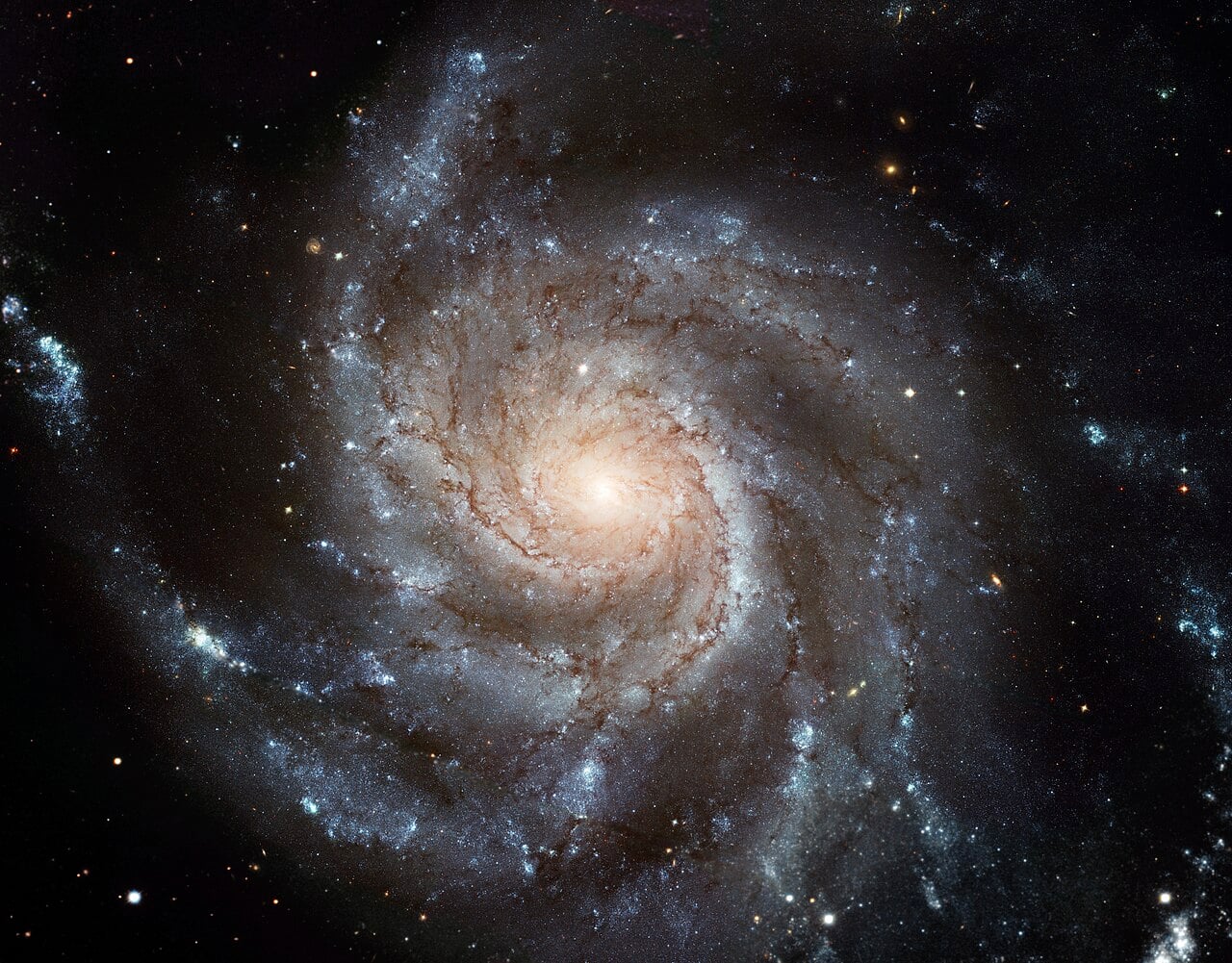
Spin a ball of gas and dust in space, let gravity do its work over billions of years, and you'll almost certainly end up with a rotating galaxy. It's one of the most basic predictions of how the universe works. The physics is straightforward, the evidence is overwhelming, and every large galaxy we've ever studied confirms it. Well, almost every one.
Using the James Webb Space Telescope, astronomers have discovered a galaxy in the early universe that simply isn't spinning. Not slowly spinning, nor just a little spin, it’s not spinning at all. Instead of the orderly rotation we'd expect, its stars are moving in all directions at once, chaotic and random and going nowhere in particular. That pattern is something we associate with the most ancient, most massive galaxies close to us chronologically. Galaxies that have had billions of years to reach that state through countless mergers and collisions. Not something you expect to find in a galaxy when the universe is less than two billion years old.
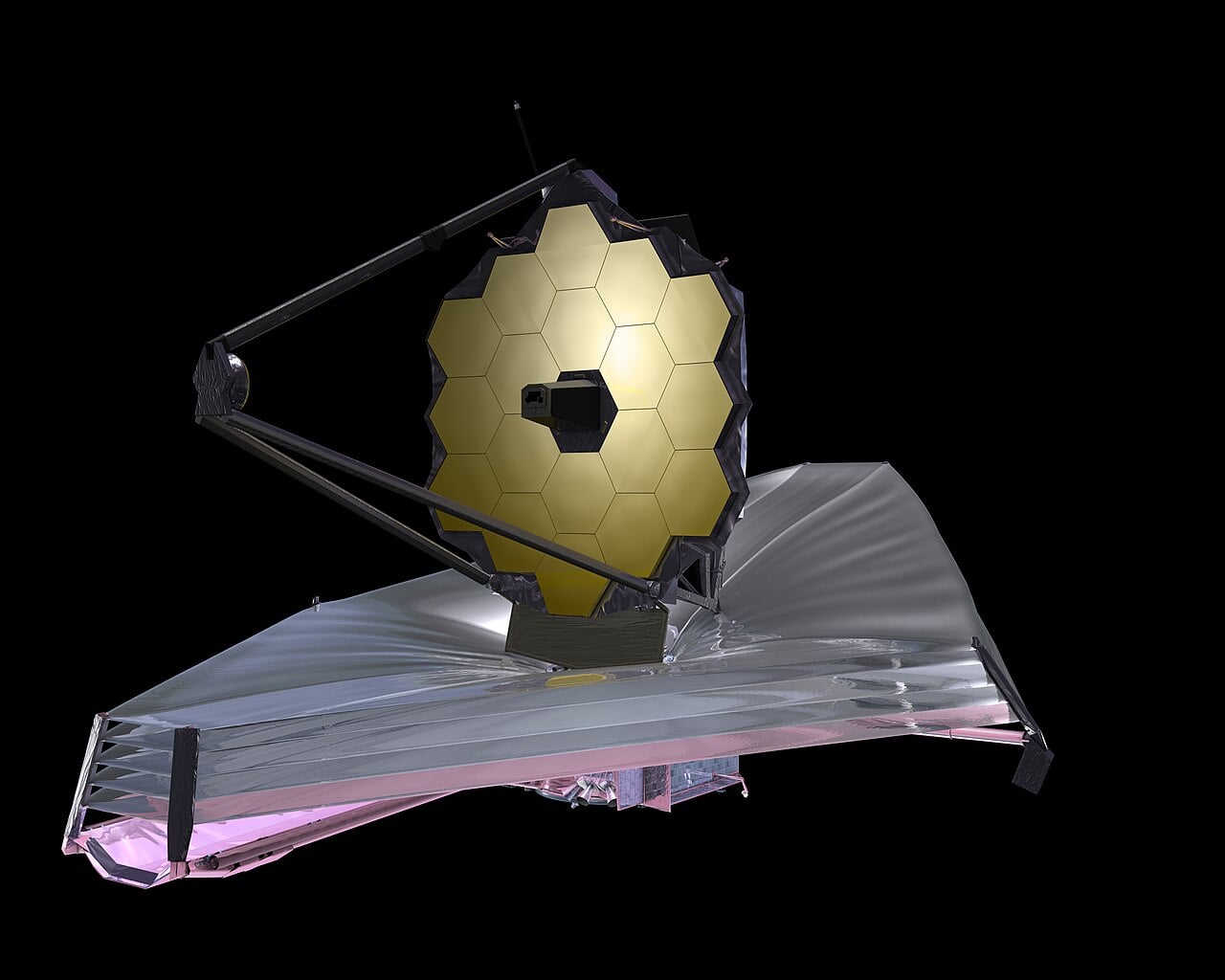 Artist impression of the James Webb Space Telescope (Credit : NASA)
The galaxy in question, unglamorously named XMM-VID1-2075 had already caught astronomers' attention before Webb came along. Previous observations had revealed it was one of the most massive galaxies in the early universe, already packing several times as many stars as our own Milky Way into its structure. Stranger still, it had already stopped forming new stars, burned out and settled.
Webb allowed the team to measure how the material inside the galaxy was actually moving. That kind of detailed work is routine for nearby galaxies, which appear large enough in the sky to study from the ground. For something this distant, seen as it was 12 billion years ago, it requires the extraordinary sensitivity that only Webb can deliver.
Of the three ancient galaxies the team examined, one is clearly rotating, one is a confused tangle of motion, and one, XMM-VID1-2075, shows no rotation whatsoever. Just stars moving at random, like a swarm of bees with no sense of direction.
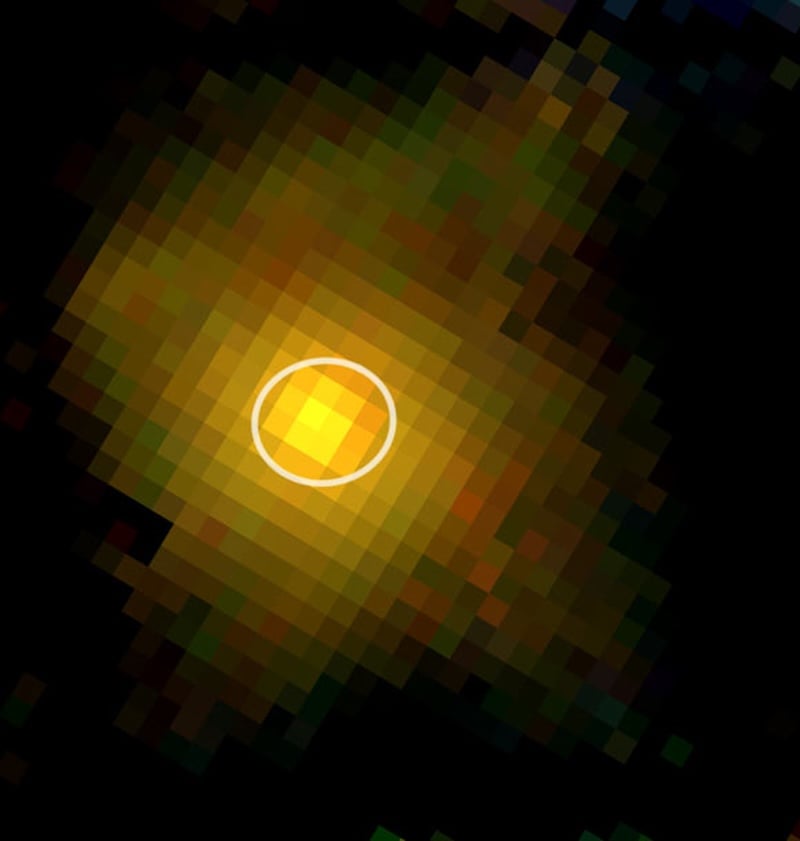 This Webb/NIRSpec/IFU image shows the slow-rotator galaxy XMM-VID1-2075 (Credit : Forrest et al)
So how does a galaxy get into this state so early? The leading theory is a head-on collision, not the gradual accumulation of dozens of mergers that we think drives this process in the modern universe, but a single, catastrophic impact between two galaxies rotating in almost exactly opposite directions. Their spins cancel each other out, leaving behind a galaxy that has rather forgotten how to turn. Supporting this idea, the team spotted a bright excess of light off to one side of the galaxy which may be a possible companion in the process of being absorbed, still disturbing the system.
What makes this discovery so important is not just the galaxy itself but that computer simulations of galaxy formation do predict that non rotating galaxies can exist in the early universe but they expect them to be extraordinarily rare. Finding one doesn't break the models, finding many would. The hunt is now on for more because if the early universe was producing rotation-less galaxies far more often than our simulations suggest, something in our understanding of how galaxies are born and grow needs a serious rethink.
Source : Non-rotating early galaxy is a surprise to astronomers